KOL









1 Michelin Star · World's 50 Best #49 · La Liste Top Restaurants
Our verdict
KOL arrived in Marylebone in late 2020 and rapidly became one of London's most closely watched restaurant openings, earning a Michelin star and a World's 50 Best ranking of #17 by 2024. The premise is structurally unusual: a ten-course tasting menu built entirely on British-sourced ingredients, reinterpreted through 9,000 years of Mexican culinary tradition. The downstairs Mezcaleria offers one of the UK's most serious agave spirit collections as a standalone destination.

Pearl is the En Primeur Club membership app — saves, bookings, and concierge access live there. Same editors, same standards.
- Address
- 9 Seymour St, London W1H 7BA, United Kingdom
- Phone
- +44 20 3829 6888
- Hours
- Mon ClosedTue 5:30–9 PMWed 12–4 PM, 5–9 PMThu–Sat 12–4 PM, 5:30–9 PMSun Closed
- Website
- kolrestaurant.com
- Directions
- Get directions
- Booking
- Book on SevenRooms
The Argument KOL Makes
When KOL opened on Seymour Street in late 2020, during London's fitful pandemic-era restaurant reboot, it posed a genuine structural question to the city's fine dining circuit: could high-end Mexican cuisine hold its own in a market where the category was still largely associated with casual formats? Four years on, the answer is documented in awards data rather than opinion. A Michelin star arrived in 2024, alongside a World's 50 Best ranking of #17 that same year and #23 the year before. La Liste placed it at 90 points in 2025 and 86 in 2026. Opinionated About Dining ranked it #82 among European restaurants in 2025. That accumulation of recognition across different judging methodologies is not coincidental — it reflects a kitchen operating at a level where credential committees stop disagreeing with one another.
What distinguishes KOL within that group is the specificity of its constraint: no imported produce beyond corn for tortillas, Mexican chocolate, and native chillies. Every other element sources from British farms, coastlines, and foragers. That constraint is not a marketing position. It is a technical challenge that reshapes the menu at a foundational level — sea buckthorn substitutes for lime, sea arrowgrass fills a coriander-adjacent role, Scottish langoustine anchors the signature course. The British Isles, reframed through a Mexican sensibility, produces something neither country would arrive at independently.
What Regulars Return For
The restaurant has a loyal cohort who book on the two-month release cycle and plan visits around it. For that group, the constant is the langoustine taco: a Scottish langoustine tail dressed with smoked chilli and sea buckthorn, the head served separately to be squeezed over the assembled taco for added umami depth, the whole parcel wrapped in a corn tortilla. It is the only dish that has remained on the menu since opening day and functions as a reference point against which each visit can be measured. Around it, the ten-course structure rotates seasonally, lamb saddle with rye koji and mulato mole has appeared as a seasonal highlight, as has confit pork cheek with black beans, woodruff, apple, and a crispy pig's skin served alongside warm tortillas in a bespoke pouch. A corn and yellow pepper custard with caviar and tagete flowers represents the menu's more visually arresting register.
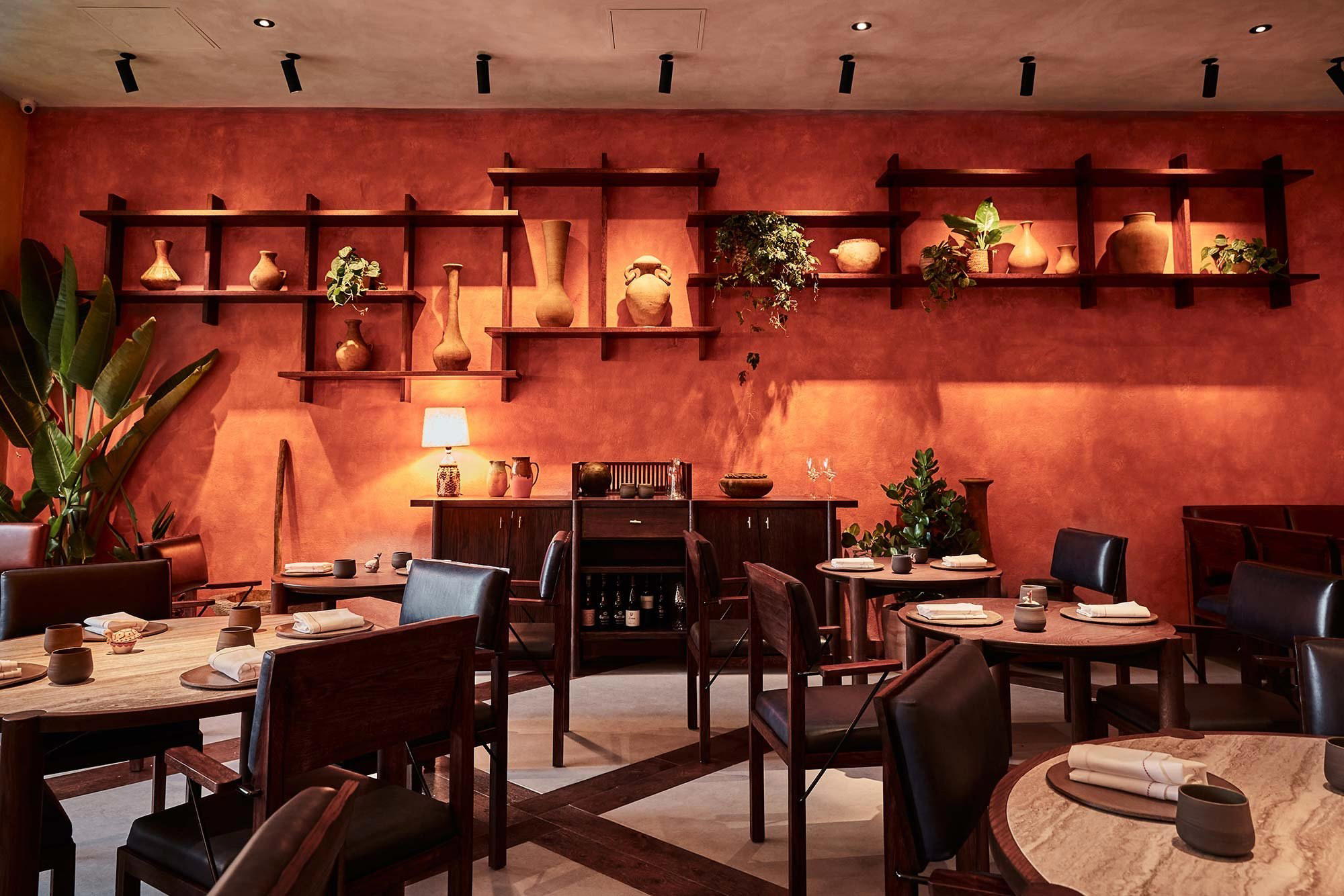
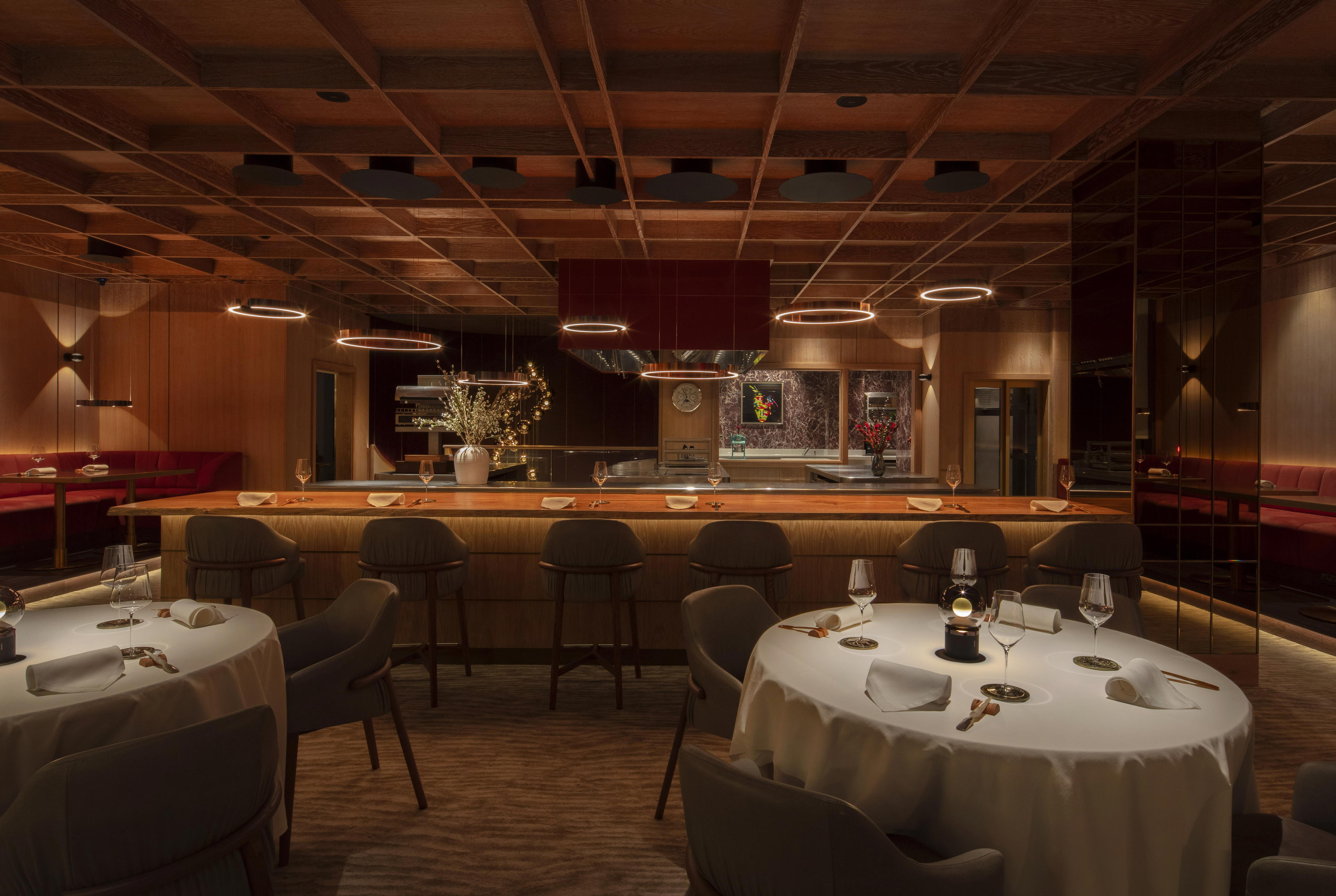
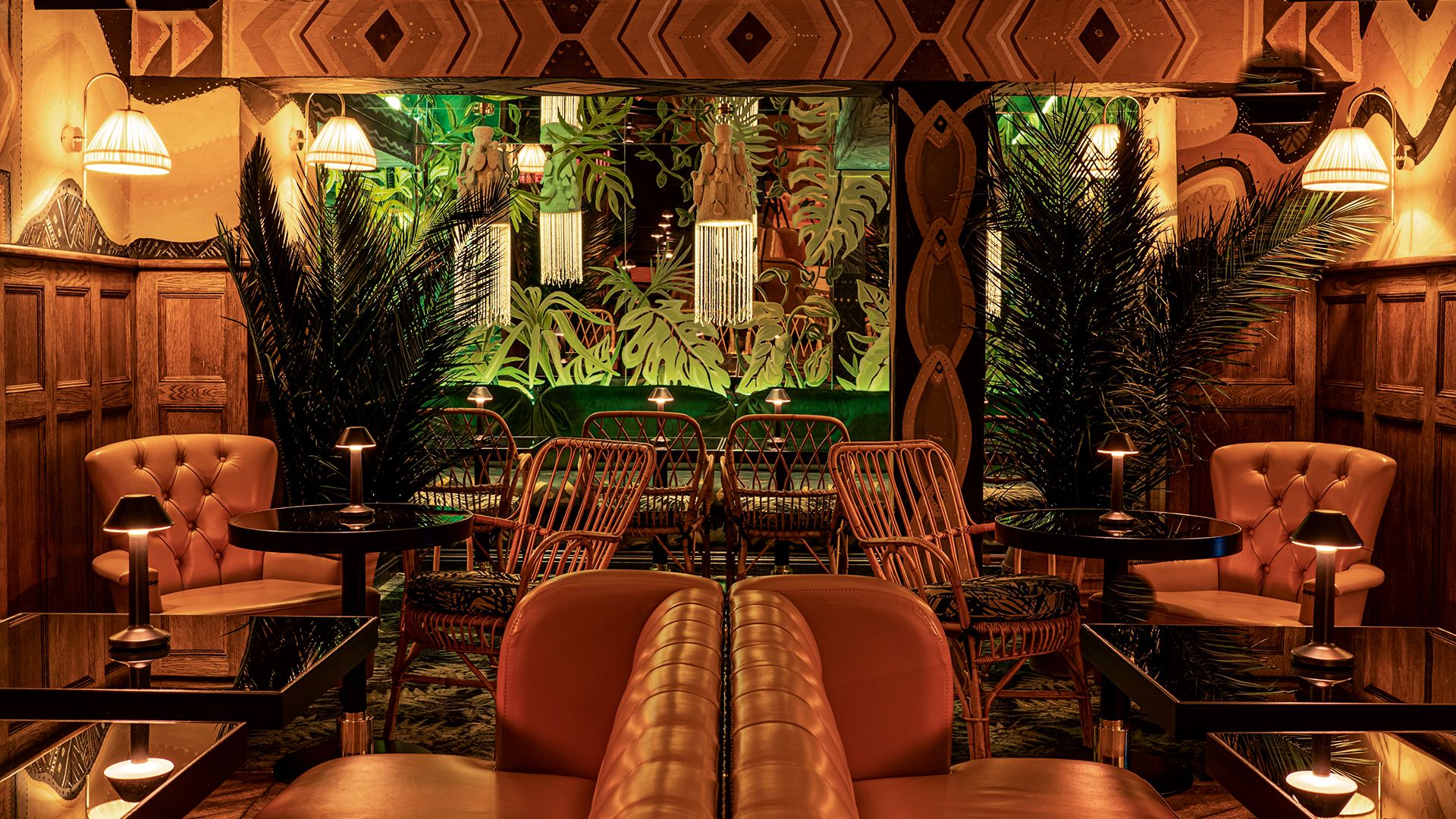
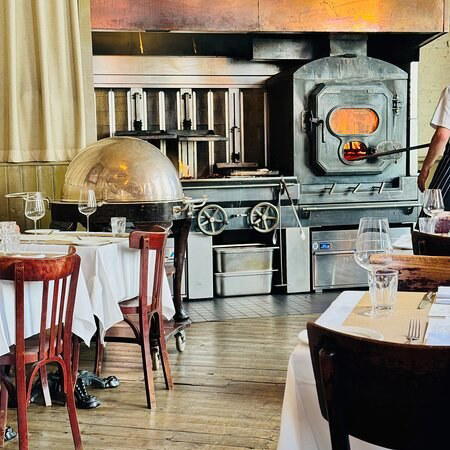
The room reinforces the sense of a coherent project rather than a decorated box. An open kitchen sits at the centre, staffed by a young team dressed in earthy tones that mirror the restaurant's interior palette. Front-of-house operates with the kind of informed commitment that characterises the better tasting-menu rooms in this price tier, knowledgeable about sourcing provenance, attentive to pacing, and not performatively theatrical about it. For regulars, the room feels familiar quickly, which is part of what sustains repeat visits at this price point.
Wine list occupies an interesting position: it focuses on lesser-known producers from Central and Eastern Europe rather than the Burgundy and Bordeaux defaults that anchor most comparable London lists. That choice is consistent with the kitchen's sourcing logic, an interest in the less-discussed, the undervalued, the ingredient or region that hasn't been fully absorbed into the premium consensus. For guests returning multiple times, the list offers genuine discovery across visits rather than a static set of reliable labels.
The Mezcaleria as a Separate Case
Basement Mezcaleria operates as a destination in its own right and has become a meaningful second entry point for those who want to engage with the KOL project without committing to the full tasting menu upstairs. It holds one of the UK's most extensive collections of agave spirits, and the cocktail program takes its cues from the kitchen's sourcing philosophy. Small plates served downstairs are constructed with the same technical attention as the tasting menu above. Booking downstairs is materially easier than securing a table in the dining room, and for guests already familiar with the main menu, the bar frequently adds another dimension to the evening rather than substituting for it.
Success of that format informed Santiago Lastra's 2024 decision to open Fonda on Heddon Street, a few minutes from KOL, as a more casual vehicle for tacos and tequila at a different price point. That expansion fits a recognisable pattern among chefs running single, reservation-intensive flagship restaurants, the casual satellite both broadens accessibility and relieves pressure on the main room's booking system.
Sourcing as a Technical Framework
Ingredient substitution framework at KOL has precedents in Scandinavian new-wave cooking, most obviously the Noma model, and Lastra's direct involvement in the Noma Mexico pop-up in Tulum in 2016 (and overseeing the 2017 version) makes the intellectual lineage explicit. But the application in London is distinct: the challenge is not to celebrate Nordic terroir using Nordic technique, but to make Mexican food taste like itself while sourcing from a country with a completely different agricultural and coastal profile. The imports list, corn, chocolate, native chillies, defines the hard boundary of what cannot be replaced without losing the cuisine's structural identity. Everything adjacent to that core is rebuilt from British materials.
That framework produces a kitchen that operates differently from its Marylebone neighbours and from most of the fine dining rooms it is ranked alongside on European lists. Venues like L'Enclume in Cartmel, Moor Hall in Aughton, and Gidleigh Park in Chagford build menus around British produce as a regional expression of European culinary tradition. KOL uses British produce as raw material for a different tradition entirely, one where the technique, the flavour logic, and the structural reference points come from Mexico rather than France or Scandinavia. That distinction is what makes the We're Smart Community's five-radish recognition (its highest tier for plant-forward cooking) sit alongside the Michelin star without contradiction: the kitchen's relationship to vegetables and seasonal produce is genuinely different from the butter-and-stock orthodoxy that underpins most comparable rooms.
Planning a Visit
KOL operates Tuesday evenings only (from 5:45 PM), with lunch and dinner service Wednesday through Saturday (lunch from noon, dinner from 5:45 PM). The restaurant is closed Sunday and Monday. Reservations open two months in advance and move quickly, the dining room is a consistent target for London's more organised restaurant-goers, and availability at the release window is the practical constraint. The address is 9 Seymour Street, W1H 7BA, a short walk from Marble Arch station in Marylebone, placing it within reach of the hotel corridor around Park Lane and within easy distance of the cluster of comparable restaurants in Mayfair and Notting Hill. The Mezcaleria downstairs accepts walk-ins more readily and is the more accessible entry point on short notice. For guests who want to extend a London trip across multiple tasting-menu formats, the city's wider fine dining offer is mapped in our full London restaurants guide, with supplementary coverage across hotels, bars, wineries, and experiences.
For context on where KOL sits in the broader British fine dining map, comparison points include The Fat Duck in Bray and Le Manoir aux Quat' Saisons in Great Milton at the institutional end, and Hand and Flowers in Marlow for a different model of ingredient-led cooking in a less formal register. Internationally, the high-concept tasting-menu model KOL operates within has equivalents at Atomix in New York City, which similarly uses a non-European culinary tradition as the foundation for a fine dining structure, and at Le Bernardin in New York City, where a similarly constrained ingredient focus (seafood as the almost exclusive protein source) generates comparable menu depth across multiple visits.
What the Dish Record Shows
What's the must-try dish at KOL?
The langoustine taco is the only dish that has appeared on every menu since KOL opened in 2020, which makes it the clearest anchor for first-time visitors and the standard reference point for returning guests. A Scottish langoustine tail arrives with smoked chilli and sea buckthorn, the latter substituting for the lime unavailable under the restaurant's British-sourcing framework, while the head is presented separately to be squeezed tableside for additional depth. The assembled taco is wrapped in a corn tortilla, one of the few imported components on the menu. Its persistence across an otherwise seasonally rotating ten-course structure, combined with its role as Santiago Lastra's signature since before KOL opened, gives it a significance that the awards record, Michelin star, World's 50 Best top-twenty ranking, has only reinforced.
Frequently asked questions
What's the must-try dish at KOL?
The langoustine taco is the only dish that has remained on every menu since KOL opened in 2020, making it the clearest fixed point across an otherwise ever-changing tasting menu. The Scottish langoustine tail arrives pre-assembled with smoked chilli and sea buckthorn, with the head served separately to be squeezed over the top for added depth. La Liste awarded KOL 90 points in 2025, and the dish is consistently cited in coverage that contributed to its ranking at #17 on the World's 50 Best list that same year.
Is KOL more mid-range or high-end?
Pricing at KOL is listed as ££££.
The Minimal Set
| Venue | Cuisine | Price | Awards | Notes |
|---|---|---|---|---|
| KOLThis venue — the venue you are viewing | Modern Mexican Fine Dining | $150–200 | 1 Michelin Star · World's 50 Best #49 | Not listed |
| The Ledbury | Modern British Fine Dining | $300–500 | 3 Michelin Stars · World's 50 Best #42 | Modern European, Modern Cuisine |
| Sketch, The Lecture Room and Library | Modern French Fine Dining | $200–300 | 3 Michelin Stars · World's 50 Best #18 | Modern French |
| CORE by Clare Smyth | Modern British Fine Dining | $150–200 | 3 Michelin Stars · World's 50 Best #97 | Modern British |
| Restaurant Gordon Ramsay | French Fine Dining | $200–300 | 3 Michelin Stars · World's 50 Best #13 | Contemporary European, French |
| Dinner by Heston Blumenthal | Historic British Fine Dining | $200–300 | 2 Michelin Stars · World's 50 Best #45 | Modern British, Traditional British |
Recognition history
Dated appearances from independent guides and award organizations, with the underlying list record or original source where available.
Michelin 1 Star
Michelin
World's 50 Best Restaurants #49
World's 50 Best
La Liste Top Restaurants
La Liste
AA Rosettes 3 Rosettes
AA Rosettes
National Restaurant Awards Top 100 #52 · No. 52
National Restaurant Awards · 2026 National Restaurant Awards Top 100
Full recognition history (19 entries)
Opinionated About Dining Top Restaurants in Europe Ranked #95
Opinionated About Dining
La Liste Top Restaurants
La Liste
Michelin 1 Star
Michelin
National Restaurant Awards Top 100 #50
National Restaurant Awards
Opinionated About Dining Top Restaurants in Europe Ranked #82
Opinionated About Dining
The Best Chef Three Knives
The Best Chef
The Good Food Guide GFG Very Good
The Good Food Guide
We're Smart World Top 100 #35
We're Smart World
We're Smart World 5 Radishes
We're Smart World
Michelin 1 Star
Michelin
Opinionated About Dining Top Restaurants in Europe Ranked #90
Opinionated About Dining
World's 50 Best Restaurants #17
World's 50 Best
Opinionated About Dining Top New Restaurants in Europe Ranked #59
Opinionated About Dining
World's 50 Best Restaurants #23
World's 50 Best
Continue exploring
More in London
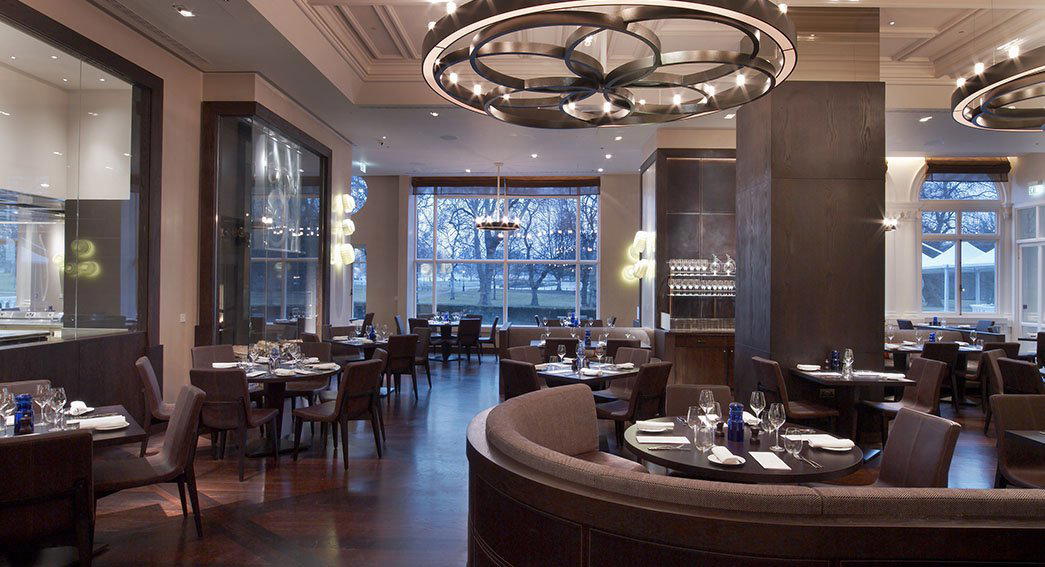
Restaurants in London
Browse all →
Bars in London
Browse all →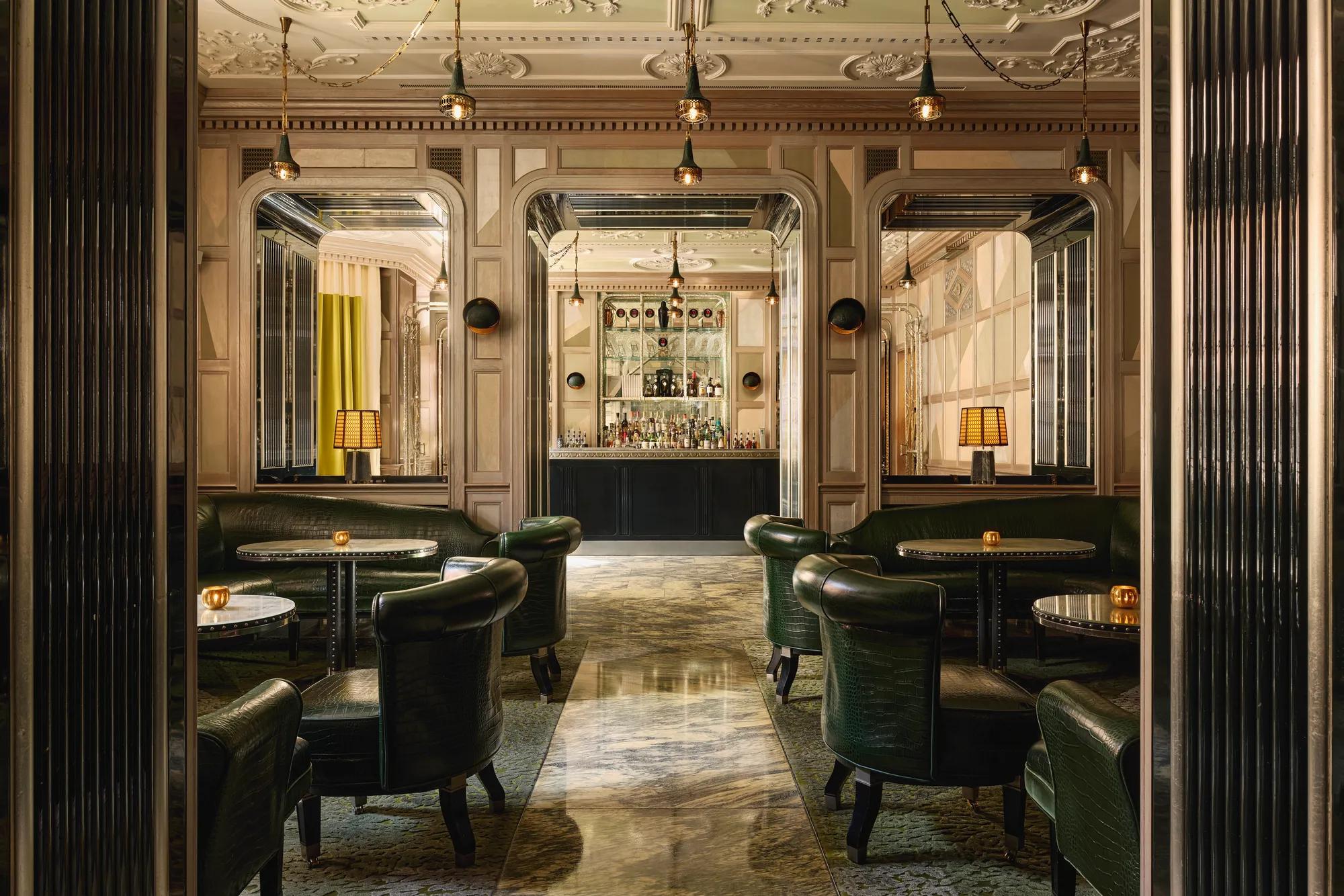
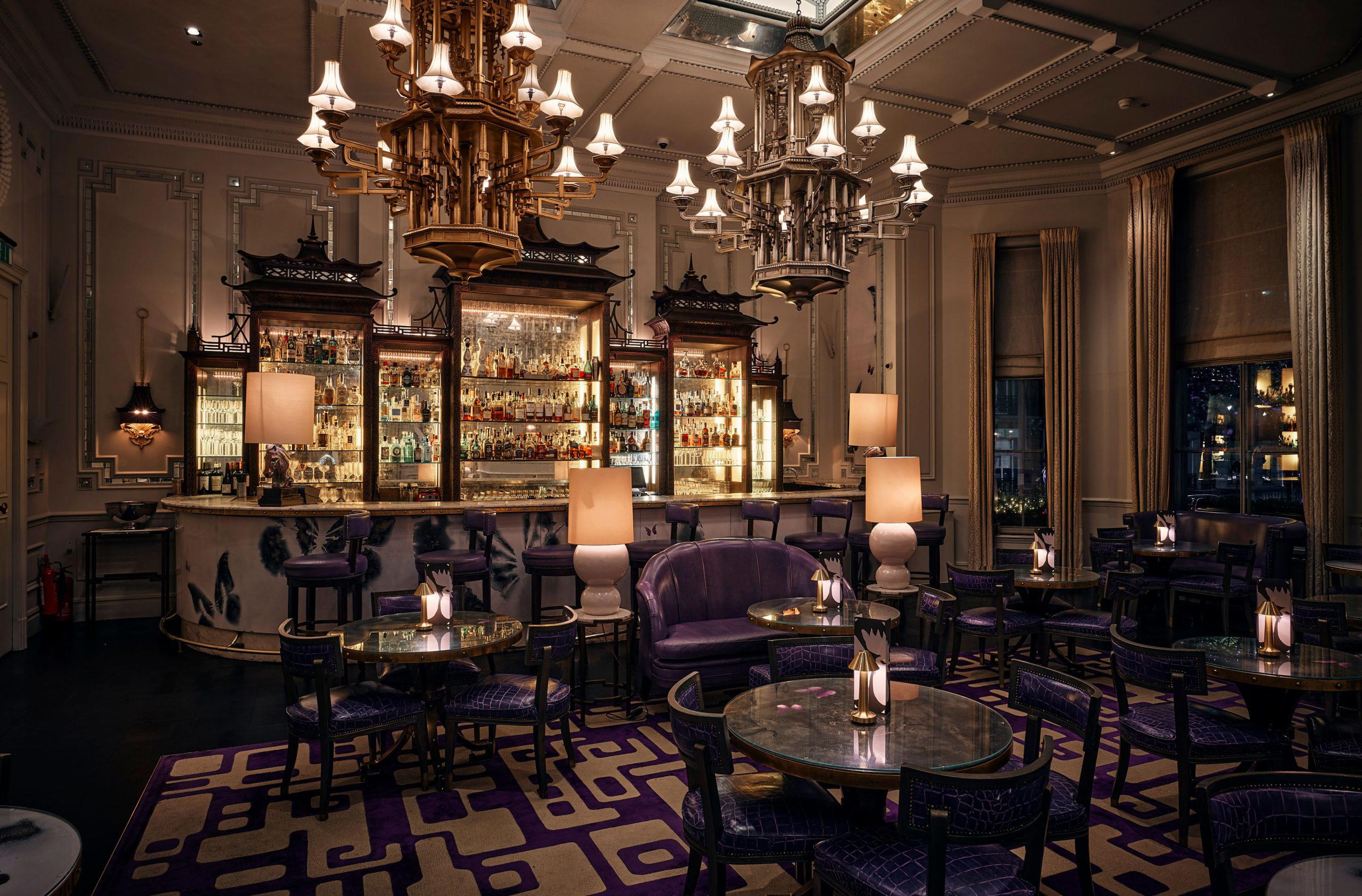
Hotels in London
Browse all →




Details
- Modern
- Trendy
- Sophisticated
- Elegant
- Date Night
- Special Occasion
- Business Dinner
- Open Kitchen
- Craft Cocktails
- Local Sourcing
- Tasting Menu
- Mezcal
- Margarita
- Vegetarian Friendly
Current opening hours
- Monday
- Closed
- Tuesday
- 5:30–9 PM
- Wednesday
- 12–4 PM, 5–9 PM
- Thursday
- 12–4 PM, 5:30–9 PM
- Friday
- 12–4 PM, 5:30–9 PM
- Saturday
- 12–4 PM, 5:30–9 PM
- Sunday
- Closed
Hours can change for holidays and private events. Last verified .
Polished interior design with earthy tones, open kitchen, chic and thoughtfully designed atmosphere.