Dishoom Shoreditch

Our verdict
Dishoom Shoreditch, at 7 Boundary Street in East London, brings the Irani café tradition of Bombay to a neighbourhood defined by its appetite for the unconventional. Where London's Michelin circuit runs toward tasting menus and white tablecloths, Dishoom operates in a different register: communal, loud, and built around dishes that reward repetition rather than occasion. It draws a crowd that returns weekly, not annually.

Pearl is the En Primeur Club membership app, where members save venues, book tables and use the concierge.

The menu
What to order
- House Black Daal
- Lamb Raan
- Chicken Ruby
- Bacon Naan Roll
The Room Before the Food
The Irani café was once a fixture of Bombay street life: a democratic space where merchants, clerks, and students shared laminate tables under ceiling fans, drinking chai and eating whatever came out of the kitchen without ceremony. By the late twentieth century, that format had declined sharply in Mumbai, squeezed out by fast food chains and rising rents. Dishoom's project, which began in Covent Garden in 2010 and extended to Shoreditch at 7 Boundary Street, E2, is in part an act of preservation, translating a specific hospitality culture into a London context before it disappears entirely from its city of origin. What makes the Shoreditch outpost interesting within that broader chain is where it sits: in a part of East London where the dining culture runs toward stripped-back naturalism and chef-led projects, not large-format all-day operations built around nostalgia and volume.
What the Regulars Already Know
London's most telling indicator of a dining room's pull is what the regulars order without looking at the menu. At Dishoom, this dynamic plays out across all sites, and Shoreditch is no exception. The black daal, slow-cooked for twenty-four hours on the menu description, has developed the kind of cult status that spreads not through press cycles but through word of mouth among people who return on their own time. The bacon naan roll, a breakfast fixture that draws queues before the doors open, sits in the same category: a dish that exists outside the language of occasion dining and operates purely on the logic of want. These are the anchors around which regulars build their visits, adding sides and small plates around a predetermined centre. That pattern, where the dish drives the booking rather than the booking driving the dish, places Dishoom in a different competitive category than the £££ tasting-menu circuit represented by venues like CORE by Clare Smyth, The Ledbury, or Sketch, The Lecture Room and Library. Dishoom competes for frequency, not occasion.
The Irani Café Format in a London Context
What the Irani café offered in Bombay was a specific kind of permission: to stay longer than the food required, to treat the room as a social rather than a culinary destination. That ethos transferred into the Dishoom format in ways that distinguish it from most Indian restaurants operating in London at any price point. The menus run all day. The rooms are designed to absorb noise rather than reflect it, which makes large groups workable rather than disruptive. The breakfast service, a format almost no Indian restaurant in London takes seriously, is treated with the same kitchen attention as dinner. For regulars, this means Dishoom functions as a venue that covers multiple occasions in a single week without repetition, which is an unusual operational position in a city where most restaurants collapse under that kind of frequency test. For broader context on London's dining scene and how different traditions sit within it, see our full London restaurants guide.
Shoreditch and Its Dining Character
Shoreditch, as a dining neighbourhood, has evolved through several identities since the early 2000s. It was briefly a destination for cheap-and-cheerful global food, then for self-consciously creative chef projects, and more recently for a mix of ambitious independents and branded casual dining that reflects the area's shift toward a broader residential and office population. The Boundary Street address sits at the edges of that geography, which gives Dishoom Shoreditch slightly more breathing room than the Covent Garden original, which operates under heavier tourist pressure. The regulars here skew toward local workers and residents who treat the room as part of their neighbourhood infrastructure rather than a destination visit. That distinction matters: neighbourhood regulars are harder to earn and more reliable to keep, and they shape the atmosphere of a room differently than occasion diners or tourists do. Compared to the formal register of London's destination dining, including Restaurant Gordon Ramsay and Dinner by Heston Blumenthal, Dishoom sits in a different tier by design, not by default. The UK's broader fine dining circuit also extends well beyond London, from Waterside Inn in Bray and Le Manoir aux Quat'Saisons in Oxford to L'Enclume in Cartmel, Moor Hall in Aughton, Gidleigh Park in Chagford, and Hand and Flowers in Marlow; Dishoom operates in a category where none of those reference points apply, which is precisely its point of difference.
The Unwritten Menu
Every restaurant that develops a loyal regular base eventually acquires an unwritten menu: the dishes that long-term customers know to order before they arrive, the timing tricks that reduce wait times, the table preferences that shape the experience. At Dishoom Shoreditch, these accumulated efficiencies represent a real transfer of value. The queuing system, which operates during peak periods when walk-ins exceed capacity, is well-documented, but experienced visitors know which services carry lower demand. The all-day format means the mid-afternoon window, after the lunch rush and before evening service ramps, tends to be more accessible than the hours either side of it. For those navigating beyond London, the same logic of finding specialist dining at a different register applies to venues like Opheem in Birmingham, which represents India-rooted fine dining at Michelin level, or Midsummer House in Cambridge for modern European work at a similar distance from London. Internationally, the conversation about how non-Western culinary traditions earn serious critical attention also plays out at venues like Atomix in New York City and Le Bernardin in New York City, though in formats that bear no structural resemblance to the Dishoom model. Closer to Dishoom's geography, Restaurant Andrew Fairlie in Auchterarder and hide and fox in Saltwood represent the kind of precision-focused independent operations that share nothing with Dishoom's format but everything with its commitment to building a specific loyal audience over time.
Planning Your Visit
Address: 7 Boundary Street, London E2 7JE. Reservations: Dishoom takes reservations for some sittings; walk-in queuing applies during peak periods, arriving before service opens or during mid-afternoon typically reduces wait times. Format: All-day dining from breakfast through dinner, suited to solo visits, pairs, and large groups equally. Price tier: Mid-range relative to London's broader dining market; accessible without the occasion-dining overhead of the tasting-menu circuit. Transport: Shoreditch High Street (Overground) is the nearest station; the Boundary Street address is walkable from Hoxton and Bethnal Green as well.
Frequently asked questions
What dish is Dishoom Shoreditch famous for?
Two dishes define the Dishoom reputation across its London sites. The black daal, simmered for an extended period before service, has become a reference point in London's conversation about Indian cooking done with kitchen discipline rather than shortcut. The bacon naan roll, served at breakfast, draws queues that begin before opening and has a following that treats it as a weekly ritual rather than an occasional treat. Both are dishes regulars order without consulting the menu, which is a useful measure of how deeply embedded they are in the regular experience.
Is Dishoom Shoreditch reservation-only?
Dishoom operates a mixed system: reservations are available for certain sittings, but walk-in queuing is part of the experience during busy periods, particularly weekend mornings and peak dinner hours. In a city where tasting-menu restaurants like CORE by Clare Smyth book weeks in advance and require formal reservation confirmation, Dishoom's partial walk-in model reflects a different hospitality philosophy. Checking availability directly through the Dishoom website before visiting is the practical first step; mid-afternoon visits on weekdays consistently carry lower demand than weekend services.
What's the signature at Dishoom Shoreditch?
The black daal functions as the dish most closely associated with the Dishoom identity across all sites, including Shoreditch. It represents the kitchen's commitment to process over convenience and has been the most replicated and referenced item from the menu in press and food writing. For visitors who want a single dish that anchors the experience, this is the consistent answer, though the breakfast menu, particularly the bacon naan roll, has its own distinct following among morning regulars.
How does Dishoom Shoreditch compare to other Indian restaurants in East London?
Dishoom occupies a distinct position in East London's Indian dining scene by combining an all-day Irani café format with a menu that draws from Bombay's street and café traditions rather than the North Indian or Bangladeshi cooking more common to the area's older restaurant stock. While Brick Lane's curry houses operate in a different register entirely, and newer chef-led Indian restaurants like Opheem in Birmingham represent the Michelin end of the spectrum, Dishoom sits between those poles: more kitchen-serious than casual takeaway, more democratic in format than a tasting-menu operation. The Shoreditch location draws a local regular base that the more tourist-heavy Covent Garden site does not replicate in the same way.
A Lean Comparison
Comparable venues nearby, for context on price, style, and recognition.
| Venue | Cuisine | Price | Notes |
|---|---|---|---|
| Dishoom ShoreditchThis venue (the venue you are viewing) | Bombay Comfort Food | $30–50 | Not listed |
| Biryani Centre | Authentic Indian Biryani House | $20–30 | New Malden, Authentic Indian Biryani House |
| African Queen | Indian Bar & Restaurant | $20–30 | Whitton, Indian Bar & Restaurant |
| Masala Zone Soho | Authentic Indian Street Food & Thalis | $20–30 | Soho, Authentic Indian Street Food & Thalis |
| Dishoom King's Cross | Bombay Comfort Food | $20–30 | King's Cross, Bombay Comfort Food |
| Chakra Little Venice | Modern North Indian | $20–30 | Little Venice, Modern North Indian |
Recognition history
Dated appearances from independent guides and award organizations, with the underlying list record or original source where available.
Opinionated About Dining Casual in Europe Recommended
Opinionated About Dining
Continue exploring
More in London
Restaurants in London
All restaurants in London →
Bars in London
All bars in London →



Details
- Lively
- Trendy
- Cozy
- Well Known
- Group Dining
- Brunch
- Casual Hangout
- Historic Building
- Craft Cocktails
- A La Carte
- Small Plates
- Vegetarian Friendly
- Vegan Options
- Gluten Free Options
Current opening hours
- Monday
- 8 AM–11 PM
- Tuesday
- 8 AM–11 PM
- Wednesday
- 8 AM–11 PM
- Thursday
- 8 AM–12 AM
- Friday
- 8 AM–12 AM
- Saturday
- 9 AM–12 AM
- Sunday
- 9 AM–11 PM
Hours can change for holidays and private events. Hours as of .
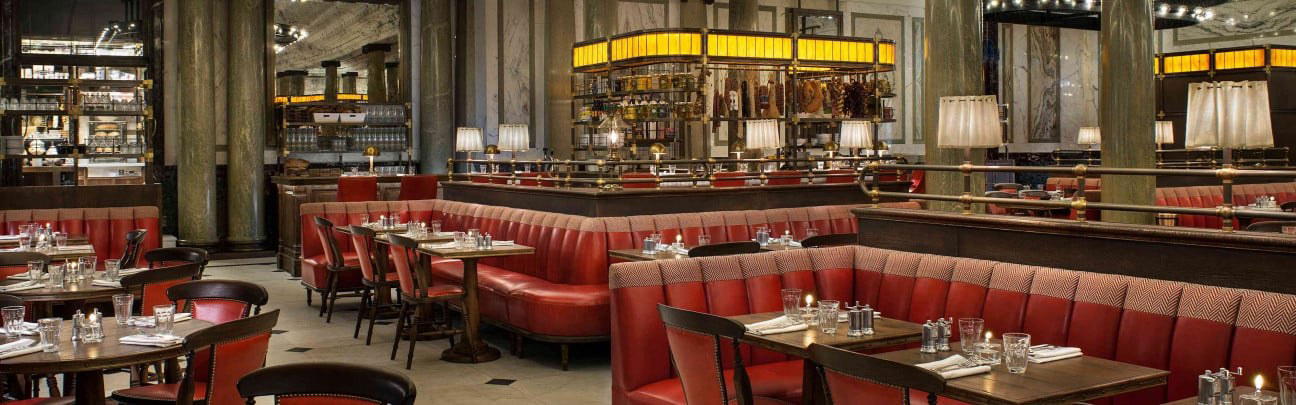
Warm, nostalgic Irani café atmosphere with buzzy, lively yet cozy energy, faded pictures on walls, and casual dining vibe.