The Lunch Lady (Nguyen Thi Thanh)
Few addresses in Ho Chi Minh City illustrate the gap between street-level eating and fine-dining ambition as clearly as The Lunch Lady (Nguyen Thi Thanh) on Nguyen Dinh Chieu. Situated in the Da Kao quarter of District 1, this open-air operation has drawn international attention precisely because it operates outside the conventions that define the city's restaurant tier. It is a reference point for how Saigon's street food culture earns its reputation on its own terms.
Pearl is the En Primeur Club membership app — saves, bookings, and concierge access live there. Same editors, same standards.
- Address
- Lô C1 Chung Cư 1A1B, Nguyễn Đình Chiểu, Đa Kao, Quận 1, Thành phố Hồ Chí Minh, Vietnam
- Phone
- +84 933 887 922
- Directions
- Get directions
 Saves & bookings on Pearl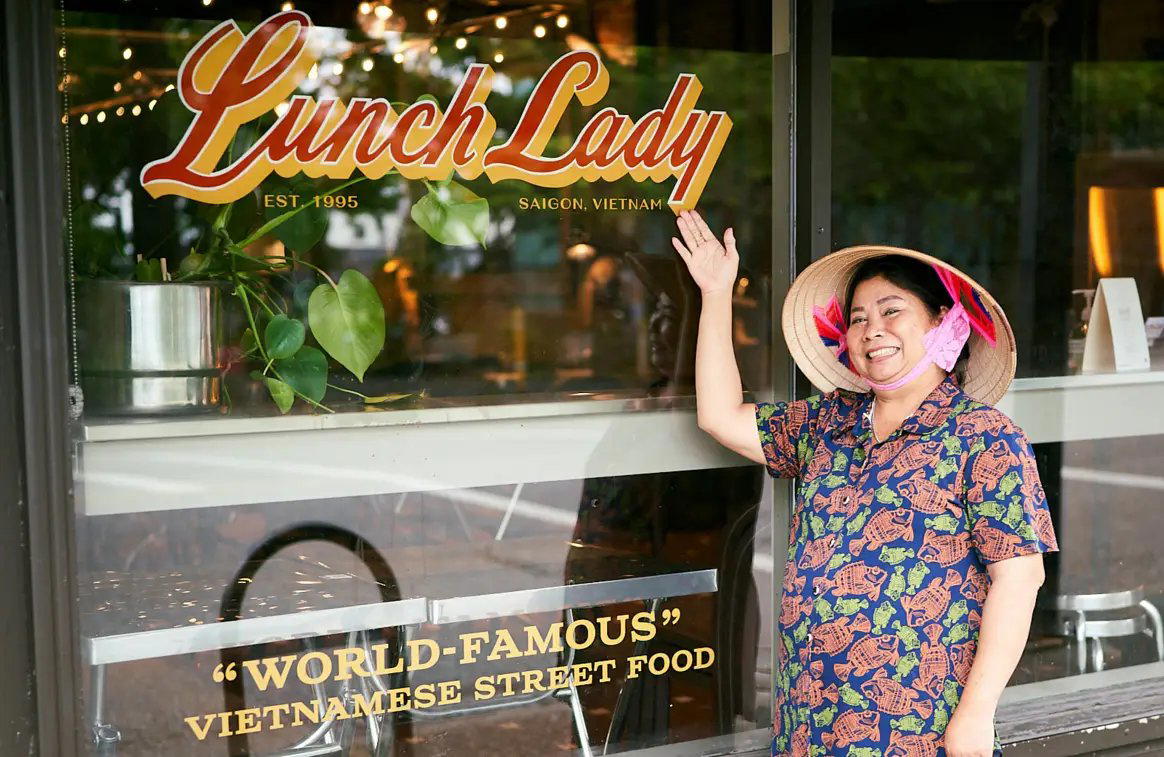
Da Kao and the Grammar of District 1 Street Eating
Approach Nguyen Dinh Chieu on a weekday morning and the street reads the way older District 1 always has: motorbikes stacked at the kerb, plastic stools pulled onto concrete, steam rising from pots that have been on since before dawn. The Da Kao neighbourhood sits at the northern edge of District 1, a few blocks from the Thi Nghe Channel and well away from the tourist-facing restaurant strips of Bui Vien or Dong Khoi. That geography matters. Da Kao retains a residential grain that the more commercially developed parts of the district have largely lost, and it is in that residential grain that street food operations like The Lunch Lady (Nguyen Thi Thanh) work well. They are not performing for a passing crowd; they are feeding a neighbourhood, and the crowd follows.
Street food in Ho Chi Minh City does not operate on a single register. At one end of the spectrum you have the single-dish stalls that have occupied the same stretch of pavement for decades, their credibility built entirely on repetition and constancy. At the other end, operators like Anan Saigon have taken Vietnamese street food vocabulary into a more constructed, menu-driven format that speaks to both local and international dining audiences. The Lunch Lady sits closer to the first register than the second, and that positioning is exactly what gave it international recognition. In a city where ambitious restaurants such as Akuna and CieL are pushing Vietnamese ingredients through an international fine-dining lens, the straight-line authority of a neighbourhood noodle operation carries its own distinct weight.
The Rotating Noodle Format
The defining structural feature of this operation is its rotating daily menu. Rather than offering the same bowl every day, the kitchen cycles through different noodle soups across the week, a format that is more common in Vietnamese home cooking than in commercial street food, where most stalls build an identity around a single preparation. The weekly rotation means that what you eat on a Tuesday differs substantially from what you eat on a Friday, and regulars who know the schedule plan their visits accordingly. For first-time visitors, arriving without knowing the day's offering is part of the experience rather than a planning failure.
This format places considerable demand on the kitchen's range. Each soup style, whether bun bo Hue, bun rieu, or any of the other regional preparations that appear in the rotation, has its own broth logic, its own balance of fermented, aromatic, and acidic elements, and its own garnish conventions. Executing several of these at the standard expected by a returning local clientele is a different proposition from perfecting one broth over years. The fact that the operation has sustained its reputation across that range is the more interesting editorial point, and it connects to a broader truth about Vietnamese cooking: regional noodle soups are among the more technically demanding preparations in the country's culinary tradition, and street-level execution of them at volume requires a discipline that formal restaurant kitchens often underestimate.
International Recognition and What It Changes
The Lunch Lady achieved international visibility through television coverage that brought a global audience to a side street in Da Kao. That visibility created a bifurcated customer base: neighbourhood regulars who have been eating here for years alongside tourists arriving with a specific destination in mind. This dynamic is not unusual in Ho Chi Minh City's street food scene, but it does create a different kind of pressure than what most comparable stalls face.
In this case, the operation's address remains on Nguyen Dinh Chieu rather than in a more commercially accessible location, which suggests that the core format has not been restructured for a tourist-optimised experience. Compare that trajectory to what happens when street food concepts get formalised into restaurant environments: something is inevitably lost in the translation from pavement stool to dining chair, even when the technical execution remains strong. The Lunch Lady's continued presence in its original neighbourhood context is itself an editorial signal about what kind of operation it is.
For visitors oriented toward the higher end of Ho Chi Minh City's dining spectrum, including the innovative tasting menus at Coco Dining or the Cantonese precision of Long Trieu, a meal here functions as a recalibration. Vietnamese cooking's depth does not map cleanly onto price tiers, and a broth that has been developing since early morning at a street stall can teach as much about the cuisine as a composed dish served in a climate-controlled dining room. The same principle holds across Vietnam: Gia in Hanoi and La Maison 1888 in Da Nang represent the formal end of Vietnamese culinary ambition, while street-level operations like this one represent the foundation those ambitions draw from.
Planning Your Visit
The operation runs from 10:30 AM to 3:30 PM Monday through Friday, with service ending earlier on busy days if the pots are spent. Arriving in the first hour of service is generally advisable, both for the condition of the broth and to avoid the longer queues that build as the morning progresses. The address places it on Nguyen Dinh Chieu in the Da Kao area of District 1, reachable by grab motorbike from most central hotels in under ten minutes. No booking mechanism is available; this is walk-in street food. Spending expectations are modest by any measure: street food pricing in this tier of Ho Chi Minh City sits well below even one casual sit-down restaurant, which makes the value-to-craft ratio one of the more compelling arguments for including it in a broader itinerary that might also span Saffron in Hue or Cargo Club in Hoi An.
Beyond the city, Vietnam's regional dining is represented by addresses such as Mi Quang Ba Vi in Thanh Khe, Bau Troi Do in Son Tra, Le Pont Club in Hai Phong, Phuong Nhung in Cat Hai, Duyen Anh in Phu Vang, and Madame Lan in Hai Chau, each of which illuminates a different node of Vietnamese cooking outside the southern capital. The craft-to-format ratio is the measure, whether the table is at a pavement stall in Saigon or at Le Bernardin in New York or Lazy Bear in San Francisco.
- rotating daily noodle soup
- bun Thai
- mi quang
- hu tieu
- bun thit nuong
- seafood soup
A Lean Comparison
Comparable venues nearby, for context on price, style, and recognition.
| Venue | Price | Notes |
|---|---|---|
| The Lunch Lady (Nguyen Thi Thanh)This venue — the venue you are viewing | $ | Not listed |
| Phở Hoàng | $ | Quan 10, Traditional Vietnamese Pho |
| Ốc Đào | $ | Quan 1, Vietnamese Shellfish and Snail Specialist |
| Quán Ốc Chi Mập | $ | Quan 3, Vietnamese Snail & Shellfish |
| Lunch Lady | $ | Quan 1, Vietnamese Street Noodle Soups |
| Bếp Người Hội An | $ | Quan 3, Central Vietnamese (Hội An-style) |
Continue exploring
More in Ho Chi Minh City
Restaurants in Ho Chi Minh City
Browse all →
Bars in Ho Chi Minh City
Browse all →
At a Glance
- Well Known
- Rustic
- Casual Hangout
- Solo
- Courtyard
- Open Kitchen
- Street Scene
Current opening hours
- Monday
- 10:30 AM–3:30 PM
- Tuesday
- 10:30 AM–3:30 PM
- Wednesday
- 10:30 AM–3:30 PM
- Thursday
- 10:30 AM–3:30 PM
- Friday
- 10:30 AM–3:30 PM
- Saturday
- Closed
- Sunday
- Closed
Hours can change for holidays and private events. Last verified .