Lunch Lady

Our verdict
Lunch Lady sits on Nguyễn Đình Chiểu in Ho Chi Minh City's Đa Kao district, drawing visitors and locals alike to a format rooted in traditional Vietnamese street cooking. The address has accumulated significant word-of-mouth attention over the years, positioning it within a small tier of street-level spots that have crossed into international awareness without changing their essential character.

Pearl is the En Primeur Club membership app, where members save venues, book tables and use the concierge.
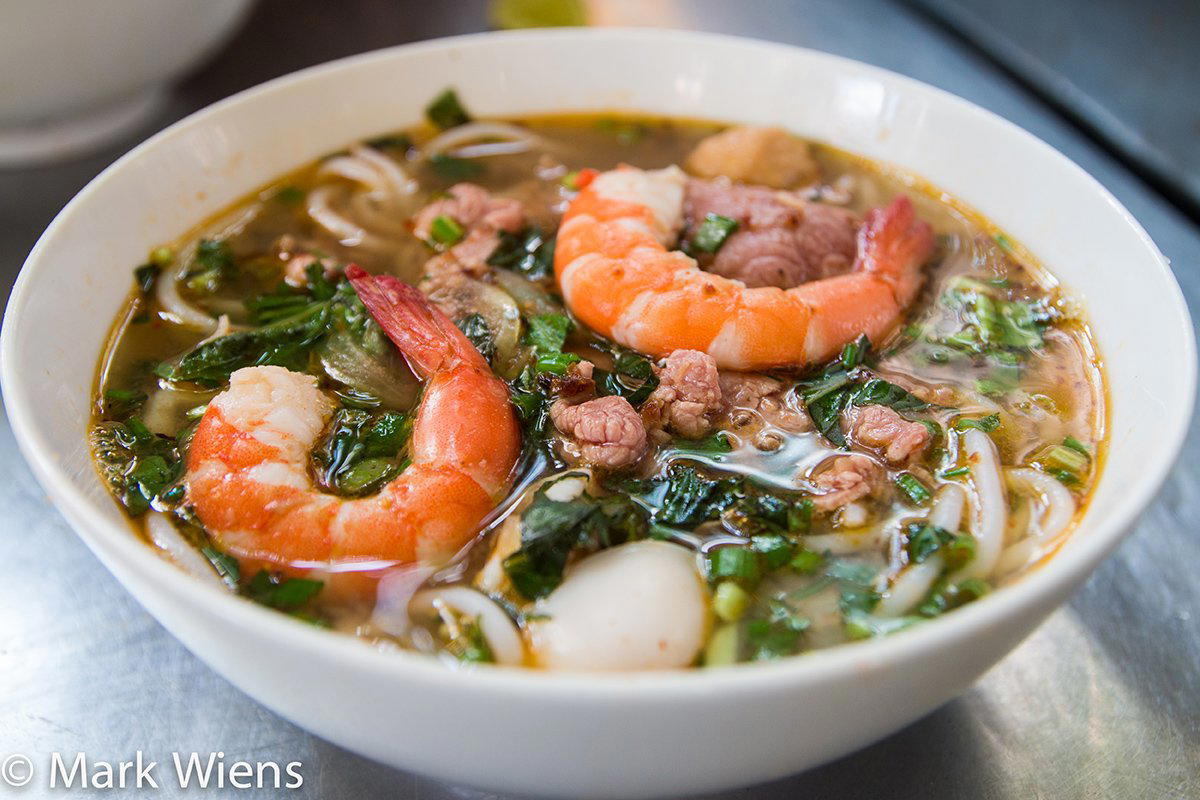
The menu
What to order
- Bun Thai
- Bun mam
- Bun bo Hue
A Street Counter That Outlasted Its Own Fame
Ho Chi Minh City's street food scene operates on a logic that formal restaurants rarely match: the leading spots tend to be hyper-specific, cooking one or two dishes with discipline accumulated over decades. The city's Đa Kao district, just east of the central Ben Thanh axis, concentrates a particular density of these operations, where residential blocks and old-quarter architecture frame vendors who have been feeding the same streets for generations. Lunch Lady, located on Nguyễn Đình Chiểu, belongs to this tradition. It has been through a recognizable arc for places of its kind: local institution, viral moment, international pilgrimage stop, and then the harder question of what comes after sustained outside attention.
The Evolution From Neighbourhood Fixture to Recognised Address
Street food venues in Vietnam follow one of two trajectories after foreign media attention arrives. Many shift toward a tourist-facing format, adjusting portion sizes, introducing English menus, and softening flavours for a broader palate. A smaller number hold the original format and absorb the attention on their own terms. Lunch Lady has become a reference point for the latter category. Its reputation was substantially amplified by international television coverage in the early 2010s, placing it in an unusual position: a street-level operation functioning with the recognition weight of a formal restaurant, without adopting that restaurant's infrastructure.
That dynamic has shaped how the address functions today. The physical context remains tied to its residential surroundings in Đa Kao, a ward that retains more of the city's pre-renovation street character than the heavily developed District 1 core. Visitors arriving from the more polished end of the Ho Chi Minh City dining scene, where venues like CieL and Akuna represent a different register of the city's culinary ambition, encounter a deliberately unmediated version of southern Vietnamese cooking at street level.
What the Format Signals
The rotating daily menu structure associated with Lunch Lady places it within a cooking tradition where the calendar, not a fixed card, organises the meal. This approach is common in Vietnamese home cooking and older street operations, where a cook's repertoire rotates across the week and regulars track what day brings which dish. The format demands consistent sourcing and a willingness to be accountable to daily preparation rather than a static menu that can be adjusted for consistency across seasons. For a visitor, it also means the experience is contingent on timing, a point that separates it from the kind of destination dining represented elsewhere in the city.
This stands in contrast to the street food model pursued by venues like Anan Saigon, which has formalised Vietnamese street food references into a ₫₫ restaurant setting with a fixed menu and reservation infrastructure. Lunch Lady operates without that mediation. The trade-off is legibility for newcomers versus authenticity of format. It is the kind of distinction that matters to visitors who are choosing between the interpreted and the direct.
Position Within the City's Dining Tier
Ho Chi Minh City's restaurant scene has expanded significantly at both ends of the price range in the past decade. At the higher end, venues like Coco Dining at ₫₫₫ and Long Trieu at ₫₫₫₫ reflect growing appetite for premium dining formats among both local and regional clientele. At the other end, single-dish specialists and market stalls anchor a street food infrastructure that feeds the majority of the city's population daily. Lunch Lady occupies a position that spans these tiers in perception if not in price: the operational model is street-level, but the audience it draws includes visitors who have come specifically for this address, making it something closer to a destination within a grassroots format.
Vietnam's broader dining geography offers useful comparison. In Hanoi, venues like Gia represent the northern capital's own version of refined Vietnamese cooking, while traditional street counters function parallel to that formal tier. The same structural split appears in coastal cities: White Rose in Hoi An and La Maison 1888 in Da Nang illustrate how different cities position their food traditions for different audiences. Lunch Lady sits at the intersection of grassroots format and destination reputation, a combination that is difficult to sustain across years of attention.
Planning a Visit
Reaching Lunch Lady requires navigating Đa Kao, which is accessible from District 1 by a short ride north along the eastern edge of the city centre. The address on Nguyễn Đình Chiểu places it within a chung cư complex, a residential building cluster common to this part of the city. Practical logistics matter here more than at a formal restaurant: the format does not support advance reservations in the conventional sense, and the operational window follows lunch service timing rather than an all-day schedule. Visitors coming from outside the immediate area should plan to arrive at the opening of service, particularly if travelling specifically for this address. Queuing is part of the experience at busy periods, as it is at most high-footfall street food addresses across the city. For context on the wider dining options available across Ho Chi Minh City's districts, EP Club's full Ho Chi Minh City restaurants guide maps the range from street counters through to the city's formal dining tier.
What This Address Represents
In cities where street food traditions face pressure from development, gentrification, and the appetite of international food tourism, a venue that has absorbed sustained outside attention without abandoning its original format is worth attention precisely because the format is rare. Lunch Lady is not positioned against venues like Le Bernardin or Atomix in terms of formality or investment. It sits in a different conversation entirely: the question of whether a street food address in southern Vietnam can carry the weight of international recognition while remaining operationally unchanged. The evidence from Đa Kao suggests it has managed that tension longer than most.
Frequently asked questions
Where exactly is Lunch Lady?
Lunch Lady is located at Lô C1 Chung Cư 1A1B, Nguyễn Đình Chiểu, Đa Kao, Sài Gòn, Hồ Chí Minh, Vietnam, Ho Chi Minh City.
Why does Lunch Lady serve a different dish on each day of the week?
The rotating structure follows a Vietnamese street food tradition in which vendors specialise by day rather than by a fixed card, allowing the cook to source and prepare each dish at its most practical scale. In Ho Chi Minh City's Đa Kao district, this calendar-driven format predates food tourism by decades, it was a neighbourhood logic, not a marketing decision. The weekly cycle means repeat visitors over several days eat a different bowl each time, and regulars learn to plan their visits around the specific dish they want.
What do people recommend at Lunch Lady?
The appeal at this Đa Kao address is that the menu changes daily, so the question shifts depending on which day you arrive. Regulars follow the weekly rotation rather than chasing a single dish. On any given visit, one soup or noodle preparation is what the kitchen is cooking, and that is what you order.
Can I walk in to Lunch Lady?
Walk-ins are the standard format at this street counter in Ho Chi Minh City's Đa Kao neighbourhood. There is no reservation system associated with this kind of street stall operation. Arriving early in the lunch window is advisable, as service typically runs until the day's batch sells out.
What has Lunch Lady built its reputation on?
The counter's reputation rests on a single structural commitment: one dish per day, determined by a rotating weekly schedule, cooked by the same vendor who has run this spot in Đa Kao for decades. That hyper-specific format, uncommon even by Vietnamese street food standards, is what drew international food media attention and sustained it long after the initial coverage.
Can Lunch Lady adjust for dietary needs?
The format here is not built around substitution. The kitchen prepares one preparation each day, and the ingredients are set by that day's recipe. Visitors with strict dietary requirements should check what the day's dish involves before arriving, as modification options at a street counter of this kind are typically limited.
A Credentials Check
Comparable venues nearby, for context on price, style, and recognition.
| Venue | Cuisine | Price | Awards | Notes |
|---|---|---|---|---|
| Lunch LadyThis venue (the venue you are viewing) | Vietnamese Street Noodle Soups | $1–10 | Not listed | Not listed |
| Be Che Inside Ben Thanh Market | Vietnamese sweet soups (chè) | $1–10 | Not listed | District 1 |
| Phở Việt Nam | Traditional Vietnamese Phở | Not listed | Not listed | Quan 1 |
| Cô Liêng | Southern Vietnamese Street Food | $1–10 | Michelin Plate | Quan 3 |
| Nhà hàng chay Zen House | Vietnamese Vegetarian | $1–10 | Not listed | Tan Binh |
| The Lunch Lady (Nguyen Thi Thanh) | Vietnamese Street Noodle Soups | $1–10 | Not listed | Quan 1 |
Recognition history
Dated appearances from independent guides and award organizations, with the underlying list record or original source where available.
Opinionated About Dining Casual in Asia Highly Recommended
Opinionated About Dining
Continue exploring
More in Ho Chi Minh City
Restaurants in Ho Chi Minh City
All restaurants in Ho Chi Minh City →
Bars in Ho Chi Minh City
All bars in Ho Chi Minh City →
Details
- Lively
- Well Known
- Casual Hangout
- Standalone
- Local Sourcing
- Street Scene
- A La Carte
Current opening hours
- Monday
- 10:30 AM–3:30 PM
- Tuesday
- 10:30 AM–3:30 PM
- Wednesday
- 10:30 AM–3:30 PM
- Thursday
- 10:30 AM–3:30 PM
- Friday
- 10:30 AM–3:30 PM
- Saturday
- Closed
- Sunday
- Closed
Hours can change for holidays and private events. Hours as of .
Casual lively street-side atmosphere with sidewalk seating in a residential area.