The Lacy Nook

Our verdict
The Lacy Nook occupies a studio space in Walthamstow's Wood Street corridor, a corner of east London that has drawn independent creative venues as the area's character has shifted. With minimal public-facing detail and a format that rewards those who seek it out, it sits in the low-profile tier of the city's dining scene, where word-of-mouth and local knowledge do the work that press releases don't.

Pearl is the En Primeur Club membership app, where members save venues, book tables and use the concierge.
The menu
What to order
- Beef Cevapi
- Fire-baked feta with confit tomatoes
- Raspberry baklava
- Charred cauliflower with kidney bean hummus
Walthamstow and the Quiet End of London's Restaurant Map
London's serious dining has long been concentrated in a familiar band: Mayfair, Notting Hill, the City fringe, and a handful of destination postcodes that attract the Michelin circuit. CORE by Clare Smyth and Restaurant Gordon Ramsay anchor the west; Sketch's Lecture Room and Library and The Ledbury hold the north-west premium tier. That geography is not accidental. It reflects where money, press attention, and hotel dining traffic have pooled for decades. What it leaves out is a growing set of venues operating in neighbourhoods that the traditional fine-dining map has not yet absorbed, places where rents are lower, the clientele is local-first, and the format is shaped by different constraints and ambitions.
Walthamstow is one of those areas. The E17 postcode has changed substantially over the past fifteen years, with Wood Street in particular becoming a corridor for independent creative businesses occupying studio and workshop spaces that pre-date the neighbourhood's current reputation. The Lacy Nook, addressed at Wood Street Studios on Barrett Road, sits inside that pattern. Its physical home is a working creative complex, not a converted warehouse dressed to look like one, and that distinction matters for how the venue reads against the central London dining scene.
The Format and What It Signals
Venues operating out of studio spaces in east London occupy a specific niche in the city's hospitality structure. They tend to run on limited capacity, abbreviated public information, and formats that require a degree of commitment from the guest: advance inquiry, flexible scheduling, or a willingness to arrive somewhere without the reassurance of a glossy website and an OpenTable page. This is not the supper-club model of the early 2010s, which often leaned on novelty and informality as substitutes for culinary depth. The current iteration, of which The Lacy Nook appears to be an example, is more likely to treat the low-profile format as a practical condition rather than a marketing stance.
The absence of publicly listed details, including cuisine type, chef name, price range, and booking method, places The Lacy Nook in a category where the format itself communicates something. Across London and in comparable cities, venues with this profile tend to operate either as private dining rooms, rotating pop-up residencies, or fixed-seat intimate formats where the host controls the pace and composition of the evening. The tasting-progression model, in which a sequence of courses builds from lighter, more acidic early dishes toward richer, more complex ones, is common in this tier precisely because it allows a small kitchen to operate with precision rather than à la carte flexibility.
For context, Dinner by Heston Blumenthal demonstrates how a tightly controlled format can sustain serious culinary ambition at scale. At the other end of the spectrum, venues like The Lacy Nook operate where the investment per head goes into the food and the host relationship rather than the fit-out or the front-of-house team. Neither model is inherently superior; they address different dining expectations.
Sequencing and the Architecture of a Meal
The tasting-progression format has become the dominant structure for serious cooking at the intimate end of London dining, and for good reason. A multi-course sequence allows a kitchen to make editorial decisions about flavour arc, pacing, and contrast that à la carte service cannot. The earliest courses in a well-constructed progression typically do orientating work: they establish the chef's reference points, the produce sourcing philosophy, and the tonal register of the evening. A sharp, clean dish early, whether built around ferment, citrus, or raw technique, resets the palate and signals what kind of attention the kitchen is asking for.
Mid-sequence courses carry the structural weight: this is where protein treatment, sauce work, and textural complexity tend to be concentrated. In the British context, where a generation of chefs trained through kitchens aligned with Waterside Inn, Le Manoir aux Quat'Saisons, and L'Enclume, the middle of a tasting menu often reflects a tension between classical French structure and the more ingredient-led approach that has defined the past decade of British cooking. How that tension is resolved, or whether it is, tells you a great deal about where a kitchen situates itself.
The closing sequences, pre-dessert, dessert, and petits fours in a formal setting, function as punctuation. In venues operating without the overhead of a full pastry team, these courses are often where compromises show. In smaller, studio-based formats, the dessert question is handled with less ceremony and more focus: fewer courses, tighter execution, no obligation to match the architecture of the savoury section.
What the format and location do suggest is that any multi-course offering here is likely shaped by the practical logic of a small kitchen: a focused number of courses, produce choices driven by what is available at the east London scale, and a pace set by the host rather than a full dining-room service team.
Placing The Lacy Nook in a Wider Map
Within the UK, the venues that have built serious reputations outside the obvious metropolitan postcodes share a common characteristic: they made the location part of the proposition rather than an obstacle to overcome. Moor Hall in Aughton, Gidleigh Park in Chagford, and hide and fox in Saltwood each require a degree of travel that filters the guest profile and raises the stakes of the visit. Within London itself, the equivalent filtering mechanism is neighbourhood unfamiliarity: a venue in E17 requires more deliberate intent to visit than one in W1.
That deliberate intent tends to self-select a particular kind of guest, someone who has heard about the place through personal recommendation rather than a press list, who is comfortable with limited publicly available information, and who is arriving with the expectation of a different kind of hospitality from what the central London circuit provides. Whether The Lacy Nook delivers at the level that intention demands is a question the public record does not yet answer clearly. What is clear is that it operates in a space where the conditions for that kind of dining exist.
For readers building a broader picture of serious British cooking, the comparison points are instructive. Midsummer House in Cambridge, Opheem in Birmingham, and Restaurant Andrew Fairlie in Auchterarder all demonstrate that the most considered cooking in the UK is not exclusively a London story. Internationally, the format finds analogues in New York's small-seat tasting venues: Atomix and Le Bernardin represent opposite ends of that city's intimate dining spectrum, and the gap between them says something useful about how much format variation the tasting-progression model can accommodate. Hand and Flowers in Marlow offers a further point of contrast: serious cooking in an informal setting, proof that the pub format and Michelin recognition are not mutually exclusive.
Planning a Visit
The Lacy Nook is located at Wood Street Studios, Barrett Road, London E17 3FU. Wood Street Overground station on the Suffragette Line places the address within walking distance, and the journey from central London runs approximately thirty minutes from Liverpool Street. Given the studio complex setting and the absence of a public-facing booking page, direct contact through the venue's own channels is the appropriate first step, and availability is likely limited by the small-scale format rather than high volume. Visiting in autumn and winter, when east London's studio-based venues tend to operate their most focused programmes, aligns timing with the conditions under which this kind of format performs at its most considered. For readers who want to set The Lacy Nook alongside the central London circuit before or after a visit, our full London restaurants guide maps the broader scene by neighbourhood, format, and price tier.
Frequently asked questions
What should I order at The Lacy Nook?
Venues operating in the studio-format tier in east London typically offer a set or limited-choice progression rather than an à la carte list, which means the ordering decision is largely made for you. If the format follows the tasting-progression model common in this category, the early courses will give you the clearest signal of the kitchen's reference points and produce sourcing. For comparison, the structured approach to sequencing seen at recognised London addresses like CORE by Clare Smyth and the historic formality of Sketch's Lecture Room and Library illustrate the range the tasting format accommodates at the awarded end of the city's spectrum.
Should I book The Lacy Nook in advance?
Given the studio-complex setting and the absence of a large-scale booking infrastructure, advance contact is advisable. Venues in this format tier in London, particularly those without a public-facing reservation system, often operate on limited seatings that fill through personal networks before any wider availability is posted. The E17 location also means that arriving without a confirmed booking and hoping for a walk-in would be a poor use of a cross-city journey. If you are planning a London visit that includes higher-profile addresses like The Ledbury or Dinner by Heston Blumenthal, those require significant lead time; The Lacy Nook's booking conditions are less publicly defined but no less worth resolving early.
Is The Lacy Nook suitable for a special occasion dinner in east London?
East London has relatively few venues that operate in the intimate, considered-format tier, which makes The Lacy Nook's Wood Street Studios address an unusual option for occasion dining in that part of the city. The studio setting and low public profile suggest a format that rewards guests who prefer an atmosphere shaped by focused cooking and a small host team over the production-level service of central London's awarded rooms. For occasion dining across the wider British scene, the contrast points are addresses like L'Enclume in Cartmel, which has built a destination reputation around a remote location and a tightly controlled format, demonstrating that occasion-dining weight does not require a central postcode.
Comparable Spots
Comparable venues nearby, for context on price, style, and recognition.
| Venue | Cuisine | Price | Notes |
|---|---|---|---|
| The Lacy NookThis venue (the venue you are viewing) | Balkan-Mediterranean Fusion | $30–50 | Not listed |
| Arcade Food Hall | Global Street Food & International Cuisines | $30–50 | Holborn |
| Inamo | Interactive Pan-Asian Fusion | $30–50 | Soho |
| MBER | Pan-Asian Tapas and Cocktails | $50–100 | Monument |
| Corner Room | European | Not listed | Globe Town |
| Sanjugo Shoreditch | Japanese Izakaya | $20–30 | Shoreditch |
Recognition history
Dated appearances from independent guides and award organizations, with the underlying list record or original source where available.
The Good Food Guide Good Food Guide Best Local Restaurant
The Good Food Guide
Continue exploring
More in London
Restaurants in London
All restaurants in London →
Bars in London
All bars in London →




Details
- Cozy
- Bohemian
- Intimate
- Casual Hangout
- Group Dining
- Brunch
- Garden
- Open Kitchen
- Standalone
- Craft Cocktails
- Beer Program
- Local Sourcing
- Farm To Table
- Garden
- Small Plates
- Family Style
- Macedonian Wine
- Craft Beer
- Cocktails
- Vegetarian Friendly
- Vegan Options
Current opening hours
- Monday
- Closed
- Tuesday
- Closed
- Wednesday
- Closed
- Thursday
- 6–11 PM
- Friday
- 6–11 PM
- Saturday
- 11 AM–4 PM, 6–11 PM
- Sunday
- 12–5 PM
Hours can change for holidays and private events. Last verified .
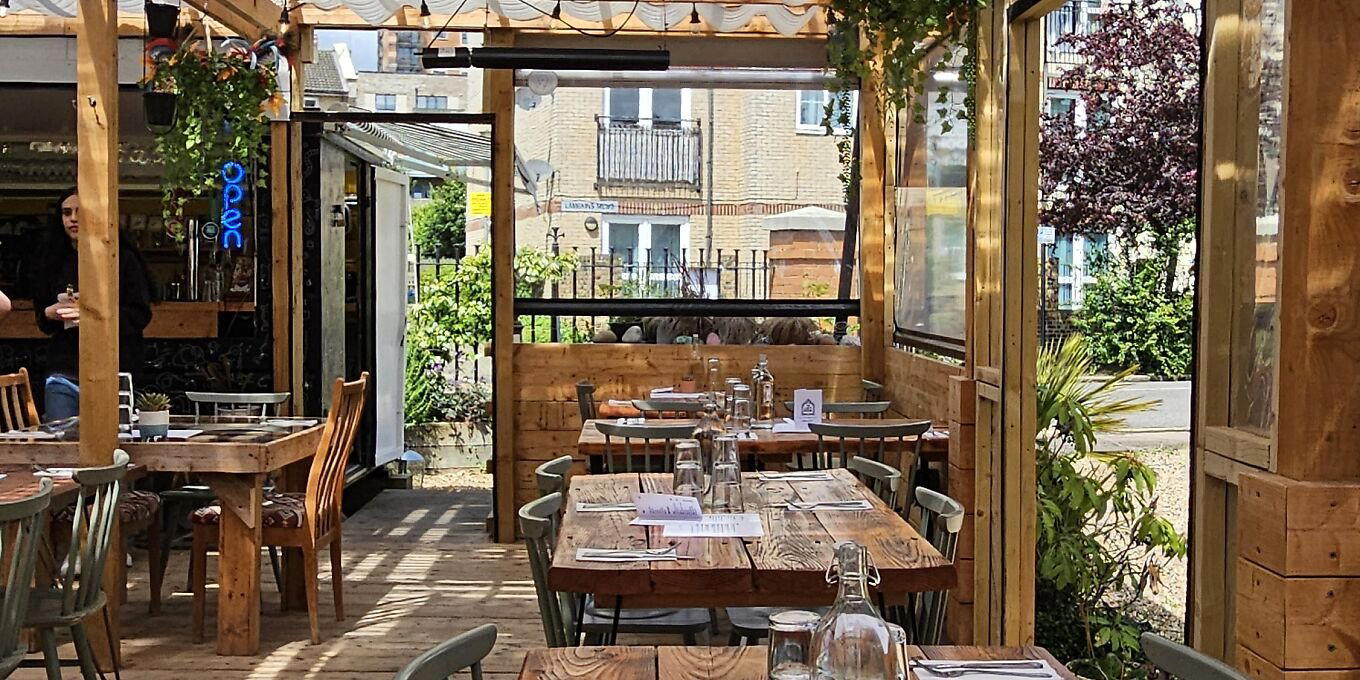
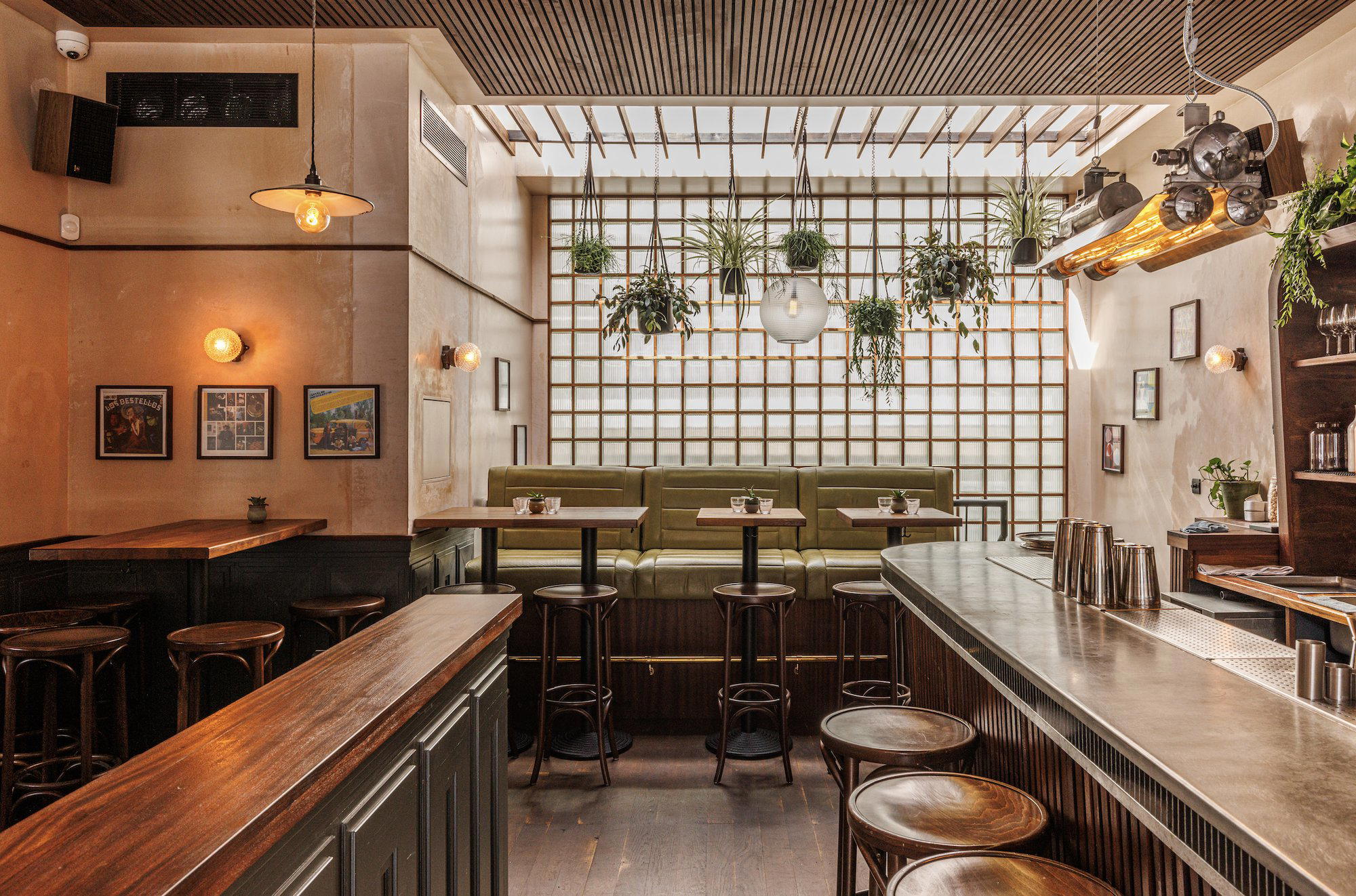
Cosy and ambient with plants hanging from wooden beams, natural light from large windows, intimate tables around an open kitchen, and a dramatic decked garden filled with plants and herbs.