
Tabelog 100 #11
Our verdict
The Fujiya occupies a position in Hakone that few properties can claim: a century-old address in Miyanoshita that helped establish the region's identity as a resort destination for both domestic travellers and international guests. Situated along the old Tokaido route corridor, it sits inside the broader tradition of Japanese hot-spring hospitality while drawing comparisons to ryokan-adjacent Western-style hotels that defined the Meiji-era tourism circuit.

Pearl is the En Primeur Club membership app, where members save venues, book tables and use the concierge.
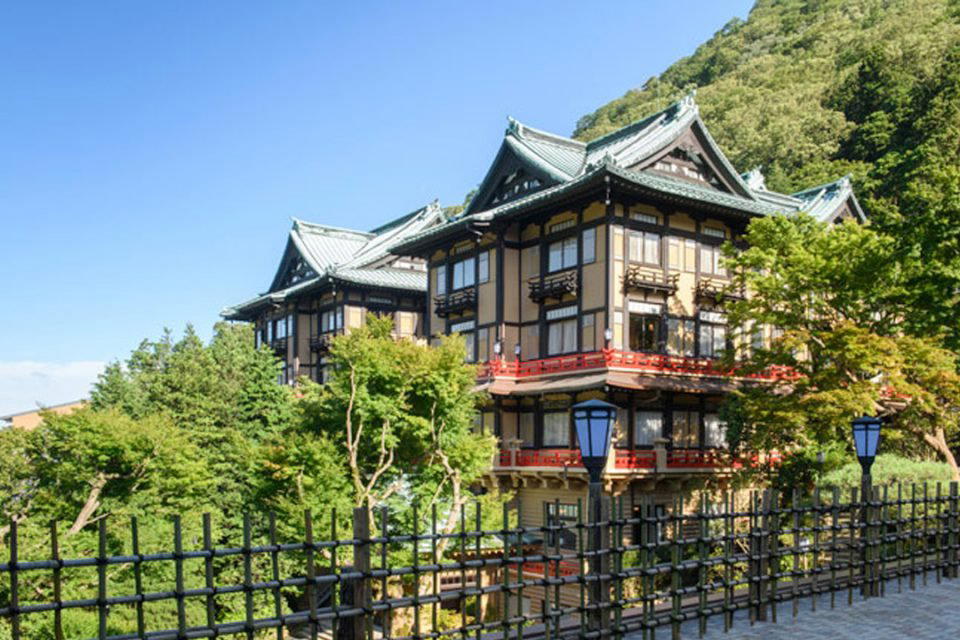
Miyanoshita and the Architecture of Escape
Hakone's appeal has always been structural. The mountain terrain, the hot-spring geology, and the sight lines toward Fuji created a geography that the Meiji-era travel infrastructure, railways, roads, resort hotels, was deliberately built to exploit. Miyanoshita sits near the heart of that circuit, a small settlement on the hillside above the Hayakawa River valley that became one of the first stops where foreign visitors and Japanese aristocracy alike paused to rest. The address at 359 Miyanoshita places The Fujiya squarely inside that history, making the location itself a form of credential that newer properties in the region cannot replicate.
What distinguishes Miyanoshita from the broader Hakone offer is its elevation above the noise of Lake Ashi day-trippers and the ropeway queues. The area draws a traveller who is less interested in checking sights off a list and more focused on the quality of the pause itself. That orientation toward measured, place-rooted experience connects to a wider pattern across Japanese resort culture, where the leading properties succeed by making geography feel like the programme rather than a backdrop. Properties like Gōra Kadan operate on a similar principle further up the mountain at Gōra, while dining experiences closer to the valley floor, such as 強羅 鮨, demonstrate how the Hakone dining scene has developed alongside its accommodation tier.
A Building That Carries Its Own Context
The physical fabric of The Fujiya is inseparable from any honest assessment of what the property offers. The main structure dates to the late nineteenth century, with additions across the Meiji, Taisho, and Showa periods that produced an architectural layering not found in purpose-built modern resorts. This kind of accumulated built history is comparatively rare in Japan, where earthquake, fire, and postwar redevelopment removed much of the country's older hospitality stock.
The Hakone region developed its resort character in part through properties that could serve as destinations for foreign diplomats and business visitors who needed a Western-compatible base with access to the mountain environment. The Fujiya's founding belongs to that period of intentional hospitality infrastructure building, and the architecture reflects a hybrid sensibility that was practical rather than merely decorative: Western dining rooms, garden design drawing on Japanese principles, and the integration of natural hot-spring access into a hotel format that European and American guests would recognise.
Dining in the Hakone Context
Dining dimension of a historic Hakone property like The Fujiya operates within a competitive environment that has grown considerably more sophisticated over the past two decades. The broader Hakone area now contains serious restaurant options across price points and formats, from the monastic austerity of Saien - Breakfast by Buddhist Monks to the meat-forward directness of KOBE BEEF YAKINIKU RESTAURANT-BAKATARE. The pattern mirrors what has happened across Japanese resort regions: dining has professionalised, and visitors no longer need to rely solely on their hotel kitchen for quality.
That shift places pressure on historic hotel dining rooms to justify themselves on culinary terms as well as atmospheric ones. Across Japan, this has produced two distinct strategies: some hotel restaurants have invested in chef-driven programmes that can compete with standalone city restaurants (the approach taken by properties like those represented in our full Hakone Machi restaurants guide), while others lean into the heritage of their room and serve food that is deliberately comfortable and context-dependent rather than destination-worthy on its own. Both are legitimate positions; they simply attract different types of traveller.
For visitors arriving from major dining cities, the reference points shift. Someone coming directly from Tokyo with a meal at Harutaka in recent memory will assess a Hakone dining room on different terms than a leisure traveller for whom the mountain air and the rotenburo are the primary draw. The broader Japan dining circuit, including properties like HAJIME in Osaka, Gion Sasaki in Kyoto, or akordu in Nara, sets a high comparative baseline for anyone building a Japan itinerary around food. Historic hotel dining rooms in resort settings compete on atmosphere and continuity rather than technical ambition, and they should be assessed accordingly.
Planning a Visit to Miyanoshita
Access to Miyanoshita is direct by the Hakone Tozan Railway, which runs from Odawara through a series of switchbacks up into the mountains. The journey from Odawara takes roughly twenty minutes to the Miyanoshita station, which sits within walking distance of the main hotel address. From central Tokyo, Odawara is accessible in around forty minutes on the Shinkansen, making Hakone a plausible one-night or two-night extension of a Tokyo visit without requiring significant logistical planning. Travellers building longer Japan itineraries might consider positioning Hakone between Tokyo and a Kyoto segment, using the mountain environment as a deliberate decompression between two dense urban experiences.
Seasonal timing affects the character of a Miyanoshita visit considerably. Autumn foliage in October and November draws visitor volume across the entire Hakone area, and spring cherry blossom periods produce similar pressure. The rainy season in June brings a cooler, quieter atmosphere and the hydrangeas for which the Tozan Railway is photographed. For visitors prioritising calm over scenery peaks, mid-winter and early autumn offer the most considered experience of what the mountain setting actually provides.
Visitors comparing historic resort properties across Japan's wider circuit might look at 大仙山乃 in Sapporo or 湖畔荘 in Takashima for a sense of how different regional resort traditions compare. Further afield, 羽根屋 in Nishikawa Machi and 三本木 川仕制 in Nanao represent how deep the regional hospitality tradition runs across Japan's less-trafficked prefectures. For benchmarking dining ambition, the contrast with properties like Goh in Fukuoka or internationally recognised programmes such as Le Bernardin in New York City and Atomix in New York City illustrates how differently a place like The Fujiya positions itself: the appeal is continuity and setting, not competitive culinary ambition. Other dining options in the broader area worth considering include Birdland in Sakai and Bistro Ange in Toyohashi for those extending a regional trip.
Frequently asked questions
Where is The Fujiya in Hakone Machi?
The Fujiya is located at 359 Miyanoshita, Hakone, Ashigarashimo District, Kanagawa 250-0404, Japan, Hakone Machi.
Is The Fujiya Hotel in Miyanoshita accessible by public transport from Tokyo?
Yes. The Hakone Tozan Railway connects Odawara to Miyanoshita through a series of switchbacks, and Odawara is served by both the Tokaido Shinkansen and the Romancecar from Shinjuku, making the journey from central Tokyo manageable in under two hours. The Fujiya sits at 359 Miyanoshita, placing it within walking distance of Miyanoshita Station on the Hakone Tozan line. This access route has been the primary approach to the property since the railway's early operation in the region.
What should I order at The Fujiya?
The Fujiya sits within the broader Hakone dining scene, where properties of this age and standing typically maintain both Western-style dining rooms and Japanese kaiseki service, reflecting their role as early bridges between foreign visitors and Japanese hospitality. The address is 359 Miyanoshita, Hakone, for direct inquiry.
Do they take walk-ins at The Fujiya?
Historic properties in Miyanoshita, particularly those with dining rooms that serve both hotel guests and outside visitors, tend to prioritise reservations, especially during the autumn foliage and cherry blossom seasons when Hakone draws the highest visitor volume. Contacting the property at 359 Miyanoshita, Hakone, ahead of arrival is the safer approach.
What has The Fujiya built its reputation on?
The Fujiya's reputation rests primarily on its historical fabric: the main structure dates to the late nineteenth century, placing it among Japan's earliest Western-style resort hotels and making it a documented site in the story of Meiji-era tourism development. Its location in Miyanoshita, on the Hakone Tozan Railway line, positioned it as the gateway property for international visitors travelling toward Fuji. That architectural and cultural context remains the property's primary credential.
Is a meal at The Fujiya worth the investment?
The value calculation at The Fujiya depends on what you are weighing: the dining itself operates within a Hakone context that now includes sharper competition from contemporary kaiseki and ryokan dining options across the valley. What The Fujiya offers that most cannot is a dining room inside a building with documented nineteenth-century provenance, which frames the meal in a way that newer properties in Hakone Machi cannot replicate.
The Quick Read
Comparable venues nearby, for context on price, style, and recognition.
| Venue | Cuisine | Price | Awards | Notes |
|---|---|---|---|---|
| The FujiyaThis venue (the venue you are viewing) | Classical French | $100–150 | Tabelog 100 #11 | Not listed |
| Gōra Kadan | Kaiseki Japanese Cuisine | $500+ | Relais Chateaux Award | Gora, Traditional Kaiseki |
| KOBE BEEF YAKINIKU RESTAURANT-BAKATARE | Kobe Beef Yakiniku | Not listed | Not listed | Hakone-machi, Kobe Beef Yakiniku |
| å¼·ç¾ é®¨ | Seasonal Japanese Sushi | $100–150 | Not listed | Hakone Machi, Traditional Japanese Kaiseki |
| Saien - Breakfast by Buddhist Monks | Shojin Ryori (Buddhist Vegetarian) | Not listed | Not listed | Miyanoshita, Shojin Ryori (Buddhist Vegetarian) |
| Restaurant N | Seasonal French Fine Dining | Not listed | Not listed | Hommachi, Seasonal French Fine Dining |
Recognition history
Dated appearances from independent guides and award organizations, with the underlying list record or original source where available.
Tabelog 100 #11 · No. 11
Tabelog · Tabelog 100 - Yoshoku - EAST - 2025
Continue exploring
More in Hakone
Restaurants in Hakone
All restaurants in Hakone →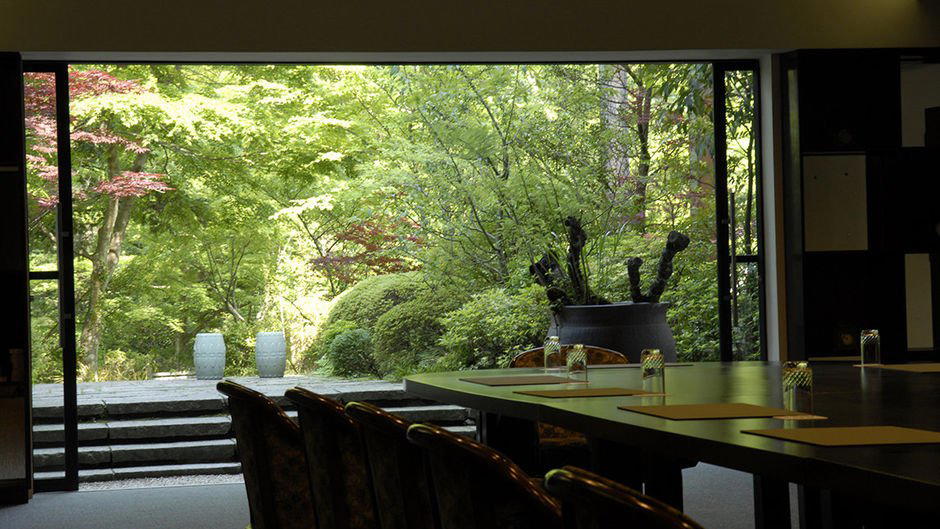
Bars in Hakone
Browse all →
Hotels in Hakone
All hotels in Hakone →
Wineries in Hakone
Browse all →
Details
- Classic
- Elegant
- Historic
- Special Occasion
- Date Night
- Family
- Historic Building
- Hotel Restaurant
- Sake Program
- Mountain
- A La Carte
Current opening hours
- Monday
- 7:30–9:30 AM, 5:30–7 PM
- Tuesday
- 7:30–9:30 AM, 5:30–7 PM
- Wednesday
- 7:30–9:30 AM, 5:30–7 PM
- Thursday
- 7:30–9:30 AM, 5:30–7 PM
- Friday
- 7:30–9:30 AM, 5:30–7 PM
- Saturday
- 7:30–9:30 AM, 12–2 PM, 5:30–7 PM
- Sunday
- 7:30–9:30 AM, 12–2 PM, 5:30–7 PM
Hours can change for holidays and private events. Hours as of .
Magnificent and relaxing classical atmosphere with high ceilings, artistic paintings, antique furniture, and spacious table arrangements for privacy.