The Chinnery
The Chinnery occupies the first floor of the Mandarin Oriental Hong Kong on Connaught Road Central, positioning it among the hotel bars and dining rooms that have defined Central's after-work and colonial-heritage circuit for decades. Against a comparable set of polished hotel venues in the district, it holds a particular place as a room where the colonial English club aesthetic has been maintained with deliberate consistency.
Pearl is the En Primeur Club membership app — saves, bookings, and concierge access live there. Same editors, same standards.
- Address
- 1/F, Mandarin Oriental Hong Kong, 5 Connaught Rd Central, Central, Hong Kong
- Phone
- +85228254009
- Website
- mandarinoriental.com
- Directions
- Get directions
 Saves & bookings on Pearl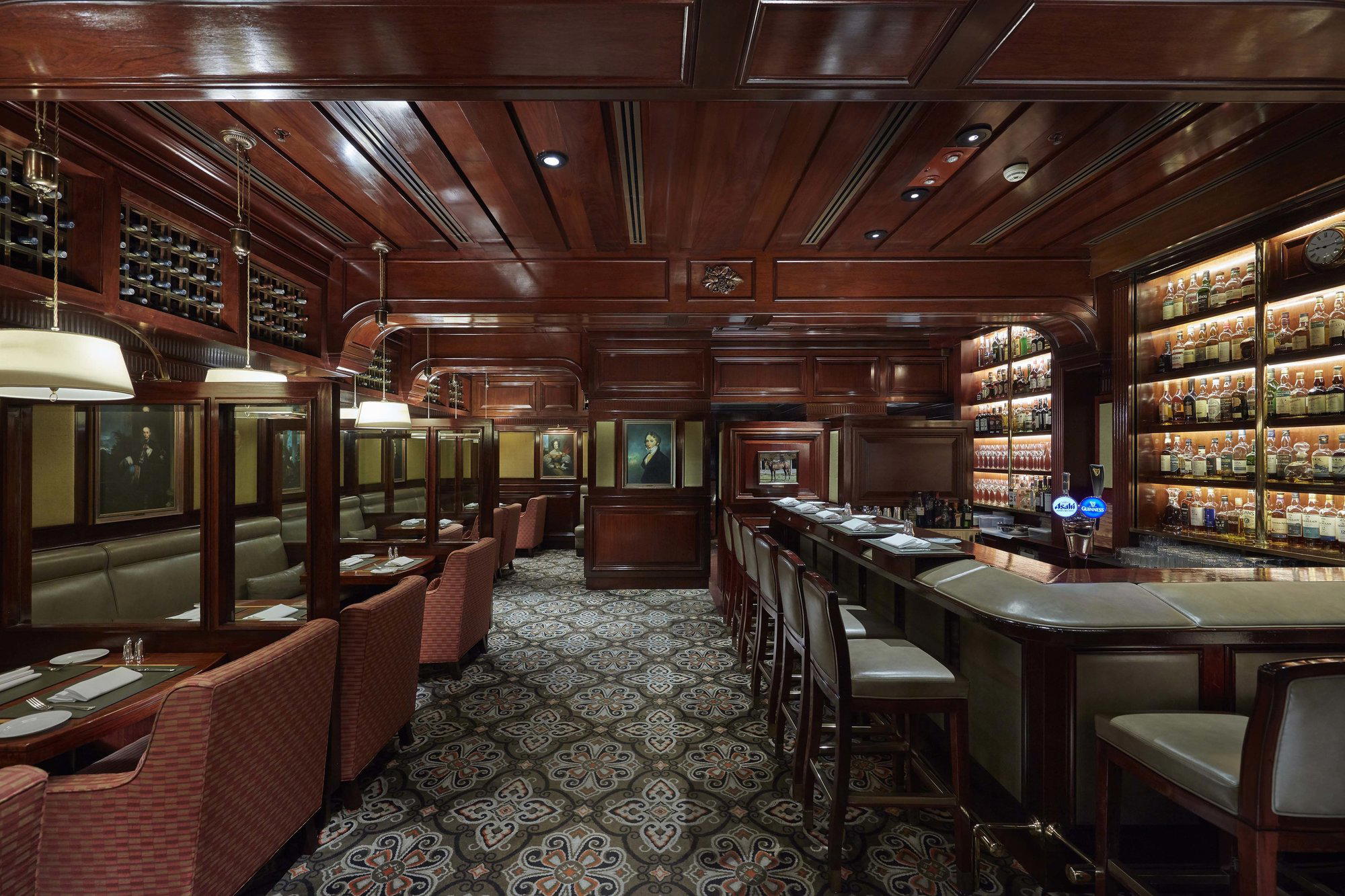
The Room That Refuses to Update
Central Hong Kong's hotel bar scene divides, broadly, into two camps: the contemporary cocktail programs that have multiplied across the district's newer properties, and the older-guard rooms that draw their authority from continuity rather than reinvention. The Chinnery, on the first floor of the Mandarin Oriental Hong Kong at 5 Connaught Road Central, sits firmly in the second camp. Where venues like AMMO have built identities around architectural drama and modern menus, The Chinnery's draw is the opposite: a deliberately preserved English club atmosphere that feels closer to a Mayfair members' room than to a hotel bar serving one of Asia's most dynamic financial districts.
The Mandarin Oriental Hong Kong has occupied its Connaught Road address since 1963, and the property's position in Central's hospitality hierarchy has been consistent across that span. Hotel bars attached to flagship properties in this tier, whether in Hong Kong or comparable financial capitals, carry a specific social function: they serve as neutral territory for client entertainment, post-market decompression, and the kind of extended conversation that a restaurant's turn-table pressure doesn't permit. The Chinnery fulfils that function with the particular confidence of a room that has been doing it for a long time.
Menu Architecture: What the List Signals
English pub-inflected bars operating inside luxury hotel contexts in Asia have historically maintained menus that anchor the experience in legibility rather than invention: familiar formats, recognisable references, and a depth in whisky and gin that functions as the room's primary credential.
At the restaurant, the drinks list is built around single malts and classic cocktails, which places it in a defined niche within Central's hotel bar circuit. Compare that to the more technically ambitious programs at properties targeting a younger finance and creative class, and the contrast becomes instructive. The restaurant is not competing for the audience that follows cocktail competition results or seeks out clarified-drink formats. It is addressing a guest who values a well-kept pour over a novel one, and a room where the ambient noise permits a conversation without raising your voice.
This is a meaningful distinction in a district where 8½ Otto e Mezzo BOMBANA and the broader Michelin-tracked restaurant circuit sit within walking distance, offering full tasting menus for those seeking a structured dining experience. The restaurant occupies a different slot in the evening: it is where you go before, after, or instead of a formal dinner.
Colonial Aesthetic as a Category Position
The English club aesthetic that defines the restaurant is worth examining as a category decision rather than a decorative one. Hong Kong's hotel bar scene has, over the past decade, largely moved away from the colonial reference point: properties have leaned into contemporary Asian design, rooftop formats, or international minimalism. The handful of rooms that have held the older visual vocabulary, dark wood, leather seating, framed prints, portrait lighting, have done so to retain a specific clientele rather than from any failure to modernise.
That clientele skews toward the longer-tenured expatriate community, senior finance and legal professionals, and international visitors who arrive at the Mandarin Oriental specifically because the property's reputation is built on a particular kind of formality. Positioning the restaurant against newer Central openings like Aaharn or Bayi would miss the point: those restaurants are operating in a different competitive frame entirely, addressing different guest intentions and different meal occasions.
The more useful comparison set includes the hotel bars of comparable flagship properties in London, Singapore, and Tokyo, rooms where the physical environment is doing as much communicative work as the menu. In that peer group, the Mandarin Oriental's heritage, the property opened the same year as the original Mandarin Hotel which later merged with The Oriental group, gives the restaurant a contextual depth that newer hotels cannot replicate by design alone.
Central And Western as a Bar Context
The district around Connaught Road Central is not, primarily, a restaurant neighbourhood in the way that Wan Chai or Sham Shui Po are. It is a business district that transforms its hospitality function depending on the hour. Lunch is driven by corporate accounts and quick-turn tables. The post-market window, roughly 6pm to 9pm, is where hotel bars earn their keep, absorbing professionals who don't yet want to commit to dinner or who need a transitional space between the trading floor and the evening. The restaurant's position within the Mandarin Oriental, one of the few properties in the district with genuine street-level presence on Connaught Road rather than tucked into a tower podium, gives it physical accessibility that matters in a neighbourhood where the pedestrian experience can be fractured by refined walkways and underground connections.
The district also connects, via the Star Ferry and MTR, to other Hong Kong dining contexts worth considering: the Former Jumbo Floating Restaurant in Aberdeen represents a different chapter of Hong Kong's hospitality history, while venues like Lei Garden in Sha Tin and One-ThirtyOne in Tai Po illustrate how the city's restaurant culture extends well beyond the island's core districts.
Planning Your Visit
The restaurant operates within the Mandarin Oriental Hong Kong, and reservations are recommended. The MTR's Central station connects directly to the surrounding blocks, and the Connaught Road address is within a short walk of the IFC complex. The room can fill during peak post-work hours on weekdays, so reservations are recommended. The dress code is smart casual.
- Beef Tartare
- Chicken Tikka Masala
- Fish and Chips
- Lamb Rogan Josh
- Shepherd's Pie
- Sticky Toffee Pudding
Compact Comparison
Comparable venues nearby, for context on price, style, and recognition.
| Venue | Cuisine | Price | Notes |
|---|---|---|---|
| The ChinneryThis venue — the venue you are viewing | Central, British-Indian Colonial | $$$ | Not listed |
| MIAN | Central, Modern Regional Chinese | $$$ | Not listed |
| cafe TOO | Not listed | $$$ | Central And Western, International Buffet |
| HAKU | Not listed | $$$ | Central And Western, Japanese Fusion Kappo |
| GOKAN | Central, Japanese Mixology Izakaya | $$$ | Not listed |
| Dragon Academy HK | Not listed | $$$ | Central, Modern Cantonese Noodles & Dim Sum |
Continue exploring
More in Central And Western
Restaurants in Central And Western
Browse all →
Bars in Central And Western
Browse all →
At a Glance
- Classic
- Elegant
- Intimate
- Sophisticated
- Well Known
- Date Night
- Business Dinner
- Special Occasion
- Celebration
- Hotel Restaurant
- Historic Building
- Private Dining
- Extensive Wine List
- Craft Cocktails
- Organic
Current opening hours
- Monday
- 11:30 AM–3 PM, 5–11 PM
- Tuesday
- 11:30 AM–3 PM, 5–11 PM
- Wednesday
- 11:30 AM–3 PM, 5–11 PM
- Thursday
- 11:30 AM–3 PM, 5–11 PM
- Friday
- 11:30 AM–3 PM, 5–11 PM
- Saturday
- 5–11 PM
- Sunday
- Closed
Hours can change for holidays and private events. Last verified .
Elegant British colonial style with seemingly untouched interiors, peaceful yet upbeat surroundings, and measured, sophisticated dining atmosphere.