
Teuchi Udon Akau belongs to Tokyo’s serious everyday-noodle tier: modest spend, small room, and recognition from Tabelog’s 2024 Udon EAST 100 list. The appeal is not ceremony but structure, with hand-made udon framed by izakaya and regional-cooking cues, plus sake and shochu for diners treating noodles as dinner rather than a quick lunch stop.
Pearl is the En Primeur Club membership app — saves, bookings, and concierge access live there. Same editors, same standards.
- Address
- 東京都荒川区西日暮里2-39-6 GSハイム日暮里 103
- Phone
- +81338072591
- Website
- tabelog.com
 Saves & bookings on Pearl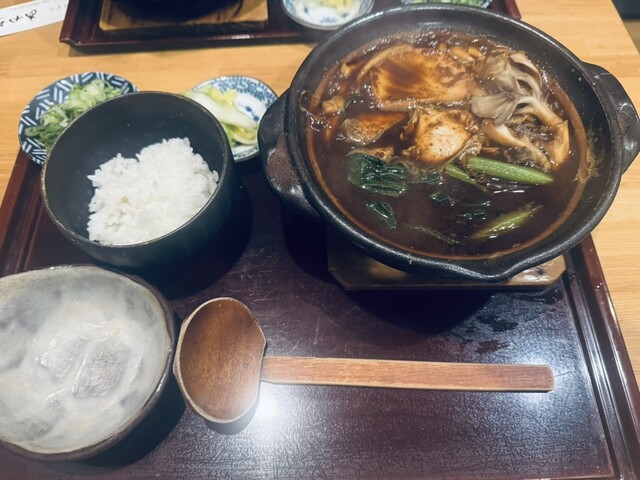
Approaching the Nippori side of Arakawa, Tokyo’s restaurant rhythm shifts. Polished reservation counters give way to compact noodle shops, sweets houses, family tables, and neighborhood rooms judged less by spectacle than repeat usefulness. In that setting, Teuchi Udon Akau reads as a serious udon address without sushi or kaiseki’s ritual weight. Its small dining room, split across counter seating, tables, and raised seating, places it in Tokyo’s everyday craft tradition: close quarters, direct service, and a wheat-noodle menu rather than performance.
Udon in Tokyo occupies a different lane from ramen. Ramen rewards specialization, speed, and broth branding; udon rewards texture, regional memory, and quiet noodle discipline. Akau’s category mix says much before any dish is named: udon, izakaya, and regional cuisine. That spread is coherent: noodles can be lunch’s center, a casual evening anchor, or the closing act after drinks. Sake and shochu strengthen that reading, placing the room closer to a neighborhood eating-and-drinking address than a single-purpose counter.
Hand-made udon in Tokyo's everyday craft tier
The key editorial point is menu architecture. Tokyo has many noodle rooms that reduce choice to one famous bowl; durable udon houses work through temperature, broth, toppings, and side dishes. Akau sits in that second camp. Its Tabelog categories connect hand-made wheat noodles with izakaya and regional cooking, letting the meal move between quick and composed. For travelers used to tasting menus, that flexibility can reveal more than another formal counter: it shows how craft survives at a price local regulars can access.
The JPY 1,000 to JPY 1,999 price band matters. Tokyo’s global reputation often filters through expensive sushi, wagyu, and French-Japanese fine dining, yet much of the city’s strongest food culture lives in low-to-mid spend categories with narrow technical focus. Selection for Tabelog 100 Udon EAST in 2024 gives Akau public recognition within that category, not a luxury signal. This is not a room to measure against Ginza omakase or hotel dining; it belongs among specialist noodle shops where texture, pacing, and consistency carry the argument.
Repeat selection history gives the listing more weight than a single-year mention. Akau appeared in Tabelog’s udon selections for 2020, 2022, and 2024. In Tokyo noodle culture, where small shops can surge on a temporary queue, that recurrence suggests category relevance beyond a brief spike. The public score of 3.66 reinforces the point: a recognized specialist in a crowded field, not a luxury dining room borrowing prestige from price.
Nippori makes the format feel local, not destination-polished
Nippori and Nishi-Nippori sit outside the city’s international dining shorthand, which is why this address makes sense there. The area rewards practical eating: noodles, sweets, Chinese, curry, and neighborhood izakaya formats sit closer together than in central Tokyo’s curated dining zones. Nearby comparison sharpens the picture. Yamada Ya Nishinippori ten occupies a higher spending bracket, while French Gashi Patissier Chocolatier Inamura Shozo shares Akau’s accessible price range from a dessert angle. Habutae Dango Honten operates at an even lighter spend, and Himitsu Do pushes shaved ice into a destination-snack bracket. Akau’s role in that mix is savory, compact, and meal-oriented.
The 23-seat scale matters. With five counter seats, twelve table seats, and six raised seats, the restaurant handles solo diners, pairs, and small family meals without becoming large-format dining. Children are welcome, private rooms are not part of the setup, and smoking is not part of the dining environment. These details shape the experience more than décor language would: small enough to feel specific, not so restrictive that it belongs only to enthusiasts chasing a scarce seat.
For visitors mapping Tokyo through food rather than landmarks, Akau is strongest as part of a neighborhood eating day. It pairs naturally with the older-city texture around Nippori, where sweets shops, noodle counters, and casual taverns show daily Tokyo more clearly than another polished mall floor. The better comparison is spending a meal slot on craft at modest cost, not a formal restaurant. In that frame, recognition has practical value: it identifies a specialist without asking travelers to reorganize an evening around prestige.
Planning the meal without overcomplicating it
The operating pattern explains intended use. Lunch service runs on select weekdays, while weekend and public-holiday service extends through the day into evening; Tuesday and Wednesday are closed. Reservations are available after 5:30 PM, making dinner cleaner for diners who prefer certainty, while lunch suits a flexible Tokyo schedule. The restaurant is listed five minutes on foot from JR Nippori Station and five minutes from Nishi-Nippori Station, rare convenience for a small noodle specialist in an older neighborhood.
Payment is more flexible than at many small Japanese restaurants: major credit cards and common electronic money are accepted, while QR code payment is not. Parking is not provided, though a paid lot is listed in front. These details define the difference between a casual detour and a frustrating attempt. Akau works well for travelers already moving through northern or eastern Tokyo, or for diners using Nippori as a counterpoint to higher-gloss dining districts.
For broader planning, keep this stop in the restaurant lane rather than making it a full-night itinerary. EP Club’s Tokyo coverage can frame the rest of the trip: start with Our full Tokyo restaurants guide, then widen the evening with Our full Tokyo bars guide, hotel context from Our full Tokyo hotels guide, cultural planning through Our full Tokyo experiences guide, and cellar-minded detours in Our full Tokyo wineries guide. Within Tokyo restaurants, the contrast is instructive:. 鮪と炭火焼き うお炭 秋葉原店, 12/10 Shinjuku ten, 124. KAGURAZAKA (Yakitori), 2D Cafe, and 3 Chome no Curry Ya San each show a different slice of the city’s casual-to-specialist range. For Japan-wide comparison, look at -Grilled beef Sukiyaki- KAMAKURA TANUKIAN 鎌倉 たぬき庵 in Kamakura.cafe in Osaka.know in Kumamoto, (Shoku) Vietnam in Kawasaki, [Curry Senmon Ten] Maruyama Kyoju. in Sapporo, and [ki:] in Kyoto. For Japanese formats abroad, Jōdo Saké Bar in Los Angeles and Onigiri Time in Pasadena offer useful counterpoints.
At-a-Glance Comparison
Comparable venues at a glance for context.
| Venue | Cuisine | Price | Notes |
|---|---|---|---|
| Teuchi Udon AkauThis venue — the venue you are viewing | Handmade Udon & Izakaya | $ | Not listed |
| Tsuruse Yushima honten | Traditional Japanese wagashi & tea cafe | $ | Bunkyō |
| Kameju | Traditional Japanese wagashi & dorayaki shop | $ | Taitō |
| Suikou Dou Honten | Traditional Japanese Wagashi & Daifuku | $ | Chūō |
| Tsukemen Gonokami Seisakujo | Shrimp Tsukemen Ramen Shop | $ | Shibuya |
| Toranomon Okanoeisen Shinjuku takashimaya ten | Japanese traditional sweets (wagashi) | $ | Shibuya |
Recognition history
Dated appearances from independent guides and award organizations, with the underlying list record or original source where available.
Tabelog 100 #47 · No. 47
Tabelog · Tabelog 100 - Udon - EAST - 2024









At a Glance
- Cozy
- Lively
- Solo
- Family
- Casual Hangout
- After Work
- Group Dining
- Standalone
- Sake Program
- Beer Program