
Kameju places Asakusa’s wagashi ritual in its plainest form: a takeaway counter near Kaminarimon, a sub-¥999 spend, and sweets built for carrying through the old temple district rather than lingering over a plated dessert course. Its Tabelog 100 selection for Tokyo Japanese sweets in 2023 puts it in a serious local category, not a tourist-snack category.
Pearl is the En Primeur Club membership app — saves, bookings, and concierge access live there. Same editors, same standards.
- Address
- 2 Chome-18-11 Kaminarimon, Taito City, Tokyo 111-0034, Japan
- Phone
- +81 3-3841-2210
- Website
- instagram.com
 Saves & bookings on Pearl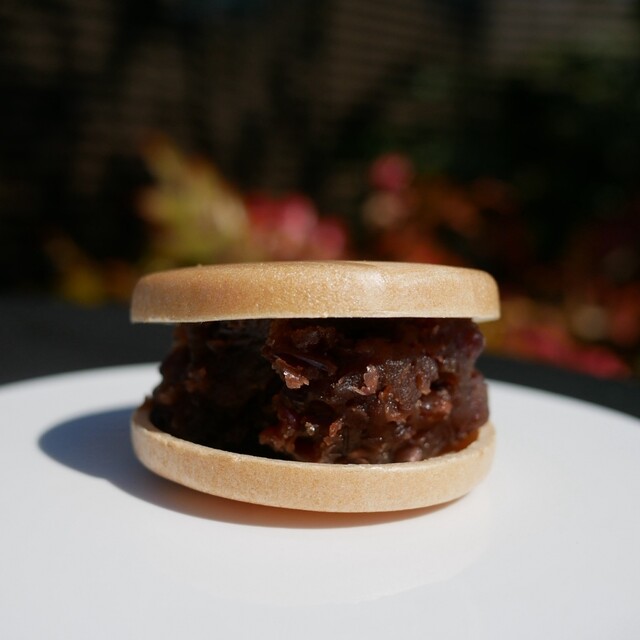
Approaching Kaminarimon, the rhythm of Asakusa changes quickly: temple-bound pedestrians, souvenir bags, train exits feeding the same blocks, and old confectionery counters doing business at street speed. In that setting, wagashi is not staged as dessert theatre. It is bought, carried, shared, and often judged in a few bites. Kameju belongs to that older Tokyo pattern, where the act of buying the sweet is part of the ritual: queue, choose, pay, leave, and let the neighbourhood continue around it.
Asakusa wagashi as a takeaway ritual, not a plated dessert course
Tokyo’s serious sweets culture splits into several lanes. Ginza and Aoyama support polished pâtisserie and gift-box formalism; department-store food halls turn confectionery into precision retail; Asakusa keeps a more public-facing tradition, where wagashi sits beside soba, sushi, mugitoro, and temple tourism. The format matters. A takeaway-only shop changes the pacing: there is no dining room to soften the experience, no tea service to stretch it out, and no chef narrative to carry the encounter. The transaction has to stand on craft, price, and local habit.
That is why the categories attached to Kameju are useful: Japanese traditional sweets, dorayaki, and daifuku. Dorayaki and daifuku occupy a different cultural register from high-gloss pastry. They are everyday forms with exacting standards, built around batter, rice cake, and bean paste rather than elaborate plating. In Tokyo, the serious version of this category often hides in plain sight: small spend, short visit, high repeat traffic, and little need for explanation. The Tabelog 100 selection for Tokyo Japanese traditional sweets and Japanese sweets cafe in 2023 gives the shop a clear trust signal inside that field.
The price bracket reinforces the point. A spend listed below JPY 999 places the experience closer to a daily purchase than a special-occasion meal, yet recognition in a curated Tokyo sweets list puts it in a competitive tier where details count. That tension is central to wagashi in Asakusa: modest format, exacting expectations. Nearby comparison venues underline the district’s range. Namiki Yabu Soba sits in a JPY 1,000 to JPY 1,999 bracket for a seated noodle tradition, while Kibun Zushi moves into a JPY 3,000 to JPY 3,999 bracket. Italiano Jerato Ya shares the sub-¥999 snack economy, but gelato and wagashi answer different cravings. Kameju is the choice when the point is Tokyo confectionery rather than a full meal.
What the recognition says about the category
Tabelog’s Hyakumeiten lists are not Michelin-style stars; they are category-specific selections that reward depth in a given genre. For wagashi, that distinction matters. The field is not only about luxury or ceremony. It includes shops that function as neighbourhood institutions, souvenir stops, and technical specialists. Kameju’s 2023 listing in the Tokyo Japanese traditional sweets category places it among businesses judged within that narrower craft tradition, where consistency and local demand carry more weight than interior design.
Asakusa gives that recognition extra context. The area has long been one of Tokyo’s more legible food districts for visitors because its classics are close together and easy to understand: soba before or after temple time, sweets as an edible souvenir, sushi and grilled formats for a fuller sit-down meal. The better way to read Kameju is not as a detour from Asakusa’s main attractions, but as part of the neighbourhood’s old commercial choreography. A sweet bought here fits the district’s movement: quick, portable, and tied to the street rather than a reservation slot.
The absence of a dining room is not a drawback if the expectation is correct. It strips the visit down to counter etiquette. Decide before reaching the front, keep the order concise, and treat the purchase like a food stop rather than a café break. That is also why the venue works well in a larger Asakusa plan. Pairing it with a seated meal nearby makes more sense than treating it as lunch. 浅草むぎとろ本店 and Namiki Yabu Soba represent older sit-down Asakusa dining habits; Kameju represents the sweet counter that sits alongside them.
How to place it in a Tokyo food day
For travellers mapping Tokyo by category rather than neighbourhood alone, this is a useful reminder that the city’s food hierarchy is not only built around tasting menus and counters. A sub-¥999 wagashi stop can carry as much local specificity as a far more expensive meal, provided the format is understood on its own terms. The right comparison is not a dessert trolley after dinner. It is the disciplined snack purchase: limited time, low spend, high standards.
Planning should be simple. The shop operates daily from 10 AM to 7 PM, with irregular closing noted, and the address places it at 2 Chome-18-11 Kaminarimon in Taito City. It is listed as takeaway only, with no private rooms and no dining space. Payment is cash-oriented in practical terms because credit cards, electronic money, and QR code payments are listed as not accepted. The nearest station is Asakusa, with the Ginza Line, Tobu Isesaki Line, and Toei Asakusa Line all serving the area. Weekend and public-holiday reservations are listed as not accepted, which suits the category: this is a queue-and-carry format, not a table to schedule.
Use it before a longer Asakusa meal, after temple time, or as a low-commitment sweets stop between neighbourhoods. For broader Tokyo planning, Our full Tokyo restaurants guide gives the wider dining map, while Our full Tokyo hotels guide, Our full Tokyo bars guide, Our full Tokyo wineries guide, and Our full Tokyo experiences guide help place the stop inside a full itinerary. Nearby and cross-city food references include. 鮪と炭火焼き うお炭 秋葉原店, 12/10 Shinjuku ten, 124. KAGURAZAKA (Yakitori), 2D Cafe, and 3 Chome no Curry Ya San. Further afield, compare casual Japanese formats through -Grilled beef Sukiyaki- KAMAKURA TANUKIAN 鎌倉 たぬき庵 in Kamakura.cafe in Osaka.know in Kumamoto, (Shoku) Vietnam in Kawasaki, [Curry Senmon Ten] Maruyama Kyoju. in Sapporo, [ki:] in Kyoto, Jōdo Saké Bar in Los Angeles, and Onigiri Time in Pasadena.
A Credentials Check
Comparable venues for context, by category and price tier.
| Venue | Cuisine | Price | Notes |
|---|---|---|---|
| KamejuThis venue — the venue you are viewing | Traditional Japanese wagashi & dorayaki shop | $ | Not listed |
| Ayu Ramen Plus (鮎ラーメンプラス) | Traditional Ayu Ramen | $ | Toranomon |
| Seijuken | Traditional Japanese wagashi & dorayaki shop | $ | Chūō |
| Gyokueido Hikokuro | Traditional Japanese Wagashi & Dorayaki | $ | Chūō |
| Stand Hero | Standing Japanese Izakaya & Kushikatsu Bar | $ | Chiyoda |
| American | Classic Ginza kissaten & sandwich café | $ | Chūō |
Recognition history
Dated appearances from independent guides and award organizations, with the underlying list record or original source where available.
Tabelog 100 #97 · No. 97
Tabelog · Tabelog 100 - Japanese traditional sweets / Japanese sweets cafe - TOKYO - 2023








At a Glance
- Well Known
- Solo
- Casual Hangout
- After Work
- Standalone
- Historic Building
- Street Scene
Current opening hours
- Monday
- 10 AM–7 PM
- Tuesday
- 10 AM–7 PM
- Wednesday
- 10 AM–7 PM
- Thursday
- 10 AM–7 PM
- Friday
- 10 AM–7 PM
- Saturday
- 10 AM–7 PM
- Sunday
- 10 AM–7 PM
Hours can change for holidays and private events. Last verified .
A classic downtown Asakusa confectionery with a simple, traditional shopfront and a constant line of customers, focused on takeaway rather than dine‑in atmosphere.