
Tempura Sugimura holds a Michelin Plate recognition (2025), placing it among Taipei's serious Japanese specialists. Positioned on the second floor of Zhongshan District's Zhongcheng Plaza, it occupies the quieter, more deliberate end of the city's tempura tier, a counter format where the cooking is the event.
Pearl is the En Primeur Club membership app — saves, bookings, and concierge access live there. Same editors, same standards.
- Address
- 104, Taiwan, Taipei City, Zhongshan District, Lequn 2nd Rd, 199號中城廣場2樓
- Phone
- +886 2 8501 1157
- Website
- inline.app
- Directions
- Get directions
 Saves & bookings on Pearl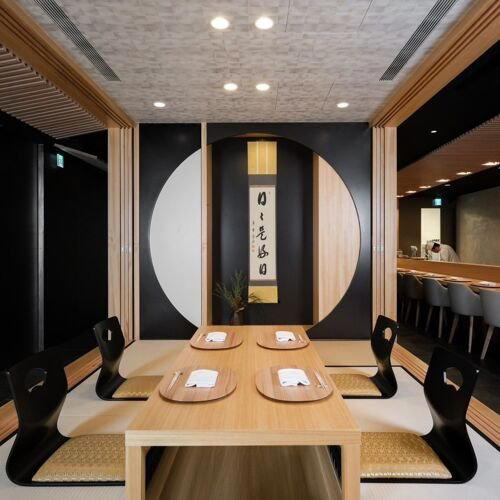
The Ritual of Tempura in Taipei
Japanese tempura, in its disciplined form, is one of the more unforgiving cooking formats: batter mixed cold, oil held at precise temperature, each ingredient fried to order and served in the moment before the coating loses its shatter. The ritual matters as much as the ingredient. Taipei has built a serious cohort of Japanese specialists over the past decade, and tempura sits near stronger examples from that cohort in terms of formality, a cuisine where timing between fryer and guest is the entire point, and where the pace of the meal is set by the cook, not the diner.
Tempura Sugimura is a Japanese Tempura Counter in Taipei's Zhongshan District. That distinction matters in a city where the Michelin Guide Taiwan has grown more selective each cycle.
Where Zhongshan District Places This Room
Lequn 2nd Road runs through one of Taipei's quieter northern residential-commercial zones. The Zhongshan District corridor has developed a reputation for Japanese food that leans toward precision over spectacle: smaller rooms, counter-centric formats, and a clientele that tends to book rather than walk in. This is a different register from the Xinyi District high-rises or the more tourist-facing lanes of Da'an. The second-floor location in Zhongcheng Plaza is consistent with how serious Japanese counters in Taipei tend to position themselves, accessible by address, low on street-level visibility, and dependent on reputation rather than footfall.
Within Taipei's tempura tier, the comparison set is narrow. Mudan Tempura operates at the same price point and draws from a similar philosophy of ingredient-led restraint. Between these two addresses, Taipei has more tempura depth than most non-Japanese cities in the region, which reflects the broader pattern of Taiwan's food culture absorbing and formalising Japanese culinary traditions over generations.
The Architecture of a Tempura Meal
A properly structured tempura service follows an order that has been largely consistent for decades: lighter, more delicate ingredients early, typically white fish, sweet shrimp, or seasonal vegetables, building toward heavier components before closing with a kakiage (a bound fritter of mixed ingredients) or a bowl of tendon to ground the meal. This sequence is not arbitrary. It is calibrated so the palate does not fatigue, and so each piece is fried to the specific temperature and time suited to that ingredient alone.
The format demands the diner slow down. Unlike kaiseki, where courses arrive with deliberate ceremony, tempura counter dining is built on small intervals, the thirty seconds between a prawn and a sweet corn kakiage, or the moment a piece of anago (sea eel) is lifted from the oil and placed directly before you on a rack or folded washi paper. Counter seating amplifies this: you are watching the cook work, which changes the pace of your eating. It becomes harder to rush. This is part of the form's design.
For Taipei diners familiar with the city's broader Japanese offer, Sugimura represents the more meditative end of a spectrum that also includes the theatrical and the casual. Counter tempura of this calibre sits in a tier where the meal's structure is the experience, comparable in intent, if different in technique, to the omakase sushi counters and kaiseki rooms at venues like Motoichi elsewhere in the city.
Taipei's $$$$-Tier Japanese Dining in Context
At the $$$$ price tier, Taipei's dining market is genuinely competitive. The Michelin Guide Taiwan has recognised venues across Japanese, French, Cantonese, and contemporary Taiwanese formats at this level. logy holds stars for its Modern European-Asian contemporary approach; Le Palais represents Cantonese fine dining at the summit of the market; Taïrroir works the Taiwanese-French intersection. Within this competitive set, a dedicated Japanese specialist like Sugimura makes a focused argument: that technical mastery of a single form is worth the same spend as a broader tasting menu.
That argument is credible in Taipei specifically because of the city's long relationship with Japanese culinary tradition. Taiwan's proximity to Japan, combined with decades of cultural exchange, has created a local dining public that understands tempura at a level that makes shortcuts visible. The kitchen is not cutting corners.
Beyond Taipei, for travellers moving through Taiwan's dining circuit, points of reference include JL Studio in Taichung for contemporary Southeast Asian technique and GEN in Kaohsiung further south. For those interested in tempura specifically in the Japanese context, Numata in Osaka, Shunsaiten Tsuchiya in Osaka, and Tempura Ginya in Tokyo offer the source-country benchmarks against which counters like Sugimura are implicitly measured.
Planning Your Visit
Know Before You Go
- Address: Zhongcheng Plaza, 2F, No. 199 Lequn 2nd Rd, Zhongshan District, Taipei City 104, Taiwan
- Price: $$$$ (premium counter, budget accordingly for a full service with drinks) 5 from 106 reviews
- Booking: Reservation essential
- Dress: Smart casual is consistent with the neighbourhood and format
For dining further afield in Taiwan, A Cun Beef Soup in Tainan, Volando Urai Spring Spa and Resort in Wulai District, and Akame in Wutai Township each represent distinct regional registers worth planning around.
Peers You’d Cross-Shop
Comparable venues nearby, for context on price, style, and recognition.
| Venue | Cuisine | Price | Notes |
|---|---|---|---|
| Tempura SugimuraThis venue — the venue you are viewing | Japanese Tempura Counter | $$$$ | Not listed |
| Sushi Kaori | Edomae Omakase Sushi | $$$$ | Juye |
| Uke | Edomae-style Omakase | $$$$ | Xicun |
| Sasa | Traditional Edomae Omakase | $$$$ | Zhongshan |
| AJIMI | Kappo Omakase | $$$$ | De'an |
| Masa | Seasonal Japanese Kappo | $$$$ | Songshan District |
Recognition history
Dated appearances from independent guides and award organizations, with the underlying list record or original source where available.
Michelin Plate
Michelin
Michelin Plate
Michelin
Continue exploring
More in Taipei
Restaurants in Taipei
Browse all →
Bars in Taipei
Browse all →
Hotels in Taipei
Browse all →
Wineries in Taipei
Browse all →
At a Glance
- Intimate
- Elegant
- Sophisticated
- Special Occasion
- Date Night
- Chefs Counter
Intimate tempura counter setting allowing guests to watch the Japanese chef work with fresh seasonal ingredients.