Tempura Matsui


1 Michelin Star
Our verdict
Tempura Matsui brings centuries-old Edo-period mastery to Manhattan through New York's first Michelin-starred tempura omakase, where 19 intimate seats witness the legendary "Matsui Way" technique that transforms pristine ingredients into feather-light perfection at this Murray Hill culinary temple.

Pearl is the En Primeur Club membership app, where members save venues, book tables and use the concierge.
The menu
What to order
- Tempura omakase course
- Foie gras chawanmushi
- Snow crab tempura
- Matsutake mushroom tempura
- Tencha
Tempura as a Discipline: Where Matsui Sits in New York's Japanese Counter Scene
When dedicated tempura restaurants began appearing in New York City, most of the dining public still filed the format under "appetizer" rather than "cuisine." Tempura Matsui, operating out of a discreet address at 222 East 39th Street in Murray Hill, has spent years making the case that the category deserves the same counter-seat reverence that omakase sushi receives. A Michelin star (2024) and three consecutive appearances on Opinionated About Dining's Leading Restaurants in North America list (ranked 65th in 2025, up from 78th in 2024 and 79th in 2023) confirm that the argument has landed with the critics who track this tier of Japanese dining in North America.
The broader New York $$$$ Japanese counter scene is small and competitive. Masa anchors the highest price point in the city for sushi omakase. Secchu Yokota operates in the same disciplined counter register. What separates Tempura Matsui from peers in this cohort is format specificity: the entire meal is organized around a single technique, fried in a combination of sesame and cottonseed oils, with batter applied as sparingly as the kitchen can manage. That restraint is the point.
The Sustainability Argument Inside the Batter
Tempura's ecological footprint is determined almost entirely by sourcing decisions: what goes into the oil, where the proteins come from, how the kitchen responds to seasonal availability. At Matsui, the seasonal rotation is not incidental, it is the structural logic of the menu. Dishes shift according to what the season offers rather than what a fixed menu requires year-round. Hokkaido scallop appears when the season supports it. Snow crab wrapped in shiso leaf, cauliflower, and squid cycle in and out. This kind of market-responsive cooking reduces the pressure to source out-of-season ingredients through supply chains that carry higher environmental costs.
The oil choice is worth examining in the same frame. Sesame and cottonseed oils have different flavor profiles from the neutral vegetable oils that dominate lower-tier tempura operations, but they also represent a deliberate ingredient decision rather than a default. Sesame oil production has a long history in Asian culinary traditions and carries a relatively compact agricultural footprint compared with some alternatives. The combination of seasonal ingredient rotation and considered oil selection places Matsui inside a quiet but growing movement among Japanese fine dining establishments in North America that treat sourcing discipline as integral to technique, rather than as a marketing position layered on top of it.
This approach connects Matsui to a wider conversation happening across the American fine dining tier. Restaurants like Single Thread Farm in Healdsburg have built their identities around farm-to-table sourcing with environmental accountability built into the format. Providence in Los Angeles has made sustainable seafood sourcing a defining credential in its Michelin-recognized operation. At Matsui, the sustainability argument is embedded in technique and seasonality rather than stated explicitly, which is arguably the more durable version of the commitment.
How the Meal Unfolds
The sequence at Matsui follows a structure that positions tempura as the main event rather than a supporting act. The meal opens with a seasonal soup, the cited version includes seared scallop with wheat cake, before moving into arranged sashimi. This preliminary section is functional: it establishes the kitchen's range and gives the palate a reference point before the fried courses begin.
The tempura sequence itself opens in the traditional way, with crispy shrimp legs. From there, the kitchen moves through whatever the season is offering: squid, Hokkaido scallop, cauliflower, snow crab in shiso leaf have all appeared in the rotation. Each piece is fried to order. The batter is thin and applied with precision. The oils leave a cleaner finish than heavier blends, which is partly technical and partly a product of the disciplined batter-to-ingredient ratio the kitchen maintains.
Meal closes with tencha, a broth-based rice dish with a mellow, deeply flavored quality that functions as a reset rather than a rich final statement. This structure, from delicate soup through sashimi through progressive tempura to a composed closing broth, reflects the kaiseki-influenced sequencing that the leading Japanese counter restaurants in New York deploy regardless of their primary technique.
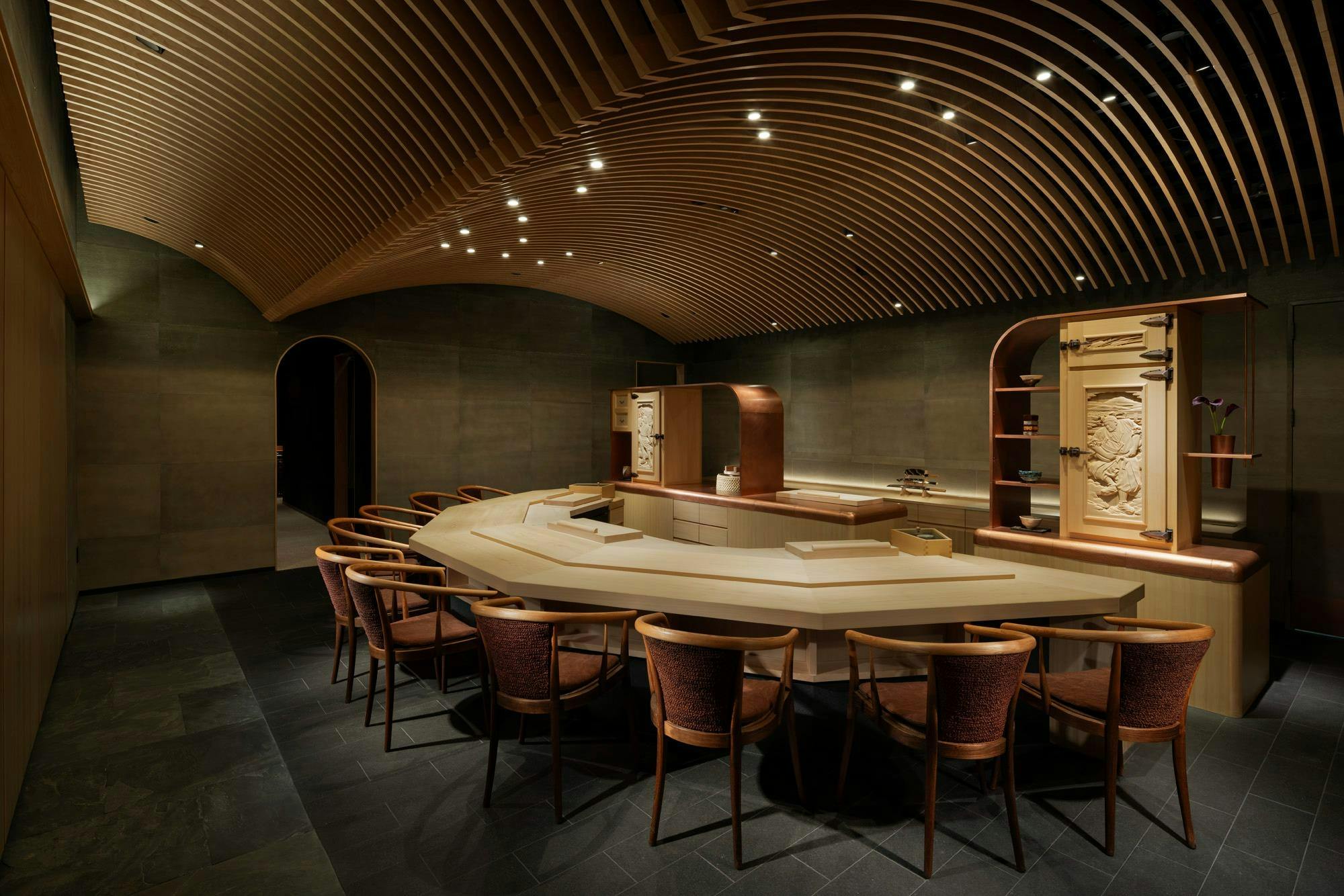
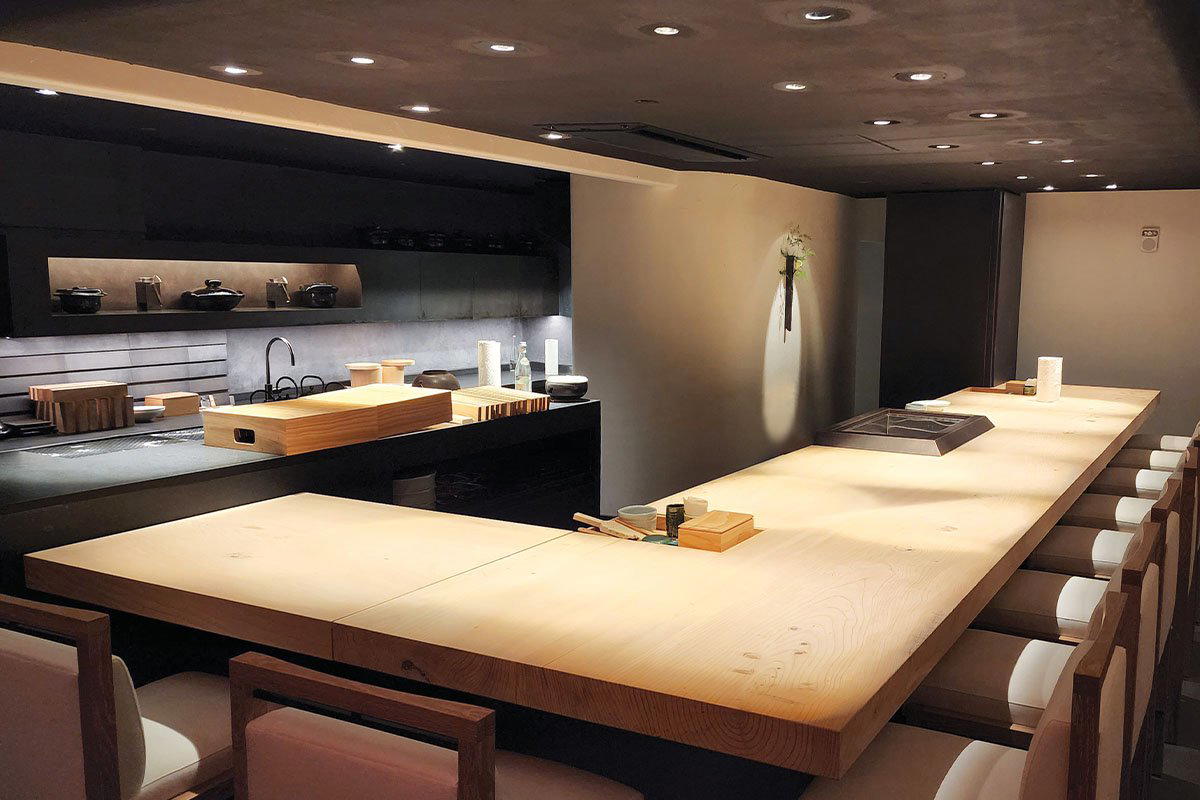
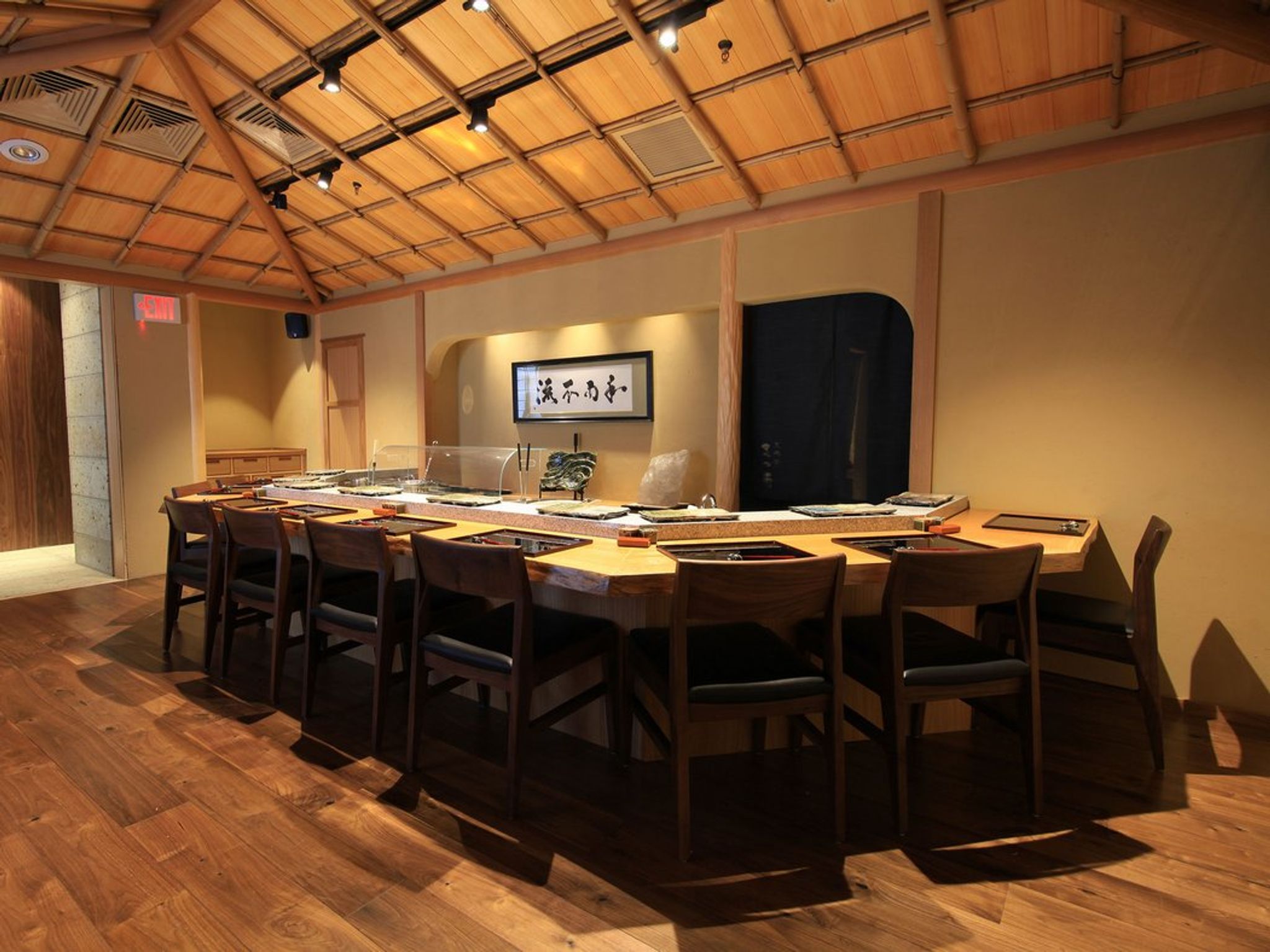
Counter seats are the priority. Watching Chef Kiyoshi Chikano work through the sequence at close range is part of the value proposition in the same way that watching a sushi master work is at a counter like Masa.
Murray Hill as a Setting for This Format
Murray Hill does not carry the same dining cachet as the West Village or Tribeca, but that positioning is partly what makes Matsui's address work. The neighborhood is quieter, more residential in character than Midtown's commercial core, and the restaurant operates in a building rather than a street-level space, adding a low-key quality that matches the counter format. Guests are not walking in off the street. They have reserved in advance, they know what they are coming for, and the room reflects that: controlled, focused, without the ambient noise levels that characterize larger dining rooms.
For visitors exploring New York's Japanese fine dining options across neighborhoods and price tiers, our full New York City restaurants guide maps the broader scene. The city's premium hotel options near Midtown and Murray Hill are covered in our New York City hotels guide, and if you are building a wider evening around drinks before or after dinner, the New York City bars guide has the relevant options by neighborhood.
How Matsui Compares Across the National Tempura Field
Dedicated tempura restaurants at this price and precision level are rare in the United States. Tempura Endo in Los Angeles operates in a comparable register on the West Coast. In the broader range of American fine dining that engages seriously with Japanese technique, Matsui's OAD trajectory, moving from 79th in 2023 to 65th in 2025, suggests a restaurant gaining rather than consolidating ground. Among New York's Michelin-starred Japanese operations, that directional movement is noteworthy.
For context on where Matsui sits relative to the full premium dining tier nationally, restaurants like Alinea in Chicago, Lazy Bear in San Francisco, and The French Laundry in Napa occupy the same conversation about American fine dining's top tier, different formats, different traditions, but the same level of intentionality around technique and sourcing. Emeril's in New Orleans represents a different chapter in that national story. What Matsui shares with these peers is a format where the restaurant's identity is inseparable from a specific technical commitment, executed at counter level, with reservation demand that requires planning ahead. The Eleven Madison Park model of a kitchen organized around a defining philosophical position applies here, even if the expression is entirely different.
For those extending travel beyond dining, the New York City experiences guide, wineries guide, and bars guide cover the adjacent programming. If the Asia-Pacific fine dining circuit is on the agenda, 8 1/2 Otto e Mezzo Bombana in Hong Kong operates in a comparable tier of precision and price in that region.
Planning Your Visit
Hours: Tuesday through Thursday, 5:30 PM to 8:30 PM; Friday and Saturday, 12 PM to 2 PM and 5:30 PM to 8:30 PM; Sunday, 5:30 PM to 8:30 PM; Monday closed. Address: 222 East 39th Street, Suite 24D, New York, NY 10016. Budget: $$$$ price point; plan accordingly for a full counter omakase with drinks. Reservations: Required; counter seats are the priority booking and fill significantly ahead, reserve as early as the booking window allows. Getting there: Murray Hill is accessible from Grand Central Terminal (4/5/6/7/S lines) and the 5 Av/42 St station (B/D/F/M lines), both within comfortable walking distance of East 39th Street.
Frequently asked questions
Is Tempura Matsui good for families?
The format is a structured counter tasting menu with a set sequence of courses, which suits adults focused on the cooking rather than flexible, child-led dining. Families with older children who can engage with a Michelin-starred, multi-course tempura progression will find it rewarding; families with young children should consider whether the counter format and two evening seatings align with their needs.
What's the overall feel of Tempura Matsui?
The atmosphere is intimate and focused, built around a counter where guests watch the chef work. Ranked #65 in North America by Opinionated About Dining in 2025 and holding a Michelin star, Matsui operates closer to the register of a Japanese kappo counter than a conventional New York dinner. Conversation stays measured; the cooking commands the room.
Has Tempura Matsui won any awards?
Tempura Matsui has received recognition including: Opinionated About Dining Top Restaurants in North America Ranked #65 (2025); Tempura Matsui skillfully demonstrates why tempura is a celebrated Japanese cuisine type in its own right. The prized seats are at the counter, especially if you w….
What do regulars order at Tempura Matsui?
The menu is fixed, so there is no ordering in the conventional sense. Regulars typically prioritise the counter seats to watch the tempura preparation directly, and the meal follows a set sequence: seasonal soup with seared scallop and wheat cake, sashimi, then tempura courses that shift with the season. The closing tencha, with its broth built from the frying residue, is a consistent highlight documented by the venue.
What type of food is Tempura Matsui known for?
Standing Among Peers
| Venue | Cuisine | Price | Awards | Notes |
|---|---|---|---|---|
| Tempura MatsuiThis venue (the venue you are viewing) | Michelin-Starred Tempura Omakase | $200–300 | 1 Michelin Star | Not listed |
| Le Bernardin | French Seafood Fine Dining | $300–500 | 3 Michelin Stars · World's 50 Best #13 | French, Seafood |
| Atomix | Modern Korean Tasting Menu | $300–500 | 2 Michelin Stars · World's 50 Best #7 | Modern Korean, Korean |
| Masa | Seasonal Hokkaido Tempura Omakase | $150–200 | Tabelog 100 #34 | Sushi, Japanese |
| Per Se | French Fine Dining Tasting Menu | $300–500 | 3 Michelin Stars · World's 50 Best #40 | French, Contemporary |
| Eleven Madison Park | Contemporary Plant-Based Fine Dining | $300–500 | 3 Michelin Stars · World's 50 Best #4 | French, Vegan |
Recognition history
Dated appearances from independent guides and award organizations, with the underlying list record or original source where available.
Michelin 1 Star
Michelin
Opinionated About Dining Top Restaurants in North America Ranked #77
Opinionated About Dining
Full recognition history (6 entries)
Opinionated About Dining Top Restaurants in North America Ranked #65
Opinionated About Dining
Michelin 1 Star
Michelin
Opinionated About Dining Top Restaurants in North America Ranked #78
Opinionated About Dining
Opinionated About Dining Top Restaurants in North America Ranked #79
Opinionated About Dining