
Tabelog 100 #83
Our verdict
Osaka’s tempura culture rewards restraint as much as heat control, and Tempura Ando sits in the small-counter tier where seafood sourcing, oil choice, and pacing carry the meal. Its 2025 Tabelog 100 Tempura selection, eight-seat counter format, and fish-focused cooking place it well above casual fry shops and closer to specialist kappo in tempo and cost.

Pearl is the En Primeur Club membership app, where members save venues, book tables and use the concierge.
The menu
What to order
- Tempura omakase course
- Olive Wagyu fillet tempura
- Sea urchin nori tempura
- Bluefin toro nori roll tempura
- Shrimp tempura two ways
Osaka is better known to many visitors for late-night neon, river traffic, and an appetite economy than for quieter specialist restaurants. That contrast matters: a serious tempura room here resists the city’s volume with fewer distractions and close attention to the instant batter, oil, seafood, and timing meet. Tempura Ando belongs to that smaller register, where the drama is control, not excess.
Tempura is often reduced abroad to crunch. In Japan, especially in specialist settings, the sharper question is stewardship: what enters the fryer, how much batter is needed, and how carefully the kitchen works when immediacy defines the format. Tempura Ando’s public positioning is clear enough from its category listing: tempura, Japanese cuisine, and seafood, placing it in a conversation about seafood-led courses and a less anonymous approach to ingredients.
Seafood-led tempura in a city that usually shouts louder
Osaka’s dining identity is often summarized by takoyaki, okonomiyaki, kushikatsu, and impulse eating. That is real, but it can obscure a quieter strain: restaurants treating seasonality and repetition as craft, not spectacle. Tempura at this level can sit close to other Japanese specialist meals in spirit. The meal depends on sequence, temperature, and the kitchen’s ability to make seafood feel precise rather than heavy.
The sustainability angle should not be inflated into a claim the restaurant itself has not made. The more defensible point sits in the cuisine’s mechanics. A seafood-focused tempura restaurant must decide portioning, trimming, frying order, and oil management in real time. Careful frying asks diners to see tempura as a transparent medium, not a covering. That does not make the restaurant an environmental manifesto. It does make the format accountable: the work is immediate and difficult to hide.
The 2025 Tabelog Hyakumeiten recognition gives the room a measurable credential in a category where public ratings can be more useful than generic acclaim. Tempura Ando’s Tabelog score is listed at 3.74, meaningful because Japan’s restaurant-rating culture compresses scores more tightly than international platforms. Editorially, the recognition places the restaurant among notable tempura choices, not general Japanese restaurants that fry a few courses.
That distinction helps when reading Osaka against other choices. Kamado represents another mode of modern dining. Tori Ichi sits in a different part of the city’s restaurant landscape. Kobe Beef WANOMIYA Dotonbori Main Store and Wagyu Japanese BBQ Yakiniku & Hamburger Ramen Dotonbori Restaurant Namba-Beef speak to the city’s appetite for spectacle and meat. Tempura Ando competes for a narrower decision: the diner seeking a controlled seafood-focused meal, not a broad night out.
The specialist format makes waste visible
Specialist restaurants are unforgiving. They expose prep discipline, pacing, and the relationship between guest demand and ingredient use. Tempura Ando’s format aligns with a focused model where cooking can be more responsive than in larger, more open-ended dining rooms. In a cuisine where seconds matter, scale is not neutral; it changes the meal’s texture and the kitchen’s margin for error.
The environmental reading should stay grounded: no need to claim zero waste or invent sourcing programs. The defensible point is structural. Course-by-course tempura can reduce the mismatch between production and demand compared with open-ended casual frying. Built around the moment of service, the kitchen works with the diner’s meal directly rather than with anonymous volume. For travelers reading where Japanese fine dining is going, that matters more than decorative sustainability language.
Drink service and pairing expectations should be understood within the broader specialist Japanese register rather than reduced to the tourist shorthand of “tempura and beer.” Even without over-claiming the list, the useful point is that tempura at this level invites attention to aroma, oil, seafood, and temperature. The meal’s rhythm asks diners to move carefully, not to treat the restaurant as a quick stop.
Context helps. A day in Osaka can run through many unnamed bakeries, pork-bun counters, coffee shops, pizza rooms, and casual dining rooms. Those addresses map the city’s breadth. Tempura Ando narrows the lens to technique, restraint, and how seafood behaves under heat.
How to read it within an Osaka itinerary
The right diner is not seeking a long menu of Osaka clichés. The appeal is tempura as a disciplined seafood format, with the focus and cost structure that follow. The listed budget is JPY 20,000 to JPY 29,999 for both dinner and lunch, putting the meal in a deliberate-dining category rather than a spontaneous stop. The price makes sense only if precision matters more than abundance.
Boundaries are useful, but they should be confirmed directly rather than assumed from general specialist-dining etiquette. For a meal built around oil, seafood, and aroma, diners should treat timing, scent, and communication with care. That may sound severe to first-time visitors, but in a focused tempura restaurant it is practical, not etiquette theatre.
For a broader Osaka plan, place this meal beside contrasting categories rather than another formal Japanese specialist meal on the same day. Other unnamed Italian, casual, specialist, and high-spend Osaka restaurants can give different views of the city’s serious dining culture, while a full Osaka restaurants guide is better for building a sequence across casual, specialist, and high-spend meals. Travelers pairing dinner with sleep, drinks, or culture can also use full Osaka hotels, bars, wineries, and experiences guides.
The broader Japanese context is instructive. Across Japan, regional dining resists a single narrative: beef-led meals, charcoal cooking, rice traditions, drinking rooms, and specialist restaurants all tell different stories. Osaka has its own range as well, from Kamado and Tori Ichi to 鮨一永 and the city’s better-known beef venues. Tempura Ando is more specific: an Osaka restaurant where seafood, oil, and restraint carry the argument.
Frequently asked questions
What days is Tempura Ando closed?
Published closing-day details are not provided here. Contact Tempura Ando directly for current opening days before booking.
What's the price range at Tempura Ando?
Pricing at Tempura Ando is listed as JPY 20,000 - JPY 29,999 JPY 20,000 - JPY 29,999.
Where is Tempura Ando in Osaka?
Osaka.
What's the defining dish or idea at Tempura Ando?
The restaurant’s clear idea is tempura with Japanese cuisine and seafood as listed categories. Its Tabelog Hyakumeiten 2025 recognition signals that this is a serious specialist address rather than a broad Japanese menu.
Do they accommodate allergies at Tempura Ando?
Allergy handling should be confirmed directly before booking. With a JPY 20,000–29,999 price range and a specialist format, it is sensible to contact the restaurant by phone at +81-6-6786-8178.
Would Tempura Ando be comfortable with kids?
Kid-friendliness is not specified here. Because Tempura Ando is a specialist tempura restaurant in Osaka, families should confirm suitability directly before booking.
Peers in This Market
Comparable venues in the metro at similar price points.
| Venue | Cuisine | Price | Awards | Notes |
|---|---|---|---|---|
| Tempura AndoThis venue (the venue you are viewing) | Contemporary Tempura Omakase | $150–200 | Tabelog 100 #83 | Not listed |
| Kobe Beef WANOMIYA Dotonbori Main Store | Teppanyaki Kobe Beef | Not listed | Not listed | Not listed |
| Kamado | Wood-fired Japanese-Italian Fusion | $100–150 | Michelin Plate · Tabelog 100 #78 | Contemporary |
| Wagyu Japanese BBQ Yakiniku & Hamburger Ramen Dotonbori Restaurant Namba-Beef | Halal Wagyu Yakiniku & Ramen | $20–30 | Not listed | Not listed |
| Tori Ichi | Traditional Osaka Yakitori & Chicken Dishes | $50–100 | Tabelog 100 #16 | JPY 8,000 - JPY 9,999 |
| 鮨一永 | Japanese Pasta | $10–20 | Not listed | Not listed |
Recognition history
Dated appearances from independent guides and award organizations, with the underlying list record or original source where available.
Tabelog 100 #83 · No. 83
Tabelog · Tabelog 100 - Tempura - 2025
Continue exploring
More in Osaka
Restaurants in Osaka
All restaurants in Osaka →



Bars in Osaka
All bars in Osaka →
Hotels in Osaka
All hotels in Osaka →


Wineries in Osaka
Browse all →
Details
- Intimate
- Elegant
- Cozy
- Sophisticated
- Date Night
- Special Occasion
- Celebration
- Business Dinner
- Solo
- Chefs Counter
- Open Kitchen
- Standalone
- Design Destination
- Sake Program
- Local Sourcing
- Sustainable Seafood
- Tasting Menu
- Omakase
- Counter Dining
- Set Menu
- Sake
- Beer
- Wine
- Pescatarian Friendly
Current opening hours
- Monday
- 6–9:30 PM
- Tuesday
- 6–9:30 PM
- Wednesday
- 6–9:30 PM
- Thursday
- 6–9:30 PM
- Friday
- 6–9:30 PM
- Saturday
- 6–9:30 PM
- Sunday
- 12–3 PM, 6–9:30 PM
Hours can change for holidays and private events. Last verified .
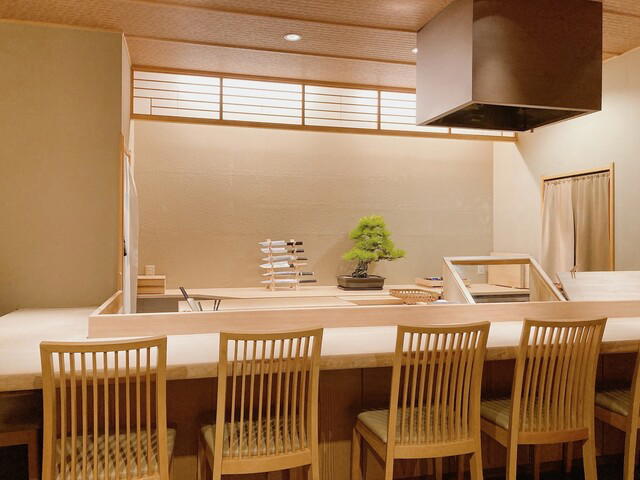
A small, hidden basement counter with warm, gentle lighting, hinoki wood counter and a calm Japanese aesthetic that feels like a quiet escape from the busy Namba streets.