
Tabelog 100 #18
Our verdict
Tebiki Soba Isshin puts Nagoya’s soba tradition into a value frame: hand-ground buckwheat noodles, tempura, and sake or shochu without the ceremony or price creep of the city’s higher-spend dining rooms. Its repeated Tabelog 100 Soba selections, including the EAST 2025 list, make it a serious address for travellers who want craft rather than spectacle.

Pearl is the En Primeur Club membership app, where members save venues, book tables and use the concierge.
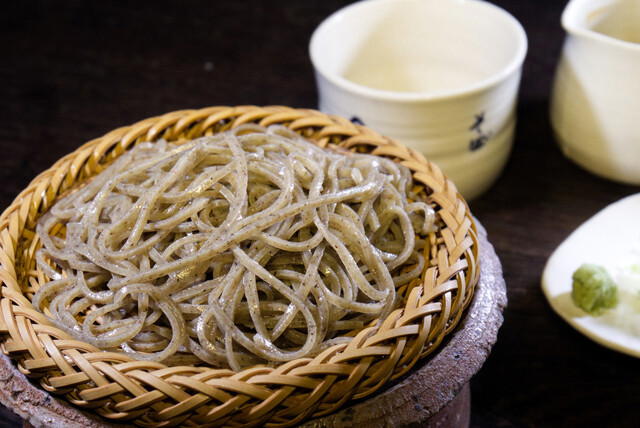
Approaching a soba shop in Nagoya shifts the rhythm before anything reaches the table. The city’s bigger dining zones and busier restaurant circuits give way to a lower, local register: regulars, simple service, and a room built for noodles rather than performance. Tebiki Soba Isshin belongs to the Japanese dining category where value is measured not by menu length or luxury signals, but by how much craft survives at an everyday spend.
Soba tests a restaurant’s priorities because it leaves little room for camouflage. Buckwheat noodles, cutting, water, timing, and dipping sauce matter before embellishment. In Nagoya, where visitors often arrive primed for the city’s better-known comfort foods, a focused soba stop redirects attention from regional checklist eating to quieter noodle discipline. The appeal is not abundance, but precision at an accessible scale.
Soba and tempura make the value argument
The key practical detail is the focus: Tebiki Soba Isshin is listed in the soba and tempura categories. Those points matter because soba pricing in Japan varies sharply between casual lunch shops, destination counters, and tasting-led restaurants that treat noodles as one act in a longer meal. This Nagoya address sits in a middle lane: focused enough for noodle specialists, approachable enough for a traveller avoiding a formal evening.
Recognition reinforces the point. Its 2025 Tabelog Hyakumeiten listing places Tebiki Soba Isshin in a category judged by specialization rather than broad restaurant glamour. A Tabelog score of 3.73 is another useful signal in Japan’s local rating culture, where small differences can carry weight among diners sorting by genre. This is not a trophy stop in the international fine-dining sense; it is a credible soba address in a city better known abroad for other dishes.
Tempura changes the value equation. Soba alone can be austere; soba with tempura broadens the meal without pushing it into banquet territory. The pairing is one of Japan’s durable lunch-and-dinner structures: cold or hot buckwheat noodles, dipping sauce or broth, and fried items for contrast. When the spend stays restrained, the question becomes less “Is this fancy?” and more “Is the craft visible enough to prioritise over ramen, gyoza, or a casual set meal?” For travellers who care about noodle technique, yes.
Nagoya's soba case against flashier meals
Nagoya’s dining identity is forceful: sweet miso, eel over rice, breakfast culture, and noodle shops with local allegiance. That can make soba feel secondary to the visitor checklist, which is exactly why it helps. It opens another angle on the city: not Nagoya as a catalogue of famous dishes, but as a place where specialist restaurants serve repeat local use, away from the most obvious tourism pressure.
The comparison with other Nagoya casual formats is instructive. Jinsei Gyoza, Raamen Ajisai, Menya Ierou, and Ramen Daruma Shokudo represent lower-spend, high-turnover comfort categories where the meal is direct and fast. Pasta Dining ROTO moves into a different dinner bracket while keeping lunch more accessible. Tebiki Soba Isshin occupies a separate slot: more craft-coded than a basic bowl shop, less expensive in feel than a long-form restaurant, and narrower than a general Japanese dining room. For a food day, it works as a clean lunch or early dinner anchor rather than the entire evening’s theatre.
The room’s appeal supports that reading. A specialist soba shop does not need elaborate staging to make its point; the focus is on noodles, tempura, and the rhythm of a concise meal. The format suits diners who want a clear purpose rather than a sprawling menu, whether they arrive solo, as a pair, or as part of a small group building a Nagoya food day around contrast.
Practical access shapes the verdict, even if it is not glamorous. Japan’s small specialist restaurants often reward planning more than spontaneity, and this one fits best when built into a Nagoya itinerary rather than treated as an incidental stop between other plans. The trade is simple: fewer tourist cues, more evidence of a restaurant defined by its category.
How to place it in a Nagoya itinerary
The strongest use case is a meal that steps away from Nagoya’s heavier famous dishes. If lunch has already been miso-led or dinner is likely to involve richer local eating, soba provides a cleaner counterpoint. Tempura gives the format enough breadth to feel complete, while the listed lunch and dinner budget of JPY 2,000 - JPY 2,999 keeps the decision controlled.
Within the restaurant archive, nearby comparisons and wider Japan references can be treated generically: use Tebiki Soba Isshin alongside other Nagoya dining rooms, casual noodle counters, and specialist Japanese restaurants when deciding how much of a trip should be built around one precise category.
The editorial case is clear: choose this for soba craft at a controlled spend, not ceremony. In a city where richer, louder meals often dominate the visitor schedule, Tebiki Soba Isshin gives Nagoya a quieter specialist note, grounded in buckwheat noodles, tempura, and recognition that matters inside a single Japanese category.
Frequently asked questions
What are the opening hours for Tebiki Soba Isshin?
Opening hours for Tebiki Soba Isshin should be checked directly before visiting.
Where is Tebiki Soba Isshin in Nagoya?
Nagoya.
What should I budget for a meal at Tebiki Soba Isshin?
Pricing at Tebiki Soba Isshin is listed as JPY 2,000 - JPY 2,999 for both lunch and dinner.
What is Tebiki Soba Isshin known for?
Tebiki Soba Isshin is known for soba and tempura in Nagoya, with a 2025 Tabelog Hyakumeiten recognition and a listed Tabelog score of 3.73.
Credentials Lens
Comparable options at the same price tier.
| Venue | Cuisine | Price | Awards | Notes |
|---|---|---|---|---|
| Tebiki Soba IsshinThis venue (the venue you are viewing) | Traditional Soba & Tempura | $20–30 | Tabelog 100 #18 | Not listed |
| 右江田 | Traditional Sushi Omakase | $150–200 | Not listed | Nakagawa |
| Yakiniku Jingu | Yakiniku (Japanese BBQ) & Tripe Izakaya | $30–50 | Tabelog 100 #98 | Atsuta |
| Suzunami Esuka ten | Traditional Japanese set-meal diner | $10–20 | Tabelog 100 #75 | Nakamura |
| TSUMUGI Kitchen | Yoshoku / Japanese-Style Western Cuisine | Not listed | Tabelog 100 #32 | Chikusa |
| Tokugawa Cho Buta Fuku | Traditional Tonkatsu (Pork Cutlet) | $20–30 | Tabelog 100 #7 | Higashi |
Recognition history
Dated appearances from independent guides and award organizations, with the underlying list record or original source where available.
Tabelog 100 #18 · No. 18
Tabelog · Tabelog 100 - Soba - EAST - 2025
Continue exploring
More in Nagoya
Restaurants in Nagoya
All restaurants in Nagoya →
Details
- Classic
- Cozy
- Solo
- Casual Hangout
- Standalone
- A La Carte
- Counter Dining
Current opening hours
- Monday
- Closed
- Tuesday
- 11 AM–2:30 PM, 5:30–8 PM
- Wednesday
- 11 AM–2:30 PM, 5:30–8 PM
- Thursday
- 11 AM–2:30 PM
- Friday
- 11 AM–2:30 PM
- Saturday
- 11 AM–2:30 PM, 5:30–8 PM
- Sunday
- 10:40 AM–2:30 PM, 5:30–8 PM
Hours can change for holidays and private events. Hours as of .
A small, traditional soba shop atmosphere with just a few counter seats, focused on craftsmanship and quiet, attentive dining rather than bustle, reflecting its reputation as a long‑established neighborhood favorite.