
Tabelog 100 #75
Our verdict
Suzunami Esuka ten places Nagoya’s station dining culture in a more traditional register: fish treated with mirin-kasu, served in a compact cafeteria format rather than a destination tasting room. Its selection for Tabelog 100 - Diner - 2026 gives a useful signal in a category where everyday Japanese cooking often receives less international attention than sushi or kaiseki.

Pearl is the En Primeur Club membership app, where members save venues, book tables and use the concierge.
The menu
What to order
- Mirin-kasu marinated dishes
- Japanese set meals (teishoku)
The approach to Nagoya dining can be brisk: commuters, shoppers, and office workers often read menus with one eye on the clock. In that setting, Suzunami Esuka ten feels less like a destination built for ceremony than a practical Nagoya answer to everyday dining. Suzunami Esuka ten belongs to the cafeteria end of Japanese cooking, with its reputation best understood through consistency, accessibility, and a meal format built for rhythm, speed, and familiarity.
Nagoya is often reduced by visitors to a few headline dishes and familiar café rituals. That shorthand misses a quieter strain of local eating, where dependable set-meal discipline can matter as much as spectacle. Suzunami Esuka ten sits within that conversation. The appeal is not a luxury performance, but a useful lens on central Japan’s everyday restaurant culture: disciplined handling, accessible pricing, and a service model that can work in a busy city setting without losing its identity.
Everyday dining gives Nagoya a practical spine
Japanese casual restaurants often split into two camps: quick fixes and polished branches of brands better known elsewhere. The stronger addresses do something more useful, translating a local food habit into a format that works for people in motion. Here, the anchor is the cafeteria format rather than a luxury dining script. That places the room in a different bracket from nearby casual comparisons such as Piyorin STATION Cafe gentiane JR nagoya eki ten, Niboshi Ramen 88 Honten, Chez Shibata Jeiāru nagoya takashimaya, Chuka Soba Raian, and Le Supreme Jeiāru nagoya takashimaya ten, all of which speak to Nagoya’s broad appetite for fast, accessible food. The distinction is not luxury; it is specificity.
The Tabelog Hyakumeiten 2026 recognition matters because it rewards a kind of Japanese restaurant that overseas visitors often underrate. These are not rooms built around chef biography or ceremony. They are judged through consistency, local recognition, and the ability to make an everyday meal feel culturally anchored. A 3.69 Tabelog score gives another signal: this is not a tourist-only convenience stop, but a compact address that has earned attention in a competitive city where casual options are dense and unforgiving.
The global-technique angle here is subtle. Everyday Japanese dining often relies on balance, repetition, and familiar meal structure rather than imported luxury markers. Rather than presenting itself through formality, Suzunami Esuka ten’s identity is tied to its cafeteria category and the quiet authority of an accessible meal. For readers mapping Nagoya beyond its headline dishes, that matters. It shows how a city’s dining character can appear in modest formats, not only in formal restaurants with long menus and international wine lists.
The appeal is discipline, not theatre
There is no need to turn this into a chef-led narrative. The stronger reading is structural: a cafeteria format, an accessible price band, and a style of dining that fits solo meals, quick decisions, and straightforward restaurant planning. The experience sits close to everyday pragmatism without needing to be treated as a grab-and-go footnote. It is the kind of place where pace and clarity shape the decision as much as appetite.
For travellers, the useful comparison is not with Nagoya’s formal dining rooms but with the city’s practical food infrastructure. Casual dining in Japan can be serious without being expensive or slow. That is why a place like this rewards the visitor who wants local context without committing an evening to a dégustation. It also suits the traveller arriving from Tokyo or Osaka who has already eaten through familiar national categories and wants a meal that reads as Nagoya rather than generically convenient.
The broader Nagoya map helps. For restaurant planning, start with Our full Nagoya restaurants guide, then use other Nagoya dining pages to separate quick, practical meals from more deliberate dining plans. City logistics sit better alongside Our full Nagoya hotels guide, while drinking and after-dinner planning belong in Our full Nagoya bars guide. For a wider itinerary, Our full Nagoya wineries guide and Our full Nagoya experiences guide help place a short meal in a fuller city day.
Where it fits in a Japan eating itinerary
The smarter way to use Suzunami Esuka ten is as a calibration point. It reminds the traveller that Japanese food culture is not only about rare reservations, counter hierarchy, or chef prestige. A modest cafeteria meal can carry regional information as clearly as a more formal table, especially in a city where practical dining shapes how people actually eat. That is the editorial value: it turns an everyday meal into a lesson in consistency, recognition, and Nagoya’s unshowy confidence.
Across Japan, casual formats can be just as revealing when the category is clear. For contrast, compare unnamed regional and diaspora interpretations through other dining rooms in Japan and abroad. The point is not to chase a single signature dish, but to notice how compact Japanese formats shift from city to city while keeping their appeal rooted in clarity, affordability, and repetition.
The verdict is concise: this is not a room to approach as a grand occasion. It is a disciplined Nagoya cafeteria with credible third-party recognition, a modest price band, and a format that suits travellers who value regional specificity over performance. In a city with louder culinary signatures, that restraint is exactly the point.
Frequently asked questions
What's the pricing like at Suzunami Esuka ten?
Pricing at Suzunami Esuka ten is listed as Dinner: JPY 1,000 - JPY 1,999; Lunch: JPY 1,000 - JPY 1,999.
What are the operating hours at Suzunami Esuka ten?
Specific operating hours for Suzunami Esuka ten are not provided here.
What part of town is Suzunami Esuka ten in?
Nagoya.
What has Suzunami Esuka ten built its reputation on?
Its standing rests on its cafeteria format, accessible pricing, a 3.69 Tabelog score, and Tabelog Hyakumeiten 2026 recognition. That combination gives Suzunami Esuka ten a practical place in Nagoya dining.
Cost and Credentials
Comparable venues to calibrate price, style, and recognition.
| Venue | Cuisine | Price | Awards | Notes |
|---|---|---|---|---|
| Suzunami Esuka tenThis venue (the venue you are viewing) | Traditional Japanese set-meal diner | $10–20 | Tabelog 100 #75 | Not listed |
| Teuchi Udon Kato | Japanese Udon | $10–20 | Tabelog 100 #63 | Nakamura, Japanese Udon |
| Su Zu Ya Akamon ten | Classic Yoshoku & Tonkatsu | $20–30 | Tabelog 100 #6 | Naka, Classic Yoshoku & Tonkatsu |
| Ronin | Japanese Kappo | Not listed | Tabelog 100 #79 | Higashi, Japanese Kappo |
| kitchen NOMU | Yoshoku (Japanese-style Western) & Hamburger Steak | $20–30 | Tabelog 100 #34 | Meitō, Yoshoku (Japanese-style Western) & Hamburger Steak |
| Menya Hanzou | Modern seafood-focused ramen & tsukemen | $10–20 | Tabelog 100 #2 | Meitō, Modern seafood-focused ramen & tsukemen |
Recognition history
Dated appearances from independent guides and award organizations, with the underlying list record or original source where available.
Tabelog 100 #75 · No. 75
Tabelog · Tabelog 100 - Diner - 2026
Continue exploring
More in Nagoya
Details
- Classic
- Cozy
- Solo
- Family
- Casual Hangout
- After Work
- Standalone
- Local Sourcing
- A La Carte
- Set Menu
- Tea
- Soft Drinks
- Beer
- Pescatarian Friendly
Current opening hours
- Monday
- 11 AM–2:30 PM, 4:30–9 PM
- Tuesday
- 11 AM–2:30 PM, 4:30–9 PM
- Wednesday
- 11 AM–2:30 PM, 4:30–9 PM
- Thursday
- 11 AM–2:30 PM, 4:30–9 PM
- Friday
- 11 AM–2:30 PM, 4:30–9 PM
- Saturday
- 11 AM–2:30 PM, 4:30–9 PM
- Sunday
- 11 AM–2:30 PM, 4:30–9 PM
Hours can change for holidays and private events. Hours as of .
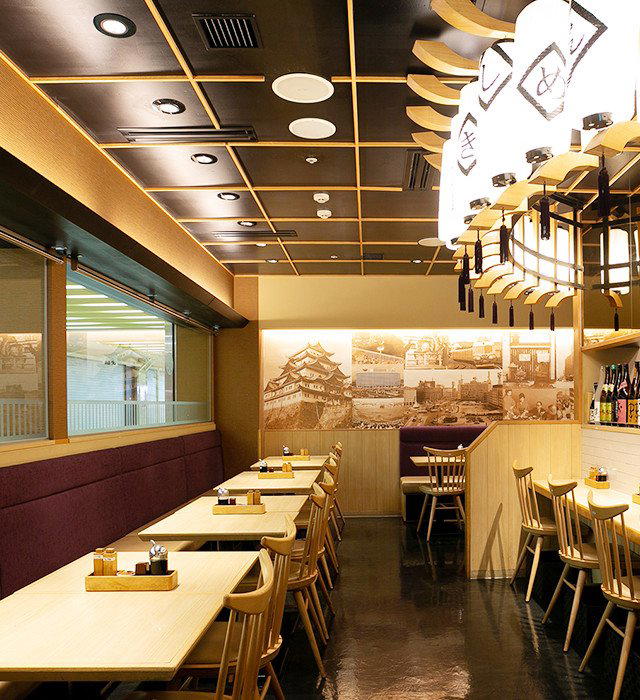
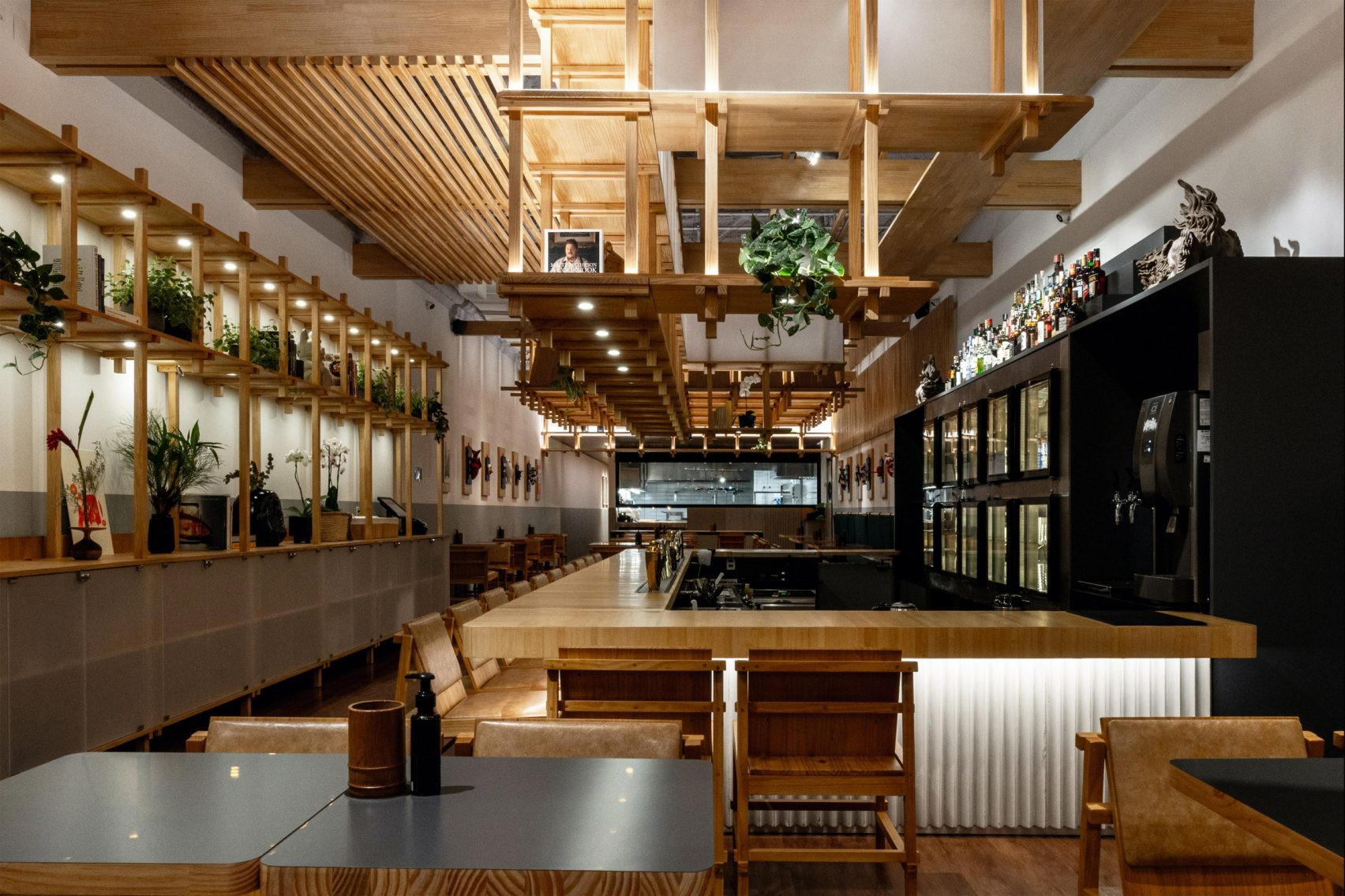
Simple, cafeteria-style Japanese diner atmosphere with counter and table seating, a calm but busy feel typical of an underground station shokudo, and a focus on hearty home-style meals rather than decor.