Tavern Klimataria occupies a storied address on Plateia Theatrou in central Athens, holding its ground as one of the city's older taverna spaces where the physical room, tiled floors, wooden panelling, the particular dimness of a space built before lighting became a design statement, does as much work as the kitchen. It sits in a neighbourhood that has shifted around it, making the building itself a reference point for a certain Athens that persists beneath the contemporary dining scene.
Pearl is the En Primeur Club membership app — saves, bookings, and concierge access live there. Same editors, same standards.
- Address
- Pl. Theatrou 2, Athina 105 52, Greece
- Phone
- +302103216629
- Website
- klimataria.gr
- Directions
- Get directions
 Saves & bookings on Pearl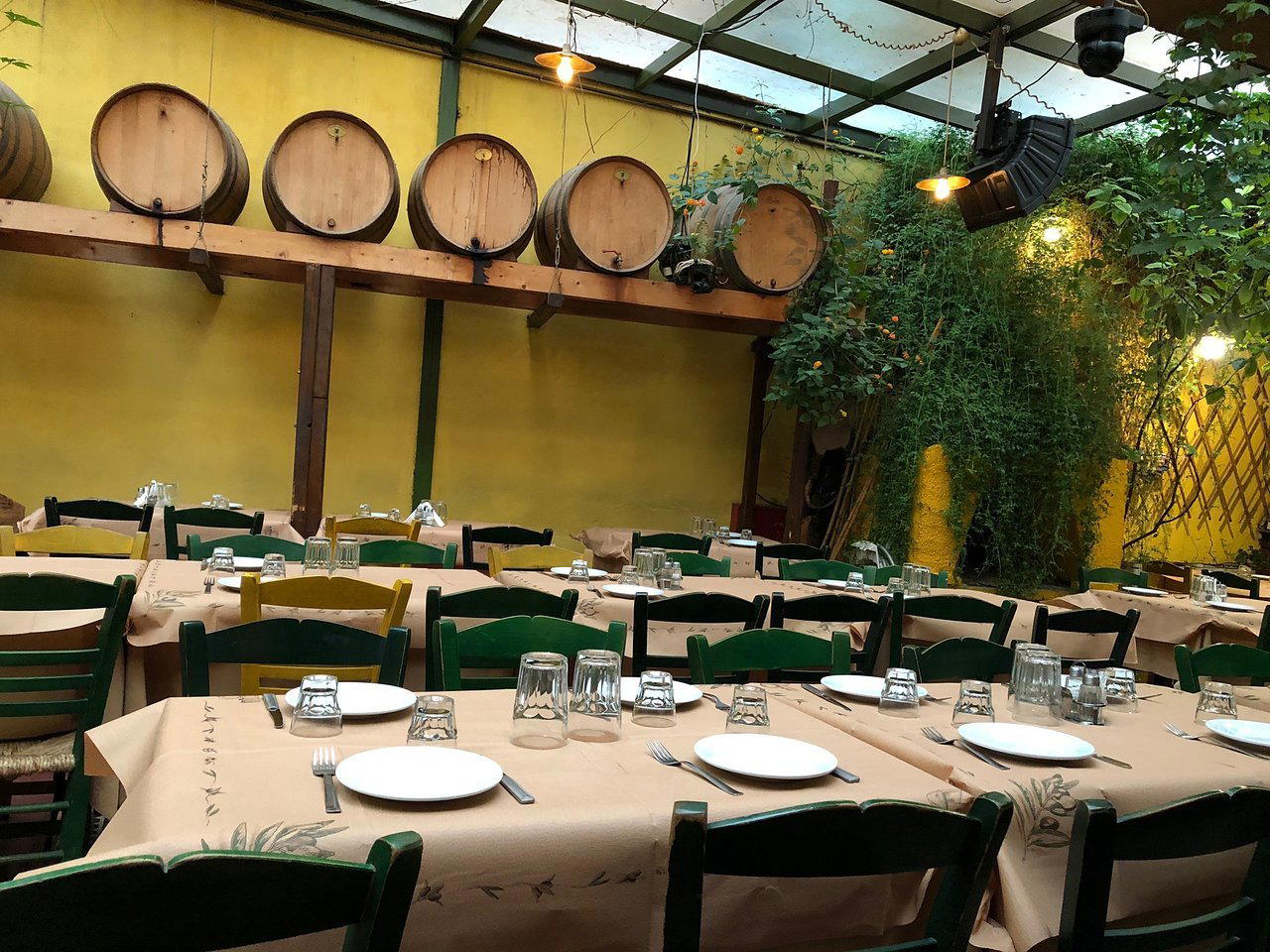
The Room That Theatrou Built
Plateia Theatrou is not the Athens that appears in most contemporary dining conversations. The square sits in the older, denser part of the city centre, a district that has absorbed waves of change without fully submitting to any of them. Arriving at Tavern Klimataria, the address itself, Pl. Theatrou 2, positions the space at the edge of that square, and the building reads as a physical document of what Athenian taverna architecture looked like before hospitality design became a discipline of its own. Tiled floors worn to a softness that no specification sheet can replicate. Wooden fittings that carry the particular colour of decades of use. A ceiling height and room proportion that belong to a different era of construction, when dining rooms were built to function rather than to photograph.
That physicality is worth taking seriously as a category signal. Athens has developed a strong tier of contemporary restaurants, Delta, Hytra, and Botrini's operate at different price points and with design languages built explicitly for the current moment. Klimataria sits at a different coordinate entirely: a room that has not been renovated into relevance, which in itself constitutes a position. For a visitor trying to triangulate between a city's present ambitions and its persistent habits, the distinction matters.
What the Space Communicates
The interior architecture of the traditional Athenian taverna follows a logic that is worth understanding in its own right. These spaces were not minimalist by design philosophy, they accumulated objects, surfaces, and fixtures over time, producing a density that reads as layered rather than curated. Klimataria belongs to this tradition. The room does not edit itself for the contemporary gaze. Wine barrels, framed objects, the particular warmth of incandescent light against wood panels, these are not styling choices but the residue of continuous operation. In a city where Makris Athens and Hervé represent the considered, designed end of the spectrum, Klimataria represents the unconsidered end, and unconsidered, in this context, is a description rather than a criticism.
Seating arrangements in spaces like this tend toward the communal or the tightly packed, with tables positioned for maximum use of a room built when floor space was treated as a resource rather than an ambient element. This compression has a social effect: conversations travel between tables, the noise level settles at a particular register, and the experience of eating becomes less private than it would be in a contemporary restaurant designed around acoustic separation. That is a feature of the format, not a deficiency.
The Broader Taverna Tradition in Athens
The Athenian taverna as a category has been under a particular kind of pressure for roughly two decades. As the city developed a fine-dining tier, the older, unreconstructed taverna was repositioned by contrast. Some operators responded by updating: modernising menus, redesigning interiors, repositioning pricing. Others did not. Klimataria occupies the latter category, and that positioning aligns it with a specific kind of diner: one who is not looking for the city's current creative output but for a point of contact with the version of Athens that existed before the creative output became the headline.
This is not a niche without demand. The Plateia Theatrou neighbourhood draws a mix of residents, working Athenians, and visitors who have moved past the Monastiraki-Plaka axis in search of something with less tourist-facing infrastructure around it. The taverna format, shared dishes, wine by the carafe, a menu that does not rotate seasonally because it is built around permanent fixtures of Greek cooking, suits that audience. Dishes in this tradition typically include slow-cooked meats, bean soups, fried vegetables, and grilled fish, presented without architectural ambition and priced to reflect the format rather than the ambition.
For comparison with the contemporary end of Athens dining, Hytra at the €€€ tier and Botrini's at the €€€€ tier both work within modern Greek cuisine frameworks that use the same raw culinary inheritance, olive oil, legumes, seafood, lamb, but process it through contemporary technique and tasting-menu structures. Klimataria's relationship to that same inheritance is direct and unmediated. Neither approach is more authentic than the other, but they answer different questions.
Athens Beyond the Plateia
Visitors who use Klimataria as an anchor for the central Athens taverna experience will find the surrounding neighbourhood useful for orientation. The area around Theatrou square connects to Psyrri and Monastiraki within walking distance, and to the broader Omonia zone that has undergone significant change in recent years. Greece's dining geography extends well beyond the capital: Lure Restaurant in Oia, Aktaion in Firostefani, and Feredini in Santorini represent the island-based end of the same food culture, while Jimy's Fish in Piraeus and Alykes in Palaio Faliro show how the seafood-forward side of Greek cooking operates in the coastal suburbs. Lake Vouliagmeni extends the coastal dining picture further south. For a fuller map of Athens options, the EP Club Athens restaurants guide covers the current range from fine dining to neighbourhood essentials.
Those looking to compare across Greek islands will find useful reference points at Cacio e Pepe in Thira Municipality, Knossos Greek Taverna in Gouves, and Beauvoir in Katakolo. And for those building an itinerary that moves between Athens and other dining cities, the EP Club covers international reference points including Le Bernardin in New York City and Atomix in New York City, as well as Cash in Kifisia for those staying in Athens' northern suburbs.
Planning a Visit
The address at Plateia Theatrou 2 is reachable on foot from central Athens landmarks, and the square itself is a useful navigation point in a part of the city where street-level wayfinding can be inconsistent. Arriving during off-peak hours, especially early lunch or weekday evenings, is the approach that tends to work in the category. The room's capacity and the neighbourhood's rhythm both favour that timing.
Where It Fits
Comparable venues nearby, for context on price, style, and recognition.
| Venue | Cuisine | Price | Notes |
|---|---|---|---|
| Tavern KlimatariaThis venue — the venue you are viewing | Traditional Greek Taverna | $$ | Not listed |
| Ατίταμος | Traditional Greek | $$ | Exarcheia |
| Old School | Traditional Greek with Modern Touches | $$ | Makrygianni |
| Kiouzin | Modern Greek Bistro | $$$ | Syntagma |
| Fabrica tou Efrosinou | Traditional Greek Regional Taverna | $$ | Koukaki |
| Migniardise | Greek Bakery Cafe | $$ | Veikou |
Continue exploring
More in Athens
Restaurants in Athens
Browse all →
Bars in Athens
Browse all →
Hotels in Athens
Browse all →

At a Glance
- Rustic
- Lively
- Well Known
- Classic
- Bohemian
- Group Dining
- Casual Hangout
- Special Occasion
- Date Night
- Live Music
- Historic Building
- Courtyard
- Local Sourcing
Current opening hours
- Monday
- 11 AM–11 PM
- Tuesday
- 12 PM–12:30 AM
- Wednesday
- 12 PM–12:30 AM
- Thursday
- 12 PM–12:30 AM
- Friday
- 12 PM–1 AM
- Saturday
- 12 PM–1 AM
- Sunday
- 12 PM–1 AM
Hours can change for holidays and private events. Last verified .
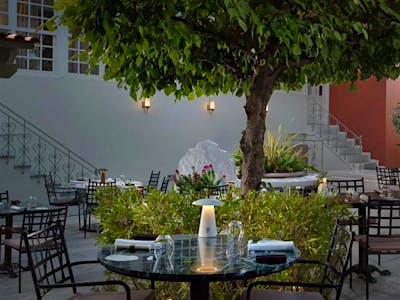
Warm, nostalgic atmosphere evoking old Athenian courtyards with climbing foliage, cast iron stoves, and the well-known presence of Pericles at the entrance; intimate stone interiors with traditional decor.