Tartine
A West Village address that slots into New York's ingredient-driven casual dining conversation, Tartine at 253 W 11th St occupies a neighbourhood where sourcing credentials and kitchen discipline carry as much weight as any formal award. The room skews intimate, the clientele local, and the approach grounded in what the season and supplier make possible on a given week.
Pearl is the En Primeur Club membership app — saves, bookings, and concierge access live there. Same editors, same standards.
- Address
- 253 W 11th St, New York, NY 10014
- Phone
- +12122292611
- Website
- tartine.nyc
- Directions
- Get directions
 Saves & bookings on Pearl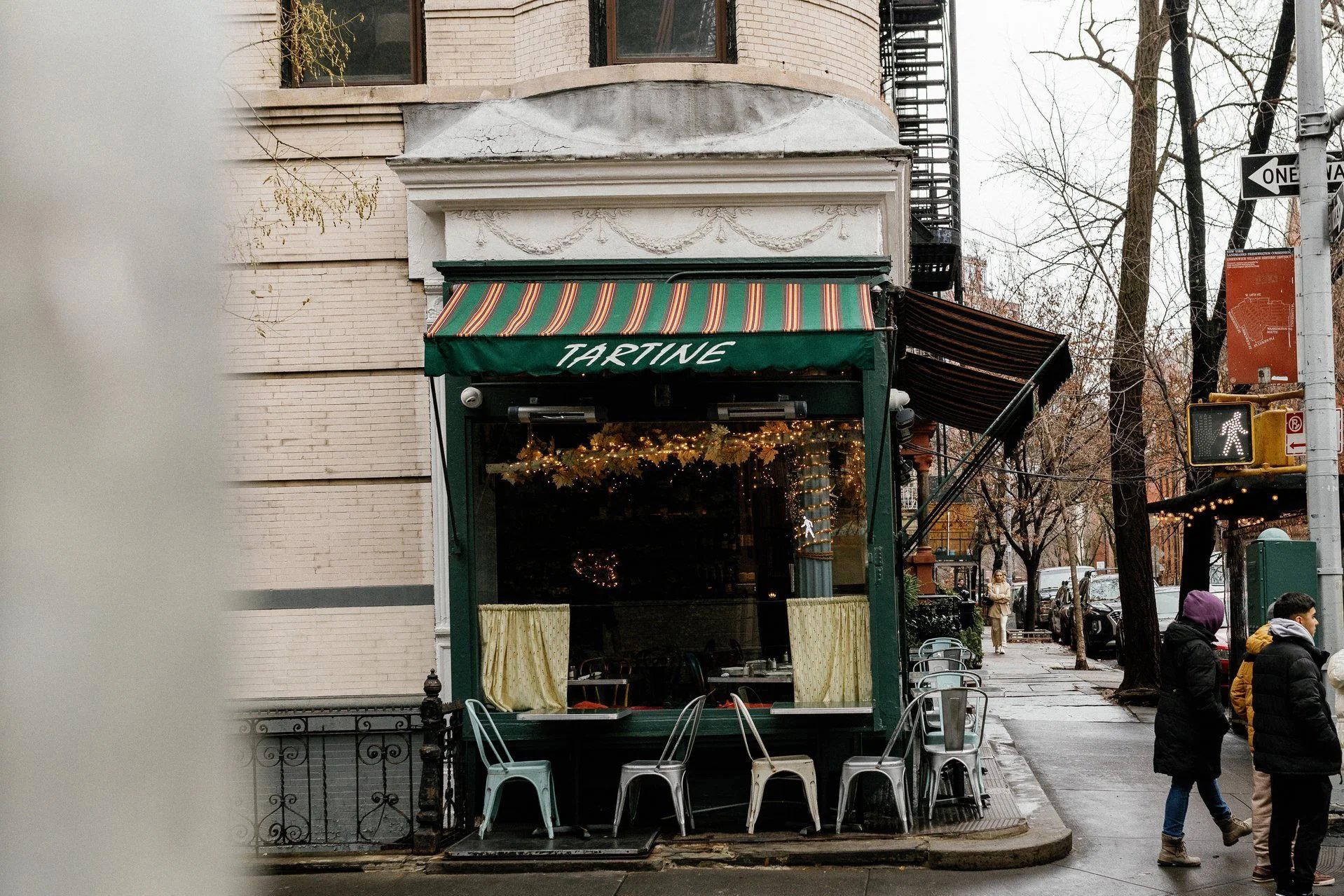
Where the West Village Sets the Table
West 11th Street in the West Village operates on a different register from Midtown's trophy-dining corridor. The blocks between Hudson and Bleecker have long attracted the kind of neighbourhood restaurant that earns its following through consistency and sourcing rather than ceremony. Tartine sits inside that tradition: a small room on a residential stretch where the competition is not Le Bernardin or Masa, but the accumulated standard set by decades of serious West Village cooking. That context shapes everything about what to expect here.
New York's fine-dining tier, represented by places like Per Se and Atomix, operates on tasting menus, long lead times, and formal service architecture. Tartine operates in a different register entirely, one where the ingredient itself, not the technique applied to it, tends to anchor the menu. That distinction places it in a comparable set defined by market relationship and seasonal responsiveness rather than by Michelin star count or prix-fixe format.
The Sourcing Logic Behind a West Village Address
The ingredient-first model that defines much of the West Village's better casual dining has a specific geography to it. New York sits within reach of some of the Northeast's most productive farmland: the Hudson Valley delivers stone fruit, alliums, and leafy brassicas across a long season, while the Greenmarket network at Union Square, roughly a ten-minute walk from this address, funnels regional produce into kitchens across lower Manhattan on a Tuesday-and-Saturday cadence. Restaurants in this neighbourhood that commit to that supply chain tend to build menus that shift week to week rather than quarter to quarter.
That model has a precedent in the wider American farm-to-table conversation. Blue Hill at Stone Barns in Tarrytown made the sourcing relationship itself the editorial subject of a meal, while Single Thread Farm in Healdsburg built an entire property around the vertical integration of farm, kitchen, and inn. The West Village equivalent of that philosophy tends to be quieter and less programmatic, more likely to show up as a specials board than a provenance narrative, but the underlying logic is the same: what grows well nearby, harvested at the right moment, requires less intervention in the kitchen.
Across the wider American scene, this approach has taken root in cities with strong regional agriculture. Bacchanalia in Atlanta built its identity around Southern-sourced ingredients long before farm-to-table became a marketing formula. Providence in Los Angeles applies comparable discipline to Pacific seafood. In each case, the commitment to sourcing acts as a constraint that sharpens rather than limits the menu.
Reading the Room on West 11th Street
The West Village has resisted the kind of destination-dining density that defines certain other Manhattan neighbourhoods. There are no long tasting-menu counters on this block, no omakase formats booking three months in advance, no theatrics borrowed from Alinea or molecular traditions. What the neighbourhood offers instead is a high floor of everyday cooking, the kind that assumes a returning clientele who will notice when a supplier changes or a seasonal ingredient drops off the menu.
That assumption shapes the room's character. Spaces in this part of the West Village tend toward the compact and unfussy: close tables, a short wine list that leans regional or natural, and a pace set by the kitchen rather than by a fixed service sequence. The comparison set is not the formal progressive Korean of Jungsik or the long-format ambition of The French Laundry in Napa. It is, rather, the accumulated judgment of a neighbourhood that has eaten well for a long time and knows the difference between a kitchen that sources carefully and one that merely says it does.
Ingredient-Led Cooking in a National Context
The West Village's quiet insistence on ingredient quality sits within a broader national shift. Across American cities, the restaurants that have built particularly durable reputations over the past two decades tend to be those that established a clear sourcing identity early and held it. Emeril's in New Orleans made Louisiana producers central to its identity at a time when regional sourcing was not yet expected of a major American kitchen. Lazy Bear in San Francisco built its communal-table format around Northern California's agricultural calendar. Addison in San Diego draws on Southern California's year-round growing season to sustain a tasting menu that changes with market availability rather than seasonal convenience.
At the international level, the same logic applies in different climates and supply chains. 8½ Otto e Mezzo Bombana in Hong Kong and Alain Ducasse's Louis XV in Monte Carlo each built reputations on sourcing discipline within their respective regional contexts, the former on Italian produce flown to market, the latter on Provençal and Ligurian ingredients treated with minimal intervention. The throughline across all these rooms is that sourcing is not a story told to guests; it is a discipline that shows up on the plate.
In the West Village, at the scale of a neighbourhood restaurant rather than a destination institution, that discipline is expressed more quietly. But the standard is no less demanding for being less conspicuous. The Inn at Little Washington built decades of recognition by treating its rural Virginia location as an asset rather than a limitation. Tartine, on a residential block in lower Manhattan, operates on a version of the same premise: that proximity to good supply, and the discipline to use it well, is especially durable foundation for a neighbourhood restaurant.
Planning Your Visit
Tartine is located at 253 W 11th St, New York, NY 10014 in the West Village. Reservations: Walk-ins are welcome, and the room is friendly to spontaneous visits. Dress: Casual. Budget: Expect about $35 per person. Getting there: The address is walkable from Christopher St-Sheridan Sq and 14th St stations.
Cuisine Context
Comparable venues nearby, for context on price, style, and recognition.
| Venue | Cuisine | Price | Notes |
|---|---|---|---|
| TartineThis venue — the venue you are viewing | French Bistro | $$ | Not listed |
| La Ripaille | Modern French Bistro | $$ | West Village |
| Paris Café | Classic French Brasserie | $$ | John F. Kennedy International Airport |
| Cafe Gitane | French-Moroccan Bistro | $$ | SoHo-Little Italy-Hudson Square |
| Sirrah | Modern French Bistro | $$$ | West Village |
| The Consulate Midtown | French-American Brasserie | $$$ | Midtown-Times Square |
Continue exploring
More in New York City
Restaurants in New York City
Browse all →
Bars in New York City
Browse all →

Hotels in New York City
Browse all →






At a Glance
- Cozy
- Intimate
- Classic
- Brunch
- Casual Hangout
- Standalone
Current opening hours
- Monday
- 11 AM–4 PM
- Tuesday
- 11 AM–4 PM, 5:30–10 PM
- Wednesday
- 11 AM–4 PM, 5:30–10 PM
- Thursday
- 11 AM–4 PM, 5:30–10:30 PM
- Friday
- 11 AM–4 PM, 5:30–10:30 PM
- Saturday
- 10 AM–4 PM, 5–10:30 PM
- Sunday
- 10 AM–4 PM, 5:30–10 PM
Hours can change for holidays and private events. Last verified .
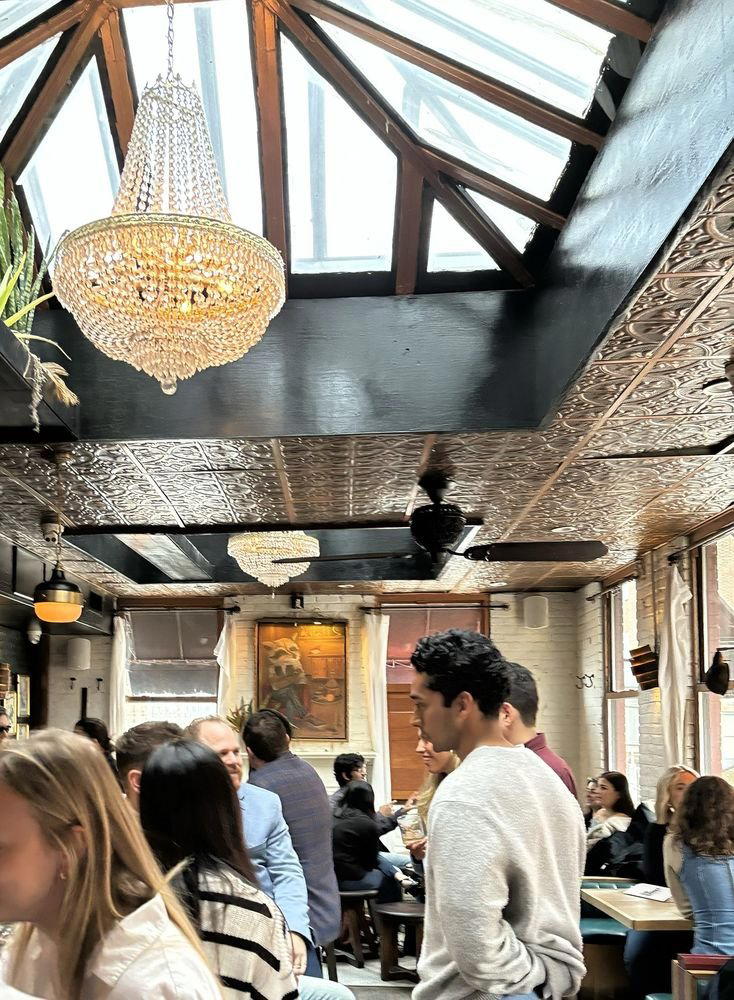
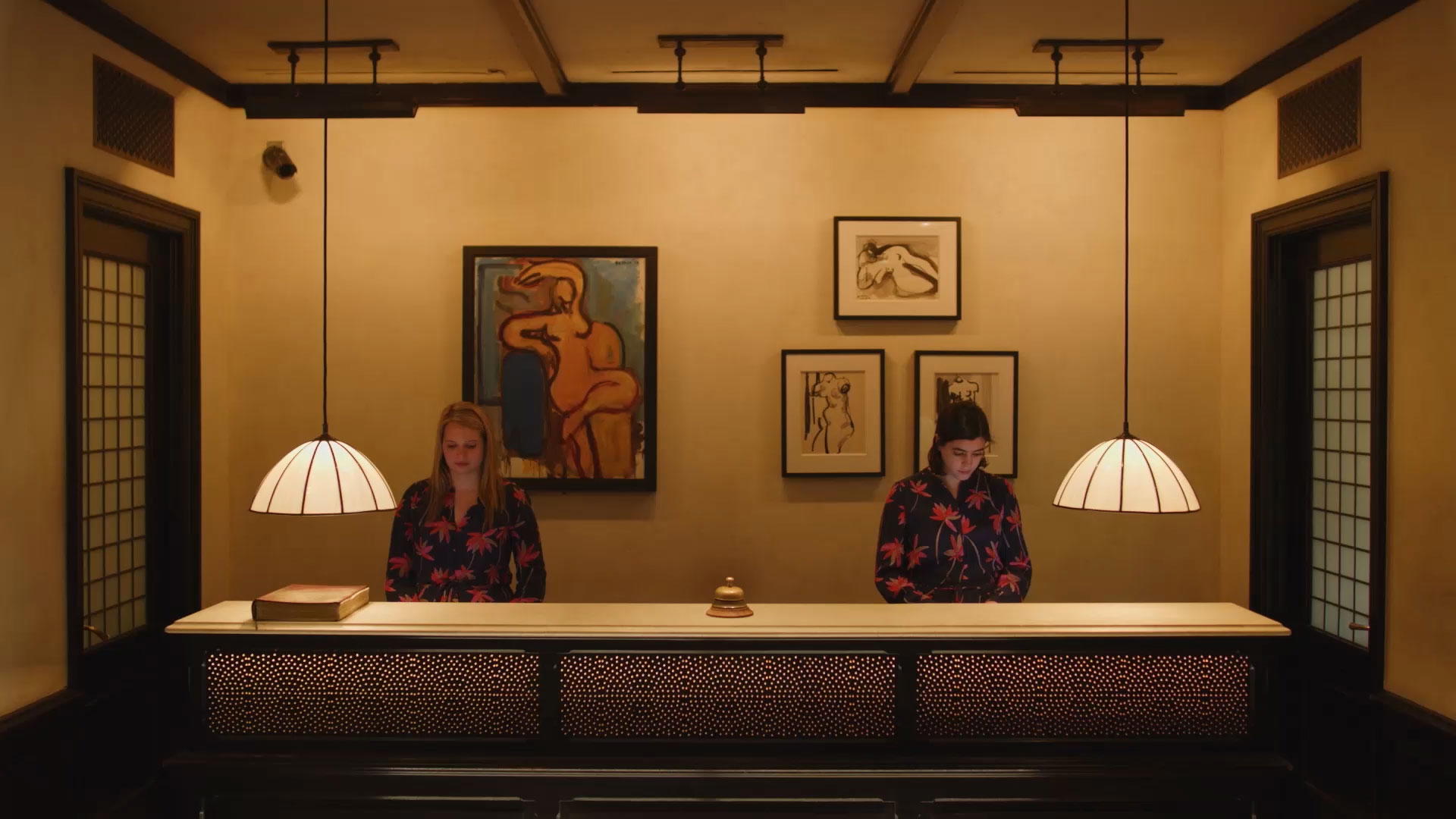
Cozy and intimate with tight quarters and informal service creating a casual Parisian bistro atmosphere.