Taquería Orinoco

Our verdict
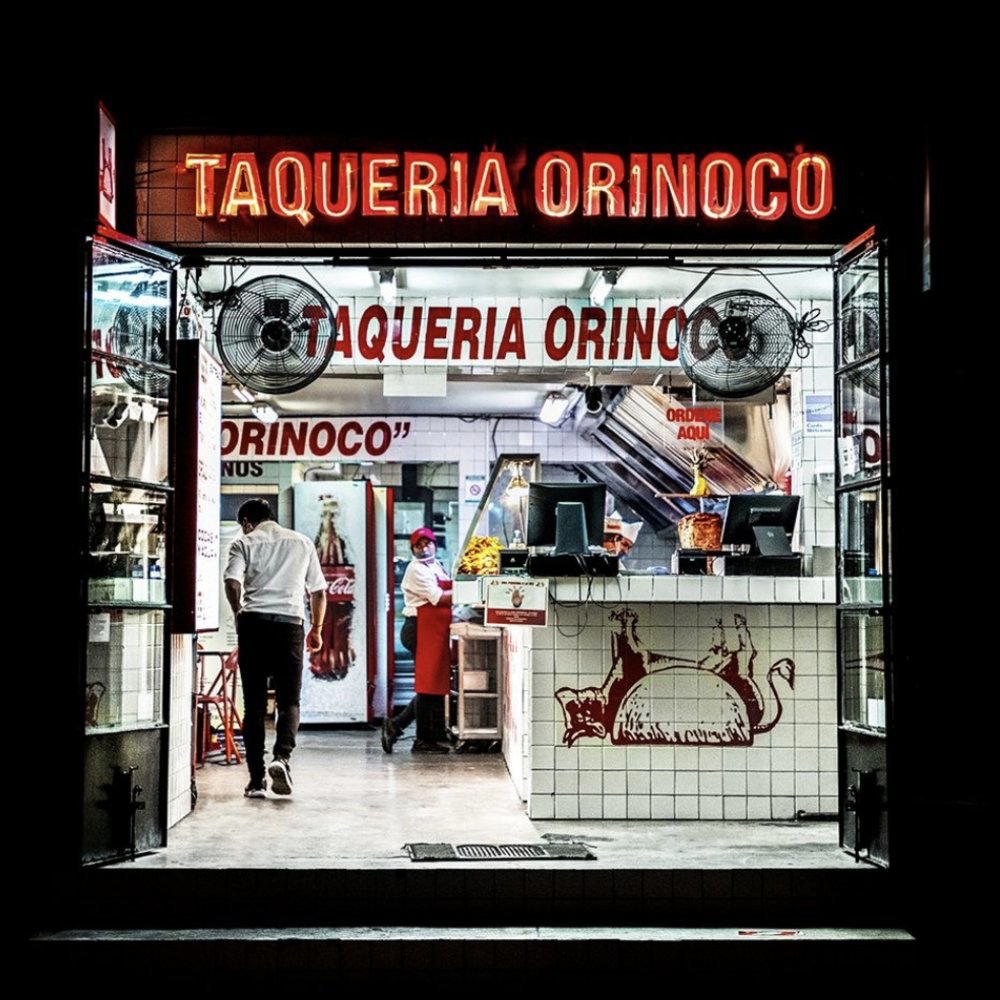
On Avenida Álvaro Obregón in Colonia Roma Norte, Taquería Orinoco occupies a position in Mexico City's taco scene that sits several registers above the street cart but stops well short of the fine-dining register where Pujol operates. The kitchen works within a tradition that prizes sourcing and technique in equal measure, making it a reference point for how the taquería format can carry genuine culinary ambition.

Pearl is the En Primeur Club membership app, where members save venues, book tables and use the concierge.
The menu
What to order
- Taco de Chicharrón
- Taco de Trompo (Al Pastor)
- Taco de Res (Beef)
Roma Norte and the Taquería That Takes Its Ingredients Seriously
Colonia Roma Norte has spent the better part of two decades becoming Mexico City's most self-aware dining neighbourhood. The tree-lined stretch of Avenida Álvaro Obregón concentrates a specific kind of restaurant: one that understands its own tradition well enough to work inside it with precision rather than nostalgia. Taquería Orinoco sits at number 100 on that avenue, and the address alone signals something about its position in the city's food conversation. This is not a sidewalk operation, nor is it attempting to be a tasting-menu room. It occupies the productive middle ground where Mexico City's taco culture and its growing appetite for traceability and sourcing transparency meet.
That middle ground is increasingly contested. Across Roma Norte and neighbouring Condesa, a generation of restaurants has absorbed the lesson that ingredient provenance is not a luxury-tier concept. You see it at the produce-driven end of the market in places like Alcalde in Guadalajara, where sourcing is the editorial frame for everything on the plate. You see it at the opposite end of the price spectrum in Oaxaca, where Levadura de Olla Restaurante treats regional ingredient identity as a given rather than a selling point. Taquería Orinoco applies a version of this logic to the taquería format itself.
The Sourcing Argument Behind the Taco
Mexican taco culture has always been more regionally specific than its international reputation suggests. The distinction between a suadero taco from a Mexico City tlayudero, a carnitas preparation from Michoacán, and a pastor-style cook from the Lebanese-influenced traditions of Puebla are not interchangeable. They point to different animals, different cuts, different fires, and different timings. The taquería that takes sourcing seriously is not importing a fine-dining concept downward; it is recovering something the street tradition understood long before provenance became fashionable language.
This matters in the Roma Norte context because the neighbourhood's diners have been trained, across years of eating at restaurants operating at multiple price points, to notice when ingredients are doing the work versus when technique is compensating for them. The same dynamic plays out further afield at places like Animalón in Valle de Guadalupe, where open-fire cooking in wine country forces the sourcing question into the open, or at Olivea Farm to Table in Ensenada, where the farm-to-table framing is literal rather than aspirational. Taquería Orinoco's version of this argument is compressed into a format where each taco is a small and direct test of the underlying ingredient.
For context on how Mexico City's premium end handles the same sourcing conversation at a higher price point, Pujol remains the clearest reference: its mole madre has aged continuously, and its sourcing relationships with regional producers are part of the public record of how the restaurant thinks. Taquería Orinoco operates at a different register, but the underlying concern with what enters the kitchen is recognisable across both formats.
The Roma Norte Setting
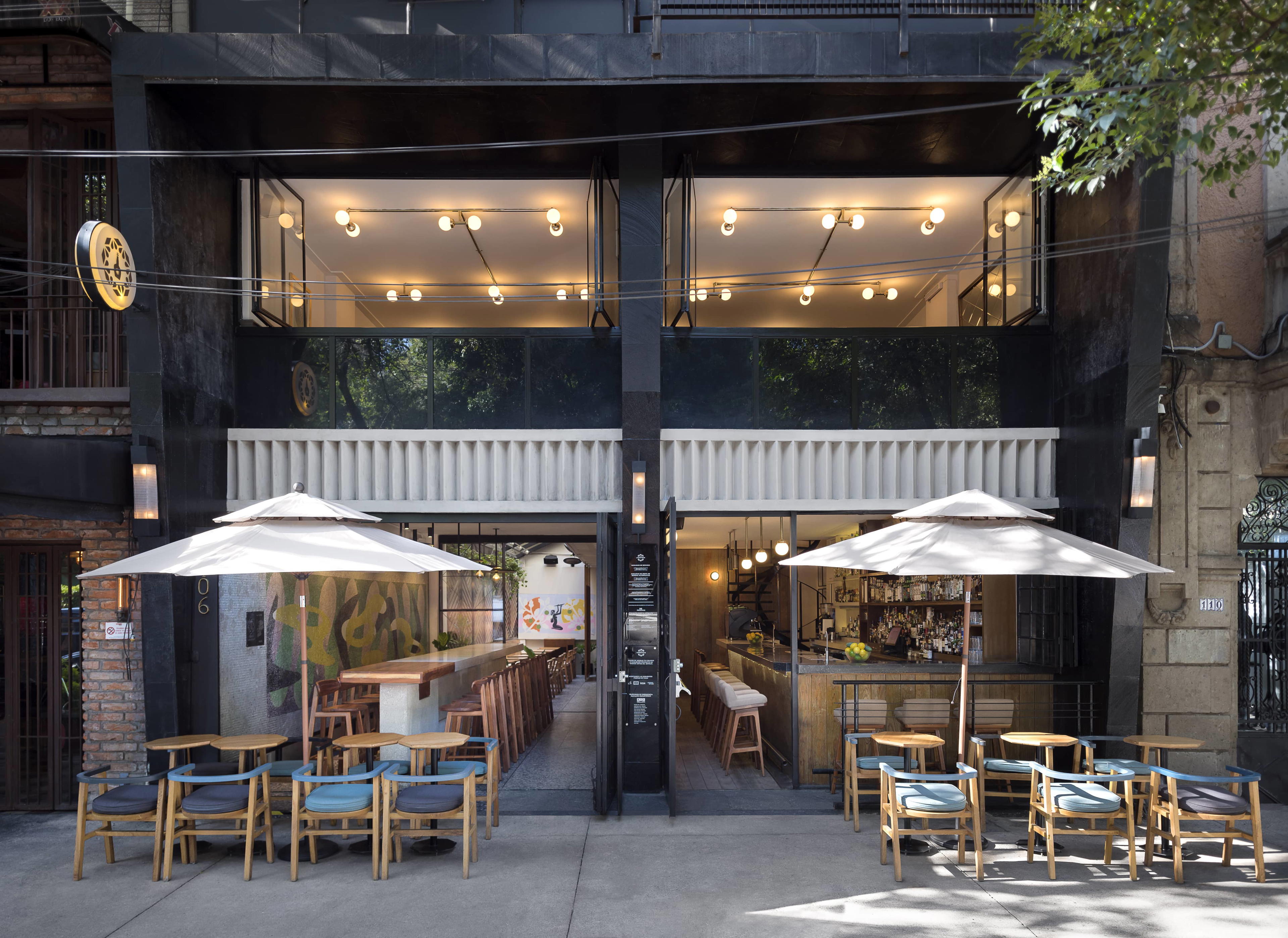
Arriving on Álvaro Obregón, the visual rhythm of the avenue is defined by jacaranda trees and mid-century facades in various states of careful restoration. The address puts Taquería Orinoco within walking distance of the neighbourhood's concentration of independent restaurants, coffee spots, and weekend markets, which means it draws from a foot-traffic pattern that includes both local residents and visitors working through Mexico City's dining geography. The Roma Norte dining scene functions as an introduction to the city for many international visitors, partly because its format diversity is legible and partly because its price range is broader than either the historic centre or the Polanco corridor.
Within that setting, the taquería format carries specific social logic. Unlike the tasting-menu rooms that require advance planning and a particular kind of occasion, a taquería operates on walk-in availability and shared-table informality. Those qualities are not deficits relative to the fine-dining tier; they reflect a different relationship between the food and the people eating it. Mexico City's strongest taquería tradition has always been about access and repetition: the places that earn loyalty do so because they can be visited on a Tuesday afternoon as readily as a Friday night.
For visitors mapping a broader route through Mexico's serious food cities, the contrast with places like KOLI Cocina de Origen in Monterrey, Huniik in Merida, or HA' in Playa del Carmen illustrates how differently regional identity gets expressed across Mexican cuisine. Roma Norte is not trying to represent a single region; it is where Mexico City's own hybrid tradition gets tested and refined.
Planning a Visit
Taquería Orinoco is located at Av. Álvaro Obregón 100 in Roma Norte, a neighbourhood that is well-served by the city's metro system and by ride-share platforms operating throughout the day. The format is casual enough to accommodate families and groups arriving without reservations, and the avenue's density of options means that even during peak hours, the surrounding block offers alternatives if the wait is long. Visitors who want to bracket a visit with other stops in the neighbourhood have no shortage of material: Roma Norte's food density rewards a deliberate, unhurried approach rather than a single-destination visit.
Those building a broader Mexico City itinerary should read our full Ciudad de México restaurants guide for context across neighbourhoods and price tiers. Orinoco fits naturally into a day that moves between formats: a morning market visit, a taquería lunch, and an evening reservation at a more structured room nearby. That rhythm reflects how the city's own residents move through its food geography, which is usually a more reliable model than any single-restaurant itinerary.
For additional points of reference across Mexico's restaurant scene, Arca in Tulum, Le Chique in Puerto Morelos, Pangea in San Pedro Garza García, Lunario in El Porvenir, Casa Barroca in Puebla, and Carnitas Don Vasco in Cancún each represent different points on the country's food map, and California Prime in Celaya shows how regional protein traditions translate into dedicated restaurant formats outside the major cities. For international calibration, Le Bernardin in New York and Atomix in New York offer reference points for how ingredient sourcing and precision translate across culinary traditions at the highest formal level.
Frequently asked questions
Would Taquería Orinoco be comfortable with kids?
Roma Norte taquerías generally run informal and fast-paced, and Taquería Orinoco on Álvaro Obregón fits that mould. The street-side setting and counter-style service make it an easy environment for children, no dress code, no lengthy multi-course format. Noise levels and the open rhythm of taco service tend to work in favour of families.
Is Taquería Orinoco better for a quiet night or a lively one?
Expect a lively atmosphere. Álvaro Obregón is one of Roma Norte's busiest pedestrian corridors, and taquerías on that stretch tend to peak with energy in the evening and on weekends. This is not the place for a hushed dinner, it runs on the energy of the neighbourhood rather than against it.
How does Taquería Orinoco fit into the Roma Norte dining scene compared to other taquerías in Ciudad de México?
Roma Norte has evolved over two decades into a neighbourhood where ingredient provenance is taken seriously across every category of restaurant, and Orinoco sits inside that conversation at the taquería level. Its address on Av. Álvaro Obregón 100 places it at the centre of one of CDMX's most food-literate corridors, where the standard of reference is higher than in a typical taquería strip. That context matters: the comparison set is not just other tacos, but the broader dining standards of the neighbourhood.
What should I eat at Taquería Orinoco?
The body of work at Orinoco is built around sourcing-conscious taco preparations rooted in regional Mexican tradition, the kind of distinctions that separate a suadero from a costilla, or a properly rendered al pastor from a shortcut version. Order across several cuts rather than sticking to one, since the kitchen's argument is made through ingredient quality and preparation discipline rather than any single showpiece taco.
A Quick Peer Check
Comparable venues nearby, for context on price, style, and recognition.
| Venue | Cuisine | Price | Notes |
|---|---|---|---|
| Taquería OrinocoThis venue (the venue you are viewing) | Traditional Mexican Tacos | $10–20 | Not listed |
| Taqueria La otra | Traditional Mexican Taqueria | $10–20 | San Jose downtown |
| Barbacoa De Vicky | Traditional Mexican Barbacoa | Not listed | San Jose del Cabo |
| Taqueria El Arbolito | Authentic Mexican Taqueria | $1–10 | Puerto Aventuras |
| Taco time | Mexican Street Tacos & Shrimp Burritos | $1–10 | Zona Romantica |
| El Flaco | Street Tacos | $10–20 | Centro |
Recognition history
Dated appearances from independent guides and award organizations, with the underlying list record or original source where available.
Opinionated About Dining Cheap Eats in North America Ranked #15
Opinionated About Dining
Continue exploring
More in Mexico City
Restaurants in Mexico City
All restaurants in Mexico City →


Details
- Lively
- Well Known
- Rustic
- Energetic
- Casual Hangout
- Late Night
- Group Dining
- Solo
- Open Kitchen
- Standalone
- A La Carte
- Agua De Jamaica
- Vegetarian Friendly
Current opening hours
- Monday
- 1 PM–3:30 AM
- Tuesday
- 1 PM–3:30 AM
- Wednesday
- 1 PM–3:30 AM
- Thursday
- 1 PM–4 AM
- Friday
- 1 PM–5:30 AM
- Saturday
- 1 PM–5:30 AM
- Sunday
- 1 PM–3:30 AM
Hours can change for holidays and private events. Hours as of .