
Tamaichi belongs to Osaka’s everyday Korean-yakiniku current rather than its formal tasting-menu circuit: communal, grill-led, and built for progression through banchan, barbecue, tripe, hot pot, and drinks. Its selection for Tabelog’s Asian cuisine / Ethnic cuisine WEST “Tabelog 100” 2024 gives the room a clear credential inside a category often judged more by regulars than ceremony.
Pearl is the En Primeur Club membership app — saves, bookings, and concierge access live there. Same editors, same standards.
- Address
- 大阪府大阪市北区池田町17-4
- Phone
- +81663538626
- Website
- tabelog.com
 Saves & bookings on Pearl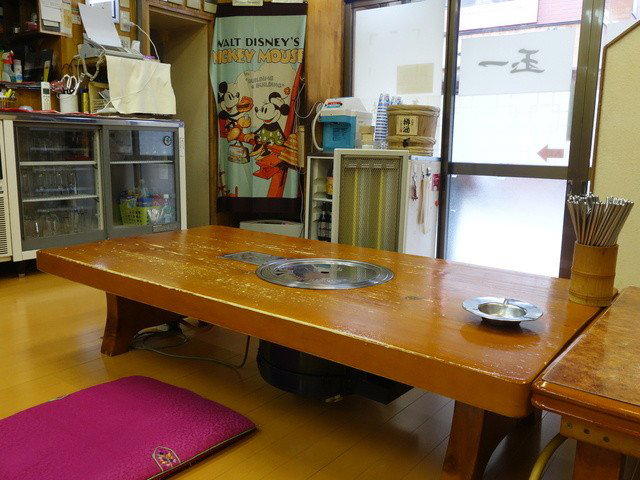
Ikedacho, north of Osaka’s central shopping gravity, suits a restaurant built around smoke, broth, and table rhythm: narrow streets, local foot traffic, and a city that treats casual eating seriously. Here, Korean food and yakiniku are not novelty. They share Osaka’s grammar with kushikatsu, okonomiyaki, and late-night noodles: food that gathers people around heat, shared plates, and a sequence that expands or contracts with the table.
Tamaichi has unusual visibility in that lane. Its 2024 selection for Tabelog’s Asian cuisine / Ethnic cuisine WEST “Tabelog 100” places it in a regional group where Korean cooking, South Asian curry, Vietnamese counters, and other non-washoku formats compete in western Japan. That matters because Osaka’s dining reputation can default to native comfort dishes or polished kappo. The city’s better ethnic restaurants tell another story: migration, adaptation, and local regulars deciding what earns repeat business.
Korean barbecue in Osaka works as a progression, not a single order
The smart way to read this meal is by sequence. Korean home cooking, yakiniku, and tripe each pull the table differently: small plates set appetite and tempo, grilled meat creates the central social act, and hot pot or organ-meat dishes add depth and volume. A restaurant in this category is judged not only by one plate, but by whether the table can move from first drinks to shared heat without losing rhythm.
That progression helps the format travel in Osaka. The city is comfortable with self-directed eating: diners cook, divide, reorder, and stretch the meal by mood. Compared with a linear tasting menu, Korean barbecue gives the table control. Compared with a snack-led izakaya crawl, it gives dinner structure. Tamaichi’s category mix, Korean, yakiniku, and tripe, signals that broader arc rather than a narrow single-specialty counter.
Within Osaka, the contrast helps. Gochiso nene occupies a more formal tempura register, while Men Genso sits at the low-cost noodle end of the everyday spectrum. Kuro Hitsuji Youniku Kushiten BLACK SHEEP and anello show the city’s appetite for focused casual formats at mid-range budgets. Tamaichi belongs to the shared-table branch of that culture: less chef-facing theater, more ordering intelligence, grill timing, and appetite management.
That difference explains why awards recognition reads differently here than in a Michelin-starred kaiseki room. Tabelog’s Hyakumeiten lists are useful for restaurants whose authority comes from repeat local use and category credibility rather than international fine-dining choreography. A 2024 WEST selection does not make the meal formal; it confirms that a casual, multi-part Korean-yakiniku format has enough pull to rank among the region’s stronger Asian and ethnic dining addresses.
The room suits groups, families, and long tables of food
The physical format reinforces the meal’s social logic. With 95 seats, semi-private rooms, counter seating, tatami, sunken seating, and take-out, the restaurant is built for several speeds rather than one script. That range matters in Osaka, where a dining room can move from family lunch to after-work group dinner without changing identity. Children are welcome, and no smoking inside, with a smoking area outside, makes the room easier for mixed-age parties.
Drinks widen the arc without turning the place into a bar. Sake, shochu, wine, and cocktails give the table more flexibility than beer-only barbecue. For a Korean-yakiniku meal, that matters: grilled meat, tripe, and hot pot can push different drink choices in one sitting. The point is not pairing ceremony, but keeping pace with salt, heat, fat, broth, and conversation.
There is a practical Osaka lesson too. Serious eating is not confined to high-ticket counters. A restaurant can work in a casual price band, hold a large room, welcome families, and still earn category recognition. That is part of Osaka’s appeal for visitors who know Tokyo’s reservation culture and Kyoto’s restraint. The city rewards diners who read ordinary-looking formats carefully.
Where Tamaichi fits into a wider Osaka itinerary
For travelers building a food itinerary, compare not only another Korean restaurant, but the meal’s role across a day in Osaka. A bakery stop such as 52CHO-ME BAKERY, a coffee break at .cafe, or the city’s familiar takeaway energy at 551 Horai (551蓬莱) all sit in another register. Dinner around grill and shared plates gives the day its centre of gravity.
Osaka’s breadth is the point. 99 Pizza Napoletana Gourmet and a canto (Italian) show how comfortably the city absorbs non-Japanese formats, while Korean barbecue adds a communal, heat-led version of that appetite. For broader planning, Our full Osaka restaurants guide is the natural base, with Our full Osaka hotels guide, Our full Osaka bars guide, Our full Osaka wineries guide, and Our full Osaka experiences guide rounding out the city.
Against Japan’s wider casual-dining map, the thread is clear. Beef-focused rooms such as -Grilled beef Sukiyaki- KAMAKURA TANUKIAN 鎌倉 たぬき庵 in Kamakura, charcoal-led seafood addresses such as. 鮪と炭火焼き うお炭 秋葉原店 in Tokyo, and regional specialists such as.know in Kumamoto or (Shoku) Vietnam in Kawasaki show how Japan’s city dining now runs on category depth, not only haute cuisine. [Curry Senmon Ten] Maruyama Kyoju. in Sapporo, [ki:] in Kyoto, Jōdo Saké Bar in Los Angeles, and Onigiri Time in Pasadena extend the point across formats: focused casual dining can carry as much cultural information as a formal room.
The editorial case for Tamaichi is precise. Choose it when the evening calls for a shared Korean-yakiniku meal with enough breadth to progress beyond a single grill order, and when Osaka’s everyday dining intelligence is the draw. The award signal helps, but the stronger reason is structural: this is the kind of table where momentum comes from the group, the grill, and the order in which the table decides to eat.
Side-by-Side Snapshot
Nearby venues at a similar price tier for orientation.
| Venue | Cuisine | Price | Notes |
|---|---|---|---|
| TamaichiThis venue — the venue you are viewing | Korean BBQ & homestyle Korean cooking | $$ | Not listed |
| Hoch | Korean Izakaya | $$$ | Kita |
| Mrs. Yun | Cozy Korean & Kimchi Gyoza House | $$ | Nishi |
| Okonomiyaki Chigusa | Traditional Osaka Okonomiyaki & Teppan Grill | $$ | Kita |
| Sangourmand | A5 Wagyu Hamburger Steak & Omurice Yoshoku | $$ | Kita |
| Manryo Minamimori machi ten | Traditional Osaka Yakiniku & Horumon | $$ | Kita |
Recognition history
Dated appearances from independent guides and award organizations, with the underlying list record or original source where available.
Tabelog 100 #22 · No. 22
Tabelog · Tabelog 100 - Asian cuisine / Ethnic cuisine - WEST - 2024
Continue exploring
More in Osaka
Restaurants in Osaka
Browse all →




Bars in Osaka
Browse all →




Hotels in Osaka
Browse all →




Wineries in Osaka
Browse all →
At a Glance
- Cozy
- Lively
- Classic
- Group Dining
- Family
- Casual Hangout
- After Work
- Late Night
- Private Dining
- Standalone
- Beer Program
Large, casual Korean BBQ restaurant with a calm, homely atmosphere reminiscent of Korea, spacious seating across counter, tatami, and sunken tables, and a relaxed local hideout feel that still stays lively during peak times.