
Osaka treats okonomiyaki as daily food rather than ceremony, and Okonomiyaki Chigusa fits that register: griddles, counter rhythm, and a Tenma setting built for casual repeat eating. Its repeated Tabelog Okonomiyaki 100 selections, including 2025, place it in a recognized slice of the city’s flour-and-iron tradition without pushing it into luxury-restaurant theatre.
Pearl is the En Primeur Club membership app — saves, bookings, and concierge access live there. Same editors, same standards.
- Address
- 4 Chome-11-18 Tenjinbashi, Kita Ward, Osaka, 530-0041, Japan
- Phone
- +81 6-6351-4072
- Website
- ke28800.gorp.jp
 Saves & bookings on Pearl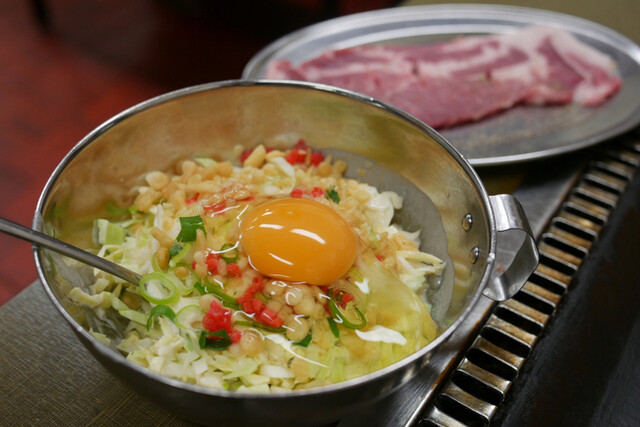
The approach to a serious Osaka okonomiyaki meal is rarely hushed. The soundtrack is metal spatulas, batter hitting hot iron, and the quick handoff between cooks and floor staff that keeps a griddle room moving. In Tenma, where drinking alleys, market-adjacent counters, and everyday restaurants sit close together, okonomiyaki belongs to the same practical dining culture as standing bars and noodle shops: fast enough for a weeknight, substantial enough to anchor the evening.
That context matters because Osaka’s okonomiyaki is not merely a tourist shorthand for the city. It is a working food form built around batter, cabbage, heat management, and timing. The difference between a forgettable pancake and a credible one often comes down to the team’s control of the griddle rather than any grand chef narrative. Okonomiyaki Chigusa is useful to understand through that lens. Its recognition in the Tabelog Okonomiyaki 100 across 2018, 2019, 2022, 2023, 2024, and 2025 signals consistency in a category where reputation is earned through repetition rather than spectacle.
Tenma's griddle culture rewards timing, not ceremony
Tenma is one of Osaka’s more instructive eating districts because it compresses several versions of the city into a walkable radius: after-work drinking, casual counters, inexpensive specialist shops, and neighborhood restaurants that do not need fine-dining language to justify themselves. In that company, okonomiyaki works because it is social without becoming formal. A griddle can serve friends, solo diners, and small groups with equal ease, and the room’s energy depends on choreography between the kitchen, the hotplate, and the staff watching pace.
The format also explains why a 56-seat okonomiyaki restaurant can feel different from a chef’s counter with the same level of recognition. Capacity changes the rhythm. A larger room requires a tighter handoff between cooking and service, especially when the menu also covers stir-fried noodles and teppanyaki. The relevant question is not whether the restaurant performs intimacy; it is whether the team can keep the room moving while preserving the qualities that make Osaka-style okonomiyaki satisfying: structure, heat, and the balance between softness and browning.
Within the nearby comparison set, that puts Okonomiyaki Chigusa in a different lane from Sushidokoro Kaihara, where sushi defines the meal’s structure, and from Tachinomi Dokoro Uo Sho Tenma, where standing-drink culture shapes the evening. Rika Shokudo Tenma honten sits closer in price territory, while CHIKICHIKI Tenma ten moves into a higher spend band. The point is not hierarchy; it is category discipline. Tenma dining is broad, and the stronger choices are those that know exactly what role they play.
A recognized Osaka staple without luxury signalling
Okonomiyaki’s reputation outside Japan can flatten it into comfort food, but Osaka treats the category with sharper distinctions. Some rooms lean nostalgic, others build around speed, and a smaller group earns attention for steady execution over years. Tabelog’s Okonomiyaki 100 selections are useful here because they separate specialist credibility from general popularity. A 2025 selection, following earlier appearances, places Okonomiyaki Chigusa among restaurants that have remained visible in a competitive local category.
The absence of a chef-centered story also suits the genre. Okonomiyaki is collaborative by nature: batter preparation, griddle management, table pacing, and drinks service all shape the result. The front-of-house role is not decorative. It determines whether diners understand the flow, whether the griddle is used efficiently, and whether the meal feels relaxed rather than rushed. In Osaka, that team dynamic is often the difference between a meal that feels merely casual and one that shows the city’s informal dining intelligence.
The drink cue is equally local. Sake appears in the restaurant’s listed drinks, but the broader pairing logic for okonomiyaki in Osaka is unfussy: fermented, refreshing, or simply cold enough to cut through a griddle meal. This is not the place to look for tasting-menu progression. It is the place to read the city’s appetite for specialist casual dining, where an affordable category can still have repeat recognition and a loyal audience.
How to read it against an Osaka itinerary
For travellers building a food-focused Osaka stay, this kind of restaurant should sit beside, not below, reservation-led dining. The city’s range only makes sense when street-level specialists, bakeries, bars, and counters are treated as part of the same ecosystem. For broader planning, Our full Osaka restaurants guide is the natural starting point, with parallel context in Our full Osaka hotels guide, Our full Osaka bars guide, Our full Osaka wineries guide, and Our full Osaka experiences guide.
Osaka’s casual range is also better understood through contrasts:.cafe for a different daytime register, 52CHO-ME BAKERY for the city’s bakery circuit, 551 Horai (551蓬莱) for a mass-loved local staple, 99 Pizza Napoletana Gourmet for Osaka’s imported-dough conversation, and a canto (Italian) for a more composed Italian meal. Outside Osaka, the national spread runs from -Grilled beef Sukiyaki- KAMAKURA TANUKIAN 鎌倉 たぬき庵 in Kamakura and. 鮪と炭火焼き うお炭 秋葉原店 in Tokyo to.know in Kumamoto, (Shoku) Vietnam in Kawasaki, [Curry Senmon Ten] Maruyama Kyoju. in Sapporo, [ki:] in Kyoto, Jōdo Saké Bar in Los Angeles, and Onigiri Time in Pasadena.
The editorial case for the restaurant is simple: it gives a recognized version of Osaka’s griddle tradition without asking diners to treat casual food as ceremony. The appeal is the category done with enough consistency to earn repeat selection, in a neighborhood where the room, the staff, and the iron surface all matter.
Just the Basics
Comparable venues by price and recognition.
| Venue | Cuisine | Price | Notes |
|---|---|---|---|
| Okonomiyaki ChigusaThis venue — the venue you are viewing | Not listed | $$ | Not listed |
| Moeyo Mensuke (燃えよ麺助) | Fukushima, Duck Ramen Specialist | $$ | Not listed |
| Dontaku | Not listed | $$ | Kita, Osaka Okonomiyaki & Teppanyaki Counter |
| Yakiniku fujimoto Umeda ohatsu tenjin ten | Not listed | $$ | Kita, Yakiniku (Japanese BBQ) |
| Sumibi Yakitori Ikoka Nishitenma | Kita, Charcoal-Grilled Yakitori Izakaya | $$ | Not listed |
| Oban | Kita, Traditional Yakiniku Counter | $$ | Not listed |
Recognition history
Dated appearances from independent guides and award organizations, with the underlying list record or original source where available.
Tabelog 100 #71 · No. 71
Tabelog · Tabelog 100 - Okonomiyaki - 2025
Continue exploring
More in Osaka
Restaurants in Osaka
Browse all →




Bars in Osaka
Browse all →




Hotels in Osaka
Browse all →



Wineries in Osaka
Browse all →
At a Glance
- Classic
- Cozy
- Lively
- Casual Hangout
- Group Dining
- Family
- Solo
- After Work
- Late Night
- Open Kitchen
- Standalone
- Historic Building
- Beer Program
Current opening hours
- Monday
- 11 AM–9 PM
- Tuesday
- Closed
- Wednesday
- 11 AM–9 PM
- Thursday
- 11 AM–9 PM
- Friday
- 11 AM–9 PM
- Saturday
- 11 AM–9 PM
- Sunday
- 11 AM–9 PM
Hours can change for holidays and private events. Last verified .