
Hoch brings Korean cooking into Osaka’s izakaya grammar, with Tabelog 100 recognition for Asian and ethnic cuisine in WEST in 2023 and 2024. The appeal is not luxury theatre but a focused Temma dining room where sourcing, fermentation and drinking-food logic carry the experience, with dinner pricing in the JPY 8,000 to JPY 9,999 band.
Pearl is the En Primeur Club membership app — saves, bookings, and concierge access live there. Same editors, same standards.
- Address
- 9-7 Ikedacho, Kita Ward, Osaka, 530-0033, Japan
- Phone
- +81 80-4484-3597
- Website
- tabelog.com
 Saves & bookings on Pearl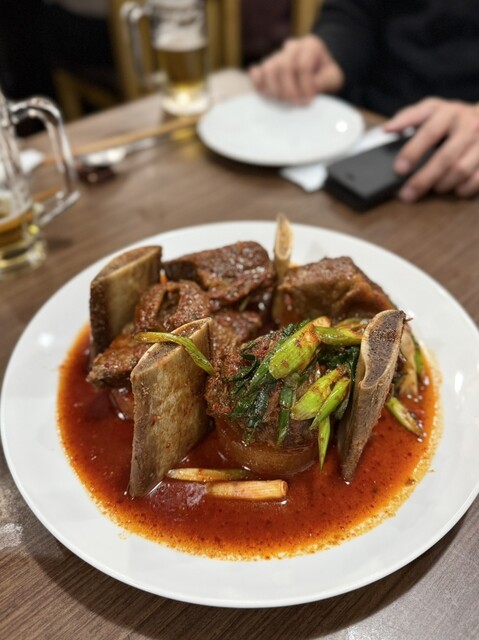
Temma is built for appetite at street level: station-side lanes, compact counters, signs above doorways, and a rhythm for diners who prefer proximity over ceremony. Here, Korean cooking feels less imported than naturally aligned with Osaka drinking culture. Salt, smoke, fermentation, chilli heat and grilled richness suit a neighbourhood where evenings move from one small room to another rather than sit still for three formal hours.
That is the useful lens for Hoch. Categorized as Korean and izakaya, it sits between two traditions with strong ingredient instincts: Korean cooking’s fermentation, preserved vegetables, seasoning pastes and grilled meats, and Osaka’s habit of making drinking food feel exact rather than casual. The result stands apart from budget Korean counters and polished tasting-menu formats borrowing Korean flavours for high-concept plating. This is a sharper middle register, supported by Tabelog 100 selection for Asian and ethnic cuisine in WEST in both 2023 and 2024.
Korean seasoning through Osaka's izakaya lens
Osaka has long been more open to hybrid dining than its comfort-food reputation suggests. Beyond takoyaki queues and department-store dining floors, the city excels at small restaurants absorbing outside forms and matching them to local tempo. Korean food fits because it shares a natural affinity with shared plates, alcohol, heat and texture. At Hoch, the category signals cooking that is not trying to imitate Seoul restaurant formality. It belongs to a Temma night out, where the table wants early impact and momentum after that.
The ingredient story is strongest through technique rather than named dishes. Korean kitchens often build depth before the pan is hot: fermented pastes, pickled or seasoned vegetables, sesame, garlic, chilli and stock provide structure. Izakaya cooking changes the pace, asking for plates that land quickly, hold up to drinks and invite another order. That is why Korean-izakaya rooms in Japan can feel more serious than their informality suggests. Sourcing is not only named farms or luxury protein; it is whether vegetables, condiments and grill-friendly ingredients behave with discipline across a drinking meal.
The price band also tells experienced diners how to read the room. Compared with Osaka Korean listings such as Gomenne JIRO and Kuro Hitsuji Youniku Kushiten BLACK SHEEP, which sit in lower dinner brackets, Hoch occupies a more deliberate tier. Tamaichi and Men Genso represent the other end, where spend is closer to quick, low-cost eating. The distinction is structural, not moral: a higher bracket in this category usually implies more considered product selection, tighter menu rhythm, or a room built for lingering rather than turnover.
Why Temma is the right neighbourhood for this format
Temma lets the restaurant stay compact in ambition and still feel relevant. Around Temma Station, one of Osaka’s great dining engines, dense counters and taverns force restaurants to communicate quickly. In quieter luxury districts, Korean-izakaya cooking can be pushed into a sleek concept. Here, it stays close to its natural use: food that works with beer, makgeolli, shochu or whatever the table is drinking, without lengthy explanation.
That matters for travellers because Osaka dining is often misread from outside. The city’s strongest meals are not always in the grandest settings. They are places that understand appetite as sequence: a first salty bite, something grilled or fried, something fermented to reset the palate, then another drink. Discipline lies in pacing and ingredient handling, not ceremony. Hoch’s Tabelog recognition places it in the regional conversation around Asian and ethnic dining, not only a local Korean-restaurant category.
For broader Osaka planning, the contrast is useful. A bakery stop such as 52CHO-ME BAKERY, a casual city staple like 551 Horai (551蓬莱), or a coffee break at .cafe shows the daily-eating side of the city. Dinner at 99 Pizza Napoletana Gourmet or a canto (Italian) points toward Osaka’s international dining confidence. Hoch belongs to a third lane: Korean roots, Japanese tavern cadence and enough recognition to draw diners looking beyond the obvious Kansai checklist.
How to place it in an Osaka itinerary
Frame this as an evening anchor, not a quick pre-theatre bite. Its selection for Tabelog’s WEST Asian and ethnic list gives it a different signal from ordinary neighbourhood discovery, and reservations are available. For travellers with limited Osaka nights, the case is clearest if the itinerary already includes sushi, kappo or French-influenced dining and needs a meal showing the city’s appetite for bolder seasoning.
The practical read is simple: plan it as a Temma dinner, then build the night around the area rather than treating the restaurant as isolated destination. The nearest station is Temma, parking is not part of the proposition, and private rooms are not the draw. Payment also matters: card, electronic money and QR payments are not listed as accepted. In Osaka, handled in advance, that is not an inconvenience; it is how smaller specialist rooms keep their operating style intact.
Readers comparing across Japan can use the same category logic elsewhere. Korean and Asian cooking in Japan ranges from compact neighbourhood rooms to more defined destination formats, just as curry, sake-bar and izakaya-adjacent restaurants do in other cities. For context beyond Osaka, see (Shoku) Vietnam in Kawasaki, [Curry Senmon Ten] Maruyama Kyoju. in Sapporo, [ki:] in Kyoto.know in Kumamoto. 鮪と炭火焼き うお炭 秋葉原店 in Tokyo, and -Grilled beef Sukiyaki- KAMAKURA TANUKIAN 鎌倉 たぬき庵 in Kamakura. The overseas comparison is looser but instructive: Jōdo Saké Bar in Los Angeles and Onigiri Time in Pasadena show how Japanese drinking and snack formats travel differently once removed from their home context.
Travellers building a fuller stay can also map the evening against Our full Osaka hotels guide, Our full Osaka bars guide, Our full Osaka wineries guide, and Our full Osaka experiences guide. Expect not a grand dining room, but a confident, ingredient-led Korean izakaya in a neighbourhood that knows exactly how that format should feel.
A Pricing-First Comparison
Comparable venues at a glance for context.
| Venue | Cuisine | Price | Notes |
|---|---|---|---|
| HochThis venue — the venue you are viewing | Kita, Korean Izakaya | $$$ | Not listed |
| Kuukai | Kita, Casual Korean in Kitashinchi | $$$ | Not listed |
| Wakan Ryori Bulgogi Senmon Ten Jurouku | Not listed | $$$ | Minoh, Japanese–Korean Bulgogi Specialty |
| BAR AUGUSTA Tarlogie | Kita, Whisky & Cocktail Bar | $$$ | Not listed |
| Goichi Nishitenma ten | Kita, Yakitori Omakase | $$$ | Not listed |
| Shushi Mon | Kita, Traditional Japanese Izakaya | $$$ | Not listed |
Recognition history
Dated appearances from independent guides and award organizations, with the underlying list record or original source where available.
Tabelog 100 #30 · No. 30
Tabelog · Tabelog 100 - Asian cuisine / Ethnic cuisine - WEST - 2024
Continue exploring
More in Osaka
Restaurants in Osaka
Browse all →




Bars in Osaka
Browse all →




Hotels in Osaka
Browse all →




Wineries in Osaka
Browse all →
At a Glance
- Lively
- Cozy
- Intimate
- After Work
- Group Dining
- Casual Hangout
- Date Night
- Late Night
- Standalone
- Beer Program
Bustling, izakaya-style atmosphere with a cozy, compact interior that feels like a local low-profile address near Tenma Market, better suited to adults and groups of friends than to families with children.