Takumi Hachi
On Belt Line Road in North Dallas, Takumi Hachi occupies a stretch where Japanese dining has quietly deepened over the past decade. The Belt Line corridor now runs from fast-casual ramen to higher-register omakase-adjacent formats, and Takumi Hachi sits toward the more considered end of that range. For Dallas diners tracking where serious Japanese cooking is taking root outside the Design District, this address is worth the detour.
 Discover on Pearl
Pearl is the En Primeur Club membership app — saves, bookings, and concierge access live there. Same editors, same standards.
- Address
- 5312 Belt Line Rd, Dallas, TX 75254
- Phone
- +12142428900
- Website
- hachi.takefiveusa.com
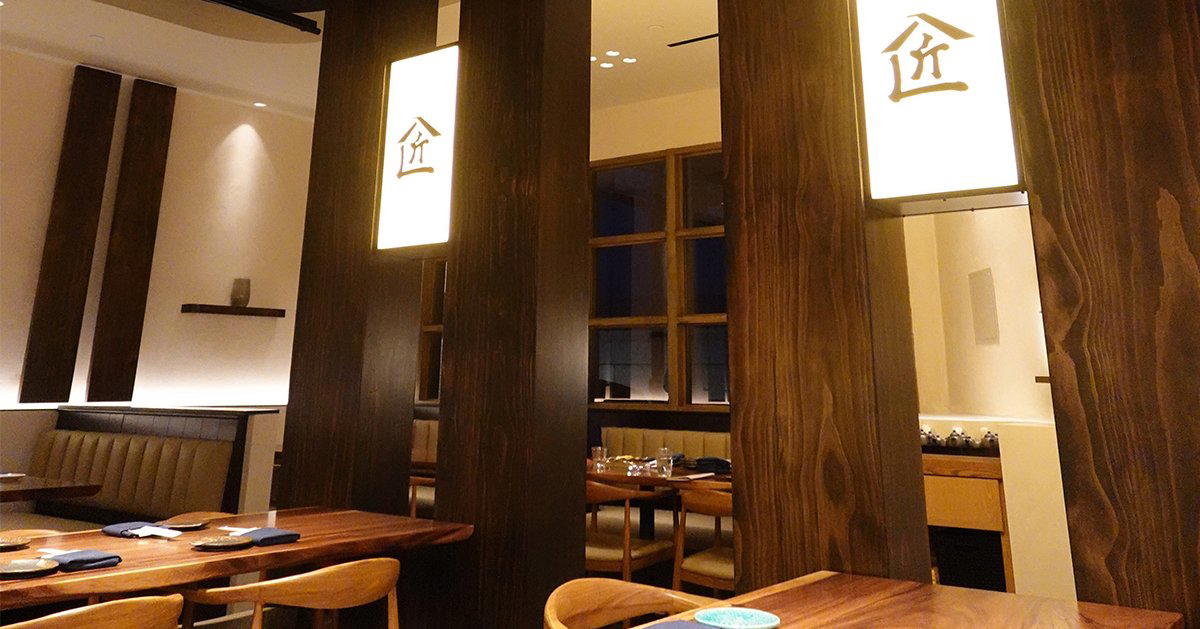
Belt Line Road and the Quiet Rise of Serious Japanese Dining in North Dallas
Takumi Hachi is a Japanese omakase restaurant in Dallas, with a 4.7 Google rating and a price tier of $$$$. The stretch of Belt Line Road running through the 75254 zip code is not where most Dallas food conversation begins. Ink tends to go to the Design District, where Tatsu Dallas anchors the high end of the city's Japanese scene, or to Oak Cliff and Uptown, where newer openings draw the weekend crowds. Belt Line is a different proposition: a corridor shaped more by a dense local population of Japanese expatriates and first-generation families than by hospitality investment cycles. That demographic history matters because it tends to produce restaurants that prioritize kitchen credibility over room design. Takumi Hachi sits on that corridor at 5312 Belt Line Rd, and its address alone signals something about its intended audience.
North Dallas's Japanese dining cluster has grown in a way that mirrors patterns seen in suburban Houston and parts of Los Angeles's San Gabriel Valley: specialty grocers and smaller family-run restaurants accumulate first, then higher-register operations follow once the supply chain and customer base are thick enough to support them. The Belt Line strip around Addison is now deep enough in that cycle that a restaurant opening here is reaching a customer who already understands context, who shops at the nearby Japanese markets, and who does not need the format explained. That changes what a kitchen can reasonably source and what it can reasonably expect diners to appreciate.
Sourcing in a Suburb: Why the Belt Line Location Is an Asset, Not a Compromise
The ingredient sourcing argument for suburban Japanese restaurants in North Dallas is more compelling than it first appears. Proximity to the Addison and Far North Dallas Japanese grocery ecosystem means that dry goods, fresh tofu, specialty produce, and protein cuts that would require a special order in other parts of the city are available on shorter supply chains here. Restaurants in this cluster have historically operated with fresher pantry stock than their more central counterparts, whose Japanese ingredient access depends on distributor schedules rather than neighborhood proximity.
Across the United States, the restaurants that have most consistently raised the floor on Japanese ingredient quality outside major coastal markets have done so by embedding in communities where the supply infrastructure already existed, not by trying to build that infrastructure from scratch in a high-visibility location. The logic runs in both directions: where the customers are, the suppliers follow, and where the suppliers concentrate, the kitchens can do more. For Dallas specifically, the Belt Line corridor is one of the few places where that logic holds at a meaningful scale. Comparable supply depth exists in Houston's Bellaire district and in the Mitsuwa-adjacent blocks of the San Gabriel Valley, but within the Dallas metro, this zip code is as close as the city gets to that model.
This matters for a diner considering Takumi Hachi against the city's other Japanese options. Tei-An in the Arts District has long held a reputation for soba craftsmanship and careful Japanese sourcing, operating at the $$$$ tier with a Design District clientele. Tatsu Dallas operates at a similar price register with a format oriented toward the omakase experience. Takumi Hachi on Belt Line exists in a different neighborhood logic entirely, one where the sourcing advantage is structural rather than dependent on relationships a single chef built independently.
How Takumi Hachi Fits the Current Dallas Dining Map
Dallas's restaurant conversation in 2024 and into 2025 has been shaped by expansion at the upper end, more tasting-menu formats, more beverage-pairing programs, and a broader awareness of how the city's fine-dining tier compares to peer markets like Houston and Atlanta. For context on where that upper register sits nationally, restaurants like Le Bernardin in New York City, Alinea in Chicago, and The French Laundry in Napa define the benchmark. Closer in format to what Dallas's Japanese scene aspires toward, Atomix in New York City demonstrates what a Korean-Japanese fine-dining format can achieve at the highest level of recognition. Dallas is building toward something in that direction, and the Belt Line cluster is part of that infrastructure.
Within Dallas itself, the comparable set for a considered Japanese restaurant is fairly compact. Tatsu Dallas and Tei-An both operate at the $$$$ level with defined reputations. Fearing's at the Ritz-Carlton represents the Southwestern American high end at the same price tier. Lucia, in the Bishop Arts District, holds an Italian position at $$$. For diners who move between these options regularly, Takumi Hachi represents a Japanese entry point that is geographically distinct from the Design District cluster and embedded in a neighborhood with genuine culinary roots rather than hospitality-district momentum.
Those looking to benchmark against farm-sourcing-led operations in other markets might compare notes with Blue Hill at Stone Barns in Tarrytown or Single Thread Farm in Healdsburg, where ingredient provenance is the organizing principle of the entire program.
Planning Your Visit
Those combining a Japanese dinner with broader North Dallas exploration might pair the visit with a stop along the Addison restaurant corridor, which runs a wide range of formats. For contrast, 360 Brunch House and Mamani operate in nearby Dallas neighborhoods and cover different parts of the cuisine spectrum. Diners who want a protein-forward counterpoint to Japanese precision might also consider 12 Cuts Brazilian Steakhouse or 3Eleven Kitchen and Cocktails for a different register entirely.
Quick Comparison: North Dallas Japanese and Peer Options
| Venue | Cuisine | Price Tier | Location |
|---|---|---|---|
| Takumi Hachi | Japanese | Not confirmed | Belt Line Rd, Addison area |
| Tei-An | Izakaya / Japanese | $$$$ | Arts District |
| Tatsu Dallas | Japanese | $$$$ | Design District |
| Fearing's | Southwestern / American | $$$$ | Uptown / Ritz-Carlton |
| Lucia | Italian | $$$ | Bishop Arts District |
Comparable Spots
Comparable venues nearby, for context on price, style, and recognition.
| Venue | Cuisine | Price | Notes |
|---|---|---|---|
| Takumi HachiThis venue — the venue you are viewing | Japanese Omakase | $$$$ | |
| Sugoi Sushi | Edomae-Style Sushi | $$$$ | La L'aceate |
| Mābo | Yakitori Omakase | $$$$ | Devonshire |
| Musume | Modern Japanese Sushi and Fusion | $$$ | Arts District |
| Shinsei Restaurant | Contemporary Pan-Asian Sushi | $$$ | Devonshire |
| Pillar | American Bistro with Global Influences | $$$$ | Bishop Arts District |
Continue exploring
More in Dallas
Restaurants in Dallas
Browse all →
Bars in Dallas
Browse all →
Hotels in Dallas
Browse all →

At a Glance
- Elegant
- Intimate
- Sophisticated
- Serene
- Date Night
- Special Occasion
- Business Dinner
- Chefs Counter
- Open Kitchen
- Sake Program
Serene and elegant space surrounded by Edo-period Japanese art, inspired by Edo-period aesthetics.