Takumi
Takumi occupies a significant address on Immermannstraße, the spine of Düsseldorf's Japanese quarter, where the concentration of authentic Japanese dining rivals any European city outside London.
Pearl is the En Primeur Club membership app — saves, bookings, and concierge access live there. Same editors, same standards.
- Address
- Immermannstraße 28, 40210 Düsseldorf, Germany
- Phone
- +492111793308
- Website
- takumi-duesseldorf.de
- Directions
- Get directions
 Saves & bookings on Pearl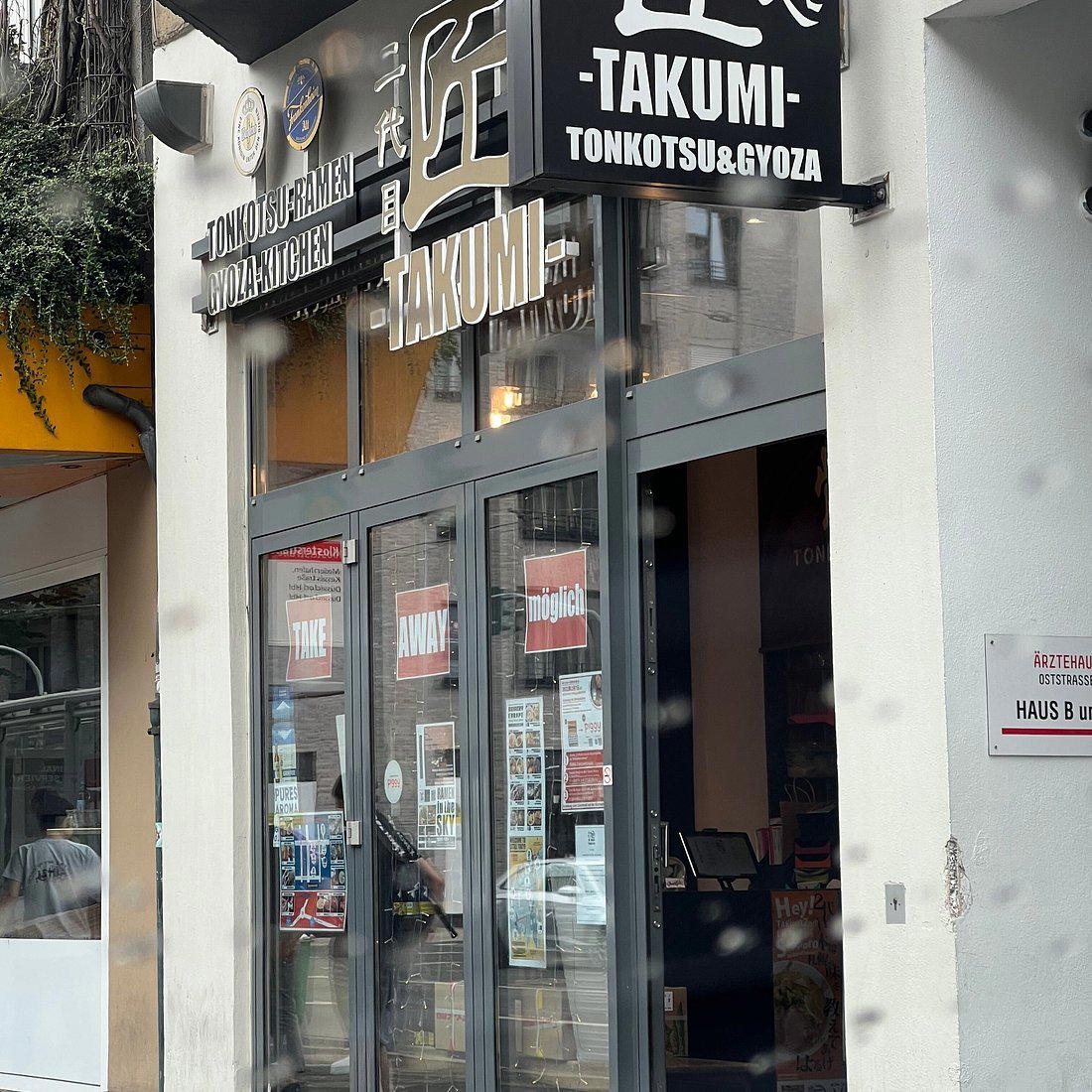
Immermannstraße and the Weight of a Japanese Quarter
Düsseldorf's Immermannstraße does not merely contain Japanese restaurants — it functions as a reference point for Japanese food culture in continental Europe. The street and its immediate surrounds are home to the highest concentration of Japanese-owned and Japanese-operated businesses in Germany, a direct product of the postwar corporate migration that brought Mitsubishi, Sumitomo, and dozens of other firms to the Rhine. That history matters at the table. The Japanese community here numbers in the thousands, and it sustains a restaurant scene accountable to an informed, critical local audience rather than a tourist trade looking for approximations.
Takumi, at Immermannstraße 28, sits inside that context. In a neighbourhood where authenticity is tested daily by residents who grew up eating the food being served, a restaurant that survives and accumulates a reputation is doing something that goes beyond décor and branding. The address is both an asset and a constraint: it signals cultural seriousness to anyone who understands the postcode, while also placing the kitchen under a standard of scrutiny that most European Japanese restaurants never face.
What Japanese Ramen Means in This Setting
Ramen is one of the most regionally specific foods in Japan. The gap between a bowl built around a tonkotsu base from Fukuoka and one drawing on the shoyu tradition of Tokyo is not a matter of minor variation — it reflects distinct ingredient philosophies, different fat and salt ratios, and bones sourced and cooked at different temperatures and durations. When a ramen-focused restaurant operates within a Japanese expatriate community, those distinctions are not academic. They are the difference between a bowl that registers as correct and one that reads as a rough translation.
In Germany more broadly, the standing of Japanese cuisine has shifted over the past decade. Cities like Berlin and Munich have developed serious Japanese dining, but Düsseldorf's quarter remains the most culturally grounded node in the country. Restaurants in this neighbourhood compete for the same resident clientele that flies back to Tokyo and Osaka on a regular basis, a competitive pressure that, over time, filters out the less disciplined operators. Takumi's presence on Immermannstraße places it in that filtered tier.
For a point of comparison further afield, the broader German fine-dining circuit includes heavily credentialed kitchens like Aqua in Wolfsburg and Vendôme in Bergisch Gladbach, both operating at three Michelin stars. Takumi's claim is not built on that kind of formal recognition but on a different kind of authority: sustained relevance in a neighbourhood that produces its own form of critical consensus.
The Neighbourhood as Dining Context
Understanding Takumi requires understanding the block it occupies. Immermannstraße and the surrounding streets form a micro-ecosystem of Japanese grocery shops, sake bars, izakayas, and travel agencies, punctuated by Korean and broader Asian businesses that have clustered in the same orbit. The area is sometimes called Little Tokyo, though that label undersells its functional complexity, this is a working community rather than a themed district.
Other options in Düsseldorf's wider dining scene span a wide range of registers. Amuni Wein- und Käsebar represents the European wine-bar tradition that runs parallel to the Japanese quarter's culture. Anfora and Arca Alacati occupy the Mediterranean end of the city's dining range. On the more casual side, Alanya Döner and 3h's burger & chicken reflect the street-food layer that exists in any German city of this size. Takumi sits in a different register entirely, a specialist operator in a specialist neighbourhood, answerable to a specific cultural tradition rather than a general dining public.
For anyone moving between Düsseldorf and Germany's broader fine-dining circuit, the contrast is instructive. Kitchens like Schwarzwaldstube in Baiersbronn, Waldhotel Sonnora in Dreis, and Schanz in Piesport operate within the French-influenced tasting-menu tradition that defines Germany's Michelin upper tier. JAN in Munich, ES:SENZ in Grassau, and Victor's Fine Dining by Christian Bau in Perl each work within that same European framework. CODA Dessert Dining in Berlin represents a more experimental format. Takumi's frame of reference is elsewhere entirely, in the ramen shops of Japan's regional cities rather than in the European tasting-menu lineage.
Internationally, the comparison points for this style of deeply culturally grounded Japanese cooking sit in New York, where Atomix demonstrates how Asian culinary traditions can achieve formal critical recognition in a Western market, and where Le Bernardin shows how sustained commitment to a culinary philosophy, rather than trend-chasing, builds long-term authority. The mechanism is different, but the underlying logic, consistency to a specific tradition, accountability to a knowledgeable audience, is the same. Restaurant Haerlin in Hamburg offers a useful northern German counterpoint for readers building a wider German itinerary.
Know Before You Go
Address: Immermannstraße 28, 40210 Düsseldorf, Germany
Neighbourhood: Stadtmitte / Immermannstraße Japanese quarter
Reservations: Given the neighbourhood's popularity with both resident Japanese community members and informed visitors, booking ahead is advisable, particularly for weekend sittings
Getting There: Düsseldorf Hauptbahnhof is within walking distance; the address is on the main artery of the city's Japanese quarter
Context: The surrounding streets contain Japanese grocery shops, sake specialists, and izakayas, arriving early to explore the neighbourhood adds significant context to the meal
Website / Phone: Not listed, confirm current details through the restaurant directly or via current search
More in Düsseldorf: Our full Dusseldorf restaurants guide
How Takumi Düsseldorf compares with similar nearby venues.
| Venue | Cuisine | Price |
|---|---|---|
| Yabase | Japanese | €€€ |
Continue exploring
More in Düsseldorf
Restaurants in Düsseldorf
Browse all →
Bars in Düsseldorf
Browse all →
Hotels in Düsseldorf
Browse all →
Wineries in Düsseldorf
Browse all →
At a Glance
- Lively
- Casual Hangout
- Standalone
Current opening hours
- Monday
- 12–9:30 PM
- Tuesday
- 12–9:30 PM
- Wednesday
- 12–9:30 PM
- Thursday
- 12–9:30 PM
- Friday
- 12–9:30 PM
- Saturday
- 12–9:30 PM
- Sunday
- 12–9:30 PM
Hours can change for holidays and private events. Last verified .
Lively dining atmosphere in the heart of Little Tokyo.
Know Before You Go
- Getting there
- Immermannstraße 28, 40210 Düsseldorf, Germany