Takoyaki Teppachi
Takoyaki Teppachi on Immermannstraße brings one of Osaka's most street-level snack traditions into the heart of Düsseldorf's Japanese quarter. The format is focused: takoyaki, the molten-centred octopus balls that define a specific register of Japanese casual eating, served in a city that supports one of Europe's most concentrated Japanese food scenes outside London and Paris.
Pearl is the En Primeur Club membership app — saves, bookings, and concierge access live there. Same editors, same standards.
- Address
- Immermannstraße 32, 40210 Düsseldorf, Germany
- Website
- brickny.com
- Directions
- Get directions
 Saves & bookings on Pearl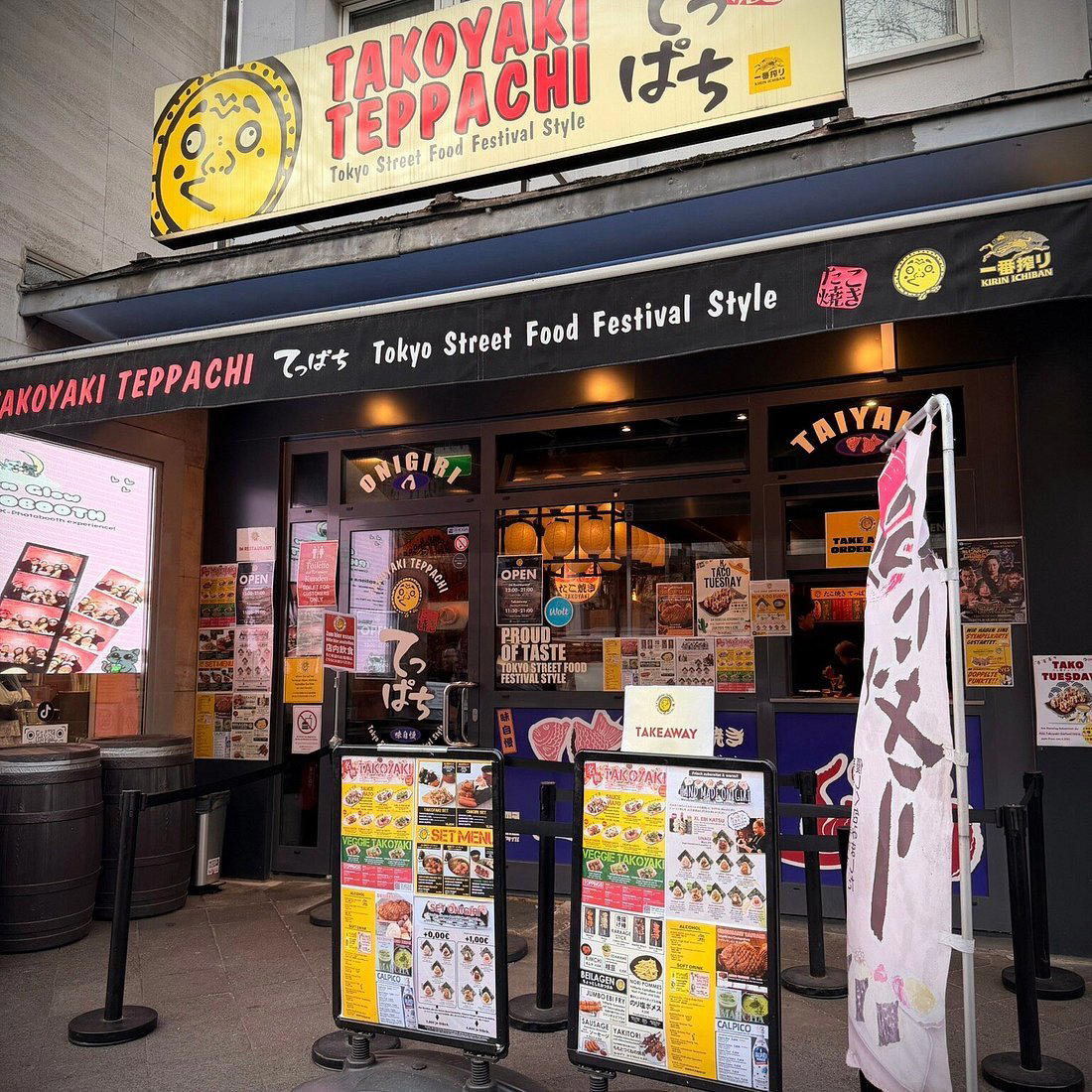
Immermannstraße and the Japanese Quarter That Earned It
Düsseldorf's Immermannstraße and the streets radiating from it form what is routinely described as the significant Japanese commercial district in continental Europe. The density of Japanese grocery importers, ramen counters, izakayas, and specialist food retailers along this corridor is not incidental, it reflects decades of Japanese corporate presence in the city, where trading houses and manufacturing subsidiaries established a residential community that eventually generated its own food infrastructure. That infrastructure now supports specialist formats that would struggle commercially in cities without a critical mass of Japanese residents and returnees.
Takoyaki Teppachi sits at Immermannstraße 32, inside this corridor. The surrounding block operates as a reference point for Japanese food in Germany, and Teppachi contributes a takoyaki stand that represents one of the more geographically specific traditions in Japanese street eating. You can find ramen and sushi across most European cities with a Japanese food scene. A dedicated takoyaki operation is a different signal entirely.
The Ingredient Question: What Takoyaki Actually Requires
Takoyaki is deceptively demanding at the ingredient level. The batter, a thin, wheat-based mixture, needs to achieve a specific texture contract: a firm, lightly charred exterior shell giving way to a molten, custard-soft interior. Achieving that requires calibrated iron plates with hemispherical moulds, the right batter-to-filling ratio, and the continuous rotation technique that builds the spherical shape without collapsing the centre. The octopus (tako) inside needs to be cut at a size that allows it to cook through without overcooking in the time it takes the exterior to set. None of this is improvised.
The toppings follow a standard Osaka template: mayonnaise applied in a lattice pattern, okonomiyaki sauce (a sweet-savoury Worcester-adjacent glaze), katsuobushi (dried bonito flakes that move in the heat rising off the fresh balls), and aonori (dried green seaweed). The quality of each topping ingredient matters, because the dish has no hiding places. Inferior katsuobushi produces less aroma; thin sauce reads as sweet without complexity. The tradition that Teppachi represents is one where the craft is in the sourcing and execution of a highly constrained ingredient set, not in creative variation.
This places takoyaki in a different category from the tasting-menu traditions found at Germany's Michelin-tier restaurants. Takoyaki operates on a different logic entirely: the format is fixed, the ingredient list is short, and execution fidelity to a specific regional original is the measure of quality. Both approaches demand serious sourcing; they arrive at it from opposite directions.
Casual Format, Specific Tradition
The format at a takoyaki counter is inherently fast and communal. Orders arrive in portions of six or eight balls, served in a shallow tray, meant to be eaten immediately while the interior retains its molten state. This is food engineered for standing, sharing, and repeat ordering, not for extended table service. In Osaka, takoyaki counters operate as both daytime snack stops and late-night absorption food. In Düsseldorf's Japanese district, the format serves a different function: it marks the transition from Japanese food as exotic cuisine to Japanese food as everyday eating, the point at which a food culture has enough depth to sustain its most casual registers.
For context on how Düsseldorf sits within Germany's broader food scene, the city operates several tiers below the Michelin concentration you find in Bavaria or the Black Forest. Locally, the Japanese quarter represents a specific niche that operates outside the main currents of German dining. Other Düsseldorf options nearby include Amuni Wein- und Käsebar, Anfora, and Arca Alacati, each representing different points in the city's import-food spectrum.
Takoyaki counters are not the same kind of destination as CODA Dessert Dining in Berlin or JAN in Munich, nor do they operate on the same planning logic. You do not book weeks ahead for takoyaki. The format rewards proximity and spontaneity, which is part of why it works well in a street-level district.
Where It Fits in the Neighbourhood's Register
The Immermannstraße food offer spans several price and format tiers. At the casual end, operations like Alanya Döner and 3h's burger & chicken serve the quick-service segment of the area's foot traffic. Takoyaki Teppachi operates in a comparable price register but within a much more geographically specific food tradition.
Germany's most ambitious cooking addresses sourcing in long-form ways: ES:SENZ in Grassau, Schanz in Piesport, Restaurant Haerlin in Hamburg, and Victor's Fine Dining by christian bau in Perl all approach ingredient sourcing as a narrative that structures an entire menu. A takoyaki counter inverts the logic: the menu is already decided, and sourcing is the only remaining variable. When the format is this constrained, getting the octopus right, the batter ratio consistent, and the katsuobushi fresh is where all the craft goes. It is also where the quality shows immediately.
For international reference points in Japanese-inflected precision dining, Atomix in New York City and the seafood focus at Le Bernardin in New York City demonstrate what rigorous sourcing produces at the tasting-menu level. Waldhotel Sonnora in Dreis shows what that commitment looks like in a German forest-resort context. Takoyaki Teppachi occupies a different register entirely, but the underlying discipline of ingredient fidelity to a specific regional original connects them across formats.
Know Before You Go
| Address | Immermannstraße 32, 40210 Düsseldorf, Germany |
|---|---|
| Area | Immermannstraße Japanese quarter, central Düsseldorf |
| Format | Takoyaki counter; casual, walk-in |
| Booking | No reservation expected for this format |
| Phone | not listed |
| Website | not listed |
| Leading approach | Combine with broader Immermannstraße exploration; the street rewards multiple stops |
Where It Fits
Comparable venues nearby, for context on price, style, and recognition.
| Venue | Cuisine | Price | Notes |
|---|---|---|---|
| Takoyaki TeppachiThis venue — the venue you are viewing | Japanese Takoyaki Street Food | $ | Not listed |
| Funky Ramen | Modern Japanese Ramen & Sushi | $$ | Derendorf |
| Imbiss Beirut | Lebanese Street Food | $ | Oberbilk |
| Shawarma city | Levantine Shawarma | $ | Stadtmitte |
| Luxor Grill | German Grill & Fast Food | $ | Unterrath |
| Takumi | Authentic Japanese Ramen | $$ | Stadtmitte |
Continue exploring
More in Düsseldorf
Restaurants in Düsseldorf
Browse all →
Bars in Düsseldorf
Browse all →


At a Glance
- Trendy
- Lively
- Modern
- Casual Hangout
- Open Kitchen
Current opening hours
- Monday
- 12–8:30 PM
- Tuesday
- 12–8:30 PM
- Wednesday
- 12–8:30 PM
- Thursday
- 12–8:30 PM
- Friday
- 12–8:30 PM
- Saturday
- 11:30 AM–8:30 PM
- Sunday
- 11:30 AM–8:30 PM
Hours can change for holidays and private events. Last verified .
Casual snack bar atmosphere with open preparation visible to guests, evoking Japanese street food energy.