Our verdict
Yakiniku occupies a specific position in Curitiba's dining scene, and Taisho Yakiniku Água Verde, on Avenida Iguaçu in the residential Água Verde neighbourhood, represents one of the cleaner expressions of Japanese barbecue culture in the city. The format rewards those who understand the difference between lunch-mode efficiency and the longer evening ritual of table grilling, smoke, and unhurried progression through cuts.

Pearl is the En Primeur Club membership app — saves, bookings, and concierge access live there. Same editors, same standards.
- Address
- Av. Iguaçu, 1836 - Água Verde, Curitiba - PR, 80250-190, Brazil
- Phone
- +554130826650
- Hours
- Mon–Fri 6:30–10 PMSat 12–2 PM, 6:30–10 PMSun 12–2 PM, 7–10 PM
- Website
- taisho.com.br
- Directions
- Get directions
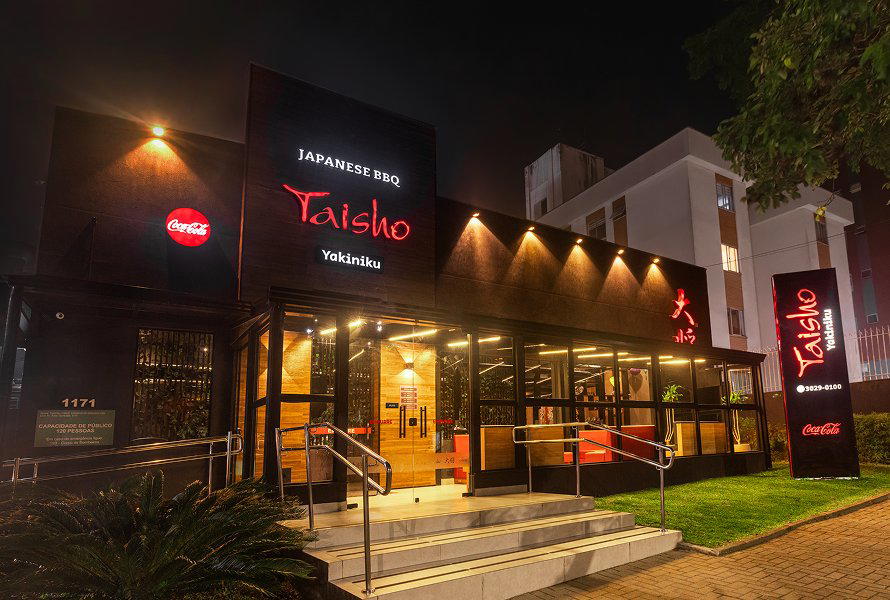
Japanese Barbecue in a Brazilian City That Knows Its Nikkei Roots
Paraná state holds the largest concentration of Japanese-Brazilian descendants outside Japan itself, and Curitiba has absorbed that inheritance into its dining fabric more thoroughly than most Brazilian cities. Yakiniku, the Japanese table-grilling format that arrived in Brazil alongside the Nikkei diaspora, is not a novelty here. It is a practised tradition, and restaurants built around it operate inside a community that has strong opinions about what the format should look and taste like. Taisho Yakiniku Água Verde, on Avenida Iguaçu 1836 in the Água Verde district, sits inside that tradition rather than alongside it as a curiosity.
The address places it firmly in the residential south of the city, away from the higher-traffic corridors of Batel and Centro. Água Verde is a neighbourhood where locals eat, not one built around tourism or office-lunch circuits, which shapes who you find at the tables and at what hour. For visitors building a broader reading of Curitiba's Japanese-influenced dining, this is a useful data point: the comparison set here is not Aizu or the more formal end of the city's restaurant roster, but the committed neighbourhood yakiniku house where regulars know the cuts and the pacing.
The Lunch and Dinner Divide
Yakiniku is a format that changes character depending on the hour, and understanding that divide is the most useful thing a first-time visitor can bring to the decision about when to go. Lunch service at most Brazilian yakiniku houses runs leaner: a shorter menu, faster table turnover, and a crowd that is often there for a practical midday protein fix rather than the full ritual. The smoke is lighter, the grill time shorter, and the social temperature of the room is calibrated accordingly.
Evening service is a different proposition. The table grill becomes the centrepiece of an extended meal rather than a means to an end. Cuts arrive in a sequence that builds from lighter to richer, the charcoal or gas element does its work more visibly, and the room's rhythm slows to match the format's logic. For yakiniku specifically, the evening version of the meal is structurally more complete: you have time to read the progression of cuts, to rest between rounds, and to engage with the grilling itself as an activity rather than an inconvenience.
At Taisho Yakiniku Água Verde, that divide is worth factoring into your planning. A midday visit will give you a functional read on the kitchen's sourcing and preparation; an evening visit will tell you what the restaurant actually is when it operates at full pace. Both are legitimate ways to encounter the format, but they produce genuinely different experiences.
Where Yakiniku Sits in Curitiba's Broader Scene
Curitiba's restaurant scene has developed its own internal hierarchy. At the formal end, there are tasting-menu formats and Brazilian-contemporary addresses that compete on a national level, in the same conversation as D.O.M. in São Paulo or Lasai in Rio de Janeiro. Further along the range, you find the reliable neighbourhood operators: the Italian descendants in the Cantina Pozzobon in Santa Maria mould, the churrascaria tradition represented by addresses like Batel Grill and Barolo Curitiba, and the Japanese-Brazilian format that has its own dedicated audience.
Yakiniku occupies a specific tier in that map: it is more interactive and socially structured than a traditional Japanese restaurant, less theatrical than a high-end omakase counter, and directly competitive with the city's churrascaria culture on the question of meat quality and preparation method. The two formats, yakiniku and churrascaria, share a carnivorous logic but diverge sharply on execution: one is about individual control at the table grill, the other about the spectacle of the central fire and the procession of a server bringing cuts to your plate. Both have their defenders in Curitiba.
For those building a broader itinerary, the city's Nikkei dining options extend beyond yakiniku into ramen, sushi, and hybrid Brazilian-Japanese formats. Our full Curitiba restaurants guide maps those options with more granularity, including the addresses in Batel and Centro that operate at different price points and formality levels. For contrast within the city's neighbourhood-restaurant register, Badida Sete and Calabouço Restaurante e Pizzaria both offer readings of how Curitiba eats outside its formal dining tier.
Planning a Visit
Água Verde is a well-connected district, accessible by bus from central Curitiba without significant difficulty. The Avenida Iguaçu address is a main arterial road, which makes orientation direct once you are in the neighbourhood. Given the venue's positioning as a local dining address rather than a destination restaurant with international reservation pressure, advance planning requirements are likely more moderate than at the city's higher-demand formal tables, though evening weekends in any well-regarded neighbourhood yakiniku house benefit from confirmation ahead of arrival. Dress expectations at this type of address in Curitiba run casual to smart-casual; the format's inherent informality, you are cooking at the table, signals what the room is not.
For reference on how other Brazilian cities handle the question of specialist neighbourhood restaurants worth a deliberate visit, Bistro Fitz Carraldo in Manaus and Casa da Flor Restaurante in Dourados offer useful comparisons on how regional context shapes what a neighbourhood address can be.
Frequently asked questions
How do I find Taisho Yakiniku Água Verde?
Taisho Yakiniku Água Verde is located at Av. Iguaçu, 1836 - Água Verde, Curitiba - PR, 80250-190, Brazil, Curitiba.
Is Taisho Yakiniku Água Verde in Curitiba a good option for a group dinner with mixed dining preferences?
The yakiniku format is inherently social and table-centred, making it a practical choice for groups where each diner controls their own grill pace and portion. Água Verde's position as a well-connected district in Curitiba, accessible by bus from the city centre along Avenida Iguaçu, means logistics are manageable for parties coming from different parts of the city. Whether the venue can accommodate split menus or non-meat eaters within a group setting should be confirmed with the restaurant directly, as menu flexibility varies by house.
What's the best thing to order at Taisho Yakiniku Água Verde?
Yakiniku formats are typically built around the grill sequence: start with leaner cuts to calibrate the heat, then move to fattier selections as the coals settle in. At a Nikkei-rooted counter in Curitiba, the beef sourcing often reflects Paraná state's agricultural strength, so cuts from the short rib and chuck are worth prioritising.
How far ahead should I plan for Taisho Yakiniku Água Verde?
Iguaçu, 1836. Yakiniku venues in Curitiba with strong Nikkei community ties tend to fill quickly on weekends and public holidays, given the city's concentrated Japanese-Brazilian population. Contacting the venue directly before arrival is advisable, particularly for groups larger than four.
What makes Taisho Yakiniku Água Verde worth seeking out?
Paraná state holds the largest concentration of Japanese-Brazilian descendants outside Japan itself, and Água Verde is one of Curitiba's districts where that heritage translates into lived culinary practice rather than themed pastiche. A yakiniku restaurant operating in this context draws on generations of Nikkei food culture rather than importing a trend. That grounding gives the format a different credibility than you'd find in cities where Japanese barbecue arrived as a recent fashion.
Can Taisho Yakiniku Água Verde handle vegetarian requests?
Yakiniku menus are structurally centred on grilled meat, and the format does not naturally accommodate full vegetarian dining without specific kitchen provisions. Vegetarians should check directly with the restaurant at Av. Iguaçu, 1836 before booking.
Cuisine-First Comparison
Comparable venues nearby, for context on price, style, and recognition.
| Venue | Cuisine | Price | Notes |
|---|---|---|---|
| Taisho Yakiniku Água VerdeThis venue — the venue you are viewing | Japanese Yakiniku | $30–50 | Not listed |
| Tahine Gourmet | Middle Eastern Gourmet Burgers & Shawarma | $10–20 | Santa Felicidade |
| Calabouço Restaurante e Pizzaria | Italian Pizza and Pasta in Medieval Setting | $10–20 | Centro Cívico |
| Thai Restaurante Tailandês | Thai | $20–30 | Bigorrilho |
| Swadisht Traditional Indian Cuisine | Traditional Indian Cuisine | $30–50 | Batel |
| Badida Sete | Brazilian Steakhouse | $20–30 | Batel |
Continue exploring
More in Curitiba
Details
- Lively
- Energetic
- Casual
- Group Dining
- Casual Hangout
- Standalone
- Sake Program
- Beer Program
- A La Carte
- Sake
- Beer
- Vegetarian Friendly
Current opening hours
- Monday
- 6:30–10 PM
- Tuesday
- 6:30–10 PM
- Wednesday
- 6:30–10 PM
- Thursday
- 6:30–10 PM
- Friday
- 6:30–10 PM
- Saturday
- 12–2 PM, 6:30–10 PM
- Sunday
- 12–2 PM, 7–10 PM
Hours can change for holidays and private events. Last verified .
Relaxed, communal, and unhurried, with a focus on grilling, tasting, and sharing.