Tabelog 100 #50
Our verdict
Tai Paitan Ramen ○de▽ sits in Shin-Osaka’s practical eating belt, where station traffic usually rewards speed over specialization. Its case is narrower and more interesting: sea-bream-led ramen and tsukemen at sub-JPY 1,000 pricing, with selection for Tabelog Ramen OSAKA “Tabelog 100” in 2023, 2024, and 2025.

Pearl is the En Primeur Club membership app, where members save venues, book tables and use the concierge.
The menu
What to order
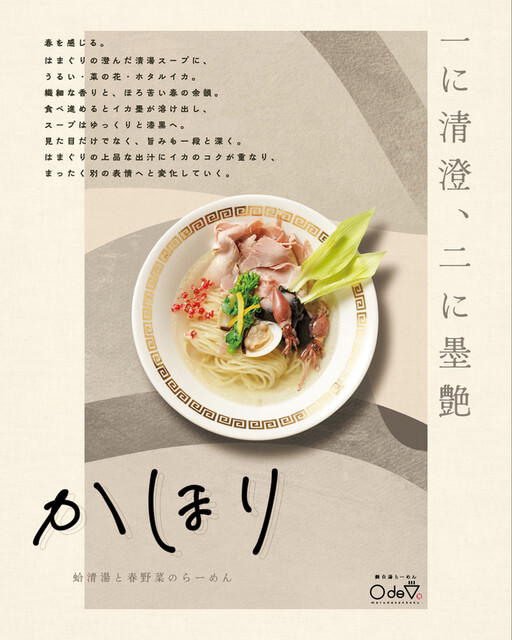
- Tai paitan (sea bream white broth) ramen
- Tai paitan tsukemen
Osaka is not always where travelers go looking for nuance in a quick noodle meal. Around the city, meals often answer a timetable: something fast before a train, noodles between meetings, or a compact stop built around repetition. Tai Paitan Ramen ○de▽ belongs to that same practical dining geography, but its emphasis is more specific than the everyday norm. The house is listed in the ramen and tsukemen category, a focused brief that sits apart from broader, more diffuse dining choices.
That matters because ramen’s sustainability conversation rarely begins with luxury language. It begins with operational discipline: how narrowly a shop builds its menu, how repeatable the service model is, and whether a focused format can reduce waste through clarity rather than breadth. No sourcing claim should be projected onto the shop without stated proof, but a ramen-and-tsukemen identity does shift the reader’s attention from abundance toward a different resource question. In a city where speed and volume shape many casual meals, a focused ramen-and-tsukemen format is a sharper editorial signal than a maximalist spread.
A focused ramen brief in Osaka
Osaka ramen is not a single tradition. The city absorbs styles from across Japan, then filters them through a dining culture that prizes value, decisiveness, and repeat use. In Osaka, that pressure is strong: visitors want a meal that works within an itinerary, locals want a reliable stop, and office diners want pricing that does not turn lunch into an event. Against that background, a ramen and tsukemen shop with a clear category has a defined position.
The Tabelog Ramen OSAKA “Tabelog 100” selection in 2025 gives the shop a useful trust signal. This is not Michelin-style ceremony, and it should not be read as such. It is a local category marker in a competitive ramen city, especially meaningful because ramen shops at this price tier live or die on repetition. A 3.70 Tabelog score reinforces the same point: the appeal is not a tasting-menu idea translated into noodles, but a compact, repeatable format that has earned attention inside Osaka’s ramen field.
Comparison also helps define the decision. Chuka Soba Kokokara Sakie, Nishinakajima Koryumasu, and Jonetsu Udon Sanshu Shin'osaka ten all sit within Osaka’s everyday meal landscape, while Moja Curry Shin osaka honten answers the need for speed from a different direction, and Trattoria Cielo moves the spend into a separate Italian frame. Tai Paitan Ramen ○de▽ is the more focused choice when the meal should remain quick and inexpensive but still say something specific about Osaka’s noodle culture.
A small-format meal built for efficiency, not ceremony
The format should be read as casual and practical rather than ceremonial. That matters because ramen is often at its strongest when the transaction is direct: arrive, choose, eat, and move on. Even without projecting unsupported room details onto the shop, the listed category and sub-JPY 1,000 budget point to a practical meal rather than a long-form dining room. Those are useful signals, not decorative ones, and they make the restaurant easier to place inside a flexible Osaka itinerary.
The environmental angle should stay grounded. There is no stated certification, no published sourcing protocol, and no public claim here that would justify a green halo. What can be said is more modest: a narrow ramen-and-tsukemen identity and a low-price noodle format encourage efficiency. In ramen, that efficiency is part of the craft. The core components and service pace have to align because there is little room for theatrical excess. The result is a meal category where value and restraint can coexist without turning sustainability into a slogan.
Practical expectations should stay simple. The published budget is listed at - JPY 999 for both lunch and dinner, placing Tai Paitan Ramen ○de▽ firmly in the everyday ramen economy. The 2025 Tabelog recognition and 3.70 score give the shop a stronger signal than price alone, but this is still best understood as a focused Osaka noodle stop, not a hotel dining room with buffer built into the system.
How to place it within an Osaka eating day
The smartest way to read the restaurant is as a precise lunch or dinner decision rather than a destination that absorbs an evening. Osaka rewards grazing: a snack, a noodle bowl, then other dining or drinking elsewhere in the city. In that sequence, Tai Paitan Ramen ○de▽ works because it does not demand a large budget or a long sitting. It gives the day a defined noodle note before the city pulls the itinerary toward other Osaka dining rooms, bars, or casual counters.
For a wider map of the city, Our full Osaka restaurants guide gives the broader dining frame, while Our full Osaka hotels guide, Our full Osaka bars guide, Our full Osaka wineries guide, and Our full Osaka experiences guide help place the meal inside a full trip. Osaka browsing can also range across bakeries, casual counters, quick-service staples, pizzerias, and Italian rooms without changing the basic point: this is a compact ramen choice inside a much broader city.
For readers building a Japan-wide eating file, the contrast is useful: other casual dining rooms in Japan and beyond show how far the same basic question can travel: what does a focused, low-waste format look like when the cuisine changes?
Frequently asked questions
What's Tai Paitan Ramen ○de▽'s location?
Osaka.
How much does it cost to eat at Tai Paitan Ramen ○de▽?
Pricing at Tai Paitan Ramen ○de▽ is listed as - JPY 999 - JPY 999.
How hard is it to get a table at Tai Paitan Ramen ○de▽?
The 2025 Tabelog 100 Ramen Osaka selection and 3.70 score point to real local recognition, so it is sensible to expect a focused ramen stop rather than a slow, reservations-led dining format.
What makes Tai Paitan Ramen ○de▽ worth seeking out?
The house is listed for ramen and tsukemen, with a sub-JPY 1,000 budget for both lunch and dinner. Add the Tabelog 100 Ramen Osaka 2025 selection, and it reads as a focused Osaka noodle stop rather than a generic casual meal.
Can Tai Paitan Ramen ○de▽ handle vegetarian requests?
The provided listing categories are ramen and tsukemen. Vegetarian suitability is not specified, so diners with dietary requirements should confirm directly before relying on it.
Fast Comparison
Comparable options at the same price tier.
| Venue | Cuisine | Price | Awards | Notes |
|---|---|---|---|---|
| Tai Paitan Ramen ○de▽This venue (the venue you are viewing) | Sea bream paitan ramen | $10–20 | Tabelog 100 #50 | Not listed |
| Osaka Mentetsu | Osaka-style ramen counter | $10–20 | Tabelog 100 #91 | Kita |
| Curry Senmonten Hakugintei Itwu biru ten | Japanese Curry House | $10–20 | Tabelog 100 #1 | Chūō |
| Kamaage Udon Ikki | Udon noodle shop | $10–20 | Tabelog 100 #28 | Nishinari |
| Kamaage Udon Raku | Kamaage udon and tempura shop | $10–20 | Tabelog 100 #97 | Nishinari |
| Sanuki Udon Ittetsu | Traditional Sanuki Udon & Tempura | $10–20 | Tabelog 100 #49 | Osakasayama (near Kongo Station) |
Recognition history
Dated appearances from independent guides and award organizations, with the underlying list record or original source where available.
Tabelog 100 #50 · No. 50
Tabelog · Tabelog 100 - Ramen - OSAKA - 2025