Tabelog 100 #49
Our verdict
Sanuki Udon Ittetsu brings Sanuki-style wheat noodles, curry udon, and tempura into Osaka’s suburban udon conversation rather than the city-center tasting-menu circuit. Its Tabelog Udon WEST 100 selections in 2020, 2022, and 2024 place it among Kansai’s closely watched noodle addresses, with everyday pricing that keeps the focus on craft rather than ceremony.

Pearl is the En Primeur Club membership app, where members save venues, book tables and use the concierge.
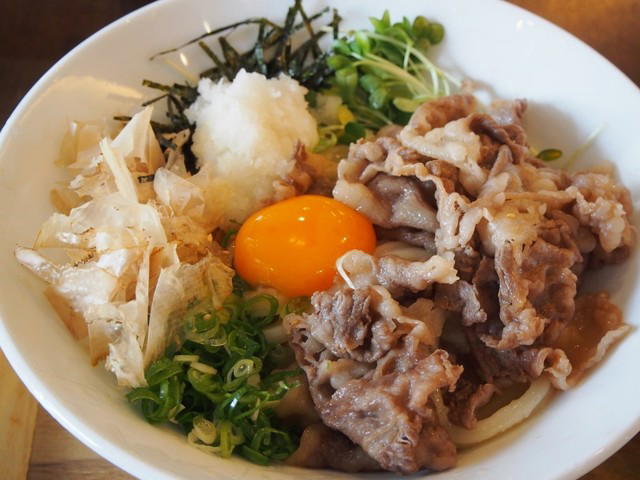
Approaching Osaka changes the rhythm of dining. The city’s central wards trade in neon, counters, and rapid turnover; elsewhere the pace can move at a lower register, where noodle shops sit closer to daily routines than destination theatre. That context matters for a specialist udon stop. Sanuki Udon Ittetsu is listed in udon, curry udon, and tempura, and its appeal is direct: a focused bowl, a modest bill, and the quick pleasure of a meal that does not need a tasting-menu frame.
Sanuki Udon Ittetsu belongs to that everyday end of Japanese craft dining. The categories are plain enough on paper, udon, curry udon, and tempura, yet those labels still leave room for a wide range of kitchen decisions: noodle handling, broth balance, frying timing, and how curry is integrated without burying the central dish. In Osaka, where casual dining can be as culturally serious as formal rooms, this is the kind of address that rewards readers who understand that low price does not mean low ambition.
Focused noodles in a city built for everyday eating
Osaka’s noodle culture is broad, practical, and deeply tied to daily appetite. A specialist udon shop fits naturally into that world because the format is unusually revealing. The noodle carries much of the experience, while the broth, curry, or tempura has to support the meal rather than distract from it. A more elaborate restaurant can sometimes hide weakness behind ceremony; an udon shop has far fewer places to disappear.
The recognition here is not decorative. Recognition in Tabelog’s Hyakumeiten coverage for 2024 places the shop inside a benchmark for specialist udon rather than a general Osaka restaurant list. That distinction is useful. Osaka has dense casual-dining competition, and an udon-specific frame filters for category knowledge: texture, consistency, value, and repeat appeal. A Tabelog score of 3.70 also signals a serious local following in a platform where ratings tend to be compressed and category specialists often sit below the numbers international visitors expect from Michelin-led dining.
Price sharpens the point. With lunch and dinner both sitting in the JPY 1,000 to JPY 1,999 range, this is not a luxury conversion of a humble dish. It sits within an everyday Osaka budget, alongside udon peers such as Senboku Do Honten, Dotou Zeniya, Ishinoue, and Aji no Mise Ichiban, where the decision is less about status than about which expression of wheat, broth, and local habit is worth the detour. For a broader sweep of the city’s dining range, Our full Osaka restaurants guide maps this kind of specialist address against other casual and specialist dining rooms.
The appeal is category confidence, not spectacle
There is a useful lesson in how Japan treats specialization. Udon, curry udon, and tempura may look like a narrow lane, but narrow lanes create standards. Curry udon asks whether spice and thickness can remain coherent with the noodle. Tempura tests timing and oil management. Plain udon exposes the kitchen’s fundamentals. This is why serious noodle shops in Japan often feel closer to craft workshops than casual chains, even when the bill stays modest.
Osaka visitors often build eating days around famous snacks, department-store basements, and reservations that require planning. That itinerary has value, but it can miss the everyday addresses that explain how residents actually eat. Sanuki Udon Ittetsu is more useful as a cultural marker than as a trophy stop: a reminder that the city’s dining intelligence is distributed across simple rooms, quick meals, and menus where the main decision may be as direct as udon, curry udon, or tempura.
The restaurant’s appeal sits firmly in daily-life Osaka rather than formal occasion dining. The format is straightforward, category-led, and built around the immediate pleasure of noodles and sides rather than the rituals of a multi-course meal. That makes it especially useful for readers who want to understand how a focused shop can carry as much local meaning as a higher-spend address.
How to place it within an Osaka eating itinerary
For travellers, the decision is simple: come for regional food literacy, not for a grand night out. Pairing this kind of udon stop with Osaka’s broader casual canon gives a clearer picture of the city than chasing only high-spend rooms. A day might move from wheat to other everyday Osaka dining, coffee, bread, or another specialist counter. Across Osaka, unnamed casual rooms show how local appetite can absorb different traditions without losing its interest in value and pace.
The wider planning frame matters too. Osaka rewards category hopping, and the same trip can hold hotels, bars, and experiences without forcing every meal into the same register. Use Our full Osaka hotels guide, Our full Osaka bars guide, Our full Osaka wineries guide, and Our full Osaka experiences guide to keep the noodle stop in proportion. It is a specialist meal with a narrow mandate, and that is its strength.
Readers tracing Japanese casual dining beyond Osaka will find useful contrasts in other dining rooms around Japan and in diaspora cities overseas, where Japanese formats shift as they meet different ingredients, habits, and expectations. The Osaka lesson remains sharper: when the craft is this focused, the bowl is the argument.
Frequently asked questions
Where exactly is Sanuki Udon Ittetsu?
Osaka.
What should I budget for a meal at Sanuki Udon Ittetsu?
Budget is listed as Dinner: JPY 1,000 - JPY 1,999; Lunch: JPY 1,000 - JPY 1,999.
Is Sanuki Udon Ittetsu reservation-only?
The provided listing does not establish it as reservation-only. Published pricing and category details place Sanuki Udon Ittetsu in the everyday Osaka dining bracket, with the focus on udon, curry udon, and tempura rather than a formal occasion format.
What makes Sanuki Udon Ittetsu worth seeking out?
It has recognition in Tabelog’s Hyakumeiten coverage for 2024, which is a concrete marker of standing in the category. The draw is a focused menu of udon, curry udon, and tempura at JPY 1,000-1,999.
Do they accommodate allergies at Sanuki Udon Ittetsu?
Those details are not provided here. That matters because the listed categories include wheat noodles, curry udon, and tempura. Check the venue's official channels for the latest details.
Cuisine and Credentials
Nearby venues at a similar price tier for orientation.
| Venue | Cuisine | Price | Awards | Notes |
|---|---|---|---|---|
| Sanuki Udon IttetsuThis venue (the venue you are viewing) | Traditional Sanuki Udon & Tempura | $10–20 | Tabelog 100 #49 | Not listed |
| Chitose Udon | Osaka Nikusui Udon | $10–20 | Tabelog 100 #24 | Namba |
| Sakai Udon Chihaya | Traditional Udon & Tempura | $1–10 | Tabelog 100 #91 | Sakaihigashi |
| Kei Chan | Udon noodle shop | Not listed | Tabelog 100 #50 | Hirano |
| Kashiya | Japanese Tonkotsu Ramen | $10–20 | Tabelog 100 #26 | Nishinari |
| Chuka Soba Fukuhara | Classic Japanese ramen (chuka soba) | $10–20 | Tabelog 100 #18 | Higashiosaka |
Recognition history
Dated appearances from independent guides and award organizations, with the underlying list record or original source where available.
Tabelog 100 #49 · No. 49
Tabelog · Tabelog 100 - Udon - WEST - 2024