Taco Bamba Taqueria
Our verdict
The taqueria operates within a local scene that prizes regional authenticity over Tex-Mex convention, putting it in useful company alongside the Afghan, Vietnamese, and Central Asian kitchens that define this corridor's culinary character.

Pearl is the En Primeur Club membership app — saves, bookings, and concierge access live there. Same editors, same standards.
- Address
- 2190 Pimmit Dr, Falls Church, VA 22043
- Phone
- (703) 639-0505
- Hours
- Mon–Thu 9 AM–9 PMFri–Sat 9 AM–10 PMSun 9 AM–9 PM
- Website
- tacobamba.com
- Directions
- Get directions
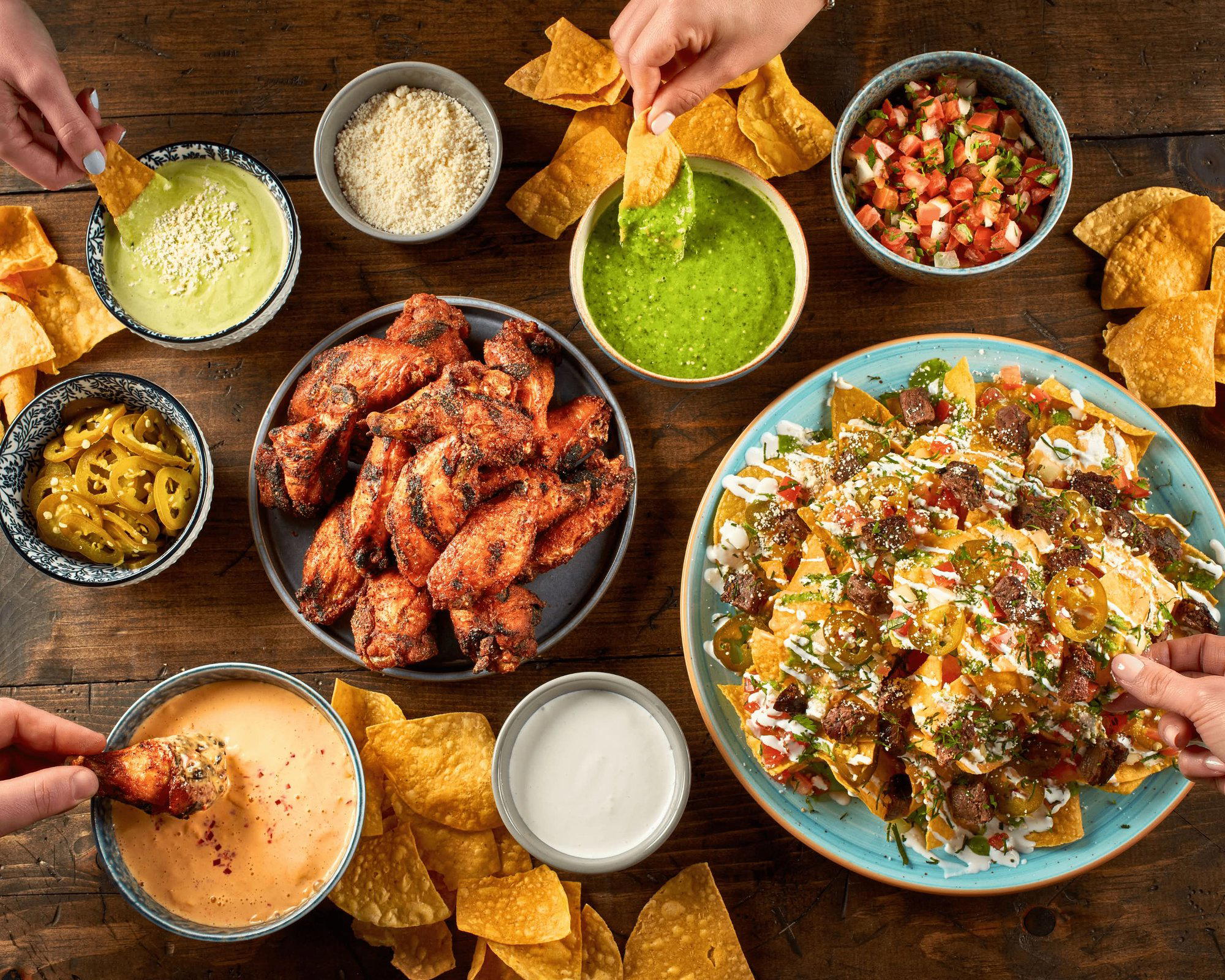
The menu
What to order
- Black Pearl fish taco
- Carne Asada taco
- Taco Bamba
- Carnitas
- Barbacoa
The broader Northern Virginia taco scene has fractured in useful ways over the past decade. On one end, fast-casual chains have standardized flavors to a lowest-common-denominator formula. On the other, a handful of independent taquerias have pursued something closer to Mexico City street-food logic, where the tortilla quality, the protein treatment, and the salsa hierarchy are taken seriously as technical matters. Taco Bamba positions itself in that second tier, a fact that its address in a neighborhood of serious independent restaurants reinforces before a single taco is ordered.
The Lunch and Dinner Divide
The way a taqueria performs across the day is often a more revealing measure of its kitchen discipline than any single dish. At lunch, the counter format places pressure on speed, consistency, and value clarity. The better taquerias in this market understand that lunch is not a warm-up for dinner service; it is a separate discipline with its own metrics.
By evening, the calculus shifts. Dinner at a counter taqueria invites a slower engagement with the menu, the kind of visit where an order expands from two tacos to four, where a side of beans or rice becomes part of the logic rather than an afterthought, and where the salsa selection gets tested more systematically. The drink program, if present, earns more attention after six in the evening. In cities like Los Angeles and San Francisco, the lunch-to-dinner transition at taco counters has produced some of the more interesting format experiments in American casual dining. The model at spots like Lazy Bear in San Francisco or the more formal end of the spectrum at Alinea in Chicago demonstrates how intentional format decisions at any price point define the guest experience. At the taqueria end of the spectrum, the same principle holds: the kitchens that think deliberately about lunch versus dinner tend to be the ones worth returning to. The neighborhood's dining culture, documented across spots like The Inn at Little Washington, operates at a remove from the casual end of the market, and the gap between those poles has not always been filled with the kind of mid-level independent operators that characterize New York's or Los Angeles's casual dining scenes.
For context on what American restaurant ambition looks like at its formal extreme, the EP Club covers venues from Le Bernardin in New York City and Providence in Los Angeles to Blue Hill at Stone Barns in Tarrytown, The French Laundry in Napa, Single Thread Farm in Healdsburg, and Addison in San Diego. The casual end of the American dining spectrum, where Taco Bamba operates, deserves the same editorial seriousness. A taco counter that sources correctly, maintains tortilla quality through a lunch rush, and adjusts its evening service to meet a different kind of diner is doing something technically considered, even if the check average stays under fifteen dollars.
The comparison is instructive in one specific way: at Atomix in New York City or Emeril's in New Orleans, the formal structure of the dining experience does a portion of the kitchen's communicative work. At a taqueria counter, the food must communicate entirely on its own terms, without the scaffolding of tablecloths, tasting menus, or sommelier guidance. That compression of context is its own form of rigor. And at the international level, kitchens like 8½ Otto e Mezzo Bombana in Hong Kong demonstrate that technical discipline and counter-casual delivery are not mutually exclusive; the format is separate from the ambition.C. area's more interesting casual dining corridors, so a meal here combines well with a broader neighborhood visit. For a fuller picture of what the city offers, the
Frequently asked questions
Where do I go for Taco Bamba Taqueria?
Taco Bamba Taqueria is located at 2190 Pimmit Dr, Falls Church, VA 22043, Falls Church.
How does Taco Bamba Taqueria fit into the Falls Church dining scene compared to other taquerias in the area?
Falls Church, particularly the Pimmit Drive corridor near Dunn Loring-Merrifield, has one of the highest concentrations of independent ethnic restaurants per square mile in the Washington metro area — a fact that makes survival there a credential in itself. Taco Bamba operates as an independent taqueria in a city where the wider D.C. market has historically been dominated by fast-casual chains rather than counter-driven taco specialists. Its address at 2190 Pimmit Drive places it directly within this competitive cluster, alongside Vietnamese, Korean, and Middle Eastern independents that collectively define Falls Church's reputation as a serious dining destination outside the Beltway.
What's the must-try dish at Taco Bamba Taqueria?
The venue data does not specify current menu items, so ordering by the counter staff's recommendation is the practical approach at 2190 Pimmit Drive. Taco Bamba has built its Falls Church reputation on a taqueria format where the taco itself is the unit of measure — order several across different proteins rather than committing to one. The Pimmit Drive location sits within one of Northern Virginia's most competitive restaurant corridors, which tends to keep kitchens sharp on execution.
What's the best way to book Taco Bamba Taqueria?
Taco Bamba Taqueria at 2190 Pimmit Drive, Falls Church operates as a taqueria counter, a format that typically runs on a walk-in basis rather than advance reservations. Checking the venue directly for any updated reservation or call-ahead policy before visiting is advisable.
Cuisine-First Comparison
Comparable venues nearby, for context on price, style, and recognition.
| Venue | Cuisine | Price | Notes |
|---|---|---|---|
| Taco Bamba TaqueriaThis venue — the venue you are viewing | Modern Mexican Street Food & Tacos | $10–20 | Not listed |
| Duangrat's | Thai | $20–30 | Falls Church |
| Thanh Son Tofu | Vietnamese Tofu & Sticky Rice | $10–20 | Eden Center |
| Present | Authentic Vietnamese | $20–30 | Arlington Boulevard corridor |
| Haandi | Authentic North Indian & Hyderabadi Cuisine | $20–30 | Falls Church |
| 2941 | Contemporary American with French and Mediterranean Influences | $30–50 | Falls Church |
Continue exploring
More in Falls Church
Restaurants in Falls Church
Browse all →
Bars in Falls Church
Browse all →
Hotels in Falls Church
Browse all →
Details
- Casual
- Trendy
- Energetic
- Casual Hangout
- After Work
- Group Dining
- Open Kitchen
- Standalone
- Craft Cocktails
- Counter Dining
- A La Carte
- Mezcal Cocktails
- Margaritas
- Vegetarian Friendly
- Pescatarian Friendly
Current opening hours
- Monday
- 9 AM–9 PM
- Tuesday
- 9 AM–9 PM
- Wednesday
- 9 AM–9 PM
- Thursday
- 9 AM–9 PM
- Friday
- 9 AM–10 PM
- Saturday
- 9 AM–10 PM
- Sunday
- 9 AM–9 PM
Hours can change for holidays and private events. Last verified .
Casual standup takeout counter with energetic, lively atmosphere focused on quick service and quality street food.