Tú Lan
On a block of 6th Street that San Francisco's fine-dining circuit has long overlooked, Tú Lan has held its ground as a reference point for Vietnamese cooking in the city. Its reputation runs on word-of-mouth and a track record that predates the current wave of Bay Area Vietnamese restaurants. The address alone separates it from the polished dining rooms of SoMa and the Financial District.
Pearl is the En Primeur Club membership app — saves, bookings, and concierge access live there. Same editors, same standards.
- Address
- 8 6th St, San Francisco, CA 94103
- Phone
- +14156260927
- Website
- tulansf.blogspot.com
- Directions
- Get directions
 Saves & bookings on Pearl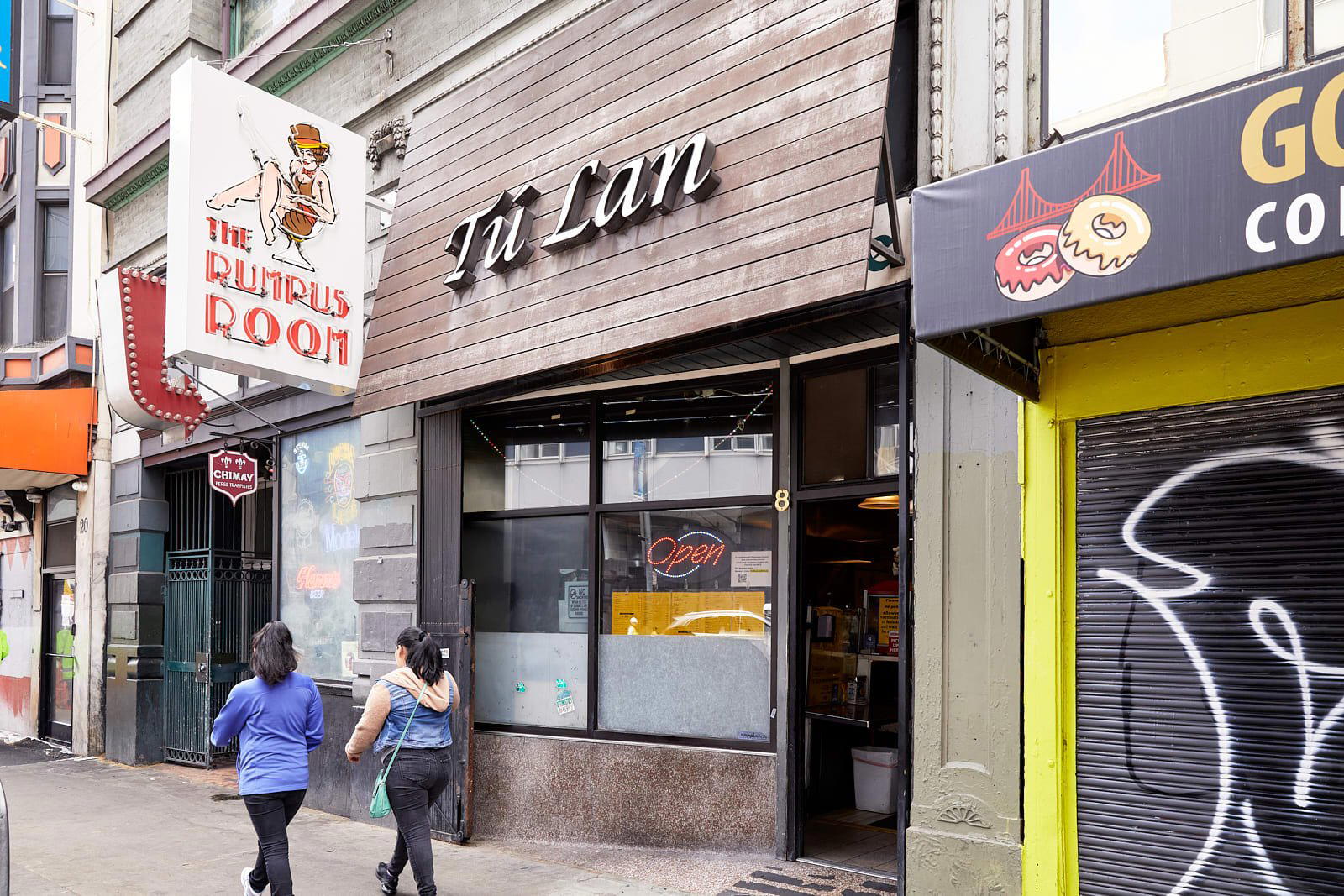
A Different Kind of San Francisco Institution
San Francisco's dining conversation rarely begins south of Market on 6th Street. The blocks around that address draw a different foot traffic than the neighbourhoods anchoring the city's Michelin circuit, the SoMa dining rooms where Benu and Saison operate, or the Financial District rooms where tasting menus price against Quince and Atelier Crenn. Tú Lan at 8 6th Street sits outside that geography, and that distance is partly the point. Its reputation has been built on cooking rather than location, and it has lasted through several cycles of San Francisco restaurant enthusiasm without relocating, rebranding, or pitching itself to a tasting-menu audience.
Vietnamese restaurants in American cities have historically occupied two poles: the large, family-style pho and banh mi operations in established diaspora neighbourhoods, and the newer wave of chef-driven Vietnamese concepts trading on fine-dining techniques. Tú Lan belongs to neither category cleanly. Its longevity in a neighbourhood that has tested many operators speaks to a consistency that trend-adjacent concepts rarely sustain.
What the Address Tells You
The 6th Street corridor in San Francisco sits between civic neglect and genuine neighbourhood life. It is not a dining destination in the conventional sense, there is no anchor institution drawing visitors from the Embarcadero or the Mission, no hotel concierge routing guests south from Union Square. Tú Lan has operated in that context without the benefit of a high-foot-traffic address, which in practical terms means its repeat customers come back by choice rather than convenience.
That dynamic separates it from the format that defines much of the city's celebrated Vietnamese cooking, which has migrated toward the Richmond and Tenderloin corridors where Vietnamese community infrastructure is denser. Eating at Tú Lan requires a deliberate trip, and the clientele that makes that trip tends to know what it is coming for. The room operates as a neighbourhood counter in a neighbourhood that most food tourists do not visit, and that keeps the experience grounded in a way that restaurants in more visited corridors sometimes struggle to maintain.
The Kitchen as the Constant
In Vietnamese restaurant culture broadly, the kitchen team and the front-of-house relationship determines whether a small independent operation holds together across years. At the scale Tú Lan operates, a compact room on a difficult block, there is no revenue cushion from private dining rooms or high-margin beverage programs. The food has to carry the operation. Restaurants in this category, across American cities, survive through repetition and precision: the same broth cooked the same way, the same rice paper rolled to the same standard, the same pacing in service that allows tables to turn without customers feeling processed.
This is a different kind of discipline than the collaborative kitchen structure you find at Lazy Bear, where the team dynamic is theatrical and intentional, or at Le Bernardin in New York City, where the relationship between kitchen and floor is formalised by decades of institutional structure. At a small Vietnamese counter, the team dynamic is less visible but no less load-bearing. The kitchen's consistency and the front-of-house's ability to manage a room efficiently are what allow a restaurant on 6th Street to accumulate a reputation that travels across the city.
Placing Tú Lan in the Broader Vietnamese Dining Picture
Vietnamese cooking in San Francisco exists along a spectrum that runs from the inexpensive pho shops of the Tenderloin to the more composed Vietnamese-influenced tasting menus appearing at the upper end of the Bay Area restaurant market. Tú Lan occupies a distinct position in that range: it is not positioning itself against the city's multi-course Vietnamese concepts, and it is not simply a quick-lunch operation. It sits in the middle register where cooking quality and value alignment determine whether a restaurant builds a lasting audience.
That middle register is where American cities' most durable Vietnamese restaurants have always operated. The-known examples, in Houston's Bellaire corridor, in Orange County, in Boston's Fields Corner, are not trend-driven. They are consistent. Tú Lan's presence at 8 6th Street in San Francisco places it in that tradition, geographically removed from the city's more photographed restaurant corridors but connected to a longer lineage of Vietnamese cooking that has nothing to do with chef-driven concepts or Michelin recognition.
For context on where this sits relative to the city's decorated dining rooms: the San Francisco restaurants holding serious award recognition, Benu, Atelier Crenn, Quince, operate at price points and formats that are incomparable to Tú Lan's register. Nationally, the same distance exists between institutions like Alinea in Chicago, The French Laundry in Napa, or Providence in Los Angeles and the kind of independent counter that Tú Lan represents. Those are different conversations, different audiences, different criteria for what makes a restaurant matter. Tú Lan's criteria are simpler and harder to sustain: cook the same food well for a long time in a difficult location.
Getting There and What to Expect
Tú Lan is at 8 6th Street in San Francisco's SoMa district, reachable from the Civic Center BART station on foot or by a short ride from Union Square and the Financial District. The room is compact and the address is not in a part of the city that rewards aimless wandering before or after a meal. Come with the restaurant as the destination rather than as part of a neighbourhood evening. Walk-in access is the norm here. The experience is counter dining in the plainest sense: direct and focused on the food.
For Vietnamese cooking in a different register nationally, Atomix in New York City represents the Korean fine-dining end of Asian-American chef-driven cooking, while Blue Hill at Stone Barns in Tarrytown, Single Thread Farm in Healdsburg, Addison in San Diego, Bacchanalia in Atlanta, The Inn at Little Washington, Emeril's in New Orleans, and 8 1/2 Otto e Mezzo Bombana in Hong Kong cover the broader spectrum of serious dining that EP Club tracks across the US and beyond.
Cuisine and Recognition
Comparable venues nearby, for context on price, style, and recognition.
| Venue | Cuisine | Price | Notes |
|---|---|---|---|
| Tú LanThis venue — the venue you are viewing | Authentic Vietnamese | $ | Not listed |
| Golden Flower Restaurant | Vietnamese Pho House | $$ | Chinatown |
| Pho Phu Quoc | Vietnamese Pho | $ | Sunset/Parkside |
| Cà Phê Việt | Vietnamese Coffee & Bánh Mì Cafe | $ | Financial District |
| Le Soleil | Vietnamese Fusion | $$ | Lakeshore |
| Saigonese Café | Vietnamese café & bánh mì shop | $$ | Embarcadero |
Continue exploring
More in San Francisco
Restaurants in San Francisco
Browse all →
Bars in San Francisco
Browse all →
Hotels in San Francisco
Browse all →
At a Glance
- Cozy
- Classic
- Casual Hangout
- Historic Building
Current opening hours
- Monday
- 11 AM–8 PM
- Tuesday
- 11 AM–8 PM
- Wednesday
- 11 AM–8 PM
- Thursday
- 11 AM–8 PM
- Friday
- 11 AM–8 PM
- Saturday
- Closed
- Sunday
- Closed
Hours can change for holidays and private events. Last verified .
Casual no-frills atmosphere with counter and small table seating in a basic, family-run space.