

An eight-seat counter in Kanazawa's Hikosomachi district, Sushi Kibatani works Sea of Japan fish through Edo-style technique with a regional inflection shaped by Noto coastline sourcing. Tabelog Bronze recognition every year from 2020 through 2026, plus consecutive selection to the Tabelog Sushi WEST 100, confirms its position in western Japan's tightest omakase tier. Dinner runs JPY 30,000–39,999; reservations require advance booking through the venue website.
 Discover on Pearl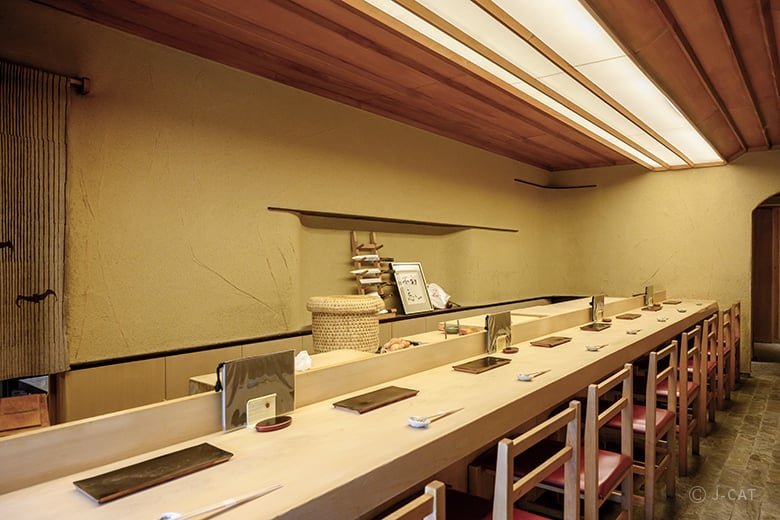
Eight Seats, One Coastline
The Hikosomachi address sits a manageable walk from central Kanazawa, but the atmosphere inside reads as deliberately removed from the city's tourist circuit. Eight counter seats face the chef's station directly, with no buffer between the preparation and the guest. That spatial compression is a deliberate condition of the omakase format: the counter is the kitchen, and the kitchen is the dining room. In cities where this format has become a premium standard, from Tokyo's Ginza district to Osaka's Kitashinchi, it signals a specific contract with the diner: undivided attention, sequence-driven pacing, and fish sourced to a standard that justifies the exposure.
Kanazawa occupies a particular position in this conversation. The city's access to the Sea of Japan, and specifically to the waters off the Noto Peninsula, gives its sushi counters a sourcing argument that counters in landlocked or port-distant cities cannot replicate. The Noto coastline produces snow crab, yellowtail, and a range of white-fleshed fish whose seasonal windows are narrow and whose quality is tied to cold-water conditions specific to that stretch of coast. At Sushi Kibatani, the stated approach places Noto-style sourcing alongside Edo-style technique, a combination that positions the counter in the tradition of Tokyo-trained sushi craft applied to non-Tokyo fish — a regional inflection that has become a distinguishing marker for serious counters across western Japan.
The shortlist, unlocked.
Hard-to-book tables, cellar releases, and concierge-planned trips.
Get Exclusive Access →The Freshness Argument in Practice
The editorial angle most useful for understanding Sushi Kibatani is not technique in the abstract but what might be called the freshness theatre of the high-end sushi counter: the way that premium fish, sourced directly from specific coastal markets and prepared in real time, becomes both the ingredient and the spectacle. At this price tier — dinner averaging JPY 30,000–39,999, or roughly USD 200–270 per person at current exchange rates , the expectation is that the gap between water and plate is as short as logistics allow. The Sea of Japan's winter fish calendar, which runs roughly from November through March, drives the premium end of this sourcing window. Outside that window, the counter shifts emphasis in ways consistent with seasonal omakase practice across Japan.
That seasonal responsiveness is baked into the counter's identity. The database record notes the venue is "particular about fish," a signal that sourcing decisions, not a fixed menu architecture, drive what arrives across the counter on any given evening. This distinguishes the format from kaiseki houses like Kataori in Kanazawa, where a multi-course seasonal structure organizes the experience differently, or from protein-specific formats like Hamagurizaka Maekawa's yakitori focus. Sushi Kibatani's organizing principle is the fish itself, sequenced by the chef's reading of that day's available quality.
Where It Sits in Western Japan's Omakase Tier
Japan's sushi counter hierarchy is legible through Tabelog data, and Sushi Kibatani's record there is consistent. Tabelog Bronze recognition in 2020, 2023, 2024, 2025, and 2026, combined with consecutive selection to the Tabelog Sushi WEST 100 in 2021 and 2025, places the counter in a documented tier of top-performing western Japan sushi venues. Its current Tabelog score of 3.97, and an Opinionated About Dining ranking of 522 among Japan's restaurants in 2025, position it below the very top tier of Tokyo counters but above the broader field of credentialed regional sushi houses.
That comparison is worth making explicit. Tokyo counters with multiple Michelin stars, like Harutaka, operate in a different competitive set and price against a global audience. Kanazawa's counters, including Sushi Kibatani, price against the regional premium and draw a clientele that includes serious domestic food travelers making specific journeys for the Noto sourcing argument. The counter opened in April 2016, giving it nearly a decade of operation behind its current recognition , a track record that separates it from newer venues accumulating early buzz without sustained peer-reviewed validation.
Within Kanazawa specifically, the high-end dining map spans several formats and traditions. Kisanuki addresses Japanese cuisine from a different structural angle, while Budoonomori Les Tonnelles represents the city's French-influenced fine dining tier. The sushi counter, in this context, occupies a specific niche: the most direct expression of the city's seafood advantage, delivered in its most concentrated format. For the full picture of what Kanazawa's dining scene offers across formats, see our full Kanazawa restaurants guide.
For further regional context, comparable omakase intensity can be found at Goh in Fukuoka, where Kyushu's coastal access drives a similar sourcing-led approach, or at Gion Sasaki in Kyoto, where kaiseki and seafood traditions intersect at a high level. Outside Japan, counters translating this kind of precision to different ingredient contexts include HAJIME in Osaka for a three-Michelin-star frame of reference, and internationally, the way sourcing-first thinking operates in non-Japanese fine dining settings can be examined at venues like Restaurant Tim Raue in Berlin or Mister Jiu's in San Francisco, each addressing their respective ingredient traditions with comparable rigor. Further afield, akordu in Nara and 1000 in Yokohama demonstrate how the premium counter format adapts across different regional and international contexts. A broader frame for Japanese precision dining is available through Komatsu in Kanazawa as well.
Planning the Visit
The practical outline for visiting Sushi Kibatani is direct but requires advance planning. Reservations are taken exclusively through the venue's website, kibatani.com, and the eight-seat counter means availability is limited at any given time. The restaurant operates Monday through Saturday from 17:00 to 21:00, with Sunday closed and additional irregular closures possible; confirming hours before travel is advisable. The counter is entirely non-smoking. Major credit cards are accepted, including VISA, JCB, American Express, and Diners, but electronic money and QR code payments are not. Parking is unavailable at the address, which is accessible on foot or by taxi from Hokutetsu Kanazawa station.
The venue can be taken exclusively for a single party at the counter's full capacity of eight, making private buyouts an option for groups planning around a single occasion. Nihonshu (sake) is available and, given the Sea of Japan fish focus, functions as the natural pairing framework. The budget sits at JPY 30,000–39,999 per person for dinner, with no lunch service currently listed.
For visitors building a broader Kanazawa itinerary beyond dining, EP Club's guides to the city's hotels, bars, wineries, and experiences provide the surrounding context for a considered trip.
Frequently Asked Questions
- Is Sushi Kibatani a family-friendly restaurant?
- No. At JPY 30,000–39,999 per person for dinner in a city where most sushi counters are formatted for adult food travelers, this is not a family setting.
- What should I expect atmosphere-wise at Sushi Kibatani?
- Kanazawa's premium counters tend toward a quieter, more considered atmosphere than their Tokyo equivalents, and Sushi Kibatani fits that pattern: eight seats, a calm and stylish counter room, and a format built around focused attention rather than spectacle. Tabelog Bronze recognition in five separate years from 2020 through 2026 confirms the consistency that underpins that atmosphere, and the JPY 30,000–39,999 price point ensures the room self-selects for guests engaging with the food seriously.
- What's the signature dish at Sushi Kibatani?
- Skip trying to identify a single signature. Sushi counters at this level in Japan sequence dishes by what the sourcing produces that day, and the Noto Peninsula fish calendar means the strongest pieces shift with the season. The stated commitment to Sea of Japan fish and the Noto-style approach across the omakase are the consistent frame; expect the chef to build the sequence around whatever that market delivered that morning.
Cuisine Context
A fast peer set for context, pulled from similar venues in our database.
| Venue | Cuisine | Awards | Notes |
|---|---|---|---|
| Sushi Kibatani | Chinese | {"Year":"2026","Award Source":"Tabelog",… | This venue |
| Kataori | Kaiseki | Kaiseki | |
| Zeniya | Kaiseki | Kaiseki | |
| Respiracion | Innovative Spanish | Innovative Spanish | |
| Hamagurizaka Maekawa | Yakitori | Yakitori | |
| Kyo Gion Negiyaki Kona | Okonomiyaki | Okonomiyaki |
Need a table?
Our members enjoy priority alerts and concierge-led booking support for the world's most difficult tables.
Get Exclusive AccessThe shortlist, unlocked.
Hard-to-book tables, cellar releases, and concierge-planned trips.
Get Exclusive Access →