




Respiracion brings Ishikawa's ingredient culture into a Spanish framework at a 14-seat counter in Kanazawa's Bakuromachi district. Chef Tatsuro Ume holds consecutive Tabelog Silver Awards from 2022 through 2026 and an 88-point La Liste score, with review-based spend landing between JPY 30,000 and JPY 39,999. The restaurant operates on group-start seatings, reservation-only, with a sommelier on hand and a wine program selected with particular care.
 Discover on Pearl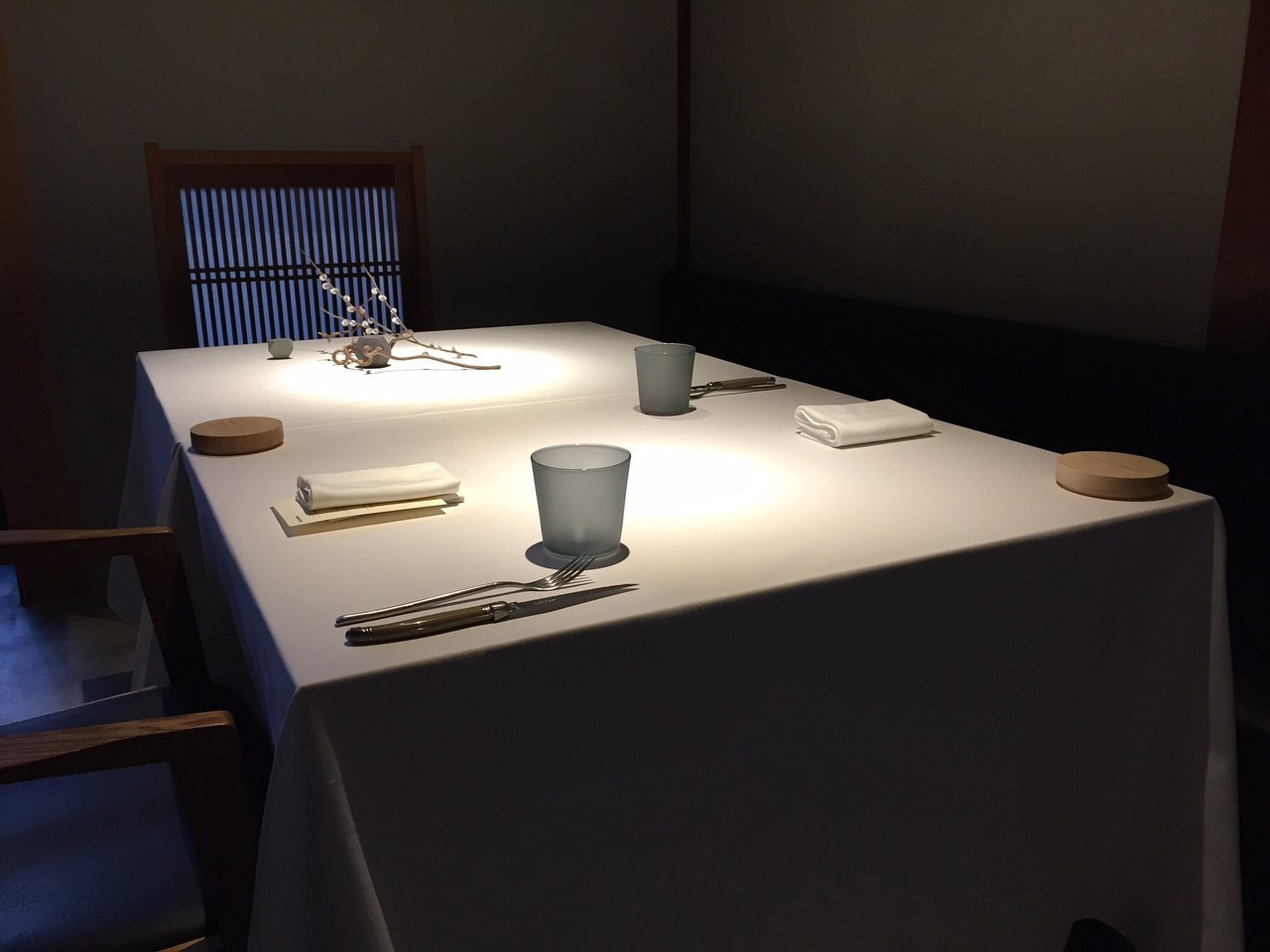
Where Kanazawa's Ingredient Culture Meets the Spanish Table
Spain and Japan share a culinary instinct that rarely gets named directly: both traditions organise themselves around the raw material rather than the technique. The asador tradition of the Basque Country, with its whole-animal cooking and reverence for fire as a clarifying rather than transforming agent, finds a counterpart in the Japanese kitchen's resistance to anything that obscures what is in front of you. Kanazawa, with its access to Noto Peninsula seafood, mountain vegetables from the surrounding Ishikawa interior, and a centuries-old craft culture that extends to its food markets, is arguably the best-supplied city in Japan for this kind of cooking. It is in this context that Respiracion, operating from a 14-seat room at 67 Bakuromachi since July 2017, becomes an interesting proposition.
Kanazawa's dining scene is anchored by kaiseki. Kataori and Kisanuki represent the city's serious traditional registers; Hamagurizaka Maekawa approaches its yakitori with the same product-first logic. Budoonomori Les Tonnelles places French technique inside the same local-sourcing framework. What Respiracion does differently is apply a Spanish sensibility to that shared Kanazawa foundation, specifically one that owes more to the northern Spanish tradition of letting fire, salt, and provenance do the work than to the molecular elaboration that defined Spanish fine dining for much of the 2000s.
The shortlist, unlocked.
Hard-to-book tables, cellar releases, and concierge-planned trips.
Get Exclusive Access →The Format: Group-Start, Reservation-Only, No Walk-Ins
The operational format at Respiracion is worth understanding before anything else. Both lunch and dinner run as group-start seatings: the noon service begins at 12:00 with entry from 11:30, and the evening service at 18:00 with entry from 17:30. The restaurant is explicit that late arrivals will be accommodated only from wherever the course has reached at the point they walk in. This is not an unusual policy for high-end tasting-menu restaurants in Japan, where kitchen timing is calibrated precisely, but it does require planning in a way that more flexible operations do not. The maximum party size is six, private rooms are unavailable, and private-use buyout is possible. All major credit cards are accepted; electronic money and QR code payments are not. A 10 percent service charge applies.
The practical logistics compound this: Respiracion sits a one-minute walk from Omicho Market, which is both useful and meaningful. Omicho is one of Japan's most significant covered markets, with seafood stalls that supply much of the serious cooking in the city. The proximity is not incidental. For visitors already spending time at the market, the restaurant is easy to reach on foot. Parking is unavailable on site, though coin parking is available in the surrounding area. The Bakuromachi address puts you in the older, more densely arranged part of central Kanazawa, where taxis and walking are more practical than driving.
The Award Record: Five Consecutive Tabelog Silvers
Tabelog's Silver designation sits below Gold and Bronze, occupying a tier that, in practical terms, represents a restaurant in the top 1 percent of Tabelog's rated universe. Respiracion has held that Silver every year from 2022 through 2026, a consecutive run that indicates stability and consistency rather than a single strong moment. Its 2026 score of 4.50 places it at 109th in the Silver cohort nationally. The restaurant also appeared in the Tabelog Spanish Cuisine Top 100 for 2024, a category-specific list that evaluates it against its actual competitive set rather than against all restaurant types.
Beyond Tabelog, La Liste awarded Respiracion 88 points in its 2026 ranking, a French-origin global list that draws on critic reviews from multiple countries. That score positions it as a restaurant with international critical recognition, not just domestic. Opinionated About Dining, a data-aggregated European-origin ranking that weights critic and food-community votes, placed Respiracion at 88th among Japanese restaurants in 2025, up significantly from 272nd in 2024 and following a Highly Recommended designation in 2023. That upward trajectory across three consecutive years on a list structured around accumulated reviews is meaningful data. Review-based spend reported by Tabelog users lands between JPY 30,000 and JPY 39,999 per person, above the stated average price band of JPY 20,000 to JPY 29,999, which typically reflects wine spend pushing the final bill upward.
Spanish Technique in Japan: A Different Kind of Fusion
Japanese restaurants working within European frameworks have proliferated in major cities over the past decade. HAJIME in Osaka applies French rigor to Japanese ingredients. Gion Sasaki in Kyoto remains firmly within kaiseki tradition. Akordu in Nara pursues Basque-rooted cooking with Nara produce. What differentiates the leading of these operations from novelty exercises is whether the European framework genuinely serves the local ingredient or merely provides a structuring device for what is essentially Japanese cooking wearing different clothes.
La Liste's note on Respiracion specifically references the alignment between Japanese and Nordic sensibilities around product purity, and names the vegetable work as a distinguishing characteristic. The We're Smart community, which recognises restaurants for their vegetable-forward cooking, cited the visual appeal and flavour clarity of the vegetable dishes as the reason for their interest in the restaurant. This points toward a cooking style where the asador logic of fire-plus-product is applied to Ishikawa's agricultural output: Noto vegetables, mountain greens, the produce that comes out of the prefecture's interior rather than solely the seafood that Kanazawa's reputation rests on. Chef Tatsuro Ume, who opened Respiracion in 2017, has built a record across eight years that suggests the Spanish framework has held.
Within Japan's Spanish restaurant category, comparable operations worth referencing include Goh in Fukuoka, which applies European technique to Kyushu ingredients, and 1000 in Yokohama. For those tracking the intersection of Japanese and European fine dining more broadly, Harutaka in Tokyo and Atomix in New York City represent different points on that spectrum. Outside Japan, Le Bernardin in New York City occupies a similar product-first discipline in the French-European tradition.
Wine, Service, and the Practical Experience
The wine program at Respiracion is described in the Tabelog listing as one the restaurant is particularly careful about, and a sommelier is on the floor. For a Spanish-format restaurant in Japan, that typically means a Spanish-weighted list with some French presence, though the actual selection is not detailed in the available data. The gap between the stated average price (JPY 20,000 to JPY 29,999) and the review-based actual spend (JPY 30,000 to JPY 39,999) points toward a wine program that diners use actively rather than skip. Credit cards are accepted across all major networks; cash-only constraints that affect some other Japanese fine dining operations do not apply here.
The room holds 14 seats, with sofa seating available and a space described as relaxing rather than formal. This sits within a broader shift across Japanese fine dining toward environments that are less ceremonially rigid than traditional kaiseki settings, while still operating at a tasting-course price point. The celebrations and surprises service notation in the listing suggests the kitchen will work with guests on occasion-specific requests, within the constraints of a course-format kitchen.
Kanazawa's Dining Scene: Where Respiracion Fits
Kanazawa is frequently discussed as Japan's food city outside the major metropolitan centres. The combination of Omicho Market, the fishing access of the Japan Sea coast, and the agricultural output of Ishikawa Prefecture gives serious restaurants here a sourcing advantage that most cities cannot replicate. Komatsu represents another point in the city's serious dining tier. The city's restaurant scene has developed largely without the Michelin guide coverage that Tokyo and Kyoto receive, which has meant Tabelog and international lists like OAD and La Liste carry more weight in shaping its critical reputation.
Respiracion's position in that scene is specific: it is the city's entry point into Spanish-framework cooking at fine dining price points, with an award record that gives it national and international standing in its category. For visitors building a Kanazawa itinerary, it offers a different register from the kaiseki counters that define the city's dining identity. For those exploring the full range of what the city offers, our full Kanazawa restaurants guide covers the broader scene, while our Kanazawa hotels guide, bars guide, wineries guide, and experiences guide map the rest of what the city has to offer.
Planning Your Visit
Respiracion is reservation-only, with seatings at noon and 18:00 on days it operates. The restaurant closes approximately six times per month, primarily on Mondays, with additional closures on Tuesdays (dinner only on that day) and other days varying by week. Arrive no later than 15 minutes before your seating time: the group-start format means the course begins on schedule regardless of whether all guests have arrived. Spend per person, accounting for wine, should be budgeted at JPY 30,000 to JPY 39,999 based on reviewer data, with a 10 percent service charge added on leading. The address at 67 Bakuromachi places the restaurant within walking distance of Omicho Market and the central city. Coin parking is nearby for those driving, though the area is more practically accessed by taxi or on foot from Kanazawa Station.
The shortlist, unlocked.
Hard-to-book tables, cellar releases, and concierge-planned trips.
Get Exclusive Access →Frequently Asked Questions
Price and Positioning
A quick peer reference to anchor this venue in its category.
| Venue | Price | Awards | Notes |
|---|---|---|---|
| Respiracion | {"Year":"2026","Award Source":"Tabelog",… | This venue | |
| Kataori | Kaiseki | ||
| Sushi Kibatani | Chinese | ||
| Zeniya | Kaiseki | ||
| Hamagurizaka Maekawa | Yakitori | ||
| Kyo Gion Negiyaki Kona | Okonomiyaki |
Need a table?
Our members enjoy priority alerts and concierge-led booking support for the world's most difficult tables.
Get Exclusive AccessThe shortlist, unlocked.
Hard-to-book tables, cellar releases, and concierge-planned trips.
Get Exclusive Access →