

Tabelog Gold #10
Our verdict
Ginza’s eight-seat sushi counters operate in a narrow luxury band where sourcing, rice temperature, and pacing matter more than theatricality. Sushi Ikkou belongs to that bracket: omakase-only, counter-only, recognised with Tabelog Award 2026 Gold and listed in Tabelog Sushi TOKYO 100 for 2025, with dinner priced at JPY 60,000–79,999.

Pearl is the En Primeur Club membership app, where members save venues, book tables and use the concierge.
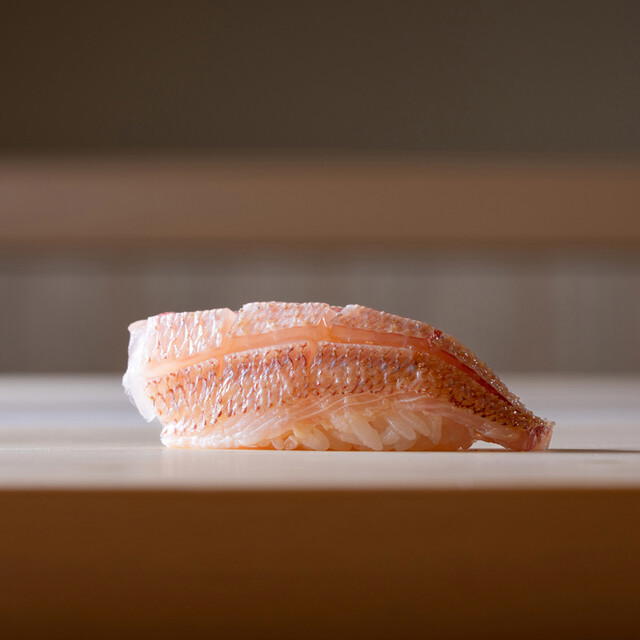
The approach is pure Ginza: a vertical building, an upper-floor address, and the quiet compression that defines Tokyo’s serious sushi rooms. The city’s sushi hierarchy is often read through lineage and fame, but at counter level the sharper question is ingredient control. Fish arrives through Tokyo’s wholesale channels, rice is calibrated to the chef’s tempo, and the room gives diners no visual escape from the craft. In that context, Sushi Ikkou enters a demanding field where a few degrees of warmth or a short pause between pieces can change the meal’s logic.
Tokyo sushi has spent the past decade narrowing at the high end. The grand restaurant model matters less than the counter: eight seats, omakase only, no private room, no à la carte safety net. This format puts pressure on sourcing and sequencing rather than décor. It also makes awards more legible. A Tabelog Award 2026 Gold citation and inclusion in Tabelog Sushi TOKYO 100 in 2025 place the restaurant inside Japan’s diner-driven evaluation culture, where sustained local attention often says more than international visibility.
Ginza sushi, measured by fish rather than ceremony
Ginza remains Tokyo’s densest stage for expensive Edomae sushi, yet the neighbourhood is not a single style. Counters such as Sushi Kanesaka, Sushi Yoshitake, Sushi Aoki: Ginza, Sushi Take, and Hakkoku compete through different readings of the same tradition: vinegar strength, neta preparation, portioning, and the balance between otsumami and nigiri. The useful comparison is not luxury against casual sushi, but one counter’s sourcing discipline against another’s.
The ingredient angle matters because Edomae sushi is often misunderstood as minimalism. It is closer to controlled intervention. Tokyo’s serious counters may cure, rest, season, brush, warm, cool, or cut fish in ways that are almost invisible once the piece is served. Toyosu replaced Tsukiji as the city’s central wholesale market in 2018, but the vocabulary of Tokyo sushi still rests on selection, timing, and relationships across the seafood trade. At this level, “particular about fish” is not a slogan; it is the baseline expectation.
Sushi Ikkou’s public details support that reading. The restaurant is listed for sushi, accepts only omakase, and operates around an eight-seat counter. Those facts point to a meal built around sequence rather than choice. The diner is not comparing menu categories; the diner is watching how the counter handles seasonal availability, fat content, temperature, and rice. In Tokyo’s premium sushi economy, that is the difference between a famous address and a serious one.
An eight-seat counter in the city's upper sushi tier
The price band, JPY 60,000–79,999 for dinner, puts the restaurant in Ginza’s expensive sushi class rather than the exploratory omakase tier found in outer neighbourhoods. That number matters editorially because it changes the reader’s decision. At this level, the question is not whether sushi in Tokyo can be cheaper; it can. The question is whether a tightly scaled counter with local recognition offers enough precision to justify prioritising it over longer-established names.
The early signal is strong. The restaurant opened on 17 August 2024 and had already appeared in Tabelog Sushi TOKYO 100 for 2025 before receiving Tabelog Award 2026 Gold. For a new counter in a saturated city, that is a fast public ascent. It should be read carefully, not breathlessly: Tokyo diners reward consistency, but the field is crowded, and reputation in sushi is usually built piece by piece, season by season. The more useful conclusion is that the restaurant has entered the serious conversation quickly.
Chef Junya Kudo is named in the Opinionated About Dining listing, where the restaurant appears in the 2026 Japan Top Restaurants ranking at number 16. That credential adds an international signal to the local Tabelog recognition, but the stronger point remains structural. Small counters are unforgiving. There is no wine-list theatre to hide behind, no large brigade visible to the room, and no separate menu path for hesitant diners. A chef-led sushi counter succeeds or fails through repetition under scrutiny.
Ginza also shapes expectations before the first piece is served. The district’s dining culture prizes punctuality, quiet concentration, and a high tolerance for formal rhythm. A counter meal here can feel less relaxed than an omakase in Ebisu or a modern Japanese room in Daikanyama, but that tension is part of the appeal. Diners choosing this address are buying into a compact, exacting version of Tokyo sushi, not a broad night out.
How to place it within a Tokyo dining itinerary
For travellers, this is a specialist reservation rather than a general Tokyo dinner. The counter-only format makes it better suited to diners who are comfortable with chef-paced sushi and a fixed omakase structure. It is not the right anchor for a mixed group debating cooked dishes, private space, or a flexible ordering style. Tokyo has plenty of alternatives for that, from French-accented rooms such as 3110 and Bistrot Dia to old-school Western-Japanese dining at Daikanyama Ogawaken and seafood-led counter cooking at Ebisu Endo.
The sharper itinerary play is to build contrast. Pair a Ginza sushi counter with a different Tokyo meal that shows the city’s range: Edomae formality at Edomae Sushi Hanabusa, then a more relaxed neighbourhood dinner the following night. Readers mapping the wider city can use Our full Tokyo restaurants guide, while hotel, bar, winery, and experience planning sit separately in Our full Tokyo hotels guide, Our full Tokyo bars guide, Our full Tokyo wineries guide, and Our full Tokyo experiences guide.
Japan’s dining map rewards lateral thinking, too. A sushi-led Tokyo trip can stretch outward to -Grilled beef Sukiyaki- KAMAKURA TANUKIAN 鎌倉 たぬき庵 in Kamakura, Osaka addresses such as.cafe in Osaka and AKA to SHIRO, Sushi in Osaka, or regional detours including.know in Kumamoto, (Shoku) Vietnam in Kawasaki, [Curry Senmon Ten] Maruyama Kyoju. in Sapporo, and [ki:] in Kyoto. For a trans-Pacific comparison in modern sushi ambition, Akikos, Sushi in San Francisco shows how differently the form translates outside Japan.
Frequently asked questions
What kind of cuisine does Sushi Ikkou serve?
Sushi Ikkou serves Sushi cuisine.
How much does it cost to eat at Sushi Ikkou?
Pricing at Sushi Ikkou is listed as JPY 60,000 - JPY 79,999.
Where exactly is Sushi Ikkou?
Sushi Ikkou is located in Tokyo.
What's the best way to book Sushi Ikkou?
Sushi Ikkou is reservation-only and accepts OMAKASE bookings. The room has 8 counter seats, so planning ahead makes sense for a Ginza address at 5-11-12 Ginza, Chuo City, Tokyo.
What's the defining dish or idea at Sushi Ikkou?
The venue frames itself around sushi and a focus on fish, with the Tabelog listing noting a goal to create sushi that moves the heart. The format is an 8-seat counter in Ginza, and the restaurant was selected for Tabelog Sushi TOKYO 100 in 2025 and won Tabelog Award 2026 Gold.
Is Sushi Ikkou suitable for children?
The dining room is compact, with just 8 counter seats and a maximum party size of 8, so it suits children only if they can handle a formal sushi counter setting. The dinner price range is JPY 60,000–79,999, which places it in a serious adult dining bracket in Tokyo.
A Tight Comparison
Comparable venues at a glance for context.
| Venue | Cuisine | Price | Awards | Notes |
|---|---|---|---|---|
| Sushi IkkouThis venue (the venue you are viewing) | Edomae Omakase | Not listed | Tabelog Gold #10 | Not listed |
| Hakkoku | Edomae Omakase | $200–300 | Tabelog Bronze | Sushi |
| Sushi Aoki: Ginza | Edomae Sushi Omakase | $200–300 | Black Pearl 1 Diamond | Sushi |
| Sushi Kanesaka | Edomae Omakase | $200–300 | 2 Michelin Stars · La Liste Top Restaurants | Sushi |
| Sushi Take | Edomae Sushi Omakase | Not listed | Tabelog 100 #36 | Sushi |
| Sushi Yoshitake | 3-Michelin-Star Omakase Sushi | $500+ | La Liste Top Restaurants · Tabelog Bronze #530 | Sushi |
Recognition history
Dated appearances from independent guides and award organizations, with the underlying list record or original source where available.
Opinionated About Dining Top Restaurants in Japan Ranked #16
Opinionated About Dining
Tabelog Gold #10
Tabelog
Full recognition history (3 entries)
Tabelog 100 #4 · No. 4
Tabelog · Tabelog 100 - Sushi - TOKYO - 2025
Continue exploring
More in Tokyo
Restaurants in Tokyo
All restaurants in Tokyo →

Bars in Tokyo
All bars in Tokyo →

Details
- Quiet
- Intimate
- Elegant
- Sophisticated
- Special Occasion
- Date Night
- Chefs Counter
- Sake Program
- Sustainable Seafood
- Omakase
- Counter Dining
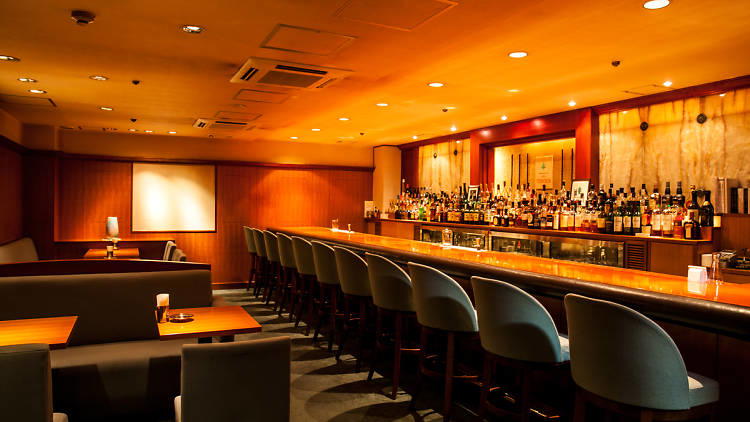
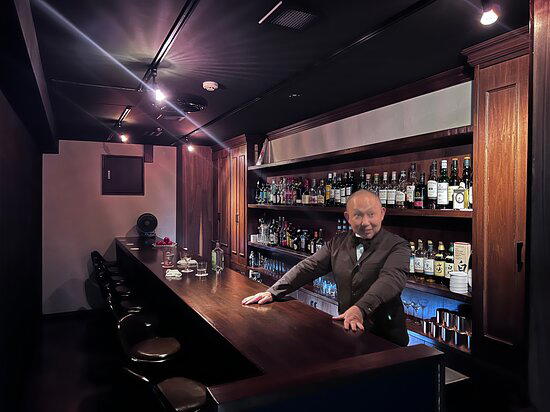
Cozy and relaxing counter seating in a small, calm space where photography is prohibited to maintain an intimate, focused dining atmosphere.