
Our verdict
Ranked #68 in Opinionated About Dining's 2025 list of Japan's top restaurants, Sushi Fukuzuka operates from a second-floor address in Shinjuku's Tsukudocho district under chef Hiranobou Fukazuka. The counter sits within Tokyo's broader omakase tradition, where shokunin training and lineage carry as much weight as the fish on the board.

Pearl is the En Primeur Club membership app, where members save venues, book tables and use the concierge.
The menu
What to order
- Temperature-controlled tuna nigiri
- Fugu shirako
- Nodoguro yakimono donburi
- Liquid nitrogen ice cream
The Apprenticeship System That Shapes Tokyo Sushi
The shokunin tradition in Japanese sushi is not a romantic metaphor. It is a structural reality: a chef spends years, sometimes over a decade, under a single master before earning the right to stand behind their own counter. This system produces a remarkably consistent standard across Tokyo's serious omakase counters, but it also creates distinct lineages, technical and philosophical threads that connect a generation of restaurants to the masters who trained them.
Shinjuku's Counter: Context and Position
Tokyo's premium sushi scene has historically concentrated in Ginza, Roppongi, and the high-rent corridors of central Tokyo, where counters like Harutaka, Sukiyabashi Jiro Roppongiten, and Sushi Kanesaka anchor the upper tier. Shinjuku is a different proposition, a district better known for its density and transit volume than for quiet second-floor omakase rooms. That positioning is worth noting: a restaurant earning a national ranking from an address outside the traditional sushi corridors is making a statement about product over location.
The OAD ranking system, which aggregates assessments from a global network of serious restaurant-goers rather than a single critic or inspectorate, tends to surface counters where the food consistently outperforms expectation relative to setting or profile. A #68 position nationally, in a country with more Michelin-starred restaurants per capita than anywhere else on earth, is a meaningful signal. It places Sushi Fukuzuka ahead of many counters that enjoy higher visibility and more prominent addresses. For comparison, other Tokyo sushi counters in EP Club's coverage that operate in this tier include Edomae Sushi Hanabusa and Hiroo Ishizaka, each working within the same Edomae discipline but from different neighbourhood positions.
Edomae Discipline and the Weight of Training
Edomae sushi, the style that evolved in Edo-period Tokyo using fish from the surrounding bay, preserved through vinegaring, curing, and marinating, is the technical foundation that most serious Tokyo counters still reference, even where the specific techniques have evolved. The discipline demands that a chef understand the fish before the seasoning, the rice before the presentation. Training within this system is cumulative and non-transferable in the shortcuts sense: it requires time in the kitchen, repetition at the counter, and proximity to a master whose corrections carry the weight of accumulated experience.
Chef Hiranobou Fukazuka's position at this counter is, by that measure, the product of a long formation. The shokunin model does not accommodate speed. What it produces, at its finest, is a chef who has internalized not just technique but judgment, the ability to read a piece of fish, assess rice temperature, and sequence a meal with the pacing that converts a series of nigiri into something coherent.
How Fukuzuka Fits the Broader Tokyo Picture
Tokyo's omakase counters operate across a wide range of price and prestige tiers. At the uppermost level, a handful of counters have achieved Michelin recognition and international profile with multi-month booking waits and prices that reach into six figures (yen). Below that, a second tier of serious, craft-led counters serves a primarily local clientele, with less visibility abroad but often comparable or superior fish work. Sushi Fukuzuka appears to occupy that second tier: nationally ranked, locally anchored, and operating without the international marketing apparatus of its more-famous peers.
This positioning has practical implications for visitors. Counters with lower international profile tend to be more accessible by booking, though serious omakase rooms in Tokyo rarely offer walk-in seats and require advance reservations regardless of fame. The second-floor Tsukudocho address also suggests a room that prioritises the counter experience over street presence or hotel adjacency, a reasonable trade for a guest whose primary interest is the food.
For those building a wider itinerary around Japan's dining scene, the country's premium restaurant network extends well beyond Tokyo. EP Club covers HAJIME in Osaka, Gion Sasaki in Kyoto, akordu in Nara, Goh in Fukuoka, 1000 in Yokohama, and 6 in Okinawa. For those travelling across Asia, the Edomae tradition has also produced serious satellite counters: Sushi Shikon in Hong Kong and Shoukouwa in Singapore both operate within a lineage traceable to Tokyo masters.
Planning a Visit
Sushi Fukuzuka is located at Tsukudocho 3-5, 2nd floor, Shinjuku City, Tokyo. Shinjuku is one of Tokyo's best-connected transit hubs, serviced by the JR Yamanote Line, multiple Metro lines, and the Shinjuku Station complex. The specific Tsukudocho address sits east of the main station area, in a quieter residential and low-rise commercial pocket that contrasts with the neon-dense corridors most visitors associate with the district.
Booking should be arranged in advance; serious omakase counters in Tokyo do not operate on a walk-in basis.
For a broader view of Tokyo's dining, drinking, and hospitality options, see our full Tokyo restaurants guide, our full Tokyo hotels guide, our full Tokyo bars guide, our full Tokyo wineries guide, and our full Tokyo experiences guide.
Quick reference: Sushi Fukuzuka, Tsukudocho 3-5, 2F, Shinjuku City, Tokyo. OAD Japan #68 (2025).
Frequently asked questions
Is Sushi Fukuzuka Michelin-listed?
Sushi Fukuzuka has received recognition including: Opinionated About Dining Top Restaurants in Japan Ranked #68 (2025).
What do people recommend at Sushi Fukuzuka?
At omakase counters operating within the edomae tradition, the menu is the chef's call, Hiranobou Fukazuka determines the sequence based on season and what the market offers that day. The OAD #68 Japan ranking for 2025 reflects consistent peer recognition, which is the most reliable signal of what to expect.
Just the Basics
Comparable venues nearby, for context on price, style, and recognition.
| Venue | Cuisine | Price | Awards | Notes |
|---|---|---|---|---|
| Sushi FukuzukaThis venue (the venue you are viewing) | Modern Japanese Omakase | $200–300 | Not listed | Not listed |
| Tokyo Shiba Toufuya Ukai | Traditional Japanese Tofu Kaiseki | Not listed | We're Smart World 1 Radish | Minato, Traditional Japanese Tofu Kaiseki |
| Hoshinoya Restaurant | Modern Japanese Kaiseki with French Techniques | $150–200 | Not listed | Chiyoda, Modern Japanese Kaiseki with French Techniques |
| てんぷら 深町 | Edo-mae Tempura Omakase | $100–150 | 1 Michelin Star · Tabelog Bronze #77 | Chūō, Edo-style Tempura |
| Ningyocho Imahan Ginza ten | Traditional Wagyu Sukiyaki & Shabu-shabu | $100–150 | Tabelog 100 #98 | Chūō, Traditional Wagyu Sukiyaki & Shabu-shabu |
| Japanese Cuisine Yamazaki | Seasonal Japanese Kaiseki | $300–500 | Tabelog 100 #39 | Chūō, Seasonal Japanese Kaiseki |
Recognition history
Dated appearances from independent guides and award organizations, with the underlying list record or original source where available.
Opinionated About Dining Top Restaurants in Japan Recommended
Opinionated About Dining
Full recognition history (2 entries)
Opinionated About Dining Top Restaurants in Japan Ranked #68
Opinionated About Dining
Continue exploring
More in Tokyo
Restaurants in Tokyo
All restaurants in Tokyo →
Bars in Tokyo
All bars in Tokyo →


Details
- Intimate
- Elegant
- Sophisticated
- Special Occasion
- Date Night
- Celebration
- Chefs Counter
- Open Kitchen
- Sake Program
- Sommelier Led
- Natural Wine
- Sustainable Seafood
- Local Sourcing
- Omakase
- Counter Dining
- Sake
- Wine
- Allergy Accommodating
Current opening hours
- Monday
- Closed
- Tuesday
- 12–1:50 p.m., 6–8 p.m., 8:30–10:30 p.m.
- Wednesday
- 12–1:50 p.m., 6–8 p.m., 8:30–10:30 p.m.
- Thursday
- 12–1:50 p.m., 6–8 p.m., 8:30–10:30 p.m.
- Friday
- 12–1:50 p.m., 6–8 p.m., 8:30–10:30 p.m.
- Saturday
- 12–1:50 p.m., 2–4 p.m., 6–8 p.m., 8:30–10:30 p.m.
- Sunday
- 12–1:50 p.m., 2–4 p.m., 6–8 p.m., 8:30–10:30 p.m.
Hours can change for holidays and private events. Hours as of .
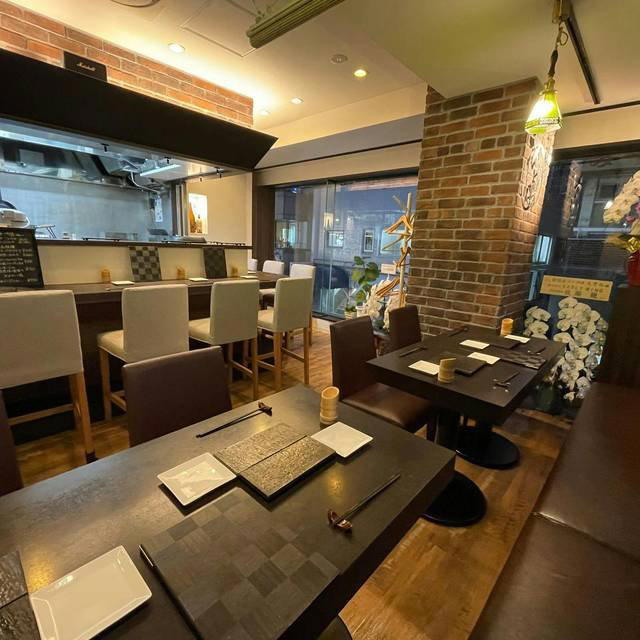
Dim, intimate lighting inspired by tea ceremony aesthetics with individual bright lamps at each seat to highlight dishes; minimalist wood-focused design with a cool, refined atmosphere.