
Sumiyaki Unagi Kamo sits in Hamamatsu’s serious eel tradition, where charcoal grilling and Lake Hamana’s long association with unagi define the meal more than ceremony. Recognition in Tabelog’s Unagi 100 selection for 2018, 2019, 2022, and 2024 places it among Japan’s closely watched eel specialists, with a compact house-restaurant format rather than a formal dining-room model.
Pearl is the En Primeur Club membership app — saves, bookings, and concierge access live there. Same editors, same standards.
- Address
- 静岡県浜松市浜名区三ヶ日町都筑791-8
- Phone
- +81535262428
- Website
- tabelog.com
 Saves & bookings on Pearl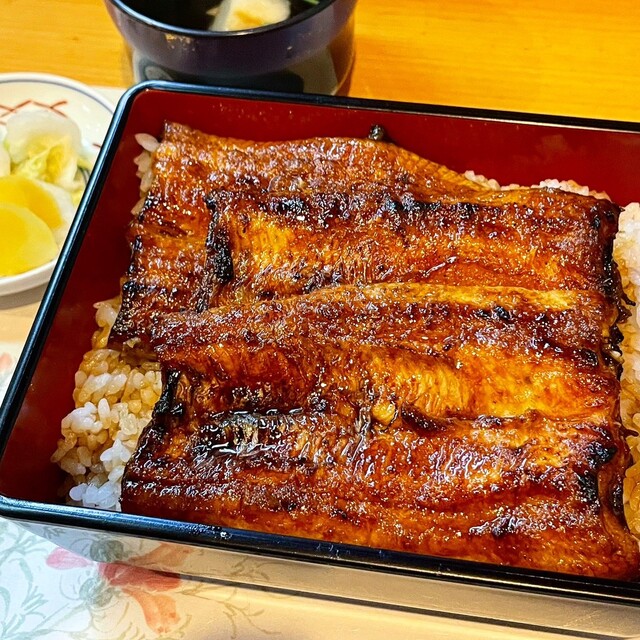
Approach this part of Mikkabi and the meal already has a frame: low-rise houses, rail-line scale, and the agricultural edge of Hamamatsu rather than the dense restaurant streets of a major station district. Unagi in this city is not a novelty category. Lake Hamana helped make the area one of Japan’s reference points for farmed eel, and the local dining culture treats grilled eel as a serious regional craft, not a celebratory extra tacked onto a broader Japanese menu.
That context matters at Sumiyaki Unagi Kamo because the address reads as a house restaurant, with counter seats and tatami seating shaping the experience around proximity rather than spectacle. The format belongs to a familiar Japanese category: specialist kitchens where the room is modest, the cooking style is narrow, and the credibility comes from repetition. For travellers used to urban tasting menus, Hamamatsu eel asks for a different kind of attention. The point is not course progression or chef narration; it is how a single ingredient, rice, sauce, heat, and timing carry a regional identity.
Hamamatsu eel culture, seen through a charcoal specialist
Japanese unagi has a long split between regional technique and house preference. Kanto-style eel is commonly steamed before grilling, while Kansai-style grilling tends to be more direct. Hamamatsu sits between larger culinary poles and has its own eel reputation, built around access, aquaculture history, and an appetite for restaurants that keep the category precise. In that setting, charcoal grilling is not a decorative phrase. It signals a kitchen judged on control: fat rendering, skin texture, sauce concentration, and the point at which smoke supports rather than overwhelms the eel.
The restaurant’s selection for Tabelog’s Unagi 100 in 2018, 2019, 2022, and 2024 is the clearest external signal. Tabelog’s category lists matter in Japan because they separate genre specialists from general popularity contests; an unagi selection places a restaurant inside a national conversation about eel rather than Hamamatsu tourism alone. A Tabelog score of 3.76 adds another useful marker in a platform where high scores are difficult to accumulate, especially for narrow-format regional restaurants.
Within Hamamatsu, the comparison is instructive. Sumiyaki Unagi Hajime sits in a similar eel price band, while Abondance and Kibori occupy a lower casual spend tier and serve a different dining purpose. That spread shows how the city’s restaurant scene works: eel specialists form a distinct premium lane, separate from everyday sweets, casual meals, or broader Japanese cooking. For a wider scan of the city, Our full Hamamatsu restaurants guide is the better map; this address is for readers who want the eel tradition in focused form.
A compact room built for a narrow brief
The seating mix tells much of the story: 25 seats, divided between 9 counter seats and 16 tatami seats, with a private room available for 8 people. This is not the architecture of a grand kappo or a luxury ryotei. It is the architecture of a specialist shop that can serve families, friends, and solo diners without diluting the cooking brief. Counter seating puts the meal closer to the grill-side rhythm; tatami seating makes sense for groups who treat eel as a shared regional outing rather than a quick stop.
There is a practical etiquette note worth taking seriously: photography inside the room is prohibited out of consideration for other customers, while food photography is allowed. That distinction says something about the dining culture. The restaurant is not trying to become a stage set for table-wide documentation. It allows the bowl or lacquer box to be remembered, while keeping the room itself private. In a region where eel shops can draw dedicated domestic travellers, that restraint is part of the appeal.
Take-out is available, which places the restaurant in another Japanese eel tradition: unagi as a meal that travels reasonably well when handled by a specialist. Sake is listed among the drinks, but the deeper logic here remains food-led. The kitchen is categorized as unagi, with an emphasis on fish, and the experience should be read through that concentration. Diners looking for multi-category izakaya breadth, cocktail pairing, or dessert-driven pacing are in the wrong lane.
How to place it in a Hamamatsu itinerary
Hamamatsu is often treated as a transit city between Tokyo, Nagoya, and the Pacific coast, but its food identity rewards a slower read. Eel is part of that identity in the same way gyoza and musical-instrument manufacturing shape other associations with the city: specific, local, and stronger than the casual visitor expects. Sumiyaki Unagi Kamo fits a day built around Lake Hamana, the Tenryu Hamanako Railway, or the Mikkabi side of town rather than a tight urban restaurant crawl.
The restaurant is near Higashi Tsuzuki Station on the Tenryu Hamanako Railway and also works for travellers arriving by car, with parking available around the restaurant. That matters because many of Japan’s serious regional specialists sit outside the convenience radius of major-city dining. The reward is not glamour; it is a clearer encounter with why a place became associated with a dish in the first place.
For travellers building a broader Hamamatsu stay, the restaurant belongs in a food-led itinerary rather than a nightlife-led one. Hotels, bars, wineries, and experiences sit in separate planning lanes: use Our full Hamamatsu hotels guide, Our full Hamamatsu bars guide, Our full Hamamatsu wineries guide, and Our full Hamamatsu experiences guide accordingly. Readers comparing Japanese regional specialists beyond Hamamatsu can also look at Fukumitsu, Binshan Li, Honkaku Teuchi Moriya Toukyou ten, -Grilled beef Sukiyaki- KAMAKURA TANUKIAN 鎌倉 たぬき庵 in Kamakura,. 鮪と炭火焼き うお炭 秋葉原店 in Tokyo,.cafe in Osaka,.know in Kumamoto, (Shoku) Vietnam in Kawasaki, [Curry Senmon Ten] Maruyama Kyoju. in Sapporo, Jōdo Saké Bar in Los Angeles, and Onigiri Time in Pasadena for contrast across format, city, and price culture.
Pricing, Compared
Nearby venues at a similar price tier for orientation.
| Venue | Cuisine | Price | Awards | Notes |
|---|---|---|---|---|
| Sumiyaki Unagi KamoThis venue — the venue you are viewing | $$ | , | ||
| Sumiyaki Unagi Aoiya | $$ | , | Chuo Ward (Iidamachi), Kansai-style Charcoal-Grilled Unagi | |
| Mutsugiku | Naka-ku, Hamamatsu gyoza specialist | $ | , | |
| Sumiyaki Unagi Hajime | $$$ | , | Nishi-ku, Charcoal-grilled Unagi Specialist | |
| Kiyo | $ | , | Naka Ward (Kamoe), Traditional Hamamatsu gyoza & horumon | |
| Unagi Ryori Atsumi | $$ | , | Chuo-ku, Traditional Unagi (eel) Restaurant |
Continue exploring
More in Hamamatsu
Restaurants in Hamamatsu
Browse all →
Hotels in Hamamatsu
Browse all →
At a Glance
- Classic
- Cozy
- Rustic
- Hidden Gem
- Family
- Group Dining
- Casual Hangout
- Solo
- Date Night
- Standalone
- Private Dining
- Sake Program
Cozy, traditional house-restaurant atmosphere with a mix of counter and tatami seating, non-smoking, and a relaxed, family-friendly feel focused on expertly grilled eel rather than formality.