
Sumibi Yakitori Ikoka Nishitenma belongs to Osaka’s serious izakaya-yakitori tier: compact, charcoal-led, and recognized in Tabelog’s 2025 Izakaya WEST 100 selection. The appeal is less about ceremony than control, with chicken dishes, counter seating, sake, shochu, wine, and cocktails placing it between neighborhood tavern culture and the city’s reservation-conscious dining circuit.
Pearl is the En Primeur Club membership app — saves, bookings, and concierge access live there. Same editors, same standards.
- Address
- 大阪府大阪市北区西天満4-10-7 オイコス西天満 1F-101
- Phone
- +817091581399
- Website
- tabelog.com
 Saves & bookings on Pearl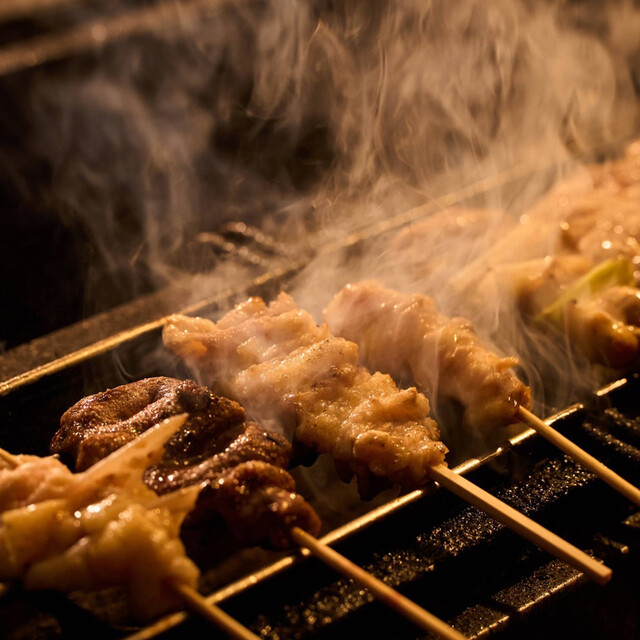
Nishitenma changes tone after office hours. The courthouse-and-business district quiets, side streets take over, and Osaka’s dining rhythm moves into smaller rooms where charcoal, bottles, and counter seats matter more than spectacle. In that setting, Sumibi Yakitori Ikoka Nishitenma fits a familiar Kansai pattern: yakitori treated not as casual filler before drinks, but as the main structure of the evening.
Osaka has always been good at compressing pleasure into modest formats. The city’s food culture rewards immediacy, but its stronger counters also prize discipline: heat management, pacing, chicken sourcing, and drink pairing. This is where the izakaya and yakitori categories overlap. The izakaya side gives flexibility, sake and shochu alongside wine and cocktails; the yakitori side imposes order, with charcoal as the technical center. Recognition in Tabelog’s 2025 Izakaya WEST 100 selection places the restaurant inside that more competitive regional bracket rather than the anonymous after-work drinking tier.
Charcoal yakitori in Osaka's serious izakaya register
Yakitori in Japan can mean many things, from standing bars turning skewers fast to chef-led counters that treat each cut as its own cooking problem. Osaka’s version is often less austere than Tokyo’s high-ticket counters, but the serious rooms share the same grammar: small portions, grill precision, drinks that keep pace, and a room where the counter is not decorative. Sumibi Yakitori Ikoka Nishitenma works in that middle-to-upper izakaya register, with grilled chicken skewers and chicken dishes anchoring a broader tavern format.
The distinction matters for travelers. A sushi counter telegraphs its hierarchy through omakase pricing and ritual; yakitori asks for closer reading. The clues here are category recognition, a compact room, counter seating, and a drinks list that goes beyond beer. Sake and shochu keep the restaurant in the izakaya tradition, while wine and cocktails signal the broader direction of Japanese chicken-focused dining, where grilled poultry now competes for evenings once reserved for sushi, tempura, or kaiseki.
Within Osaka, this makes for a useful contrast with formal Japanese dining rooms such as Oimatsu Kitagawa, Shoroku, Oryori Amenimomakezu, and Oimatsu Miyamoto, or with sushi-focused Sushiroku. Those restaurants sit closer to composed-course dining. Yakitori, by comparison, keeps the cooking visible and the sequence tactile. The pleasure is in repetition with variation: different cuts, different heat exposure, different drinking speeds. That is a cultural point, not a minor format note.
Nishitenma favors compact rooms over spectacle
Nishitenma is a smart address for this kind of restaurant because it avoids the broad-brush tourist energy of more obvious Osaka dining zones. The area sits within reach of Umeda’s transit gravity and Kitahama-Yodoyabashi’s business dining circuit, but its smaller streets support restaurants built around regulars, reservations, and rooms that do not need to announce themselves loudly. A 19-seat yakitori-izakaya format belongs naturally here.
That scale affects the meal. In a small yakitori room, timing is part of the craft: orders, grill capacity, drink service, and table turnover are intertwined. The listed two-hour seating rhythm is not unusual for a compact Osaka counter-and-table setup; it keeps the room moving without turning the experience into quick-service dining. Private-room availability adds another layer, making the restaurant workable for a small group that wants yakitori without losing the social ease of an izakaya.
The drink program also says something about contemporary Osaka dining. Serious izakaya once meant a predictable sake-shochu-beer triangle. The inclusion of wine and cocktails reflects a broader shift: yakitori’s smoke, fat, salt, tare, and poultry texture can handle more than traditional pairings. That does not make the restaurant Westernized. It shows how the category has expanded while keeping its Japanese core intact.
How to place it on an Osaka eating itinerary
For a visitor building several days of eating in Osaka, this is the kind of dinner that gives structure to the city’s less formal side. It pairs well with daytime bakery and casual stops such as 52CHO-ME BAKERY, .cafe, or the pork-bun institution 551 Horai (551蓬莱), then leaves room on another night for Italian cooking at a canto (Italian) or Neapolitan-leaning pizza at 99 Pizza Napoletana Gourmet. The point is not to rank these meals against one another, but to understand Osaka through its range: counter, tavern, bakery, casual chain, and polished dining all carry cultural weight here.
For broader planning, use Our full Osaka restaurants guide alongside Our full Osaka hotels guide, Our full Osaka bars guide, Our full Osaka wineries guide, and Our full Osaka experiences guide. Travelers extending the same food logic across Japan can compare how regional formats shift at -Grilled beef Sukiyaki- KAMAKURA TANUKIAN 鎌倉 たぬき庵 in Kamakura,. 鮪と炭火焼き うお炭 秋葉原店 in Tokyo,.know in Kumamoto, (Shoku) Vietnam in Kawasaki, [Curry Senmon Ten] Maruyama Kyoju. in Sapporo, and [ki:] in Kyoto. Japanese food culture abroad tells another story again, from Jōdo Saké Bar in Los Angeles to Onigiri Time in Pasadena.
The editorial case is clear: Sumibi Yakitori Ikoka Nishitenma is for diners who want Osaka’s tavern culture with sharper category credentials. It is not the choice for a long tasting-menu performance or a luxury dining room. It is a compact charcoal-led izakaya where the city’s appetite for chicken, smoke, and drink meets a recognized regional standard.
What It’s Closest To
Comparable venues by cuisine and category.
| Venue | Cuisine | Price | Awards | Notes |
|---|---|---|---|---|
| Sumibi Yakitori Ikoka NishitenmaThis venue — the venue you are viewing | Charcoal-Grilled Yakitori Izakaya | $$ | , | |
| Lilo Coffee Kissa | Japanese Specialty Coffee Kissa | $$ | , | Chuo Ward, Shinsaibashi |
| Sogetsu | Traditional Osaka Okonomiyaki | $$ | , | Kita |
| Ganesh m Kitahama ten | Specialty Japanese curry house with global curry influences | $$ | , | Chūō |
| Sapporo Soup Curry JACK Shinmachi ten | Sapporo-style Japanese Soup Curry | $$ | , | Nishi |
| Grill Baranoki | Japanese-style Western (Yoshoku) | $$ | , | Chūō |
Continue exploring
More in Osaka
Restaurants in Osaka
Browse all →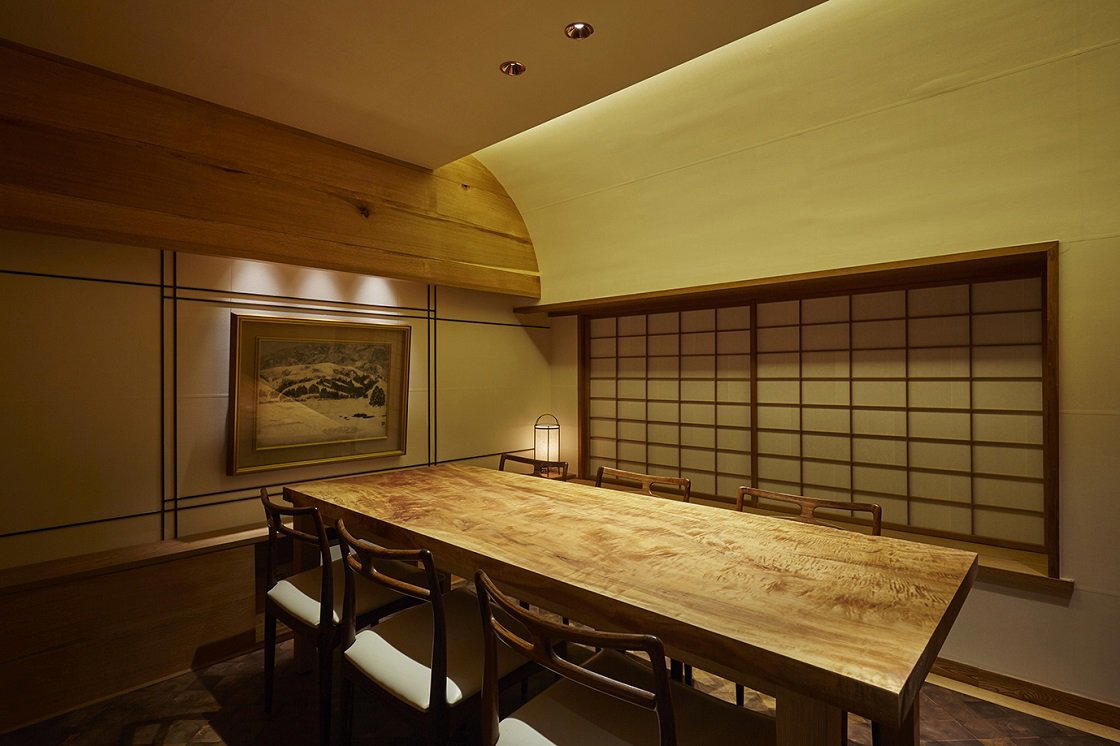



Bars in Osaka
Browse all →



Hotels in Osaka
Browse all →




Wineries in Osaka
Browse all →
At a Glance
- Cozy
- Intimate
- Modern
- Hidden Gem
- Sophisticated
- Date Night
- Business Dinner
- Group Dining
- After Work
- Special Occasion
- Private Event
- Chefs Counter
- Private Dining
- Standalone
- Extensive Wine List
- Sake Program
- Beer Program
- Local Sourcing
A small, chic yakitori izakaya with a sophisticated yet unpretentious "adult hideaway" feel, counter‑focused seating, warm lighting, and an atmosphere suited to dates, business meetings, and relaxed evening drinks with carefully grilled skewers.