Our verdict
Sugiki occupies Dalian's upper tier of Japanese-influenced dining, where the city's coastal geography and cross-strait culinary history converge. The format signals an intimate, counter-led experience calibrated for a guest who arrives with expectations shaped by Tokyo or Osaka. Booking early and arriving with questions is the practical posture for a first visit.

Pearl is the En Primeur Club membership app — saves, bookings, and concierge access live there. Same editors, same standards.
- Address
- Dalian, China
The menu
What to order
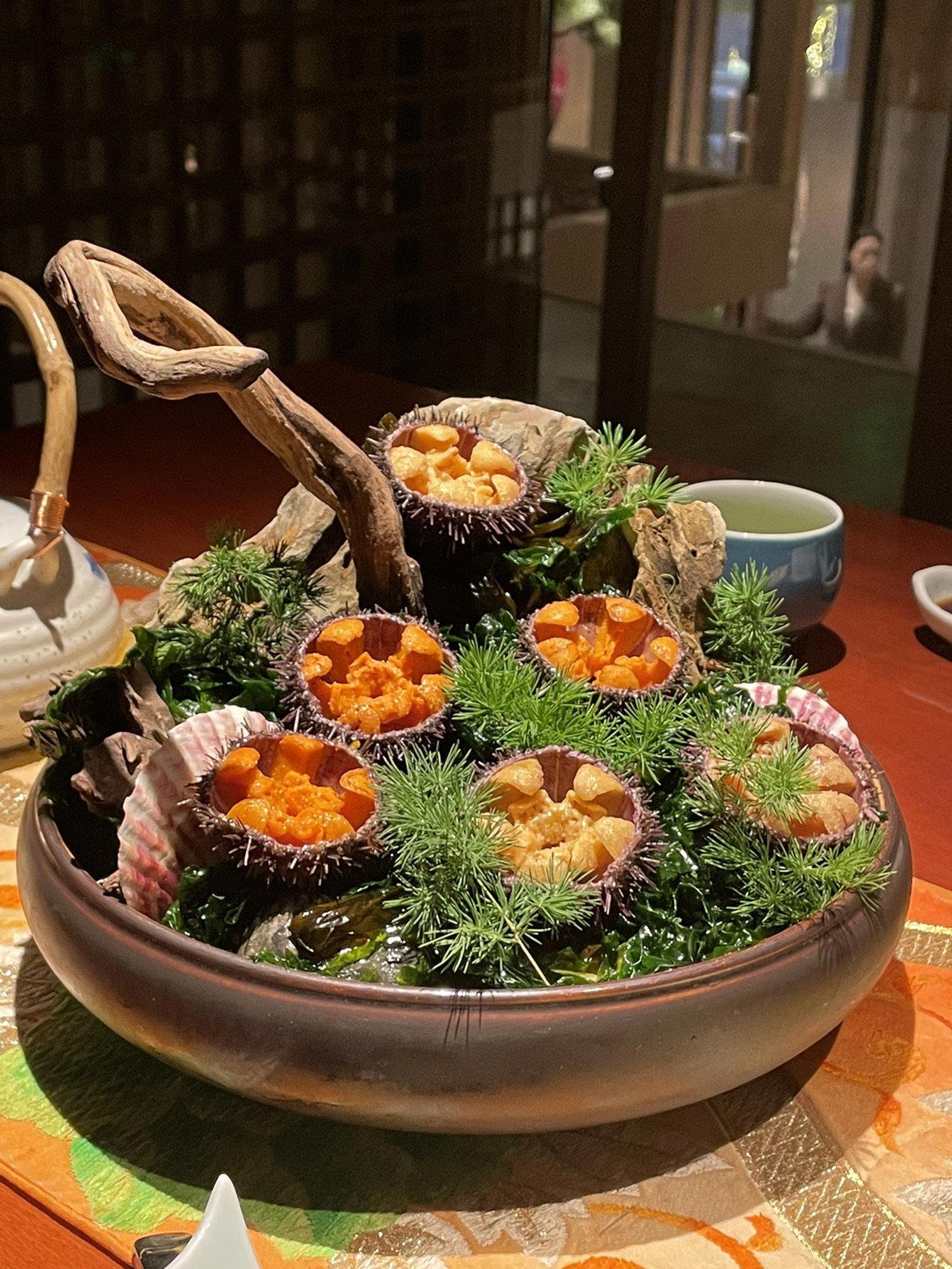
- Hokkaido seafood rice
- Sea urchin dishes
Where Dalian's Coastal Identity Meets Japanese Dining Tradition
Dalian sits at the southern tip of the Liaodong Peninsula, a port city whose food culture has been shaped as much by geography as by history. The Yellow Sea and Bohai Sea deliver cold-water seafood to local markets year-round, and the city's decades of Japanese colonial presence left an infrastructure — architectural, commercial, and gastronomic — that still informs how the city eats. In that context, Japanese-influenced dining in Dalian is not an import so much as a continuation. Sugiki operates inside that tradition, drawing on a culinary lineage that feels locally rooted rather than cosmopolitan or trend-driven.
Across China's major cities, the upper register of Japanese cuisine has fragmented into distinct formats: large-format robatayaki halls, Cantonese-Japanese fusion menus, and the more restrained counter-based omakase model that has migrated from Tokyo and Osaka into Shanghai, Beijing, and, more recently, second-tier port cities. Dalian, given its proximity to Japan and its history of Japanese culinary influence, represents a natural anchor for that last format. For context on how similar precision-led Japanese dining operates elsewhere in China, the approach at Sakura Chizuru (樱木千鹤·割烹料理·刺身寿司·烧鸟铁板) offers a useful local comparison within the same city.
The Counter Format and What It Demands of the Diner
Counter dining in the Japanese tradition is a two-way exchange. The chef reads the table; the diner reads the kitchen. This format asks more of the guest than a conventional restaurant does: attention to pacing, willingness to follow a sequence, and some tolerance for courses that arrive on the chef's timetable rather than the diner's. What it offers in return is specificity, ingredients selected for the day, preparation methods calibrated to the exact piece of fish or cut of protein on the block, and a proximity to craft that a large dining room cannot replicate.
This format has proven commercially durable across Asia's port cities precisely because the seafood supply chains support it. Dalian's wholesale fish markets, supplied by boats working the cold northern waters, provide the kind of raw material that makes seasonal counter dining credible rather than performative. The analogy to New York's seafood-anchored counter programs, such as those at Le Bernardin in New York City, is instructive: the discipline of the format only holds when the sourcing does.
Culinary Roots: The Kappo and Kaiseki Traditions
Japanese fine dining in Chinese cities tends to arrive in one of two modes. The first is the sushi-led omakase, where a sequence of nigiri anchors the meal and the chef's hand with rice is the primary measure of skill. The second is the kappo or kaiseki format, where cooked and raw preparations rotate through a longer sequence, and the kitchen's range, across heat, texture, and seasoning, carries more of the argument. Both traditions place seasonal produce at the centre, but kaiseki in particular treats the calendar as the primary menu, with course sequences shifting as the season moves.
In Dalian's case, the seasonal argument has particular force. Spring brings sea urchin from local waters; winter signals the arrival of premium crabs from the Bohai. A kitchen calibrated to those rhythms will read differently in March than in November, which is part of what makes timing a genuine editorial consideration rather than a booking formality. Diners who have followed the same logic at counter restaurants across China, at Xin Rong Ji (Xinyuan South Road) in Beijing or Ru Yuan in Hangzhou, understand that seasonal positioning is often the most reliable guide to when a tasting menu is at its argument-strongest.
Placing Sugiki in Dalian's Wider Dining Context
Dalian's premium dining tier is smaller than Beijing's or Shanghai's, which concentrates attention on a shorter list of addresses. This works in two directions: it makes discovery more efficient, but it also means that reputational signals travel faster and carry more weight. A restaurant that holds its position in a city this size is doing so against active local competition and an increasingly well-travelled local clientele whose reference points now include meals at Atomix in New York City, Chef Tam's Seasons in Macau, or Ensue at Hotel in Shenzhen.
For visitors arriving from other Chinese cities, the EP Club's full Dalian restaurants guide maps the wider field, from Northeastern Chinese staples to the imported formats that have found purchase in the port city's dining culture. Readers building a broader China itinerary might also consider the editorial assessments of 102 House in Shanghai, Xin Rong Ji in Chengdu, Imperial Treasure Fine Chinese Cuisine in Guangzhou, Dai Yuet Heen in Nanjing, Dingshan·Jiangyan (Xiangcheng) in Suzhou, Fleurs Et Festin in Xiamen, Jiangnan Wok·Rong in Fuzhou, and Shang Palace in Yangzhou to calibrate expectations across the country's premium tier. For a more unusual contrast, Local Old Town Home in Kashgar and 57号窑烤披萨咖啡馆 in Wenzhou illustrate how far China's dining geography extends beyond the coastal premium circuit.
Planning a Visit: Practical Considerations
Venue-specific booking details, confirmed pricing, and current hours for Sugiki are not publicly indexed at the time of writing. This is not unusual for counter-led restaurants in Chinese cities outside Beijing and Shanghai; many operate through private reservation channels, WeChat-based booking, or referral networks rather than third-party platforms. The practical approach is to search the venue's current status through local dining aggregators (Dianping is the most reliable for Dalian), confirm hours and seat availability directly, and build in lead time of at least two to three weeks for weekend slots, which are standard for this format across China's second-tier cities. Allergen and dietary questions are leading raised at the time of booking rather than on arrival, particularly for counter formats where the sequence is often fixed in advance.
Frequently asked questions
Is Sugiki in Dalian a good choice for Japanese counter dining compared to options in Beijing or Shanghai?
Dalian has a historically closer relationship with Japanese culinary culture than most Chinese cities, shaped by its port geography and cross-channel trade, which gives Japanese restaurants here a different local context than transplanted concepts in Beijing or Shanghai. The city's smaller premium dining pool means a venue operating at counter-format level in Dalian faces concentrated local scrutiny and tends to maintain consistent standards to hold its position. For travellers already in Dalian rather than routing through a first-tier city, Sugiki represents a geographically grounded option rather than a compromise.
What do people recommend at Sugiki?
Confirmed menu details for Sugiki are not publicly indexed at the time of writing, which is common for counter-format Japanese restaurants in Dalian that operate on a chef-led sequence rather than an à la carte selection. In the kappo and kaiseki tradition, the kitchen sets the direction based on seasonal availability and the diner's preferences discussed on arrival. The most reliable approach is to communicate any preferences or restrictions when booking rather than arriving with fixed expectations.
How far ahead should I plan for Sugiki?
Counter-format Japanese restaurants in Chinese cities at this tier routinely require advance reservations, often two to four weeks out for weekday seatings and longer for weekends or special occasions. Dalian's premium dining tier is compact, which means a shorter list of addresses absorbs significant demand. Contact Sugiki directly to confirm current availability windows before building travel plans around a specific date.
What makes Sugiki worth seeking out?
Dalian's position as a port city with deep historical ties to Japanese culinary culture gives Japanese dining here a different register than in Beijing or Shanghai, where the scene is larger but less geographically rooted. Sugiki operates within the counter tradition that places the chef and diner in direct dialogue, a format that demands more from the kitchen and rewards attentive guests. For Dalian specifically, the concentration of the city's premium dining tier means venues at this level receive sustained local scrutiny rather than tourist traffic.
What if I have allergies at Sugiki?
Counter dining in the Japanese tradition is better suited to managing dietary restrictions than most formats, because the chef controls the full sequence and can adjust individual courses. Communicate allergies clearly at the time of reservation rather than on arrival, giving the kitchen the lead time to source or substitute appropriately. This applies to shellfish, soy, gluten, and other common allergens relevant to Japanese cuisine.
Does Sugiki justify its prices?
Confirmed pricing for Sugiki is not publicly listed at the time of writing. Japanese counter dining in China's non-first-tier cities tends to sit below comparable addresses in Shanghai or Beijing in absolute terms, though the gap has narrowed as sourcing costs for Japanese-origin ingredients have risen across the country. The value question is best answered against the format: a chef-led counter sequence at this level prices the cook's time and ingredient selection, not just the plate.
When should I go to Sugiki?
Dalian's climate is most hospitable from late spring through early autumn, and seasonal ingredient availability in the kappo and kaiseki tradition means the kitchen's range is typically broadest during those months. Winter visits are viable and local seafood remains a strength year-round given the city's coastal position on the Liaodong Peninsula. Avoid national holiday weeks if flexibility allows, as reservation pressure across Dalian's limited premium dining tier compresses significantly.
Budget and Context
| Venue | Cuisine | Price | Awards | Notes |
|---|---|---|---|---|
| SugikiThis venue — the venue you are viewing | Japanese Sea Urchin & Seafood | Not listed | Not listed | Not listed |
| Fu He Hui | Modern Seasonal Vegetarian Fine Dining | $200–300 | 2 Michelin Stars · World's 50 Best #11 | Vegetarian |
| Aji | Asian Bistronomy (Nikkei Fusion) | $50–100 | 1 Michelin Star · Wine Spectator Best of Award of Excellence | Nikkei, Innovative |
| Five Foot Road | Modern Sichuan Fine Dining | Not listed | 1 Michelin Star · La Liste Top Restaurants | Sichuan |
| Jing | Modern French with Asian Influences | $300–500 | 1 Michelin Star · Black Pearl 1 Diamond | French Contemporary |
| Lai Heen | Michelin-Starred Cantonese | $50–100 | 1 Michelin Star · Forbes 5-Star | Cantonese |

Details
- Elegant
- Sophisticated
- Date Night
- Special Occasion
- Hotel Restaurant
- Sake Program
- A La Carte
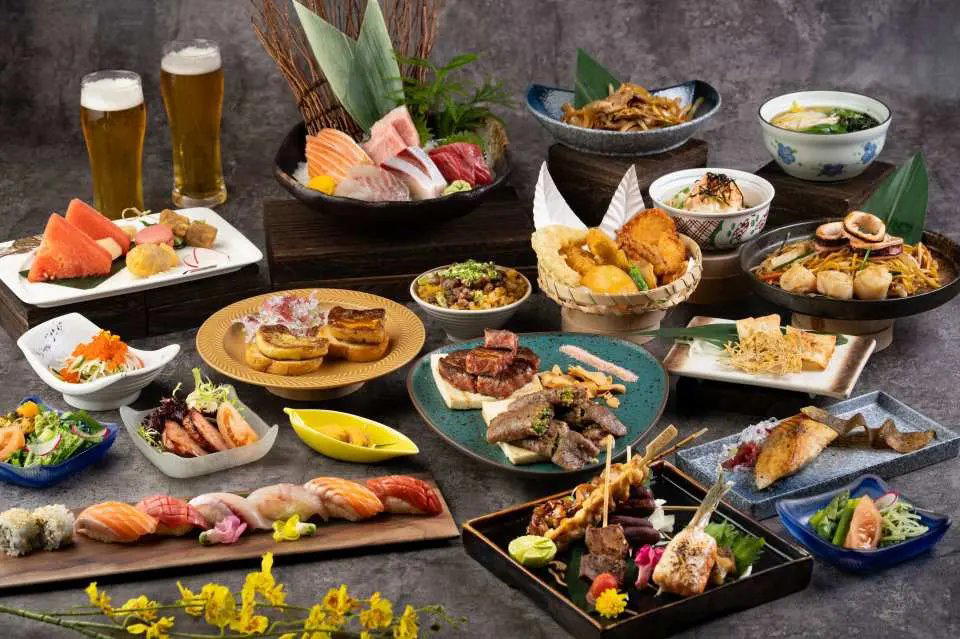
Elegant and upscale decor with sophisticated Japanese atmosphere.