Set within a historic castle above Wolfsberg in Carinthia, Stölzl Schloss Wolfsberg occupies one of southern Austria's more arresting dining addresses. The kitchen works within a region where alpine produce, game, and lake fish define seasonal menus, placing it alongside Austria's broader movement toward ingredient-led, territory-rooted cooking. For visitors to the Lavant Valley, it represents a purposeful detour.
Pearl is the En Primeur Club membership app — saves, bookings, and concierge access live there. Same editors, same standards.
- Address
- Schloß Wolfsberg 1, 9400 Schoßbach, Austria
- Phone
- +43435236100
- Website
- schloss-wolfsberg.info
- Directions
- Get directions
 Saves & bookings on Pearl
A Castle Dining Room in Carinthia's Lavant Valley
The approach to Schloss Wolfsberg sets a particular tone before any dish arrives. The castle sits above the town of Wolfsberg in southern Carinthia, a region that sits at Austria's agricultural and climatic crossroads: the Lavant Valley channels Mediterranean warmth northward from Slovenia while the surrounding Koralpe and Saualpe ranges enforce alpine discipline on what grows, grazes, and forages at altitude. Dining rooms in these settings carry an expectation, and it is one that the serious cooking houses of rural Austria have increasingly met with sourcing discipline rather than theatrical décor alone.
Castle dining in Austria occupies a distinct niche. Unlike urban fine dining, which competes on novelty and concentration of talent, a restaurant operating within a historic estate is partly selling territory itself — the specific meadows, farms, and forest edges that surround the building. Whether that implicit promise is kept depends almost entirely on how seriously the kitchen engages with the land nearby. The stronger examples of this format across the country, from the Weinviertel estates to the Styrian Schlösser, treat provenance as kitchen infrastructure, not garnish.
Carinthia's Ingredient Geography
Carinthia is one of Austria's least-discussed serious food regions from an international perspective, which means its produce credentials travel slowly beyond the country's borders. That is a structural advantage for the kitchens that have built supply chains here. The province's freshwater lakes — the Wörthersee, Millstätter See, Weissensee, provide pike, perch, and the local Reinanke (a whitefish of the coregonid family) that appear on menus across the region. Game from the surrounding forests, lamb and beef from upland farms, and mushrooms harvested across the Koralpe foothills contribute to a larder that is genuinely seasonal by geography rather than by menu-design choice.
This is the context in which ingredient-led cooking in this corner of Austria makes most sense. A kitchen that ignores the lakes and forests around Wolfsberg in favour of generic European fine dining inputs is, in effect, choosing to compete on less favourable terms. The trajectory of Austrian gastronomy more broadly has moved firmly toward regional articulation: Döllerer in Golling an der Salzach has built a reputation specifically on Salzach Valley produce and altitude-driven sourcing; Kräuterreich by Vitus Winkler in Sankt Veit im Pongau anchors its entire format to alpine herb cultivation. Both demonstrate that rural Austrian kitchens can compete at a serious level precisely because of where they sit, not despite it.
How Stölzl Wolfsberg Sits in This Tradition
Stölzl Schloss Wolfsberg operates in a format that is more common across the German-speaking south than in urban European dining: a restaurant embedded within a historical property, serving a clientele that includes both local guests and travellers who have made a deliberate journey. This format requires a different kind of kitchen confidence than the tasting-menu counter in a city. The menu needs to work for a longer evening in a grander physical setting, and the sourcing story needs to carry weight given what the setting implies.
Within Wolfsberg's dining scene, it occupies the upper tier. The town itself is not a major gastronomic destination in the way that Salzburg or Vienna anchors national and international attention, but Carinthia has enough serious kitchens and committed producers to sustain ambitious cooking at this level. Stücklerhof represents the other notable dining address in the immediate area. For broader regional comparison, our full Wolfsberg restaurants guide maps the local field in more detail.
Taubenkobel in Schützen am Gebirge in Burgenland and Landhaus Bacher in Mautern an der Donau in the Wachau represent the benchmark for what a property-embedded Austrian dining room can achieve at the highest level. Both have maintained sustained recognition over decades by treating their respective territories as the primary creative brief.
The Broader Austrian Fine Dining Frame
Austria's fine dining scene has, over the past decade, bifurcated into two recognisable tendencies. The first is the cosmopolitan creative model, leading represented by Steirereck im Stadtpark in Vienna, which operates at a level of technical ambition and international recognition that few kitchens in the German-speaking world match. The second is the provincial-rooted model, where a kitchen's identity is inseparable from a specific geography. Obauer in Werfen and Ois in Neufelden both operate in this mode, drawing critical attention not despite their rural addresses but because of what those addresses enable in terms of sourcing specificity.
Stölzl Schloss Wolfsberg belongs to the second tendency. Its address in the Lavant Valley is its primary credential, and the cooking should be read in that light. For travellers moving through Carinthia rather than arriving specifically for a restaurant, it offers a form of dining that repays the detour: a setting with historical weight, a region with genuine produce depth, and a kitchen format that suits an unhurried evening.
For those building a longer Austrian itinerary around serious cooking, the country's alpine restaurant circuit extends considerably beyond the major cities. Gourmetrestaurant Tannenhof in Sankt Anton am Arlberg, Griggeler Stuba in Lech, Schwarzer Adler in Hall in Tirol, and Stüva in Ischgl map the western alpine dining tradition; Ikarus in Salzburg and Restaurant 141 by Joachim Jaud in Mieming represent Salzburg province and Tyrol's contemporary direction. Artis in Graz anchors Styria's urban dining scene, the province that borders Carinthia to the east and shares much of its agricultural vocabulary. For international reference points at the technical and conceptual end of the spectrum, Le Bernardin in New York City and Atomix in New York City illustrate what ingredient-focused precision and tasting-counter discipline look like at their most developed.
Planning Your Visit
Schloss Wolfsberg sits at the address Schloß Wolfsberg 1, 9400 Schoßbach, outside the centre of Wolfsberg. Driving is the practical approach from most points in Carinthia; Wolfsberg is accessible by rail from Klagenfurt, though the final stretch to the castle itself requires a car or taxi. Given the setting and format, advance booking is advisable, particularly for weekend evenings when the dining room is most likely to be at capacity. Contact and reservation details are best confirmed through current local listings, as specific booking channels and hours were not available at the time of publication.
How Stölzl Schloss Wolfsberg compares with similar nearby venues.
| Venue | Cuisine | Price |
|---|---|---|
| Reiterhof Stückler | Creative | €€€ |
| Trippolt Zum Bären | Mediterranean Cuisine | €€€ |
Continue exploring
More in Wolfsberg
Restaurants in Wolfsberg
Browse all →
Bars in Wolfsberg
Browse all →
Hotels in Wolfsberg
Browse all →

At a Glance
- Romantic
- Elegant
- Classic
- Scenic
- Cozy
- Date Night
- Special Occasion
- Celebration
- Historic Building
- Terrace
- Wine Cellar
- Extensive Wine List
- Sommelier Led
- Local Sourcing
- Mountain
- Street Scene
Current opening hours
- Monday
- Closed
- Tuesday
- Closed
- Wednesday
- 5:30–11 PM
- Thursday
- 5:30–11 PM
- Friday
- 5:30–11 PM
- Saturday
- 11:30 AM–11 PM
- Sunday
- 11:30 AM–6 PM
Hours can change for holidays and private events. Last verified .
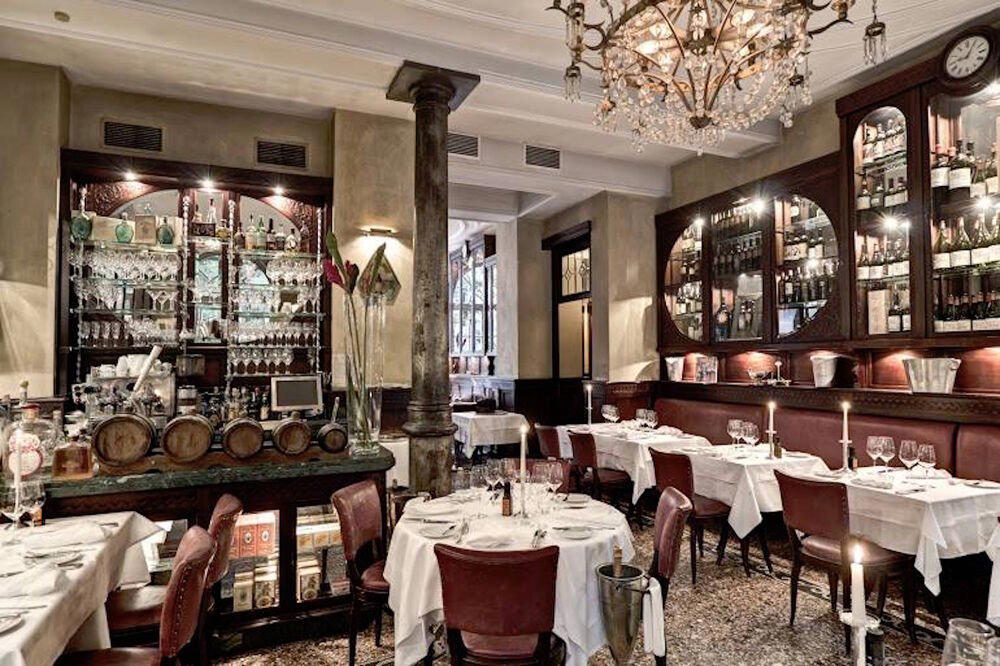
Romantic historic Tudor castle ambiance with stylish, elegant setting and seasonal charm.