Stiftskeller
Stiftskeller sits within the grounds of Stift Schlägl, a working Augustinian monastery in Austria's Upper Mühlviertel, where centuries of monastic self-sufficiency still shape what arrives on the table. The kitchen draws from the abbey's own brewing and agricultural traditions, placing it firmly within Austria's monastery hospitality lineage rather than the urban fine-dining circuit. For travellers seeking provenance-driven cooking in a genuinely uncommon setting, this is a compelling detour from the Salzburg and Vienna axis.
Pearl is the En Primeur Club membership app — saves, bookings, and concierge access live there. Same editors, same standards.
- Address
- Schlagl 1, 4160 Schlägl, Austria
- Phone
- +4372818801280
- Website
- stift-schlaegl.at
- Directions
- Get directions
 Saves & bookings on Pearl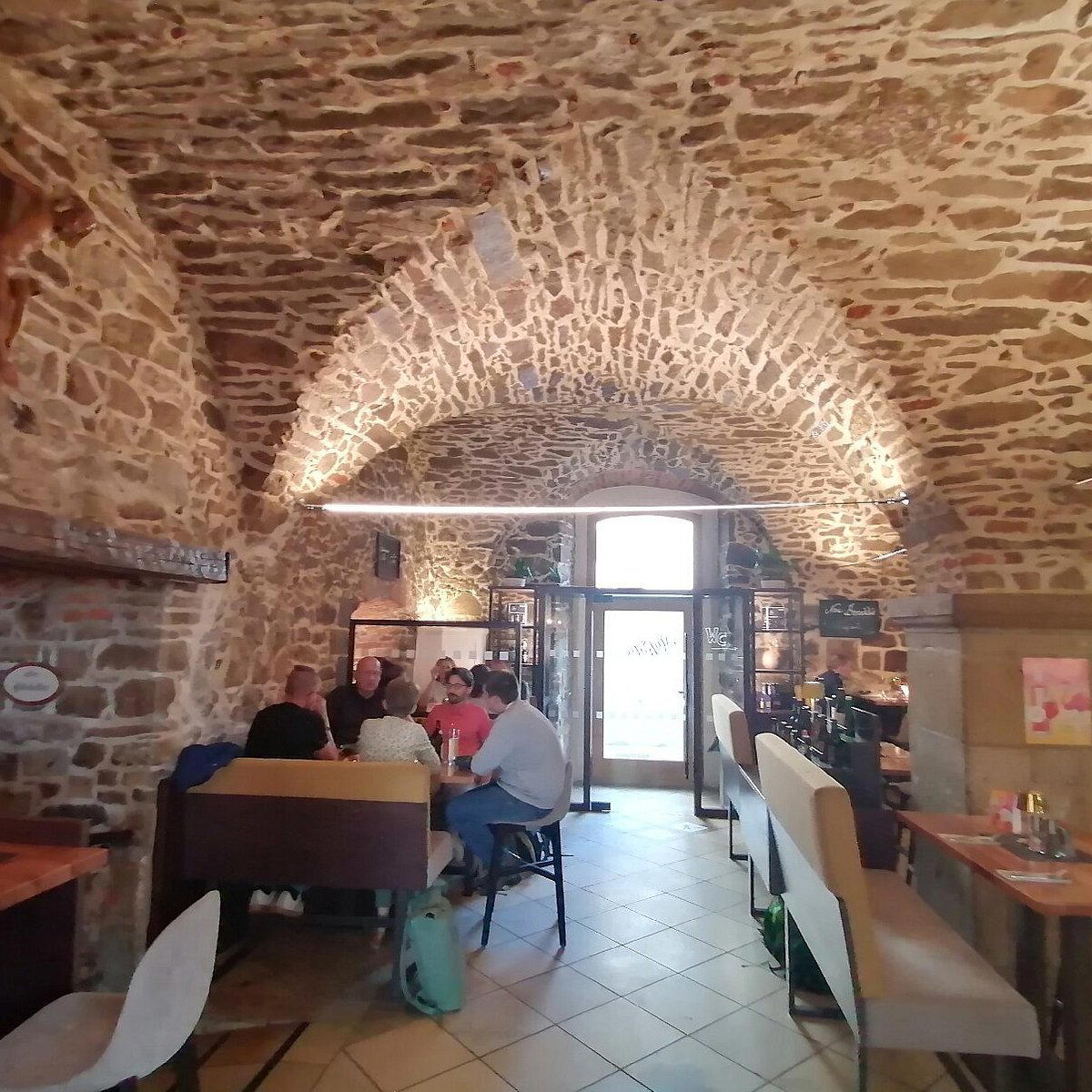
Monastery Kitchens and the Logic of the Land
Austria's most interesting regional tables tend to share a quality that has nothing to do with technique: they are tethered to a specific place in a way that urban restaurants, however accomplished, cannot replicate. The monastic dining tradition is among the more literal expressions of this idea. Stiftskeller, operating within the precincts of Stift Schlägl in the Bohemian Forest borderlands of Upper Austria, belongs to that tradition. The abbey itself has functioned continuously since the thirteenth century, and the hospitality arm of a working monastery carries institutional weight that no amount of branding can manufacture. Where Döllerer in Golling an der Salzach or Landhaus Bacher in Mautern an der Donau situate themselves within Austria's contemporary fine-dining canon through Michelin recognition and menu ambition, Stiftskeller's authority is structural and historical rather than accolades-driven.
Arriving in Aigen-Schlägl
The approach through the Mühlviertel sets the register before you reach the door. Upper Austria's granite plateau country is quieter and less touristically polished than the Salzkammergut or Tyrol, which means the village of Aigen-Schlägl absorbs its monastery rather than the other way around. The abbey complex dominates the settlement physically: a compact ensemble of church, cloister, brewery, and outbuildings that makes the Stiftskeller's address, Schlägl 1, feel less like a street number and more like a coordinate within a self-contained world. Visitors arriving from Linz cover roughly 50 kilometres northwest along routes that pass through rolling agricultural land before the terrain closes into forest. There is no rail connection to the village itself, which means private transport or a staged bus journey from Rohrbach is the practical reality. That slight friction is also the point: the Mühlviertel rewards travellers who have made an active decision to be there rather than those passing through.
The Sourcing Logic of Monastic Hospitality
The editorial angle on Stiftskeller that matters most is provenance, because the monastic model is fundamentally a provenance model. Augustinian monasteries historically operated as integrated agricultural and craft institutions: brewing, farming, forestry, and hospitality were not separate economic activities but expressions of the same self-sustaining community. Stift Schlägl's brewery, which produces a range of beers including the abbey's documented Dunkles and seasonal variants, is among the better-known outputs of that tradition, and the Stiftskeller's connection to in-house brewing distinguishes it immediately from restaurants that curate regional producers at arm's length. When beer is made metres from where it is served, and when the institutional landholding that surrounds the building has supplied food production for centuries, the sourcing conversation is not marketing copy, it is the operational baseline.
This is a different register from the farm-to-table positioning adopted by destination restaurants across Austria and internationally. Venues like Kräuterreich by Vitus Winkler in Sankt Veit im Pongau build ingredient sourcing into a contemporary creative framework. The Stiftskeller's relationship with its ingredients is older and less mediated: the monastery grew what it needed because that was how monastic communities operated, and the kitchen has inherited that orientation rather than adopted it as a concept. Austria's broader hospitality circuit, from Ikarus in Salzburg to Steirereck im Stadtpark in Vienna, engages with provenance through highly curated supplier relationships. At Stiftskeller the supply chain is, in a literal sense, ecclesiastical.
Positioning Within Austria's Regional Dining Scene
Austria's restaurant geography has a well-documented urban concentration: Vienna and Salzburg together account for the majority of the country's Michelin-starred tables, with a secondary cluster in alpine destination towns including Griggeler Stuba in Lech, Stüva in Ischgl, and Gourmetrestaurant Tannenhof in Sankt Anton am Arlberg. The Mühlviertel sits outside both concentrations, which positions Stiftskeller in a different competitive conversation entirely. Its comparable set is not the starred country house, Obauer in Werfen or Taubenkobel in Schützen am Gebirge inhabit that bracket, but rather the category of regionally anchored dining that earns its audience through authenticity of setting and product rather than through formal accolade structures.
That distinction is worth understanding before booking. Travellers calibrated to the creative ambition of Artis in Graz or the technical range of Atelier Fischer in Sankt Gilgen are arriving at Stiftskeller with the wrong frame of reference. Travellers interested in how monastic Austria fed itself, and how that feeding logic persists in a contemporary setting, are arriving with the right one. The comparison extends internationally: the monastery hospitality tradition in Central Europe occupies a niche similar to what temple dining does in Japan or what estate wineries with attached restaurants do in France, the setting is not incidental to the meal, it is the meal's primary context.
The Mühlviertel as Dining Destination
Aigen-Schlägl is not a standalone visit for most travellers; it functions better as part of a Mühlviertel itinerary that might include Ois in Neufelden, a short distance south, which represents a different, more contemporary, expression of Upper Austrian regional cooking. Together they sketch a portrait of a region that is finding its dining voice gradually, without the promotional infrastructure of Salzburgerland or Tyrol. The Mühlviertel's granite terrain and forest character have historically made it one of Austria's less visited interior regions, but that same quality keeps the food culture less performative and more grounded in what the land actually produces: game, freshwater fish, root vegetables, rye, and the dark, malty beer that Stift Schlägl's brewery has long represented.
For the international traveller accustomed to the precision of Le Bernardin in New York City or the conceptual rigor of Atomix in New York City, a monastery Stiftskeller in rural Upper Austria asks for a recalibration of expectations, not a lowering of standards but a reorientation toward a different set of values. Restaurant 141 by Joachim Jaud in Mieming and Schwarzer Adler in Hall in Tirol show what happens when Austrian regional cooking meets formal ambition. Stiftskeller shows what happens when it doesn't need to, when the setting and the sourcing carry the argument without a tasting menu to mediate them. See our full Aigen Schlagl restaurants guide for further context on the area.
Planning a Visit
The remoteness of Aigen-Schlägl makes advance planning essential: arriving without a confirmed table in a monastery refectory that may have limited cover capacity is a meaningful logistical risk. The surrounding region is most accessible between late spring and early autumn, when road conditions through the Bohemian Forest border area are direct and daylight favours the drive.
Fast Comparison
Comparable venues nearby, for context on price, style, and recognition.
| Venue | Cuisine | Price | Notes |
|---|---|---|---|
| StiftskellerThis venue — the venue you are viewing | Traditional Austrian Comfort Food | $$ | Not listed |
| Hopfen und Schmalz | Modern Austrian Brew Pub | $$ | Neufelden |
| Gasthof Süss | Traditional Austrian Mühlviertel Cuisine | $$ | Oberkappel |
| Lärchbodenalm | Traditional Austrian Alpine | $$ | Ramsau am Dachstein |
| Weitmoosalm | Traditional Austrian Alpine | $$ | Planai |
| Waldhäuslalm | Traditional Styrian Alpine | $$ | Rohrmoos-Untertal |
Continue exploring
More in Aigen Schlagl
Restaurants in Aigen Schlagl
Browse all →
Bars in Aigen Schlagl
Browse all →
Hotels in Aigen Schlagl
Browse all →
Wineries in Aigen Schlagl
Browse all →
At a Glance
- Cozy
- Rustic
- Historic
- Casual Hangout
- Celebration
- Historic Building
- Beer Program
- Local Sourcing
Current opening hours
- Monday
- Closed
- Tuesday
- Closed
- Wednesday
- 11 AM–11 PM
- Thursday
- 11 AM–11 PM
- Friday
- 11 AM–11 PM
- Saturday
- 11 AM–11 PM
- Sunday
- 11 AM–7:30 PM
Hours can change for holidays and private events. Last verified .
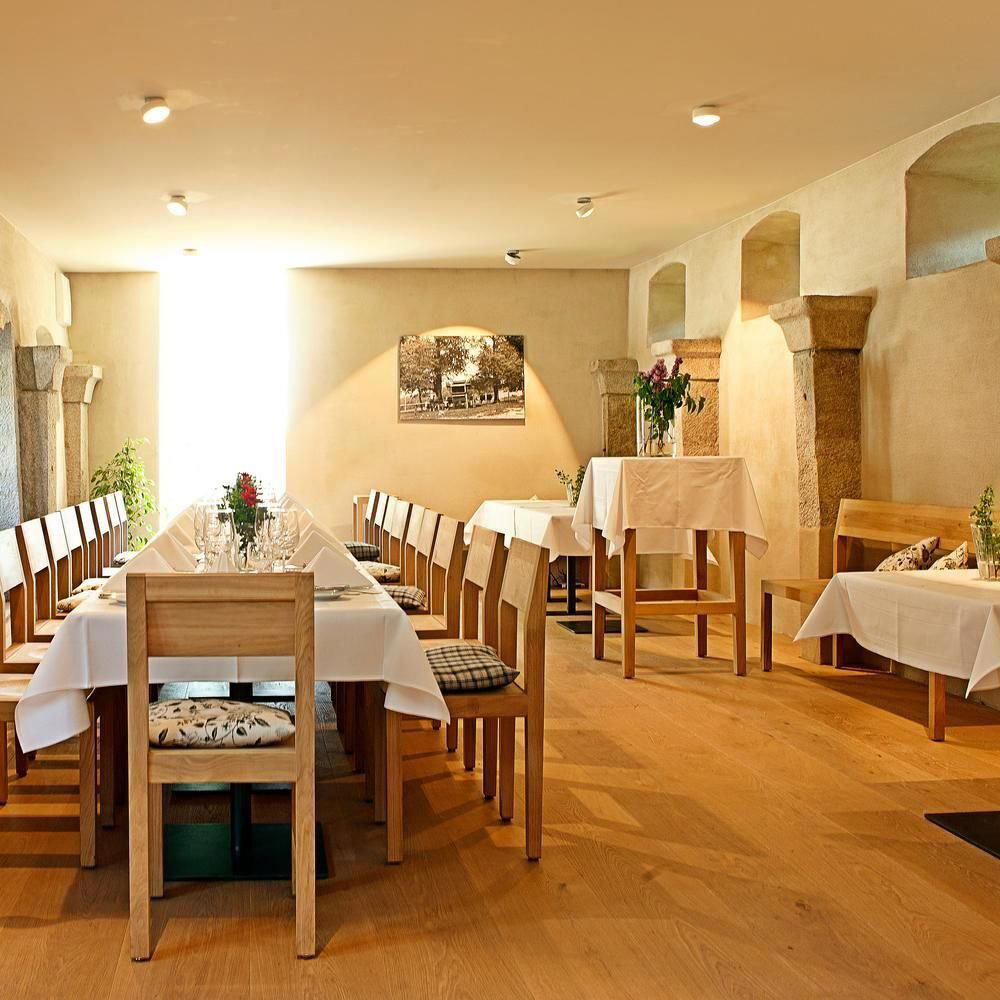
Distinctive, original, and cozy historic ambiance providing gemütlichkeit and sensory delight.