Sticks'n'Sushi
Sticks'n'Sushi at Battersea Power Station sits at the intersection of Japanese robata tradition and Scandinavian practicality, a format the Danish-Japanese chain has refined since its Copenhagen origins in 1994. The Electric Boulevard address places it inside one of London's most ambitious regeneration projects, where the dining offer skews casual-premium rather than formal. A reliable option for groups navigating a mixed-appetite table in south-west London.
Pearl is the En Primeur Club membership app — saves, bookings, and concierge access live there. Same editors, same standards.
- Address
- Station, 6 Electric Boulevard Battersea Power, London SW11 8AL, United Kingdom
- Phone
- +442033438646
- Website
- sticksnsushi.com
- Directions
- Get directions
 Saves & bookings on Pearl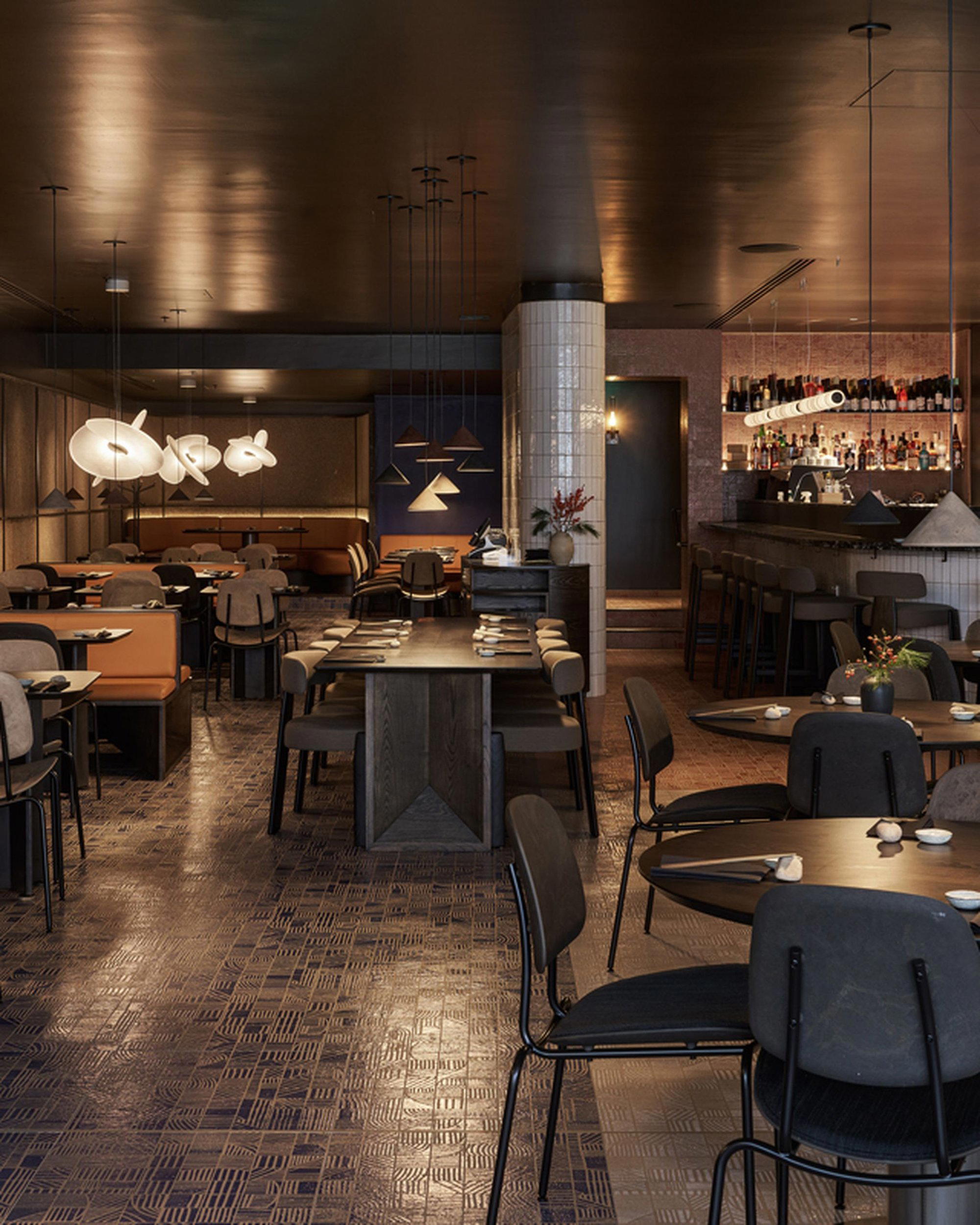
Battersea Power Station and the Casual-Premium Dining Tier
London's dining scene has long split between destination restaurants demanding advance planning and neighbourhood spots that absorb walk-ins without ceremony. The regeneration of Battersea Power Station has created a third category: casual-premium dining anchored to a landmark, drawing visitors and local residents in roughly equal measure. Sticks'n'Sushi on Electric Boulevard sits squarely in that tier.
The Power Station development represents one of the largest retail and hospitality openings in London in a generation. Its tenant mix leans toward accessible international brands rather than the haute cuisine of, say, Chelsea or Mayfair, where CORE by Clare Smyth or Restaurant Gordon Ramsay operate at price points and formats that demand a different kind of commitment from the diner. Battersea is deliberately more democratic, and Sticks'n'Sushi is a logical fit for that register.
A Danish-Japanese Format, Thirty Years in the Making
Sticks'n'Sushi was founded in Copenhagen in 1994 by the Vittrup family, who had grown up between Japan and Denmark, and the chain's core concept has remained consistent across its expansion: sushi rolls and nigiri sit alongside robata-grilled skewers on the same menu, allowing a table to split between those who want raw fish and those who want something cooked from an open flame. That dual format is relatively rare in London's Japanese restaurant market, where operators tend to commit either to sushi-led counters or to izakaya-style grilled food, seldom both at comparable quality.
The London expansion began in 2012 with a Wimbledon opening, and the brand now operates multiple sites across the capital, including Covent Garden, Soho, and the King's Road. The Battersea address, at Station 6 Electric Boulevard, is among the newer additions, positioned to capture footfall from the Power Station's retail circuit as well as the residential population growing around the Nine Elms corridor. For context, the brand operates in cities including Berlin and Tokyo.
The Electric Boulevard Address: What the Location Means in Practice
Electric Boulevard is the central pedestrianised spine running through the Power Station's ground-level retail offer. The address is SW11, technically Battersea, though the development's identity has been deliberately constructed to transcend the neighbourhood rather than embed within it. This has implications for the dining experience. The immediate surroundings are polished and controlled in a way that older London dining streets are not: there is no competing noise from passing traffic, the architecture is consistent, and the footfall is curated by the development's own programming calendar.
Access is direct. The Northern Line extension, which opened in 2021, delivers Battersea Power Station station directly beneath the development, making the site genuinely accessible from central London in under fifteen minutes from the West End. This connectivity has repositioned the area on London's dining map.
For comparison, the kind of destination dining that requires planning well in advance, such as tables at Sketch's Lecture Room and Library or The Ledbury, involves a different calculus of neighbourhood, formality, and pre-commitment. The restaurant at Battersea operates in a register where spontaneity is more viable, though weekend evenings at the Power Station development generally see high footfall across all operators.
Where Sticks'n'Sushi Sits in London's Japanese Dining Market
London's Japanese restaurant market has matured considerably over the past decade. At the leading end, omakase counters and kaiseki rooms operate on long lead times and fixed menus at prices comparable to London's Michelin-starred European rooms. At the other end, conveyor-belt formats and fast-casual sushi chains serve a volume market. The restaurant occupies a mid-to-upper casual position: it is more deliberate than a conveyor-belt operation, with a printed menu and table service, but it does not aspire to the tasting-menu formality of the capital's more serious Japanese rooms.
The robata skewer element is worth noting as a point of differentiation. Robata, a form of Japanese open-fire cooking derived from the fishing villages of Hokkaido, is less common in London's mid-market than in its premium Japanese restaurants, where it often features as a component of a larger omakase progression. At the restaurant, the skewers are menu items in their own right, ordered à la carte and designed for sharing, which makes the format well-suited to groups with divergent preferences. This contrasts with destinations like Dinner by Heston Blumenthal, where the menu is a more unified authorial statement.
For those planning a broader London dining itinerary that extends to the UK's wider restaurant scene, EP Club covers destinations including Waterside Inn in Bray, Le Manoir aux Quat'Saisons in Oxford, L'Enclume in Cartmel, Moor Hall in Aughton, Gidleigh Park in Chagford, Hand and Flowers in Marlow, hide and fox in Saltwood, Midsummer House in Cambridge, Opheem in Birmingham, and Restaurant Andrew Fairlie in Auchterarder. If you are also travelling internationally, the format-conscious Japanese approach at the restaurant has an interesting counterpoint in the more rigorous Korean tasting menus at Atomix in New York City, or the seafood precision of Le Bernardin. Our full London restaurants guide covers the wider field.
Planning Your Visit
The Battersea Power Station site is busiest on weekend afternoons and evenings, when the development's retail footfall peaks. Weekday lunches and early weekday evenings are quieter. The Northern Line extension makes the journey from central London simple, with Battersea Power Station station serving the development directly. Whether a reservation is advisable depends on the day and time: weekend dinner almost certainly warrants one, while a weekday lunch may not. The brand's multi-site presence across London means that if the Battersea location is full, the Covent Garden or Soho addresses offer comparable menus in central locations.
How It Stacks Up
Comparable venues nearby, for context on price, style, and recognition.
| Venue | Cuisine | Price | Notes |
|---|---|---|---|
| Sticks'n'SushiThis venue — the venue you are viewing | Japanese-Danish Sushi & Yakitori | $$ | Not listed |
| wagamama great marlborough street | Japanese Ramen Noodle Bar | $$ | Soho |
| Konnichiwa Japanese Cuisine | Authentic Japanese Sushi | $$ | Hornsey |
| Kiku | Authentic Japanese Sushi & Kaiseki | $$ | Mayfair |
| Jeux Jeux | Hiroshima-Style Okonomiyaki | $$ | South Bank |
| Kulu Kulu | Conveyor Belt Sushi | $$ | Soho |
Continue exploring
More in London
Restaurants in London
Browse all →
Bars in London
Browse all →
Hotels in London
Browse all →

At a Glance
- Lively
- Modern
- Trendy
- Energetic
- Casual Hangout
- Group Dining
- After Work
- Celebration
- Open Kitchen
- Standalone
- Design Destination
- Craft Cocktails
- Beer Program
Current opening hours
- Monday
- 12–10:30 PM
- Tuesday
- 12–10:30 PM
- Wednesday
- 12–10:30 PM
- Thursday
- 12–10:30 PM
- Friday
- 12–11:30 PM
- Saturday
- 12–11:30 PM
- Sunday
- 12–10:30 PM
Hours can change for holidays and private events. Last verified .
Sleek Scandinavian interiors with a lively, energetic dining scene; described as a pulsating playground for foodies and creatives with modern, relaxed atmosphere.