Kulu Kulu
Kulu Kulu sits on Brewer Street in Soho, placing it squarely in one of London's most concentrated dining corridors. The restaurant operates in the conveyor-belt sushi format that has become a fixture of affordable Japanese dining in the capital, offering an accessible entry point into Japanese food culture at a price tier well below the city's omakase counters.
Pearl is the En Primeur Club membership app — saves, bookings, and concierge access live there. Same editors, same standards.
- Address
- 76 Brewer St, London W1F 9TX, United Kingdom
- Phone
- +442077347316
- Website
- kulukulusushi.com
- Directions
- Get directions
 Saves & bookings on Pearl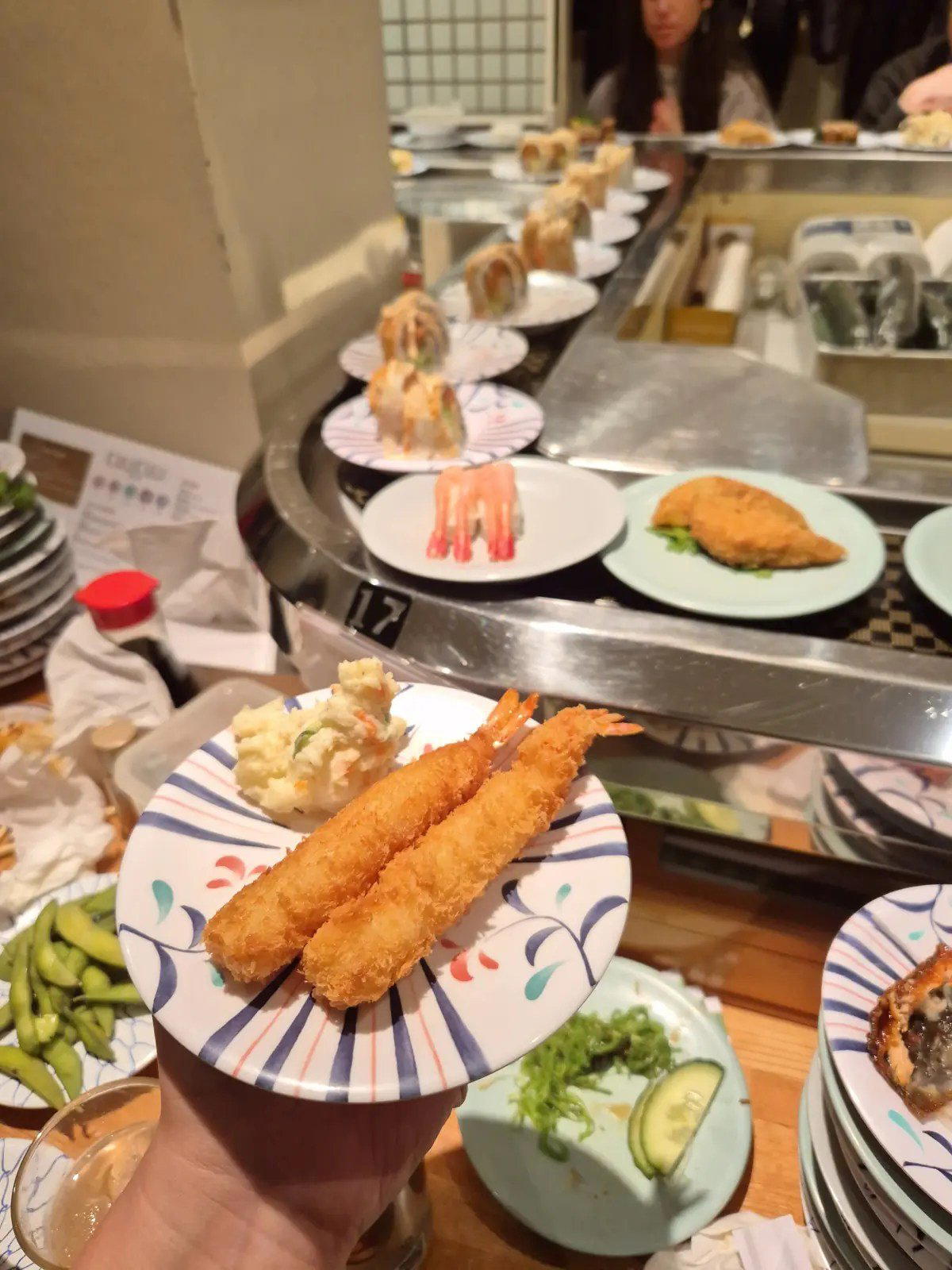
Soho's Conveyor Belt and What It Tells You About Japanese Food in London
The strip has long attracted a range of Japanese restaurants, partly because of its proximity to the concentrated Japanese retail and dining infrastructure around nearby Piccadilly and the Japan Centre. Kulu Kulu, at number 76, occupies this address as a kaiten-zushi operation, the conveyor-belt format that first emerged in Osaka in the late 1950s and has since spread to every major city with a meaningful Japanese food culture.
The kaiten model is worth understanding on its own terms before walking through the door. It was designed by Yoshiaki Shiraishi, who observed assembly-line production and applied the logic to sushi service, reducing labour costs while allowing customers to eat at their own pace. The format democratised sushi in Japan, pulling it out of the specialist counter and into a more casual register. London adopted it relatively early compared to other European cities, and kaiten restaurants in the capital now operate across a wide price range, from modest neighbourhood spots to more considered versions using higher-grade fish. Kulu Kulu sits toward the accessible end of that spectrum, which places it in a different conversation from London's high-end Japanese dining scene, where omakase counters charge prices that align with Michelin-recognised venues like CORE by Clare Smyth or Sketch, The Lecture Room and Library.
The Cultural Roots of the Format
Kaiten-zushi carries specific cultural weight that gets lost when the format is reduced to a gimmick. In Japan, the conveyor is a social equaliser: the same piece of salmon nigiri passes in front of everyone at the counter, and the hierarchy of the traditional sushi bar, where the customer-chef relationship could be intimidating for newcomers, is dissolved. You take what appeals to you, at your own pace, and pay by the plate count at the end. This accessibility function matters in a city like London, where Japanese cuisine spans an enormous range from the casual to the formally structured.
The distinction between kaiten and the sit-down omakase tradition is not merely price. It is a difference in dining philosophy. Omakase asks you to surrender to a chef's sequence; kaiten asks you to make your own selections from a rotating set. Both are legitimate expressions of Japanese food culture, and London now has sufficient depth in Japanese dining for visitors to engage with both. For those building familiarity with Japanese food, the kaiten format provides a readable, pressure-free environment that rewards curiosity.
Where Kulu Kulu Sits in the Soho Dining Context
Soho's restaurant scene operates under significant commercial pressure, with rents and footfall dynamics that have historically favoured either high-volume casual operations or high-margin destination restaurants. The middle tier has thinned considerably over the past decade. The restaurant's kaiten format is structurally suited to the high-volume model: turnover is quicker than a tasting menu restaurant, and the self-selection mechanism means service overhead is lower than a full à la carte operation.
This contrasts with the positioning of London's tasting-menu-led restaurants, some of which have used Soho and the surrounding West End as a base for more formal dining. The high-end side of that market includes venues that compete on chef pedigree and award recognition, such as Restaurant Gordon Ramsay and The Ledbury. The restaurant does not compete in that tier and is not trying to. It represents a different value proposition: accessible, fast-moving, and culturally specific to a format that has its own integrity.
Beyond Soho, the broader UK dining scene covers a wide range of registers. Outside London, recognised names like Waterside Inn in Bray, Le Manoir aux Quat'Saisons in Oxford, and L'Enclume in Cartmel define the formal end of British dining. Venues like Moor Hall in Aughton, Gidleigh Park in Chagford, Hand and Flowers in Marlow, hide and fox in Saltwood, Midsummer House in Cambridge, Opheem in Birmingham, and Restaurant Andrew Fairlie in Auchterarder extend that range across regions. The restaurant is not positioned against any of these; it belongs to a different category entirely, one defined by speed, affordability, and a specific Japanese food-service tradition.
Internationally, the kaiten format also appears at the accessible end of Japanese dining in cities like New York, where the Japanese restaurant scene ranges from neighbourhood conveyor spots to high-end counters. Venues like Le Bernardin and Atomix in New York represent the formal, award-recognised tier of that city's dining, providing a useful point of comparison for understanding how price and format tiers operate across different markets.
London's own formal Japanese dining has grown considerably in range and seriousness over the past fifteen years, with a number of omakase-format counters now operating at prices that place them in the same bracket as the city's leading European tasting-menu restaurants. This expansion at the leading has not displaced the casual Japanese tier; if anything, it has created a clearer two-speed market. The restaurant operates in the accessible speed, where the measure of quality is consistency, freshness relative to price, and adherence to a format that Japanese food culture has refined over decades. The city also has relevant comparisons in the Dinner by Heston Blumenthal tradition of making historically grounded food accessible within a contemporary format, though the price point and occasion type differ significantly.
Planning Your Visit
The restaurant is located at 76 Brewer Street, W1F 9TX, in Soho, within walking distance of Piccadilly Circus and Leicester Square underground stations. The address places it in among the more accessible parts of central London for visitors arriving by public transport. The venue is casual, walk-in friendly, and open Monday through Saturday for lunch and dinner, with Sunday closed.
Quick reference: 76 Brewer St, London W1F 9TX. Nearest underground stations: Piccadilly Circus and Leicester Square.
Price and Recognition
Comparable venues nearby, for context on price, style, and recognition.
| Venue | Cuisine | Price | Notes |
|---|---|---|---|
| Kulu KuluThis venue — the venue you are viewing | Soho, Conveyor Belt Sushi | $$ | Not listed |
| Sushi Bar Makoto | Chiswick, Fresh Sushi Bar | $$ | Not listed |
| wagamama covent garden | Not listed | $$ | Covent Garden, Japanese-inspired Asian Fusion |
| wagamama royal festival hall | South Bank, Pan-Asian Ramen & Noodles | $$ | Not listed |
| AUN | Stoke Newington, Modern Japanese Izakaya | $$ | Not listed |
| wagamama westfield stratford | Stratford, Japanese Asian Ramen Bar | $$ | Not listed |
Continue exploring
More in London
Restaurants in London
Browse all →
Bars in London
Browse all →
Hotels in London
Browse all →



At a Glance
- Cozy
- Casual
- Intimate
- Casual Hangout
- After Work
- Open Kitchen
- Sake Program
Current opening hours
- Monday
- 12–2:30 PM, 5–9:30 PM
- Tuesday
- 12–2:30 PM, 5–9:30 PM
- Wednesday
- 12–2:30 PM, 5–9:30 PM
- Thursday
- 12–2:30 PM, 5–9:30 PM
- Friday
- 12–2:30 PM, 5–10 PM
- Saturday
- 12–2:30 PM, 5–10 PM
- Sunday
- Closed
Hours can change for holidays and private events. Last verified .
Relaxed and cozy atmosphere with counter seating around the central conveyor belt and basic beige decor focusing attention on the food.