St John. Marylebone
St John Marylebone on Marylebone Lane is the neighbourhood outpost of one of London's most influential British restaurants, operating as a wine bar and dining room built around the nose-to-tail tradition. The format is relaxed and unhurried: small plates, natural wines, and a pacing that invites grazing rather than ceremony. For anyone who finds the Smithfield original too boisterous, this is the same canon in a quieter register.
Pearl is the En Primeur Club membership app — saves, bookings, and concierge access live there. Same editors, same standards.
- Address
- 98 Marylebone Ln, London W1U 2QA, United Kingdom
- Phone
- +44 20 7251 0848
- Website
- stjohnrestaurant.com
- Directions
- Get directions
 Saves & bookings on Pearl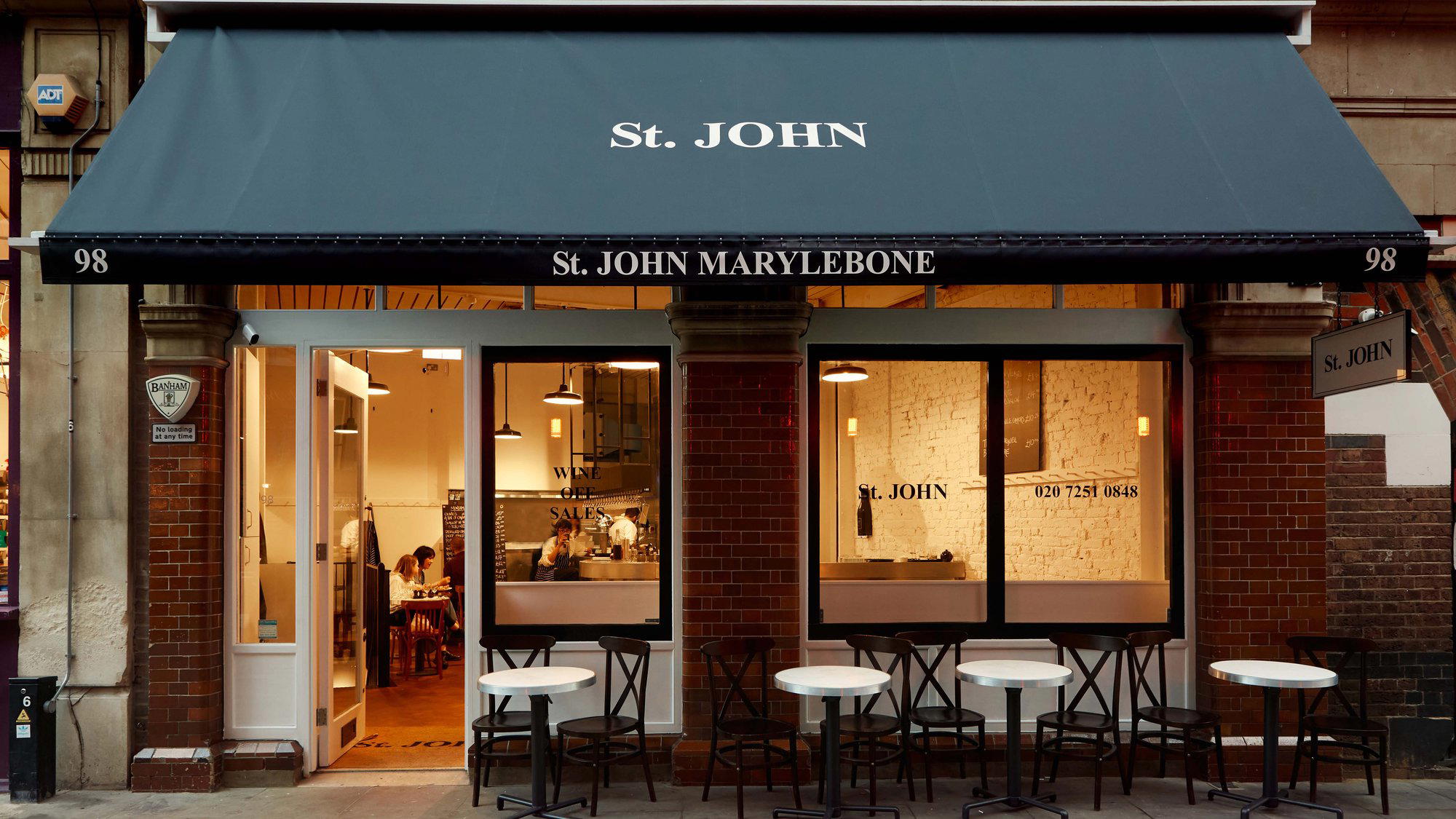
The Room Before the Food
Marylebone Lane narrows as it dips south from Marylebone High Street, the pavement tightening until the street feels more village than central London. St John Marylebone sits at number 98, occupying a space that reads immediately as a wine bar rather than a restaurant proper. Bare walls, plain tables, and the kind of lighting that suggests you are expected to stay rather than turn over. The room is a position statement: no tablecloths, no ceremony, no softening of the format's edges. In a neighbourhood that runs to more polished neighbourhood bistros and hotel dining rooms, this is a deliberate act of restraint.
The original St John on St John Street in Clerkenwell established a template that is now a reference point for British cooking across the country. The Marylebone outpost operates as a wine bar with food, which in practice means the same commitment to offal, bread, and bone marrow in a format designed around drinking and grazing rather than a structured three-course progression. The distinction matters for how you approach an evening here.
A Dining Ritual Built on Accumulation
The operative custom at St John Marylebone is accumulation. Dishes arrive as they are ready, plates stack at the edge of the table, bread appears early and often. The meal has no fixed architecture. You do not eat an amuse-bouche, then a starter, then a main. You eat what is good that day, in whatever sequence the kitchen sends it, and you order more when the plate empties. This is nose-to-tail dining as a philosophy of pacing, not just a philosophy of ingredients.
That approach places St John in a specific tradition of British eating that predates the contemporary small-plates trend by several decades. The format has more in common with a Spanish bodega or a French zinc bar than with the modern sharing-plates restaurant that has spread through every city in the country. The difference is intent: at St John, the food is incidental to the wine in a favorable sense, which keeps the kitchen honest about portion logic and ingredient quality in a way that destination tasting menus rarely require.
Elsewhere on London's high-end British dining spectrum, the register is considerably more formal. CORE by Clare Smyth and Dinner by Heston Blumenthal operate with sequenced tasting formats and full brigade service. The Ledbury, Restaurant Gordon Ramsay, and Sketch, The Lecture Room and Library all sit at the ££££ tier, with the tableside formality that implies. St John operates at a moderate price point and without that ceremony, which is not a compromise so much as a different set of priorities entirely.
The Nose-to-Tail Context
The St John name carries weight in British food culture that is disproportionate to its physical footprint. The approach it codified in the 1990s, treating the whole animal as the raw material rather than selecting only prime cuts, became a template that a generation of British chefs adopted and exported. That influence is traceable in restaurants across the UK and internationally. Corner Shop in Glasgow and The Highland Laddie in Leeds both work within traditions of British ingredient-led cooking that the St John lineage helped normalise.
The approach also has international counterparts. The same commitment to provenance, simplicity, and the less fashionable parts of the animal runs through kitchens as different as Lazy Bear in San Francisco and Franc in Canterbury. Where Le Bernardin in New York City or Alain Ducasse at Louis XV in Monte Carlo represent the maximalist end of ingredient handling, St John sits at the opposite pole: minimum intervention, maximum accountability.
Wine list at the Marylebone site follows the same logic. The selection skews toward natural and low-intervention producers, with a depth in French regions that reflects the kitchen's French-influenced approach to British ingredients. Ordering by the glass is encouraged, and the staff knowledge tends toward the practical rather than the performative, which suits the format.
Where This Fits in London Right Now
Marylebone has developed a food identity somewhat separate from the destination-dining corridors of Mayfair and the City. The neighbourhood supports a density of neighbourhood restaurants and wine bars that operate on repeat-visit logic rather than occasion logic. St John Marylebone fits that pattern: the kind of place you return to on a Tuesday when you want something correct rather than spectacular.
That positioning distinguishes it from the broader St John brand, which at Smithfield attracts a significant tourist and destination-dining contingent. The Marylebone site operates at a lower temperature, which is either a drawback or the point depending on what you are looking for. For London restaurant visitors working through the city's higher-end options, it offers a useful counterpoint: a room where the food tradition is as serious as anywhere in the city, but the ritual of eating is stripped back to something closer to a daily habit than a special occasion.
Practically, the venue is on Marylebone Lane, accessible from Bond Street or Baker Street stations. As a wine bar format, it accepts walk-ins more readily than a reservation-only restaurant, though booking ahead for weekend evenings is sensible. The format supports both solo dining and small groups without the table-size logistics that constrain some larger dining rooms.
Internationally, the comparison set for this kind of serious-but-informal British drinking food extends to Atomix in New York City on the question of format discipline, and to Emeril's in New Orleans on the question of a flagship brand operating a distinct neighbourhood register. The analogy is imperfect, but the underlying question is the same: what does a serious restaurant do when it operates a room designed for something other than a serious occasion?
Quick Comparison
Comparable venues nearby, for context on price, style, and recognition.
| Venue | Cuisine | Price | Notes |
|---|---|---|---|
| St John. MaryleboneThis venue — the venue you are viewing | Modern British Nose-to-Tail | $$$ | Not listed |
| The Yellow Bittern | Irish-influenced British set-menu lunch | $$$ | King's Cross |
| Franklins | Seasonal British Gastropub | $$$ | East Dulwich |
| Restaurant Michael Nadra | Modern European Brasserie | $$$ | Primrose Hill |
| Daffodil Mulligan | Modern Irish Fusion | $$$ | St Luke's |
| Caxtons | Modern British Grill | $$$ | Westminster |
Continue exploring
More in London
Restaurants in London
Browse all →
Bars in London
Browse all →
Hotels in London
Browse all →

At a Glance
- Intimate
- Classic
- Elegant
- Date Night
- Celebration
- Special Occasion
- Business Dinner
- Open Kitchen
- Standalone
- Historic Building
- Extensive Wine List
- Craft Cocktails
- Local Sourcing
Current opening hours
- Monday
- 9 AM–10 PM
- Tuesday
- 9 AM–10 PM
- Wednesday
- 9 AM–10 PM
- Thursday
- 9 AM–10 PM
- Friday
- 9 AM–10 PM
- Saturday
- 9 AM–10 PM
- Sunday
- 9 AM–10 PM
Hours can change for holidays and private events. Last verified .
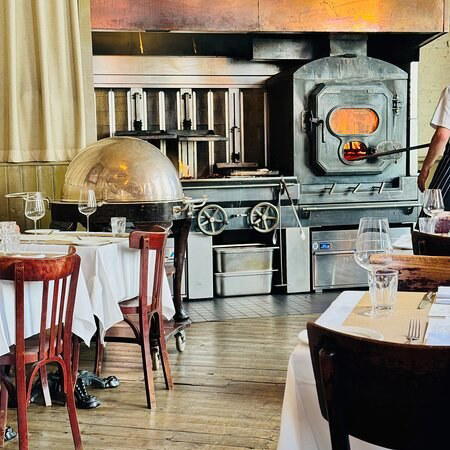
Utilitarian basement dining with white walls and steel stairs; intimate upstairs with open kitchen and windows; low-comfort, charming if slightly quirky aesthetic that encourages leisurely, immersive meals.