Our verdict
Sri Lankan Wave Streetfood on Bellealliancestraße brings the cooking traditions of the island's roadside stalls and coastal kitchens to Hamburg's Eimsbüttel district. The format sits in a growing tier of European street-food venues that prioritize ingredient provenance and regional specificity over pan-Asian generalism. For Hamburg diners accustomed to fine-dining anchors like The Table Kevin Fehling or Restaurant Haerlin, this is the city's opposite pole: informal, ingredient-driven, and rooted in a cuisine still underrepresented in German cities.

Pearl is the En Primeur Club membership app, where members save venues, book tables and use the concierge.
The menu
What to order
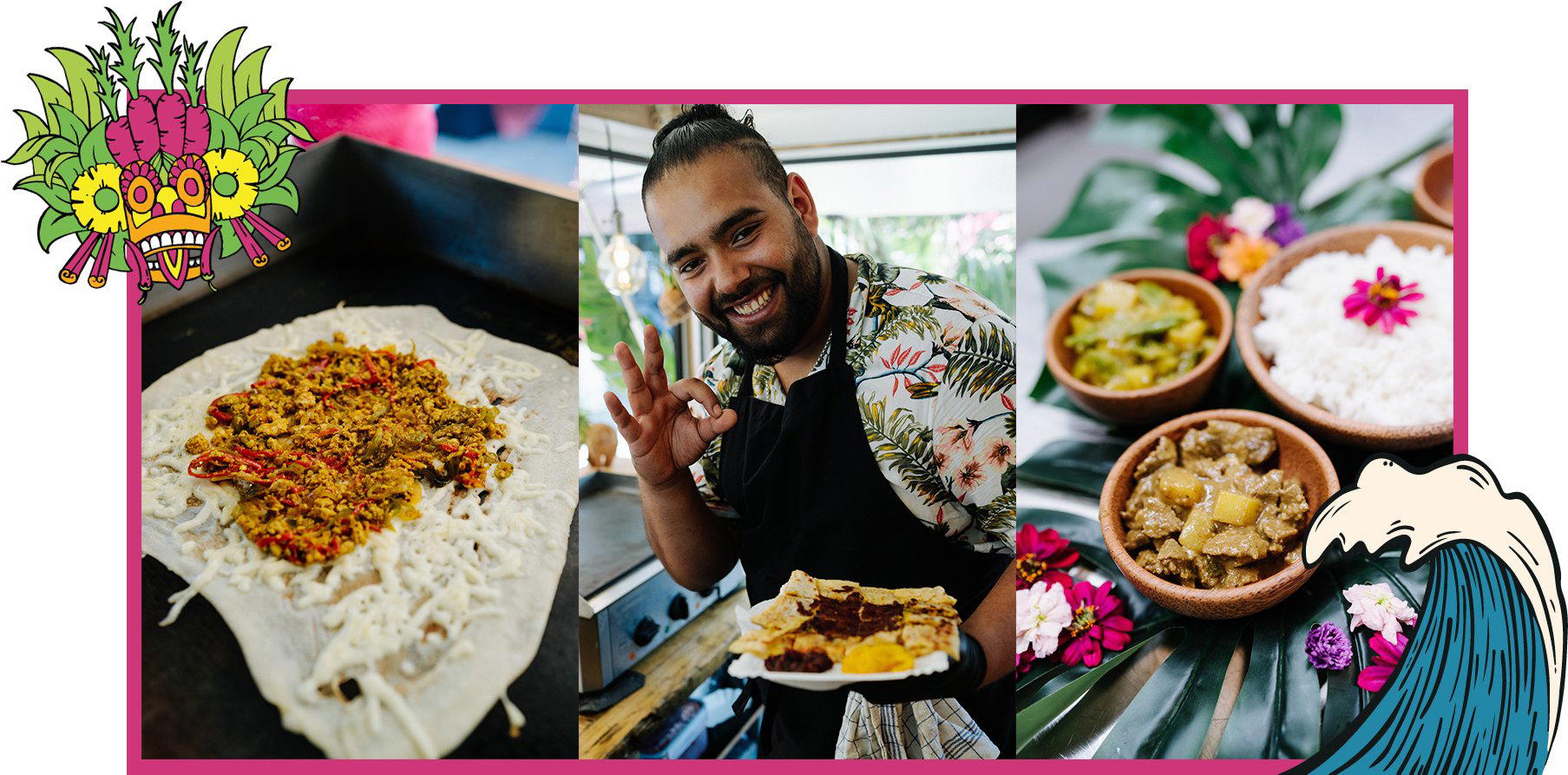
- Kottu Roti
- Devilled Chicken
A Street Food Tradition That Travels Well
Hamburg's Eimsbüttel district has spent the last decade accumulating the kind of independent food businesses that resist category. Bellealliancestraße, where Sri Lankan Wave Streetfood operates, sits in a residential stretch of the neighborhood where cooking from South and Southeast Asia has found durable footing. Sri Lankan cuisine, specifically, occupies a narrow lane in the European food scene: it is neither as institutionalized as Indian cooking nor as fashionable as Vietnamese or Thai, which means venues representing it tend to operate with a sharper identity or not at all.
Globally, Sri Lankan street food is organized around a logic of freshness and sourcing that the island's geography makes possible. Coconut, curry leaf, pandan, tamarind, fresh-ground spice blends, coastal fish, and tropical vegetables move from smallholder farms and coastal markets into dishes within hours. The leading kottu, hoppers, and devilled preparations derive their character almost entirely from ingredient quality and timing. Translating that logic to a northern European city requires either proximity to strong import networks or a willingness to adapt. The venues that take this seriously in Germany are few, which gives Sri Lankan Wave Streetfood a narrow but real context to operate in.
Ingredient Sourcing as the Core Argument
The editorial case for any Sri Lankan kitchen operating in Germany rests first on what it sources and how. The cuisine's flavor architecture is built on spices, black pepper, cardamom, fenugreek, cinnamon in its true Ceylon form, that differ materially from the standardized spice blends common in pan-Asian restaurant supply chains. Ceylon cinnamon, for instance, is botanically distinct from the cassia sold under the same name across most of Europe; its flavor is lighter, more floral, and less aggressive. A kitchen that sources it correctly produces a noticeably different curry profile.
The same distinction applies to dried Maldive fish, the fermented, sun-dried tuna flakes used as a flavor base in Sri Lankan cooking. There is no adequate substitution; without it, sambols and dhal preparations lose a layer of depth that defines the cuisine's coastal identity. For Hamburg diners who follow the sourcing arguments made by fine-dining rooms like 100/200 Kitchen or Lakeside, the same logic applies here at a different price register. The question is not what tier the cooking occupies but whether the ingredients are correct.
Sri Lankan Wave Streetfood is positioned in Eimsbüttel, which has the import infrastructure of a city with a significant South Asian diaspora. Hamburg's wholesale and specialty food networks serve a large international community, giving kitchens in this area access to supply chains that smaller German cities cannot match. This is a practical advantage that shapes what is possible on a street-food menu operating without the sourcing budgets of a formal restaurant.
Where This Fits in Hamburg's Dining Map
Hamburg's restaurant scene is heavily indexed toward northern European fine dining and modern European formats. The city holds Michelin-starred rooms at venues including Restaurant Haerlin and The Table Kevin Fehling, and a middle tier of modern Mediterranean and contemporary European cooking at places like bianc. Street-food venues operating in specific South Asian traditions sit at a different end of the spectrum entirely, serving a function the fine-dining end of the market does not address.
Across Germany, the fine-dining tier includes destinations as far-ranging as Aqua in Wolfsburg, JAN in Munich, and Schwarzwaldstube in Baiersbronn. Internationally, precision-focused tasting menus at venues like Atomix in New York City or Le Bernardin represent the institutional end of ethnic cuisine refined into fine-dining formats. Sri Lankan Wave Streetfood operates without that institutional scaffolding, which is consistent with the cuisine's street origins and the neighborhood's character.
Eimsbüttel functions as one of Hamburg's more locally oriented food neighborhoods, with a density of independent operators rather than group-backed concepts. That context matters: a Sri Lankan street-food kitchen in this setting competes on neighborhood fit and ingredient specificity, not on price-point prestige or award recognition. It is a different competitive set than CODA Dessert Dining in Berlin or Vendôme in Bergisch Gladbach, but it is a real one.
Planning Your Visit
Sri Lankan Wave Streetfood is located at Bellealliancestraße 38, 20259 Hamburg, in the Eimsbüttel district. The area is accessible by U-Bahn from Hamburg's city center, with Osterstraße and Emilienstraße stations within walking distance.
For a broader view of Hamburg's dining options across price tiers and formats, see our full Hamburg restaurants guide. Those planning a wider trip through Germany's dining circuit may also consider ES:SENZ in Grassau, Schanz in Piesport, Bagatelle in Trier, Waldhotel Sonnora in Dreis, or Victor's Fine Dining by Christian Bau in Perl for formal dining at the other end of the format spectrum.
Logistics at a Glance
| Factor | Sri Lankan Wave Streetfood | The Table Kevin Fehling | bianc |
|---|---|---|---|
| Format | Street food | Fine dining tasting menu | Modern Mediterranean |
| Price tier | Not published | €€€€ | €€€€ |
| Booking | Confirm directly | Advance reservation required | Advance reservation required |
| Neighborhood | Eimsbüttel | HafenCity | City center |
| Cuisine origin | Sri Lanka | Creative European | Mediterranean |
Frequently asked questions
What part of town is Sri Lankan Wave Streetfood in?
Sri Lankan Wave Streetfood is located at Bellealliancestraße 38, 20259 Hamburg, Germany, Hamburg.
How does Sri Lankan Wave Streetfood fit into Hamburg's broader international food scene?
Hamburg's restaurant landscape is heavily weighted toward northern European and modern European formats, with Sri Lankan representation remaining sparse compared to cities like London, where a larger diaspora has built out supply chains and audience familiarity. A venue at Bellealliancestraße 38 in Eimsbüttel occupies a gap in the city's offer, sitting in a district that has historically attracted independent operators working outside the mainstream dining categories.
What's the must-try dish at Sri Lankan Wave Streetfood?
Sri Lankan street food traditions centre on kottu roti, chopped flatbread stir-fried with vegetables, egg, and spiced meat on a flat iron, and on hoppers, bowl-shaped fermented rice-flour pancakes often served with sambols. Either would represent the cuisine's core logic at a counter like this one in Eimsbüttel.
Is Sri Lankan Wave Streetfood reservation-only?
No booking information has been published for Sri Lankan Wave Streetfood at Bellealliancestraße 38. Street-food formats in Eimsbüttel almost universally operate on a walk-in basis, and nothing in the available venue data indicates a reservation system is in place.
What's the defining dish or idea at Sri Lankan Wave Streetfood?
The defining idea in Sri Lankan cooking is the specificity of its spice logic: coconut milk as a base rather than a garnish, pandan and curry leaf as aromatic anchors, and a heat profile built from multiple chilli varieties rather than a single source. That framework separates Sri Lankan cuisine from the broader South Asian category and gives a Hamburg venue operating under this name a clear culinary identity to work within.
Comparable Spots
| Venue | Cuisine | Price | Awards | Notes |
|---|---|---|---|---|
| Sri Lankan Wave StreetfoodThis venue (the venue you are viewing) | Sri Lankan Streetfood | Not listed | Not listed | Not listed |
| The Table Kevin Fehling | Avant-Garde Fusion Fine Dining | $200–300 | 3 Michelin Stars · La Liste Top Restaurants | Creative |
| bianc | Modern Mediterranean Fine Dining | $200–300 | 2 Michelin Stars · La Liste Top Restaurants | Modern Mediterranean, Mediterranean Cuisine |
| Lakeside | Modern European Fine Dining | $200–300 | 2 Michelin Stars · La Liste Top Restaurants | German Lakeside |
| Heimatjuwel | Modern Regional German Vegetarian Fine Dining | Not listed | 1 Michelin Star · We're Smart World 3 Radishes | German, Creative |
| Landhaus Scherrer | Michelin-Starred North German Fine Dining | $150–200 | 1 Michelin Star · Star Wine List | Modern European, Classic Cuisine |