Spring




Michelin Plate · The Good Food Guide GFG Exceptional · We're Smart World 2 Radishes
Our verdict
Spring occupies a high-ceilinged room in Somerset House's New Wing, serving Italian-influenced, ingredient-led cooking with an emphasis on seasonal produce and named artisan suppliers. The midweek set lunch and the 'Scratch' menu built from kitchen surplus represent the most considered entry points.

Pearl is the En Primeur Club membership app, where members save venues, book tables and use the concierge.
The menu
What to order
- Cod roe and radish
- Sea trout on puy lentils
- Wild turbot with chard and bay butter
- Scratch menu dishes
A Room with a Purpose: Somerset House and the Case for Seasonal Cooking
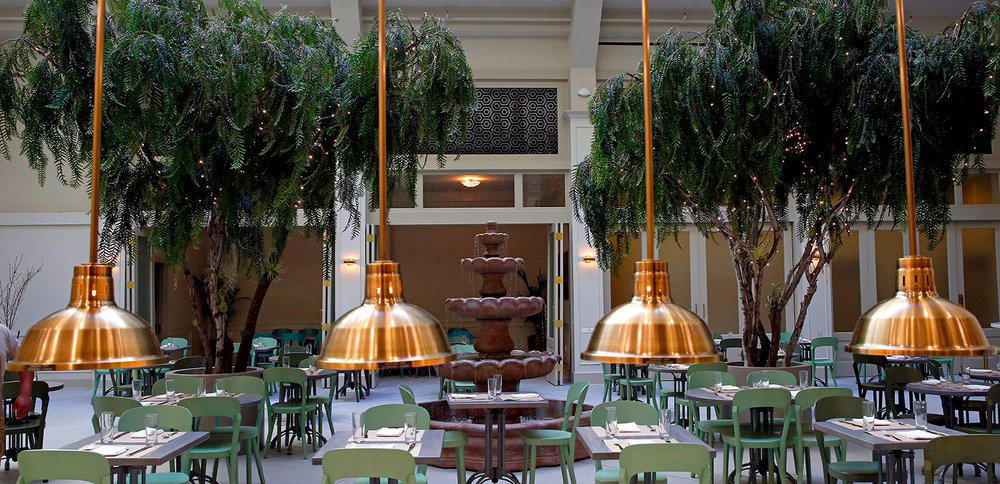
The neo-classical architecture of Somerset House has housed tax collectors, learned societies, and art institutions. Its New Wing, long occupied by the Inland Revenue, now holds one of London's more argued-over Italian-influenced dining rooms. White walls, classical pillars, pastel upholstery, and cluster light fittings create an atmosphere that multiple readers have independently called one of the most serene in the city. That consensus is worth noting: London has no shortage of handsome dining rooms, yet Spring's setting generates a specific kind of calm that separates it from noisier, more theatrical contemporaries.
That calm is not incidental. It connects directly to the kitchen's approach. Spring sits within a strand of London Italian dining that prizes produce transparency over technique display, a different competitive set from the butter-rich, pasta-baroque rooms of Soho. Where Bocca di Lupo leans into regional Italian breadth and Luca applies a British-produce filter to Italian form, Spring operates on a slower, more vegetable-forward frequency. The room reinforces the cooking rather than distracting from it.
The Supplier Chain as Editorial Statement
The ingredient-purity approach at Spring is not atmospheric branding. It is structural. Fern Verrow, a biodynamic farm in Herefordshire operated by Jane Scotter and Harry Astley, supplies vegetables and leaves to the kitchen, and that sourcing relationship shapes what appears on the plate. Biodynamic farming operates under stricter protocols than organic certification, regulating planting schedules to lunar and solar cycles and prohibiting synthetic inputs entirely. Ingredients arriving from Fern Verrow carry a provenance chain that is traceable and philosophically coherent, not merely fashionable.
The kitchen applies that material with minimal interference. Seasonal vegetables appear in meat-free preparations with tulips, elderflower, and buttermilk dressing. Wye Valley asparagus arrives with Italian fonduta. Cultured kefir butter accompanies porridge sourdough and seeded rye as a standard opening gesture. Each of these is an argument about what the ingredient can do without transformation. That argument places Spring closer in spirit to cenci in Kyoto, where Japanese-Italian cross-pollination happens through restraint rather than fusion, than to the showier end of London Italian dining.
Animal proteins follow the same logic. Grilled leg of lamb comes with slow-cooked courgettes, rocket, and horseradish cream. Wild sea bass appears with girolles and corn purée. These are composites built around one dominant flavour supported by seasonal accompaniments rather than constructions that obscure the primary ingredient. The result is cooking that readers describe as making them feel it is doing them good, a phrase that gestures at something real: food in which you can identify what you are eating and where it came from.
Pasta, Stracciatella, and the Mediterranean Thread
Italian-influenced does not mean Italian in the strict regional sense. Spring draws from Mediterranean cookery more broadly, filtering seasonal British produce through that framework. Pasta remains a consistent reader recommendation: pappardelle with artichokes, guanciale, chilli, and mint represents a combination that is classically Italian in structure but tuned to available produce. Stracciatella, the fresh cheese derived from burrata, appears in various seasonal iterations and has been consistently well received.
That Mediterranean thread connects Spring to a wider Italian dining scene in London that includes Artusi in Peckham and Bancone in Covent Garden, both of which foreground pasta craft and seasonal produce. Spring operates at a higher price point than either, justified partly by the setting and partly by the sourcing rigour. The comparison is informative: it shows that the Italian-influenced, ingredient-led register covers a wide price spectrum in London, and Spring occupies its upper tier deliberately.
Desserts maintain the seasonal logic through to the end. A classic summer pudding with crème fraîche, a honey custard tart with white peaches and white almonds, and an espresso jelly pudding with cream all operate within the same produce-respecting framework. The espresso jelly drew one comparison to a Malaysian gula melaka, a syrup made from palm sugar, which suggests the flavour register occasionally travels further than the Mediterranean without abandoning the underlying approach.
The Scratch Menu and the Economics of Waste
The 'Scratch' menu is one of the more considered responses to kitchen waste in London dining. Composed of ingredients that would otherwise be discarded, it includes preparations like bread and butter pudding made from yesterday's sourdough. The format has two implications. First, it demonstrates that the kitchen's sourcing standards extend to reducing surplus rather than simply curating inputs. Second, it creates a lower-cost entry point into a restaurant that, at full price, sits at the £££ tier.
The midweek set lunch serves the same function. For diners calibrating against the higher price of dinner, both the set lunch and the Scratch menu represent access points that preserve the essential Spring experience at reduced cost. In London's central Italian dining tier, that kind of pricing structure is not universal; the availability of a thoughtfully composed lower-price format is a practical differentiator worth noting before booking.
Wine, Low-Intervention, and the Cellar Tier
Wine list aligns with the kitchen's provenance philosophy. Low-intervention and natural producers make up a significant portion of the offering, consistent with the broader direction Italian-adjacent restaurants in London have taken over the past decade. That segment coexists with a tier of seriously priced cellar bottles for guests who want depth of vintage or producer prestige. The list does not force a choice between the two registers; it maps them against each other, which suits a room where the diner demographic includes both committed natural wine advocates and more conventional drinkers.
Planning a Visit
Spring is located at Lancaster Place, London WC2R 1LA, in the New Wing of Somerset House, a building most visitors to Covent Garden or the Strand will know by sight. The address is accessible from Temple or Embankment stations, and the setting makes it a natural choice before or after the Courtauld Gallery. Bookings for weekday lunch, particularly the set menu, are worth making in advance; the room has the kind of reputation that fills it without heavy marketing.
For readers building a wider picture of London dining, our full London restaurants guide covers the full range of neighbourhoods and price tiers. Those combining a meal at Spring with other central London plans can consult our full London hotels guide, our full London bars guide, and our full London experiences guide. Readers interested in the UK's broader fine-dining geography might also consider The Fat Duck in Bray, L'Enclume in Cartmel, Moor Hall in Aughton, Gidleigh Park in Chagford, Hand and Flowers in Marlow, and Le Manoir aux Quat' Saisons, a Belmond Hotel in Great Milton, each of which operates in a distinct register. For Italian cooking at a comparable level of ambition in other international cities, 8 1/2 Otto e Mezzo Bombana in Hong Kong provides a useful reference point, as does Archway for a different side of London dining.
What People Recommend at Spring
Reader recommendations cluster around pasta, particularly pappardelle preparations with seasonal accompaniments, and the stracciatella in its various seasonal forms. The room itself features as frequently as any dish in reader accounts: the neo-classical setting, the floristry, and the quality of service from staff described as diligent and knowledgeable are consistent reference points. The set lunch and Scratch menu are the specific formats most frequently cited for value. On the wine side, the low-intervention selection draws consistent mention from readers who appreciate the alignment between what the kitchen is doing with ingredients and what the list is doing with producers. The overall register, described by one reader as fine feasting in wonderful surroundings, reflects a room where cooking, setting, and sourcing philosophy operate in the same direction rather than pulling against each other.
Frequently asked questions
Is Spring award-winning?
Spring has received recognition including: Sporting fresh, bright décor that's befitting of its name, Spring occupies an undeniably gorgeous room in the 'New Wing' of Somerset House, that for many years was inhabited by the Inland Revenue. Launched under the aegis of the late Skye G….
What do people recommend at Spring?
Pasta is the consistent call, particularly pappardelle preparations with seasonal accompaniments such as artichokes, guanciale, chilli and mint. Stracciatella in its various seasonal forms draws repeated praise, as does the simple pleasure of Wye Valley asparagus with Italian fonduta. Readers also single out the midweek set lunch and the early-evening Scratch menu, which is built around kitchen offcuts and includes dishes like a bread and butter pudding made from the previous day's sourdough.
At-a-Glance Comparison
| Venue | Cuisine | Price | Awards | Notes |
|---|---|---|---|---|
| SpringThis venue (the venue you are viewing) | Modern Mediterranean Seasonal | $150–200 | Michelin Plate · The Good Food Guide GFG Exceptional | Not listed |
| The Ledbury | Modern British Fine Dining | $300–500 | 3 Michelin Stars · World's 50 Best #42 | Modern European, Modern Cuisine |
| Sketch, The Lecture Room and Library | Modern French Fine Dining | $200–300 | 3 Michelin Stars · World's 50 Best #18 | Modern French |
| CORE by Clare Smyth | Modern British Fine Dining | $150–200 | 3 Michelin Stars · World's 50 Best #97 | Modern British |
| Restaurant Gordon Ramsay | French Fine Dining | $200–300 | 3 Michelin Stars · World's 50 Best #13 | Contemporary European, French |
| Dinner by Heston Blumenthal | Historic British Fine Dining | $200–300 | 2 Michelin Stars · World's 50 Best #45 | Modern British, Traditional British |
Recognition history
Dated appearances from independent guides and award organizations, with the underlying list record or original source where available.
Michelin Plate
Michelin
Opinionated About Dining Casual in Europe Recommended
Opinionated About Dining
The Good Food Guide GFG Exceptional
The Good Food Guide
We're Smart World 2 Radishes
We're Smart World
Full recognition history (5 entries)
Michelin Plate
Michelin

Continue exploring
More in London
Restaurants in London
All restaurants in London →
Bars in London
All bars in London →
Hotels in London
All hotels in London →





Details
- Elegant
- Romantic
- Quiet
- Sophisticated
- Intimate
- Date Night
- Special Occasion
- Celebration
- Business Dinner
- Historic Building
- Design Destination
- Standalone
- Extensive Wine List
- Sommelier Led
- Local Sourcing
- Farm To Table
- A La Carte
- Set Menu
- Prix Fixe
- Wine
- Vegetarian Friendly
- Gluten Free Options
Current opening hours
- Monday
- Closed
- Tuesday
- 12–2:30 PM, 5:30–9:30 PM
- Wednesday
- 12–2:30 PM, 5:30–9:30 PM
- Thursday
- 12–2:30 PM, 5:30–9:30 PM
- Friday
- 12–2:30 PM, 5:30–9:30 PM
- Saturday
- 5:30–9:30 PM
- Sunday
- Closed
Hours can change for holidays and private events. Hours as of .
Light, airy, and serene with gleaming white walls, neo-classical pillars, precise floristry, pastel upholstery, and luxuriously spaced tables creating an elegant, soothing atmosphere.