Wildflowers



Michelin Plate · National Restaurant Awards Top 100 #30 · The Good Food Guide GFG Very Good
Our verdict
A Michelin Plate-recognised Mediterranean restaurant inside Newson's Yard, a high-end design development just off Pimlico Road. The kitchen draws on produce-led flavours from across the Mediterranean basin, anchored by fresh herbs and rustic technique, while a first-floor wine bar and an all-European list with bottles under £50 make the postcode less punishing than expected.

Pearl is the En Primeur Club membership app, where members save venues, book tables and use the concierge.
The menu
What to order
- Sweetcorn & polenta ravioli
Marble counters and herb-driven plates in the heart of Belgravia
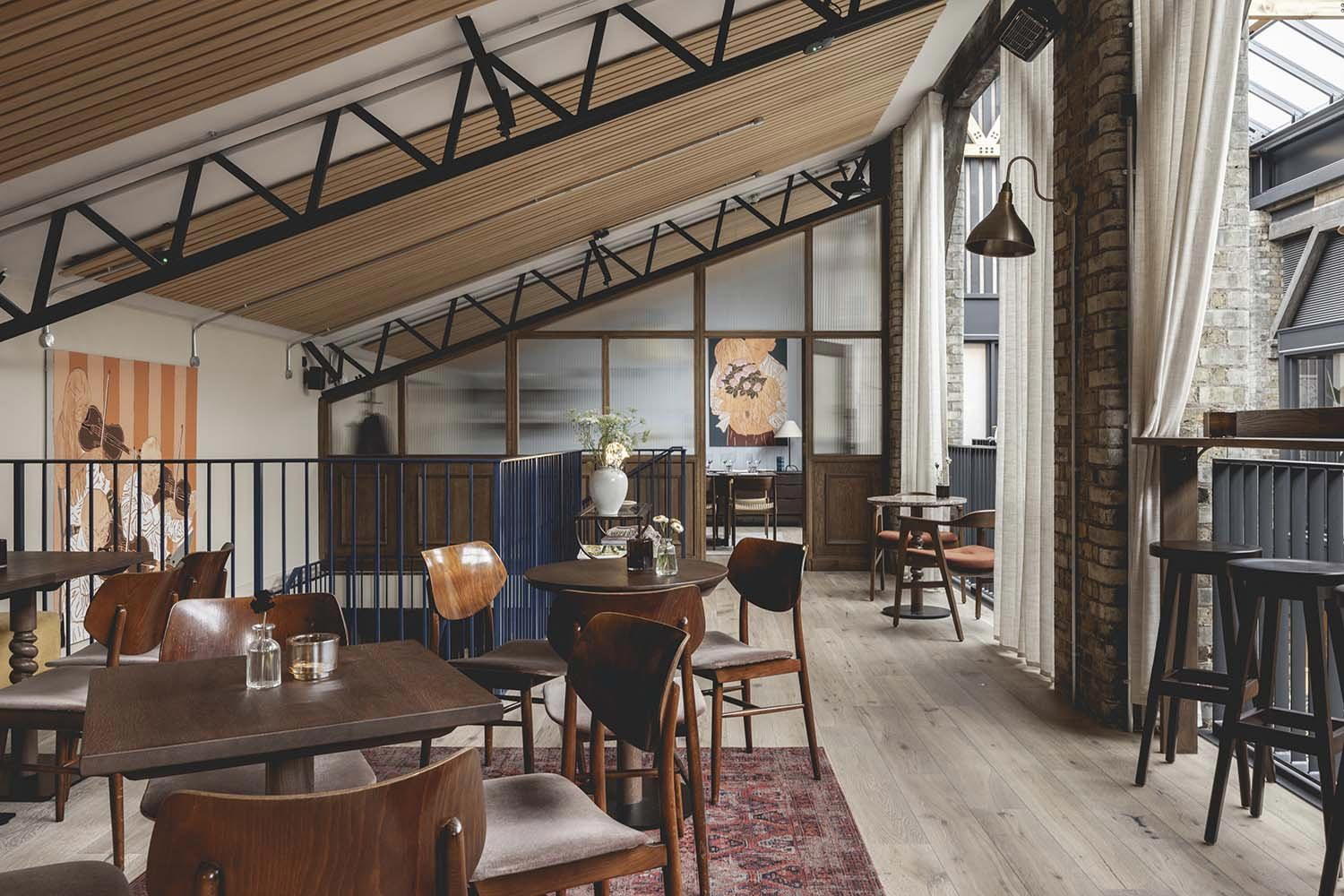
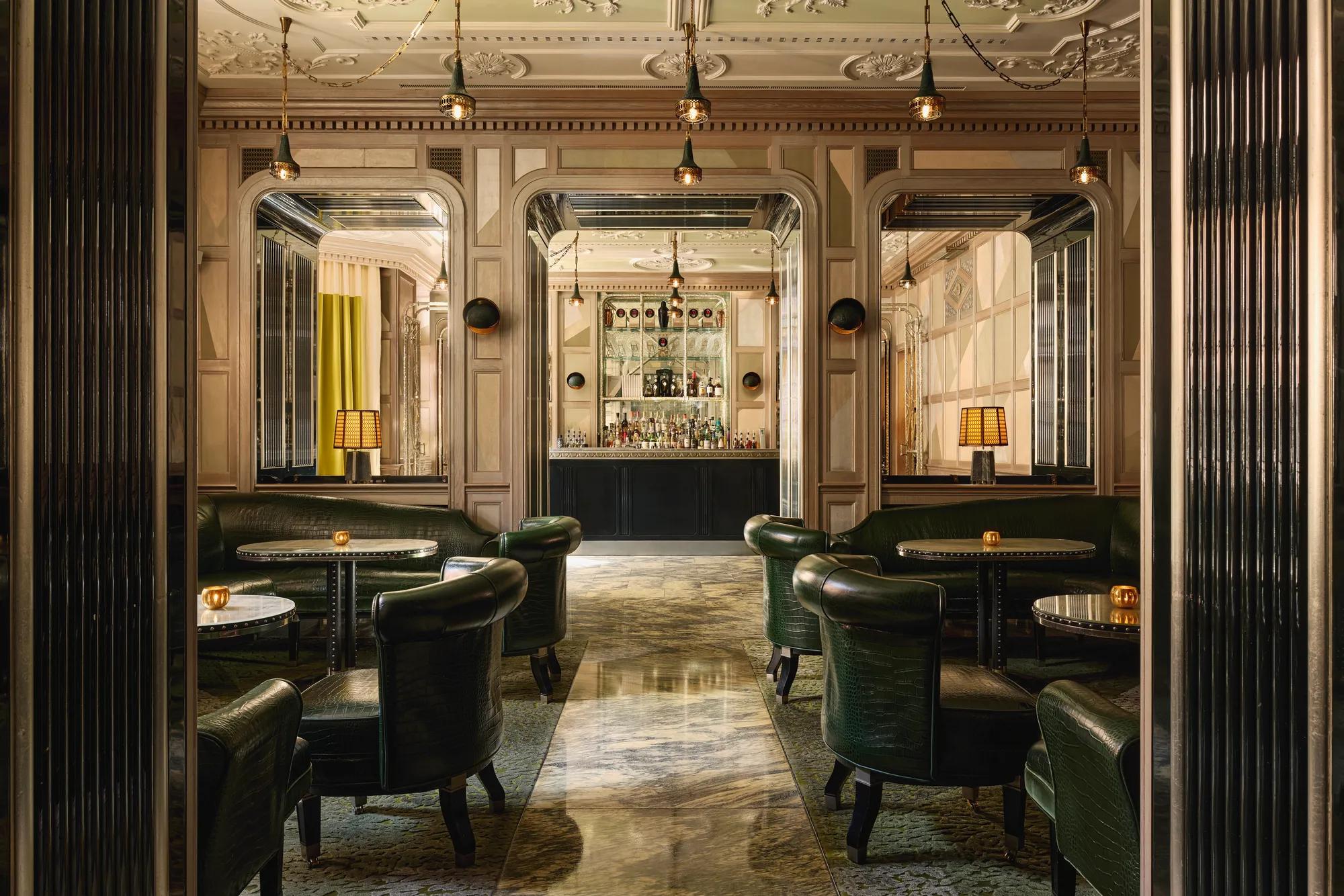
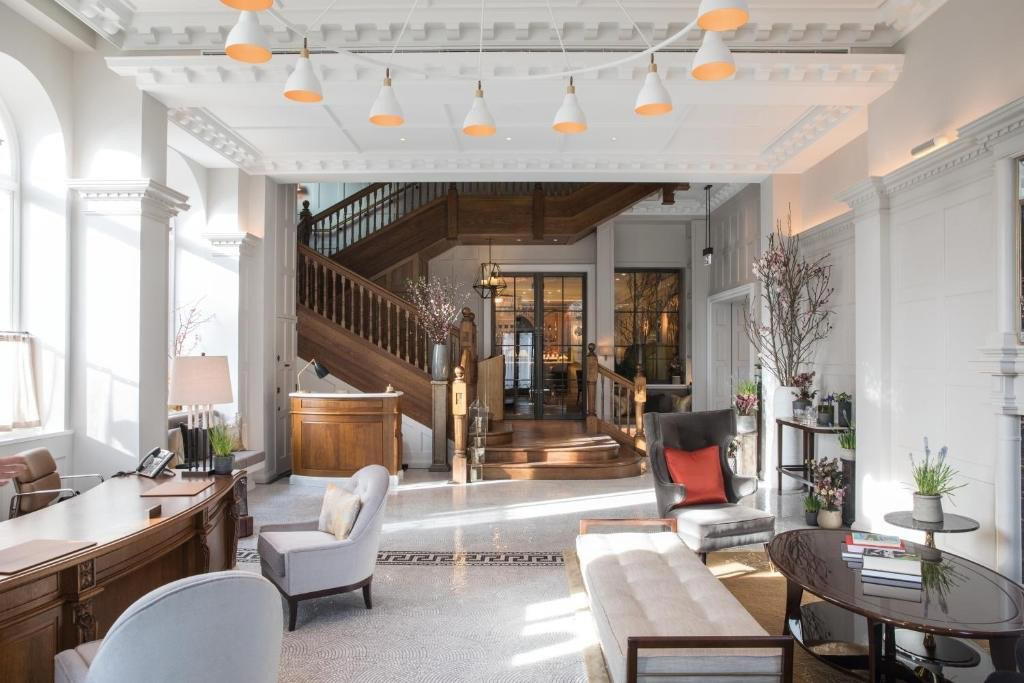
The chef's counter at Wildflowers is topped in marble, a deliberate material choice that signals where this restaurant sits in the Pimlico-Belgravia tier. The room around it follows the same logic: dark and light wood furnishings, pale blue banquettes, brick walls, candle-dressed tables, and an outdoor terrace shaded by a glass atrium. It is the kind of space that reads as effortless but has been precisely considered, the product of a collaboration between a trained chef and an interior designer rather than a kitchen operation bolted into a developer's blank box. Newson's Yard, the high-end design and retail development that houses it on Pimlico Road, provides an appropriate frame: the building already attracts a crowd willing to pay for considered aesthetics, and Wildflowers fits that register without leaning on it.
The restaurant holds a Michelin Plate for both 2024 and 2025, a signal that the guide's inspectors found the cooking consistently competent and the experience coherent, without yet awarding a star. That position, just below star level in a neighbourhood where starred restaurants are not scarce, puts Wildflowers in the same functional tier as other produce-led, neighbourhood-serious rooms: the food is precise enough to reward attention, the room is relaxed enough to absorb a long Tuesday dinner.
The Mediterranean through fresh herbs and seasonal produce
Mediterranean cooking in London has diversified considerably over the past decade. What was once shorthand for pasta and grilled fish now covers a wider arc: Levantine herb-and-spice combinations at places like Oren and Bala Baya, Alsatian brasserie tradition at Bellanger, and the kind of produce-driven, slightly rustic central-Mediterranean register that Wildflowers occupies. Here the herb vocabulary is basil and thyme over za'atar, salsa verde over harissa, and the cooking idiom is Italian and Iberian before it is Levantine.
That orientation shows in specific dishes. A stracciatella arrives with violet artichoke, dried apricot, and black truffle, a combination where the richness of the cheese needs the sharpness of the artichoke and the perfume of truffle to stay in balance. Grilled Cornish red mullet is paired with Grezzina courgettes softened until their texture yields, and a salsa verde whose sharp herb base cuts the fish's natural oiliness. A surf-and-turf paella of rabbit and cuttlefish is finished with blood-orange allioli, where the citrus note in the aioli serves as the same function that lemon or capers would in a simpler preparation: it lifts and clarifies. The herb logic here is not decorative; it is structural, doing the work that cream sauces or reductions do in a different culinary tradition.
For vegetables, a baked wild mushroom rice with chanterelles makes the case that umami depth does not require meat. The focaccia, made in-house, operates as a reliable early signal of a kitchen that has its fermentation and baking process under control. Desserts lean on citrus in a similar way: a blood orange and almond polenta cake with blood-orange sorbet uses the same fruit in two textures and temperatures, a technique more common in fine dining tasting menus than in neighbourhood rooms priced at the £££ level.
This is not food without fault. Some dishes have arrived with heavy-handed seasoning, a lapse that the kitchen's broader consistency makes more noticeable rather than less. A restaurant operating at this standard earns the right to be assessed critically, and the seasoning issue is the kind of variable that separates a Michelin Plate from a star.
The wine bar upstairs, and why it matters
The first-floor wine bar, tucked under the eaves above the main dining room, operates as a separate experience within the same building. In London's neighbourhood restaurant scene, a wine offer of this kind, intimate, architectural, separated from the main dining floor, is relatively rare below the £££££ bracket. The bar at Wildflowers functions as both a pre-dinner staging point and a destination in its own right, and the design of the eaves space gives it a character the main room, for all its marble and candlelight, cannot quite replicate.
The wine list is all-European and, despite the SW1W postcode, includes a meaningful number of bottles below £50. That is not a trivial detail. Belgravia restaurants routinely use their address as justification for wine margins that make a three-course dinner a serious financial commitment even before the first glass. The restraint here reflects either genuine editorial intent in the list's curation or an awareness that the neighbourhood's dining room is not exclusively populated by expense accounts. Either way, the result is a list that rewards attention rather than discouraging it. The emphasis on European producers aligns with the kitchen's Mediterranean orientation, keeping the bottle selections in dialogue with what arrives on the plate.
For wine-focused visitors who want to explore beyond the Pimlico area, Peckham Cellars offers a different model of the wine-led neighbourhood room, as does Morchella, which operates in a more overtly natural-wine register. These are different propositions to Wildflowers, but useful comparisons for anyone trying to map London's current spread of mid-to-high neighbourhood wine dining.
Context: neighbourhood dining at the Belgravia price point
Pimlico and Belgravia represent a particular stratum of London neighbourhood dining. The residential wealth of the area sustains restaurants that would struggle in zones where walk-in custom from tourists or office workers makes up the gap. The trade-off is that opening a room here requires a level of fit-out and service that matches the postcode expectation. Wildflowers clears that threshold, but its personality is less formal than many of its neighbours: the service is described as genuinely friendly rather than professionally cool, and the background soundtrack runs to 1980s rock and pop rather than ambient drone.
Chef Aaron Potter's previous work at Trinity in Clapham and Elystan Street in Chelsea placed him inside London's serious neighbourhood-dining circuit before this solo project. Both of those restaurants operate at a level where critical attention is consistent and the cooking is assessed against a high baseline. That credential matters here not as biography but as a calibration tool: the cooking at Wildflowers should be understood in the context of what those kitchens produce, rather than in the softer frame of a first restaurant finding its feet. This is a room that arrived with technical fluency already in place.
For context on the upper end of London's restaurant tier, the starred rooms at properties like The Fat Duck in Bray, L'Enclume in Cartmel, and Moor Hall in Aughton represent the ceiling of what British fine dining achieves, while closer to London, Gidleigh Park in Chagford, Hand and Flowers in Marlow, and Le Manoir aux Quat' Saisons in Great Milton fill the country-house serious-dining bracket. Wildflowers sits several tiers below that ceiling, intentionally, and without apology. Within the Mediterranean register specifically, La Brezza in Ascona and Arnaud Donckele at Louis Vuitton in Saint-Tropez show where the cuisine goes at the starred, destination end of the spectrum.
For a fuller picture of where Wildflowers sits within London's dining scene, see our full London restaurants guide. For planning the rest of a visit, our London hotels guide, London bars guide, London wineries guide, and London experiences guide cover the broader city.
Know Before You Go
- Address: Newson's Yard, 57 Pimlico Rd, London SW1W 8NE
- Price range: £££ (mid-to-high neighbourhood pricing)
- Awards: Michelin Plate 2024 and 2025
- Cuisine: Mediterranean, produce-led, herb-driven
- Wine: All-European list; bottles available below £50
- Upstairs wine bar: First-floor bar under the eaves, worth booking time for separately
- Getting there: Pimlico Road, SW1W; closest tube is Sloane Square (District/Circle) or Pimlico (Victoria line)
Frequently asked questions
What dish is Wildflowers known for?
No single dish has been singled out as a signature in the way that some restaurants build their reputation around one preparation. What the kitchen is consistent about is the herb-led Mediterranean register across the menu: salsa verde with grilled fish, allioli with paella, stracciatella paired with artichoke and truffle. The house-made focaccia is noted repeatedly as a reliable early indicator of the kitchen's standard, and the Italian citrus tart has been cited as a strong finish to a meal. The chef worked at Trinity and Elystan Street before opening Wildflowers, and both those references are relevant to understanding the style: accomplished, produce-driven, neighbourhood-serious rather than tasting-menu theatrical.
Should I book Wildflowers in advance?
Belgravia restaurants at the £££ level with critical recognition tend to operate with reasonable forward booking windows, particularly on Fridays and Saturdays. If you are flexible on timing, a midweek booking is usually the more reliable option for any Michelin Plate restaurant in this part of London. The first-floor wine bar offers an alternative if the dining room is full: it functions as a destination rather than merely a waiting area, and given the strength of the wine list, an evening spent there is not a consolation.
Recognition, Side-by-Side
A quick peer reference to anchor this venue in its category.
| Venue | Cuisine | Price | Awards | Notes |
|---|---|---|---|---|
| WildflowersThis venue (the venue you are viewing) | Mediterranean Cuisine | Not listed | Michelin Plate · National Restaurant Awards Top 100 #30 | Not listed |
| The Ledbury | Modern British Fine Dining | $300–500 | 3 Michelin Stars · World's 50 Best #42 | Modern European, Modern Cuisine |
| Sketch, The Lecture Room and Library | Modern French Fine Dining | $200–300 | 3 Michelin Stars · World's 50 Best #18 | Modern French |
| CORE by Clare Smyth | Modern British Fine Dining | $150–200 | 3 Michelin Stars · World's 50 Best #97 | Modern British |
| Restaurant Gordon Ramsay | French Fine Dining | $200–300 | 3 Michelin Stars · World's 50 Best #13 | Contemporary European, French |
| Dinner by Heston Blumenthal | Historic British Fine Dining | $200–300 | 2 Michelin Stars · World's 50 Best #45 | Modern British, Traditional British |
Recognition history
Dated appearances from independent guides and award organizations, with the underlying list record or original source where available.
Michelin Plate
Michelin
National Restaurant Awards Top 100 #30 · No. 30
National Restaurant Awards · 2026 National Restaurant Awards Top 100
The Good Food Guide GFG Very Good
The Good Food Guide
Full recognition history (7 entries)
Michelin Plate
Michelin
National Restaurant Awards Top 100 #70
National Restaurant Awards
National Restaurant Awards Chef to Watch
National Restaurant Awards
Michelin Plate
Michelin
Continue exploring
More in London
Restaurants in London
All restaurants in London →
Bars in London
All bars in London →

Details
- Sophisticated
- Intimate
- Modern
- Cozy
- Date Night
- Group Dining
- Special Occasion
- Casual Hangout
- Private Dining
- Terrace
- Standalone
- Natural Wine
- Beer Program
- Local Sourcing
- A La Carte
- Small Plates
- Wine
- Spritzes
- Vegetarian Friendly
Current opening hours
- Monday
- 12–2:30 PM, 6–11 PM
- Tuesday
- 12–2:30 PM, 6–11 PM
- Wednesday
- 12–2:30 PM, 6–11 PM
- Thursday
- 12–2:30 PM, 6–11 PM
- Friday
- 12–2:30 PM, 6–11 PM
- Saturday
- 12–2:30 PM, 6–11 PM
- Sunday
- 12–3 PM
Hours can change for holidays and private events. Hours as of .
Warm, welcoming, and stylish, with a refined but relaxed upscale feel.