Our verdict
Solar de Alfama occupies one of Lisbon's most atmospheric addresses in the Alfama district, where the smell of charcoal and the sound of fado filtering through stone walls set the terms before you sit down. Positioned within the older, neighbourhood-rooted tier of Lisbon dining rather than the tasting-menu circuit anchored by venues like Belcanto or CURA, it draws visitors and locals alike to a tradition that predates any star rating system.

Pearl is the En Primeur Club membership app — saves, bookings, and concierge access live there. Same editors, same standards.
- Address
- R. dos Remédios 64, 1100-345 Lisboa, Portugal
- Phone
- +351920404090
- Hours
- Mon ClosedTue–Sun 8 AM–3 PM, 6:30–11 PM
- Website
- cravimelalfama.wixsite.com
- Directions
- Get directions
- Booking
- Book on OpenTable
The menu
What to order
- Garlic shrimp
- Grilled fish
- Tuna tacos
- Octopus
Where the Neighbourhood Does the Talking
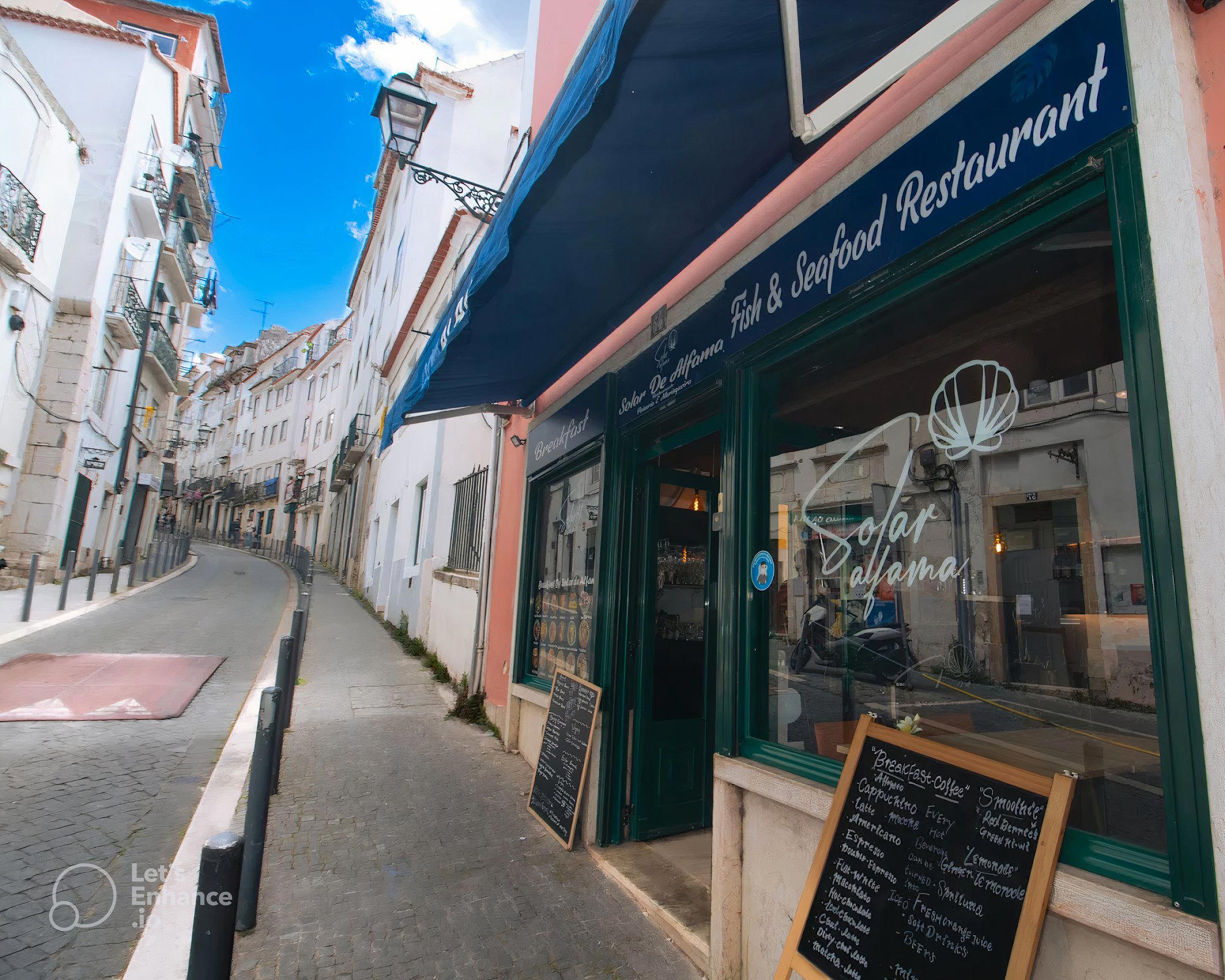
Alfama is Lisbon's oldest surviving district, a dense lattice of narrow streets that climbed away from the 1755 earthquake's worst damage and kept its Moorish street plan intact. Arriving at R. dos Remédios 64, you are already inside the logic of the neighbourhood before you reach the door. The street is narrow enough that the buildings on either side compete for light, washing lines occasionally strung between them, the smell of slow-cooked food drifting at pavement level. This is the sensory context that Solar de Alfama operates within — and, to its credit, does not attempt to override.
Lisbon's dining scene has split into two distinct registers over the past decade. One tier — anchored by places like Belcanto, CURA, Eleven, and 50 Seconds from Martin Berasategui, competes on tasting menus, Michelin recognition, and technical ambition. The other tier roots itself in neighbourhood identity, where the room, the wine list, and the cooking vocabulary are shaped by the street outside rather than international fine-dining conventions. Solar de Alfama operates in the second register, and that distinction matters for how you should read it.
The Atmosphere as the Architecture
In Alfama, setting is not a design decision; it is an inheritance. The district's buildings carry centuries of use in their walls, azulejo tiles, exposed stone, rooms with sightlines shaped by necessity rather than by an interior designer's plan. Restaurants in this part of Lisbon tend to carry that character into the dining room rather than papering over it, and the experience at Solar de Alfama is shaped accordingly.
Sound is a significant part of the proposition. Alfama is fado's original home, and the music that is now performed in venues across Lisbon was first produced in streets like this one, in taverns, in courtyards, in spaces where it functioned as lived expression rather than tourist performance. A restaurant on R. dos Remédios operates with that history at close range, whether the music is live or arriving through an open window from a neighbouring venue. The distinction matters: fado in Alfama retains a neighbourhood credibility that performances elsewhere in the city can lack, because the streets around it still house the community that produced the genre.
Portugal's broader dining circuit has extended well beyond Lisbon in recent years. Across the country, Michelin-recognised addresses now span from Antiqvvm in Porto to Vila Joya in Albufeira, from Casa de Chá da Boa Nova in Leça da Palmeira to Il Gallo d'Oro in Funchal. That expansion has sharpened appreciation for the kind of neighbourhood address that does not compete on those terms, where the value is in being precisely where it is, doing precisely what the neighbourhood does.
What the Alfama Dining Tradition Actually Means
Portuguese cooking in Alfama has a set of recurring reference points: bacalhau prepared in any number of the traditional 365 ways the culture claims to possess, grilled sardines in season (peak months running from June through September, when the fish are fattest), slow-braised meat dishes, and a wine list that draws on regional production rather than international labels. Vinho Verde, wines from the Douro, and local Lisbon-area production tend to anchor the shorter, more accessible lists that neighbourhood restaurants in this district maintain.
The hospitality register here differs from what you encounter at places like The Yeatman in Vila Nova de Gaia or Ocean in Porches, where service is calibrated to a formal fine-dining standard. In Alfama, tables tend to be closer together, the pace less choreographed, and the relationship between staff and regular customers often more visible than the relationship between front-of-house and visiting strangers. For some readers, that informality is the point. For others accustomed to the precision of somewhere like Le Bernardin in New York City or the structural rigour of Atomix, the contrast is sharp.
The Algarve and Minho also offer their own regional interpretations of Portuguese cooking, Al Sud in Lagos, Bon Bon in Lagoa, and A Cozinha in Guimarães each reflect their geography in how they approach produce and tradition. Solar de Alfama's context is specifically urban and specifically Lisbonite, rooted in a district whose culinary identity predates the country's current restaurant moment by several generations.
Planning Your Visit
R. dos Remédios 64 sits in lower Alfama, reachable on foot from Alfama's tram stops or from Santa Apolónia via a ten-minute uphill walk. The neighbourhood operates on different rhythms to Lisbon's Chiado or Baixa districts: tables at neighbourhood restaurants in Alfama tend to fill earlier in the evening than at the city's more formal addresses, and weekend nights in the district carry a higher ambient energy as fado houses on nearby streets draw their own crowds. Arriving before 8pm on a weekend is advisable if you prefer a quieter room. For broader context on where Solar de Alfama sits within Lisbon's full dining spectrum, our full Lisbon restaurants guide maps the city's options across price tiers and neighbourhoods. Those also considering the Algarve should note A Ver Tavira in Tavira and 2Monkeys as useful reference points for the creative end of the Portuguese dining spectrum, which offers a useful contrast to the tradition Solar de Alfama represents.
Frequently asked questions
What's the signature dish at Solar de Alfama?
Because Solar de Alfama operates within the neighbourhood tradition of Alfama rather than the tasting-menu circuit anchored by Lisbon's Michelin-recognised addresses, there is no formally documented signature dish in the public record. The cooking vocabulary of the area centres on bacalhau preparations, charcoal-grilled fish, and slow-braised meat dishes drawn from Portuguese domestic tradition. Visiting with an appetite for seasonal fish, particularly sardines in summer, and the house wine list is the approach most consistent with what this part of Lisbon does.
Is Solar de Alfama reservation-only?
Neighbourhood restaurants in Alfama generally accept walk-ins more readily than Lisbon's formal tasting-menu addresses, places like Belcanto or CURA in the €€€€ tier require advance booking of several weeks. For Solar de Alfama, arriving early in the evening (before 8pm) on weekdays reduces the risk of a wait, particularly outside the summer peak season of June through September when tourist volumes in Alfama are at their highest.
What's the standout thing about Solar de Alfama?
The standout quality here is locational and atmospheric rather than purely culinary. Solar de Alfama sits on one of Alfama's most characterful streets, in a district whose food, music, and built environment are genuinely connected to a long tradition rather than assembled for effect. That places it in a different category from the cuisine-led excellence of Belcanto or the creative ambition of CURA, and the reader should approach it accordingly: this is a neighbourhood address, evaluated on neighbourhood terms.
Does Solar de Alfama offer a fado dining experience?
Alfama is the original home of fado, and several venues on and around R. dos Remédios combine dining with live fado performance, a format that is common in this district rather than unique to any single address. Solar de Alfama's proximity to active fado houses means the music is part of the ambient experience of the street even without a formal performance programme inside. For visitors prioritising fado as much as food, arriving on a weekend evening, when the district's performance activity peaks, connects the dining experience to the neighbourhood's broader cultural character.
A Tight Comparison
Comparable venues nearby, for context on price, style, and recognition.
| Venue | Cuisine | Price | Notes |
|---|---|---|---|
| Solar de AlfamaThis venue — the venue you are viewing | Portuguese Seafood | $20–30 | Not listed |
| Marítima de Xabregas | Traditional Portuguese Seafood & Grill | Not listed | Xabregas, Traditional Portuguese Seafood & Grill |
| Marisqueira Azul | Portuguese Seafood | $30–50 | Chiado, Portuguese Seafood |
| Cervejaria Ramiro | Classic Portuguese Seafood Cervejaria | $30–50 | Estefania, Classic Portuguese Seafood Cervejaria |
| Casanova | Traditional Italian Wood-Fired Pizza | $20–30 | Santa Apolonia, Traditional Italian Wood-Fired Pizza |
| Cozinha Popular da Mouraria | Traditional Portuguese Multicultural | $10–20 | Mouraria, Traditional Portuguese Multicultural |
Continue exploring
More in Lisbon
Restaurants in Lisbon
Browse all →
Bars in Lisbon
Browse all →
Hotels in Lisbon
Browse all →

Details
- Cozy
- Modern
- Intimate
- Date Night
- Family
- Casual Hangout
- Historic Building
- Local Sourcing
- Street Scene
- A La Carte
- Tasting Menu
- Vegetarian Friendly
Current opening hours
- Monday
- Closed
- Tuesday
- 8 AM–3 PM, 6:30–11 PM
- Wednesday
- 8 AM–3 PM, 6:30–11 PM
- Thursday
- 8 AM–3 PM, 6:30–11 PM
- Friday
- 8 AM–3 PM, 6:30–11 PM
- Saturday
- 8 AM–3 PM, 6:30–11 PM
- Sunday
- 8 AM–3 PM, 6:30–11 PM
Hours can change for holidays and private events. Last verified .
Clean, inviting, and modern interior with warm, friendly service that makes guests feel at home.