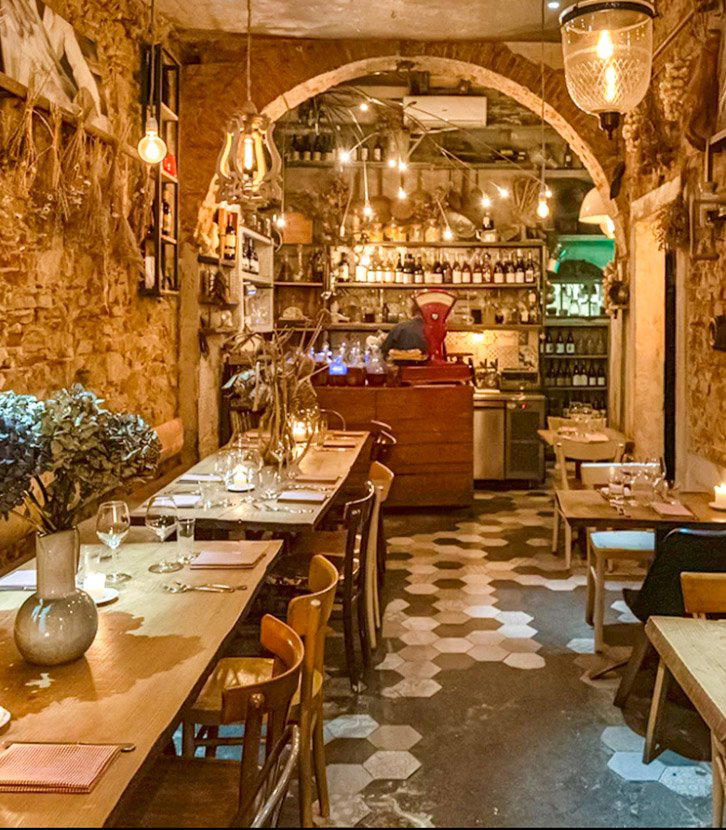
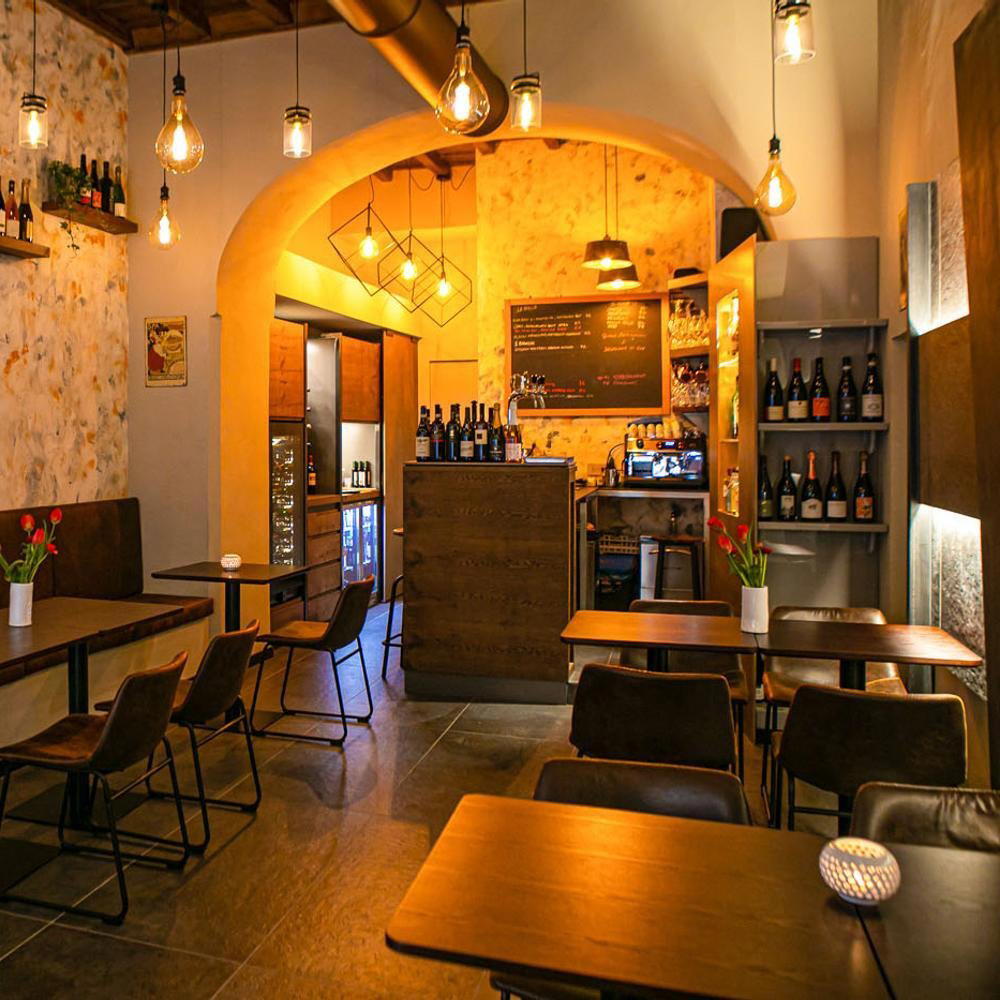
A Cabreira occupies a corner of Largo da Graça in one of Lisbon's most resident-facing neighbourhoods, sitting at some distance from the tourist circuits that dominate the riverfront. The bar draws on the Graça quarter's longstanding tavern culture, offering a reference point for Portuguese drinking traditions in a setting that rewards those who make the uphill walk.

Pearl is the En Primeur Club membership app, where members save venues, book tables and use the concierge.
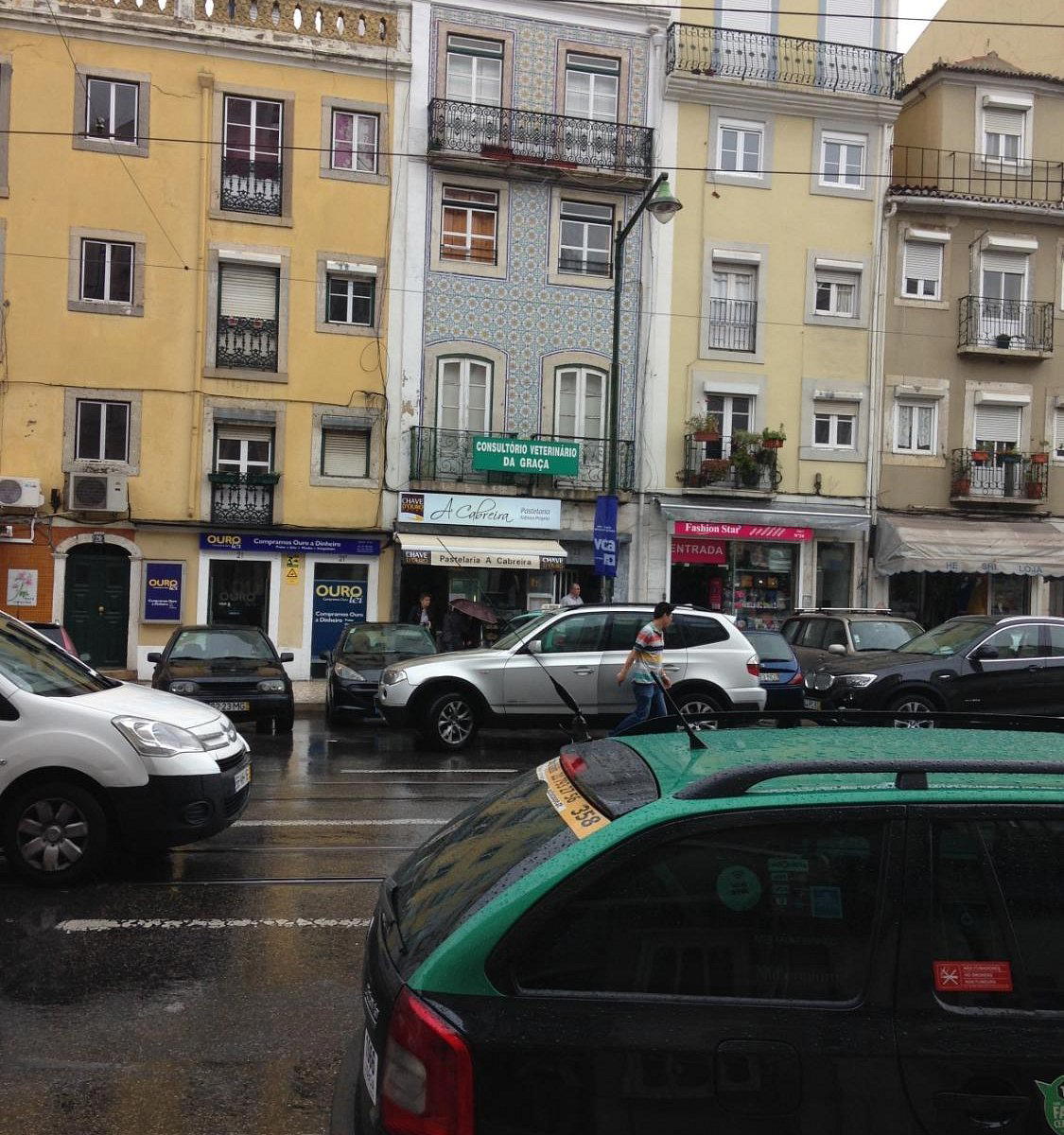
Graça Before the Crowds Find It
Largo da Graça sits above the main tourist drag in a way that still feels earned. You approach through steep, narrow streets where laundry lines cross above tiled facades and the sound of the city shifts from tour-group murmur to neighbourhood noise. By the time you reach the square itself, the Tagus is visible in the distance and the geometry of the miradouro benches tells you this is a place people actually use rather than visit. A Cabreira is at number 22 on that square, and the address alone explains a good deal about what you'll find inside.
Graça has historically been one of the more working-class quarters of the Alfama ridge, less photographed than the castle district below it and slower to attract the kind of concept-bar investment that reshaped Príncipe Real and Cais do Sodré across the last decade. That lag is not a deficiency. It meant the neighbourhood retained a denser concentration of old-style tascas and corner bars, the kind of places where the afternoon light cuts across zinc counters and the wine comes from unlabelled bottles or single-quinta cooperatives with no international distribution. A Cabreira sits in that continuum.
Local Product, the Point of the Exercise
Portuguese bar culture has always leaned on geography in ways that international spirits programs rarely need to. The country produces distinct regional wines across a compact territory, ranging from the Atlantic-facing Vinho Verde and the schist-driven Douro to the volcanic character of Pico in the Azores and the fortified tradition of the Douro Valley. A bar rooted in Graça, with the neighbourhood's historical relationship to simple, direct eating and drinking, sits naturally within a tradition that prizes product legibility over technique spectacle.
The intersection of local ingredients and acquired technique is where Lisbon's more interesting bars have carved space in recent years. The model differs from the clarified-cocktail programs that define technically ambitious bars in other cities, such as the molecular precision found at Red Frog in Lisbon's Príncipe Real quarter. Instead, it draws on what Portugal actually grows, ferments, and distills: ginjinha made from sour cherries, medronho from the Algarve arbutus berry, aged aguardente from the Douro, and wines from regions that have been producing for centuries without needing external validation. Venues like A Ginjinha have kept that tradition alive at street level, while spots across the wider Portuguese coast, from Bar do Guincho in Alcabideche to Bar e Duna da Cresmina in Cascais, anchor their offer in Atlantic-facing produce and coastal context.
That same logic extends to food. Lisbon's tavern bars have long served as informal annex kitchens for the city's working population, offering petiscos that function as a Portuguese counterpart to Spanish tapas but with their own identity: bacalhau preparations, cured meats from the Alentejo, sheep's cheese from the Serra da Estrela, and sardine-based plates that follow the season rather than a fixed menu. The pairing of these ingredients with a thoughtfully assembled drinks offer is a format that reads differently when it emerges from a Graça address than when it is engineered for a design-led bar in the Bairro Alto.
The Wider Lisbon Bar Picture
Lisbon's bar scene has split into roughly three operational registers. The first is the tourist-facing tier concentrated along the Alfama and Time Out Market corridor, where volume drives the offer and local product functions more as marketing language than sourcing principle. The second is the internationally recognised cocktail bar circuit, where Portuguese venues now compete on technical programs that draw comparison with London or New York peers. The third, and in some ways the most coherent, is the neighbourhood-tavern register that Graça represents: bars where the competitive frame is loyalty rather than discovery, and where the regulars understand the wine list without needing a sommelier.
A Cabreira belongs to that third register, as does A Tasca do Chico, the fado-house tavern in Madragoa that draws a similarly local crowd and similarly resists the production values of the tourist circuit. Both sit in a city that is still working out how to hold onto neighbourhood character as visitor numbers push into record territory. The question for bars at this address level is whether they maintain the conditions that made them worth finding in the first place.
For those travelling from elsewhere in Portugal, the comparison points shift. Base Porto in Porto operates within a different urban register, reflecting that city's more compact, industrially inflected bar culture. Venda Velha in Funchal draws on Madeiran produce and a wine tradition shaped by a specific volcanic soil and Atlantic humidity. The Algarve produces its own framework, visible at Epicur Wine Boutique and Food in Faro. And further afield, bars like Bar Leather Apron in Honolulu or Estoril bar show how differently local-ingredient philosophies can resolve depending on geography and competitive context. The Graça model, by contrast, is about reduction rather than expansion: fewer references, more direct sourcing, and a room that doesn't need to explain itself.
Getting There and Practical Notes
Largo da Graça is a direct walk from the Alfama district, though the climb from the riverfront is steep enough that most visitors choose the 28 tram line, which runs through Graça and stops close to the square. The neighbourhood is most active in the late afternoon and early evening, when the square fills with residents using the miradouro benches before dinner, making that window the most atmospheric time to arrive. Those looking for a broader picture of where A Cabreira fits within Lisbon's eating and drinking offer should consult our full Lisbon restaurants guide, which maps the city's key neighbourhoods and price tiers. A Marisqueira do Lis, covered separately in our A Marisqueira do Lis bar guide, represents a different but complementary register for those building a Lisbon itinerary around Portuguese seafood traditions.
Nearby-ish Comparables
Comparable venues nearby, for context on price, style, and recognition.
| Venue | Cuisine | Price | Notes |
|---|---|---|---|
| A CabreiraThis venue (the venue you are viewing) | Bar | Not listed | Not listed |
| Casa Independente | lounge | $10–20 | Estefania |
| Bar Old Vic | speakeasy | $20–30 | Campo Pequeno |
| Crew Hassan - Cultural Cooperative C. L. R. | lounge | Not listed | Estefania |
| Grupo Desportivo da Mouraria / Palácio dos Távora | lounge | $10–20 | Estefania |
| Dois Corvos Marvila Taproom | beer_bar | $10–20 | Marvila |
Continue exploring
More in Lisbon
Bars in Lisbon
All bars in Lisbon →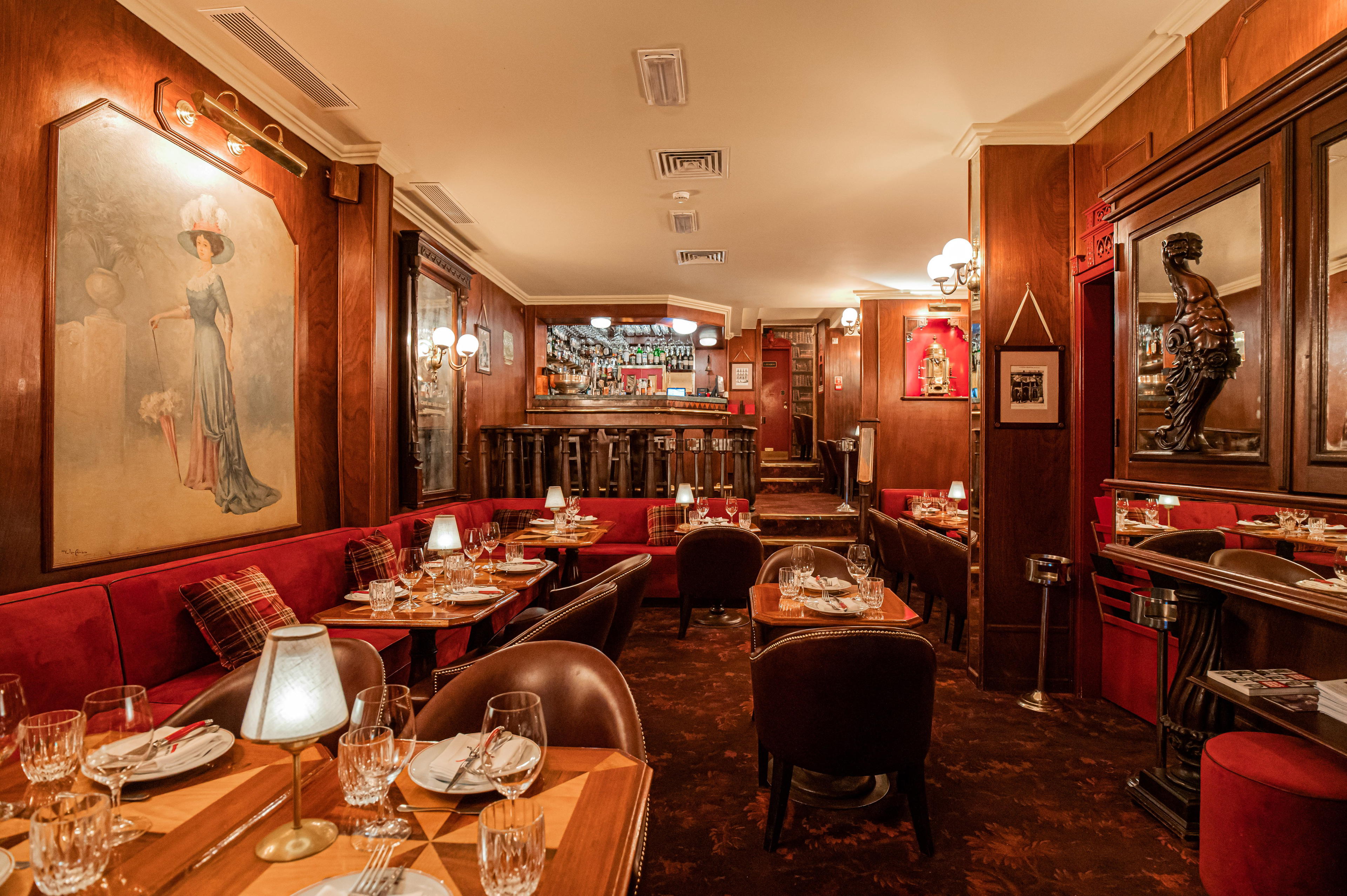
Restaurants in Lisbon
All restaurants in Lisbon →

Details
- Cozy
- Classic
- Casual Hangout
- Conventional Wine
Current opening hours
- Monday
- 7 AM–9:15 PM
- Tuesday
- 7 AM–9:15 PM
- Wednesday
- 7 AM–9:15 PM
- Thursday
- 7 AM–9:15 PM
- Friday
- 7 AM–9:15 PM
- Saturday
- 7 AM–9:15 PM
- Sunday
- Closed
Hours can change for holidays and private events. Hours as of .
Calm and welcoming with friendly service.