Adega Regional de Colares sits at the heart of one of Portugal's most geographically singular wine appellations, where sandy Atlantic soils and century-old ungrafted Ramisco vines produce reds that resist easy comparison..
Pearl is the En Primeur Club membership app — saves, bookings, and concierge access live there. Same editors, same standards.
- Address
- Alameda Cel. Linhares de Lima 32, 2705-351 Colares
- Phone
- +351 21 929 1210
- Website
- arcolares.com
- Directions
- Get directions
 Saves & bookings on Pearl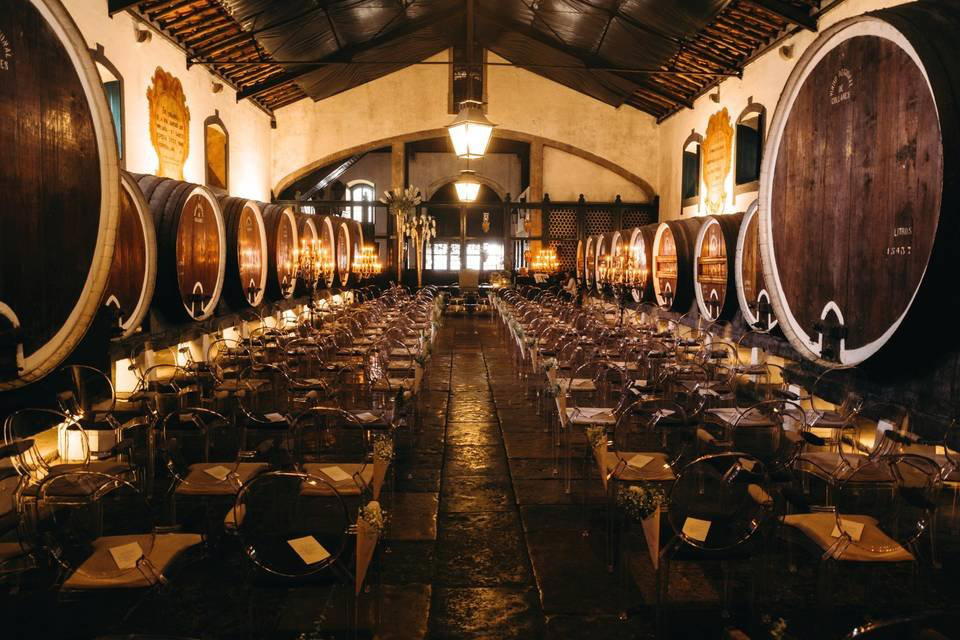
Where the Dunes Meet the Vine
Approach Colares from the Sintra hills and the Atlantic asserts itself before you arrive. The salt air thickens, the terrain flattens into coastal scrub, and the vineyards that appear along the roadside look unlike anything else in Portugal. The vines grow low and untrained across sandy soils, some of them ungrafted and pre-phylloxera in origin, their roots pushing through the sand to reach the clay beneath. This is not a landscape that invites shortcuts, and the wines it produces reflect that intractability directly.
Adega Regional de Colares is a winery in Colares, Portugal, at Alameda Cel. Linhares de Lima 32.
The Terroir Argument
Colares belongs to a small group of European appellations where the phylloxera louse never established itself, because the sandy coastal soils it requires for movement simply do not exist in sufficient depth here. That historical accident preserved a population of ungrafted Ramisco vines, some of them more than a century old, whose root systems descend through loose sand into clay subsoil metres below the surface. The result is a vine under perpetual low-level stress, producing tiny yields of small, thick-skinned berries with tannin structures that, in youth, resist most conventional assessments of approachability.
Ramisco is not a grape that travelled. It stayed here, adapted to Atlantic wind exposure, high humidity, and soils that drain fast but retain enough moisture from Atlantic rains to sustain the vine through dry summers. The wines it produces carry salinity as a structural element rather than a tasting note, with a mineral quality that reflects the proximity of the ocean in a way that inland Portuguese appellations simply cannot replicate. For comparison, the cooperatives and estates of the Alentejo, including Adega Cooperativa de Borba in Borba and Herdade do Esporão in Reguengos de Monsaraz, work with Mediterranean-influenced heat retention and schist or granite substrates. Colares is a different argument entirely.
The Colares appellation also permits white wines from Malvasia de Colares, grown on the same coastal sands. These whites share the salinity signature of the Ramisco reds, with oxidative tendencies that align them more closely with certain Atlantic-influenced whites than with the bright, clean Vinho Verde style. For those who have spent time at Aliança Vinhos in Sangalhos or Casa de Santar in Nelas in the Dão, the Colares whites represent a sharp tonal shift, less fruit-forward, more mineral, shaped by coast rather than continental climate.
The Cooperative Model in a Rare Appellation
Portugal's cooperative wine model has a complicated recent history. Several cooperatives that once served as the primary custodians of regional appellations have struggled to adapt to export markets and premium positioning. Colares presents a different case. Because the appellation is so geographically constrained and the grape varieties so specific to their location, the cooperative here functions less as an industrial aggregator and more as a guardian of a production tradition that individual smallholders could not sustain alone. The vineyard parcels in Colares are often small and fragmented, the work of harvesting and pressing labour-intensive, and the market for the wines niche enough that pooled resources make structural sense.
This cooperative logic is not distinctive to Portugal. The comparison holds with certain Burgundian village cooperatives or the Madeira Wine Company's role in consolidating island production, though Blandy's Wine Lodge in Funchal and Henriques & Henriques in Câmara de Lobos operate in an archipelago context where the cooperative model evolved differently. What matters for Colares is that the adega's continued operation is one reason the appellation still has functioning commercial production at all, given the pressure on coastal vineyard land and the difficulty of working the sandy soils without mechanisation.
Placing Colares in the Portuguese Wine Map
Portugal's premium wine conversation in recent years has centred heavily on the Douro and Alentejo, with Dão and Bairrada drawing renewed critical attention. Colares barely registers in that conversation, which is partly a function of production volume, the appellation is tiny, and partly a function of the wines themselves, which require patience and context that casual wine tourism does not easily provide. The estates and cooperatives that draw substantial visitor numbers, from Quinta do Bomfim in Pinhão and Quinta do Seixo (Sandeman) in Tabuaço in the Douro to Quinta do Vallado in Peso da Régua, operate with visitor infrastructure, river scenery, and wine styles that translate immediately. Colares asks more of its visitors.
That ask is also the appeal. The wines of Bacalhôa Vinhos in Azeitão or Adega Cartuxa in Évora are easier entry points into Portuguese wine's depth and range. Colares sits at the specialist end of that spectrum: a place where terroir specificity is so pronounced that the wines function as documents of a particular place and agricultural history rather than as broadly accessible commercial products.
For those already oriented toward Atlantic-influenced wines, the comparison extends internationally. The saline, mineral quality of aged Ramisco has more in common with certain northern Spanish coastal reds or some Canary Island bottlings than with the Douro's concentrated fruit. It is a style that rewards prior engagement with the wines rather than first encounter.
Planning a Visit
Colares sits roughly 40 kilometres west of Lisbon, reachable by car via the A16 motorway or by train to Sintra followed by a local connection or taxi. The village is small, and the adega's address on Alameda Cel. Linhares de Lima is centrally positioned within it. Visitors making the trip should factor in time for the surrounding Sintra-Cascais Natural Park, which frames the vineyard landscape and makes the journey worthwhile beyond wine alone.
Given the appellation's limited production and the adega's role as the primary commercial producer, acquiring bottles here represents access to wines that rarely appear on Lisbon wine lists or in retail export channels with any consistency.
Fast Comparison
Comparable venues nearby, for context on price, style, and recognition.
| Venue | Cuisine | Price | Notes |
|---|---|---|---|
| Adega Regional de ColaresThis venue — the venue you are viewing | Winery | Not listed | Not listed |
| Cockburn's Port | Touriga Nacional, Touriga Franca | $$ | Vila Nova de Gaia |
| The Factory House | Touriga Nacional, Touriga Francesa | $$$ | Porto docks |
| Ferreira | Touriga Nacional, Touriga Franca | $$$ | Vila Nova de Gaia |
| José Maria da Fonseca | Castelão, Moscatel | $$ | Azeitão |
| Fonseca Port | Douro Valley | $$ | Vila Nova de Gaia |
Continue exploring
More in Colares
Wineries in Colares
Browse all →
Bars in Colares
Browse all →
Restaurants in Colares
Browse all →
At a Glance
- Classic
- Historic
- Well Known
- Rustic
- Wine Education
- Group Outing
- Special Occasion
- Historic Building
- Private Tasting
- Barrel Room
- DOC Colares
- Ramisco
- Malvasia De Colares
- Castelão
- João Santarém
- Still Red
- Still White
- Guided Tasting
- Tour And Tasting
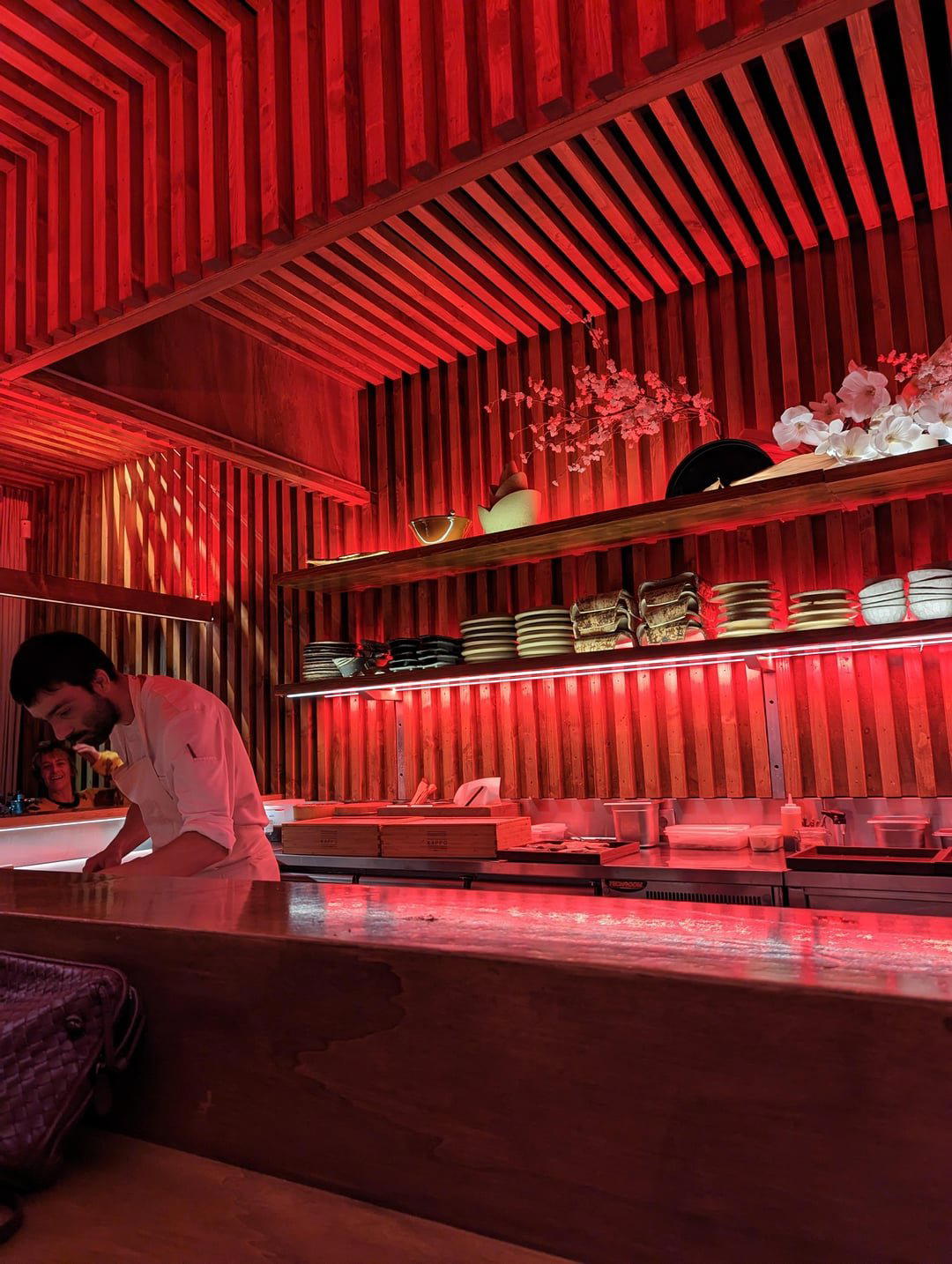
Historic, spacious, cellar-like atmosphere with imposing interiors, large wooden barrels, and an emblematic old-world cooperative winery character.