

A Michelin Bib Gourmand counter in Osaka's Nishitenma district where buckwheat is treated as a serious craft subject. The counter-seat format puts the chef's preparation sequence, parboiling, washing, plating, directly in view. The 'Soba Zanmai' tasting set covers three soba styles across half-bowl portions, making it one of the more structured introductions to the range of buckwheat in the Kansai region.
Pearl is the En Primeur Club membership app — saves, bookings, and concierge access live there. Same editors, same standards.
- Address
- Japan, 〒530-0047 Osaka, Kita Ward, Nishitenma, 4 Chome−1−11 昭栄ビル 南館
- Phone
- +81 6-6315-6767
- Website
- facebook.com
- Directions
- Get directions
 Saves & bookings on Pearl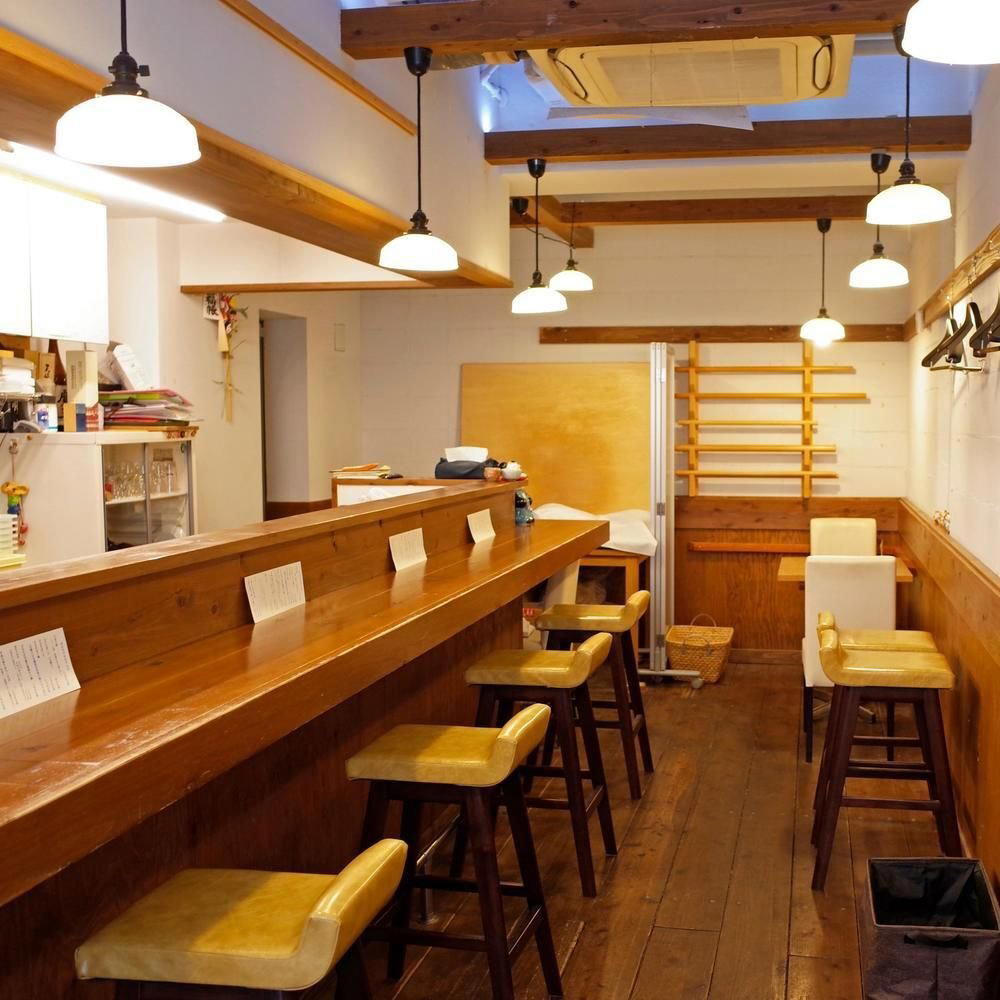
Buckwheat as a Considered Practice
Osaka's serious dining scene is weighted toward kaiseki houses such as Taian and French-leaning tasting menus at the four-symbol tier occupied by HAJIME and La Cime. Soba, by contrast, occupies a quieter register in the city, and the practitioners who treat buckwheat with the same methodical care that those kitchens apply to multi-course progression are easier to overlook. Sobakiri Arabompu, sitting in a building on Nishitenma's 4-chome, is one of those practitioners. Its Michelin Bib Gourmand recognition in both 2024 and 2025 places it in a select bracket of Osaka addresses where serious craft meets accessible price.
The name is worth understanding before you arrive. 'Arabompu' comes from Edo-era haiku poet Kobayashi Issa, for whom it described the state of living freely and ordinarily, without pretension or excess. In the context of a soba counter, the word functions as a statement of approach: the ingredients, primarily buckwheat, are met on their own terms rather than dressed up. This is a philosophy that has real implications for how the kitchen works, and for what ends up in the bowl.
The Counter and What Happens There
Counter dining in Japan spans a wide range of purposes, from the theatrical distance of a kaiseki teppan to the close, functional proximity of a soba-ya. At Arabompu, the counter is the essential vantage point. Preparation is visible from the seat, and that visibility matters. Watching the process makes clear that the care applied to temperature, timing, and water contact is as deliberate as anything happening in the city's more expensive rooms.
The format that leading demonstrates range here is the 'Soba Zanmai' set, which presents three types of soba in half-bowl portions: nihachi (an 80/20 blend of buckwheat and wheat flour), juwari (100 percent buckwheat), and arabiki (coarsely milled buckwheat). Each has a different texture and an assertively different character. The structural logic of the set mirrors what serious soba houses across Japan use to show how milling ratio and technique produce fundamentally distinct eating experiences from the same base grain. For anyone building familiarity with buckwheat as a subject, this sequencing is more instructive than a single bowl served in isolation.
The dipping sauce is Kanto-style, carrying the stronger, more saline profile that reflects the chef's apprenticeship background. In Osaka, where the prevailing culinary register trends toward softer, lighter sauces, this is a deliberate counterpoint, and it holds up well against the intensity of the juwari noodle.
Buckwheat, Sustainability, and the Grain-Forward Kitchen
Soba's environmental footprint sits at a different point on the spectrum from the protein-heavy menus that dominate fine dining internationally. Buckwheat is a low-input crop: it improves soil health, requires minimal fertilisation, and supports pollinators. A kitchen built around it as a primary subject is, structurally, a lower-impact kitchen than one oriented around premium fish, aged beef, or luxury imported ingredients. This is not a claim Arabompu makes loudly, the name's etymology points to ordinariness rather than virtue, but the grain-forward model has a coherence that more declaratively sustainable restaurants sometimes lack.
The minimalism of the format extends to waste. Soba preparation, when done with attention to whole-grain milling and careful water use, generates relatively little byproduct compared to multi-component tasting menus. The arabiki style on the Zanmai set uses coarser-milled buckwheat that retains more of the hull, producing a noodle closer to the whole grain. This is partly a textural and flavour decision, but it is also a reflection of a kitchen that does not automatically discard the parts of the ingredient that are harder to work with.
Among Osaka's soba houses, Arabompu sits alongside Soba Takama and Sobadokoro Toki as part of a small cohort that approaches the grain seriously. It is a different conversation from the one happening at Ayamedo or Naniwa Okina, and from the broader Osaka restaurant scene covered in our full Osaka restaurants guide.
Where It Fits in the Wider Soba Conversation
Tokyo remains the reference city for soba in Japan, with addresses like Akasaka Sunaba and Azabukawakamian anchoring a long tradition of serious buckwheat craft in the Kanto region. Osaka's soba scene is smaller and receives less attention in the international press, which is partly why Arabompu's consecutive Bib Gourmand citations read as significant: they represent Michelin's recognition that the standard here competes with the more visible Tokyo comparable set.
The price range, sitting at the lowest tier on the scale, makes the comparison sharper. At ¥ pricing against a Bib Gourmand credential, Arabompu occupies a position similar to what Shitennoji Hayauchi holds in its own category: technically serious, accessible on cost, and easy to underestimate if you're calibrating by spend alone.
Visitors passing through the Kansai region who are also tracking serious restaurants in other cities might cross-reference this with Gion Sasaki in Kyoto, akordu in Nara, or further afield at Harutaka in Tokyo, Goh in Fukuoka, 1000 in Yokohama, or 6 in Okinawa.
Planning Your Visit
| Detail | Sobakiri Arabompu | Soba Takama (Osaka) | Akasaka Sunaba (Tokyo) |
|---|---|---|---|
| Cuisine | Soba | Soba | Soba |
| Price range | ¥ | Not listed | Not listed |
| Awards | Michelin Bib Gourmand 2024, 2025 | See venue page | See venue page |
| Format | Counter, tasting set available | See venue page | Traditional soba-ya |
| City | Osaka (Nishitenma) | Osaka | Tokyo |
The address is 4 Chome-1-11, Nishitenma, Kita Ward, Osaka. The Nishitenma area is walkable from central Osaka and connects easily to the broader Kita district. The venue is open Mon: 11:30 AM to 3 PM; Tue: Closed; Wed: 11:30 AM to 3 PM; Thu: 11:30 AM to 3 PM, 6 to 8:30 PM; Fri: 11:30 AM to 3 PM, 6 to 8:30 PM; Sat: 11:30 AM to 3 PM; Sun: 11:30 AM to 3 PM. Reservations are recommended.
Accolades, Compared
Comparable venues nearby, for context on price, style, and recognition.
| Venue | Cuisine | Price | Awards | Notes |
|---|---|---|---|---|
| Sobakiri ArabompuThis venue — the venue you are viewing | Authentic Handmade Soba | $$ | Bib Gourmand | Not listed |
| kushiage 010 | Creative Kushiage | $$ | Bib Gourmand | Kita |
| tanpopo | Modern Okonomiyaki Teppanyaki | $$ | Bib Gourmand | Kita |
| Naniwa Okina | Traditional Hand-Rolled Soba | $$ | Bib Gourmand | Kita |
| Shokudo Akari | Seasonal Wakayama Izakaya Omakase | $$ | Bib Gourmand | Kita |
| Izakaya Tokitame | Creative Izakaya | $$ | Bib Gourmand | Fukushima |
Recognition history
Dated appearances from independent guides and award organizations, with the underlying list record or original source where available.
Michelin Bib Gourmand
Michelin
Michelin Bib Gourmand
Michelin
Tabelog 100 #50 · No. 50
Tabelog · Tabelog 100 - Soba - WEST - 2025
Michelin Bib Gourmand
Michelin
Continue exploring
More in Osaka
Restaurants in Osaka
Browse all →




Bars in Osaka
Browse all →




Hotels in Osaka
Browse all →




Wineries in Osaka
Browse all →
At a Glance
- Cozy
- Intimate
- Quiet
- Solo
- Casual Hangout
- Open Kitchen
- Chefs Counter
- Sake Program
- Local Sourcing
Current opening hours
- Monday
- 11:30 AM–3 PM
- Tuesday
- Closed
- Wednesday
- 11:30 AM–3 PM
- Thursday
- 11:30 AM–3 PM, 6–8:30 PM
- Friday
- 11:30 AM–3 PM, 6–8:30 PM
- Saturday
- 11:30 AM–3 PM
- Sunday
- 11:30 AM–3 PM
Hours can change for holidays and private events. Last verified .
Hushed and intimate with warm wood, gentle lighting, and a calm, focused atmosphere.