Slurp Ramen Joint

Our verdict
Copenhagen's New Nordic dining circuit runs deep, but Slurp Ramen Joint at Borgergade 16 makes the case for Japanese broth in a city that has learned to take it seriously. Chef Andrea Piras steers the kitchen through split lunch and dinner sittings, seven days a week.

Pearl is the En Primeur Club membership app, where members save venues, book tables and use the concierge.
The menu
What to order
- Shio Ramen
- Shoyu Ramen
- Vegetarian Ramen
- Miso Ramen
Where Copenhagen's Broth Culture Meets Japanese Precision
Borgergade runs through the Inner City as one of those quietly functional streets that tourists rarely stop on. The building at number 16 offers no theatrical signage, no queue-management rope. What arrives instead, as you step inside Slurp Ramen Joint, is steam, the low, persistent kind that accumulates around a kitchen producing long-cooked broth in real quantities. Copenhagen's casual dining scene has spent the last decade producing some of the sharpest small-format restaurants in Northern Europe, and the ramen counter has become one of its more coherent imports: technically demanding, amenable to the obsessive ingredient sourcing the city already does well, and priced below the tasting-menu tier that defines so much of the city's international reputation.
The broader context matters here. Copenhagen's dining identity is built around Geranium, Noma, Alchemist, Kadeau, and Koan, a cluster of tasting-menu operations that have shaped how the city is perceived abroad. Below that tier, the casual segment is less discussed internationally but no less considered. Ramen, specifically, has moved in most European capitals from novelty to established category, with the better houses separated by broth depth, noodle sourcing, and the discipline of execution across multiple services per day.
Three Years on Opinionated About Dining
Among the signals that distinguish serious casual restaurants from serviceable ones, sustained peer recognition tends to be the clearest. Slurp Ramen Joint has appeared on the Opinionated About Dining Casual in Europe list in each of the last three years: ranked 67th in 2023, 93rd in 2024, and 99th in 2025. The OAD methodology relies on votes from a community of food-focused diners and professionals rather than institutional inspectors, which means this kind of sustained inclusion reflects repeat visitor loyalty as much as first-impression performance.
That trajectory, ranked higher in earlier years, settling in the 90s range more recently, is a pattern seen across maturing restaurants in competitive casual categories. The initial surge of attention gives way to a stable position within the peer group as the category fills out and comparisons sharpen. Within the Copenhagen casual segment, Slurp sits in the upper tier of a category that has grown in discipline since the early 2010s, when Japanese-style ramen first arrived in Scandinavian cities in serious form.
The Service Structure and What It Signals
Slurp operates seven days a week on a split-service model: lunch from noon to 3 pm, dinner from 5 pm to 9 pm, every day without exception. That consistency is not incidental. Running two services daily, seven days a week, requires either a large team or a menu tight enough that production remains controllable, and in ramen, the latter is usually the answer. The leading broth-led Japanese restaurants in Tokyo and across the Japanese diaspora typically work from a narrow menu that allows the kitchen to maintain stock quality across every bowl leaving the pass. Consistency of the broth is not a marketing claim; it is a structural outcome of how the kitchen is organised.
Chef Andrea Piras leads the kitchen. Beyond the name, what the kitchen's output suggests is a European-trained sensibility applied to a Japanese format: the rigour of Nordic casual dining translated into a bowl. That kind of cross-referencing is more common now than it was a decade ago, when European ramen was either a faithful reproduction or an awkward fusion. The better operations have moved past that binary.
The Wine Question in a Ramen Context
Ramen and wine pairing is a genuinely contested area in contemporary casual dining. The category's default is beer or soft drinks, and many serious ramen houses in Japan operate with no wine list at all. The European casual segment, however, has developed a different expectation. Restaurants operating at the level Slurp occupies on the OAD list are increasingly expected to offer something considered alongside the bowl, not necessarily a deep cellar, but curation that reflects the kitchen's precision. In Copenhagen particularly, where the natural wine movement is embedded at every price point and the city's bar and restaurant culture is attentive to what is poured, the drinks offering at a casual restaurant carries editorial weight.
What can be said is that the broader Copenhagen casual scene has normalised serious by-the-glass programmes at this price tier, and that pairing ramen broth with low-intervention, high-acid whites or light reds has become an established approach in European ramen houses that have considered the question. Visitors with a specific interest in the drinks side should verify directly with the restaurant before the visit. The full picture of what Copenhagen's bar and drinking culture looks like beyond restaurant walls is in our full Copenhagen bars guide.
Ramen in the Copenhagen Casual Tier: How Slurp Fits
It is worth placing Slurp against the broader geography of serious casual dining in Denmark. The country's fine dining is distributed across cities: Jordnær in Gentofte, Frederikshøj in Aarhus, Henne Kirkeby Kro in Henne, Alimentum in Aalborg, ARO in Odense, and Domæne in Herning. Copenhagen concentrates the casual international formats, and ramen in particular has a stronger foothold here than in any other Danish city. Slurp's Borgergade address puts it in the Inner City, walkable from the major hotel clusters and from the concentrated restaurant strip that defines the neighbourhood's evening character.
For comparison outside Denmark, the ramen category at the level Slurp occupies is leading understood by reference to operations like Afuri in Tokyo or the diaspora model it has built, Afuri Ramen in Portland being one, where a clearly defined broth style travels across markets without losing its technical identity. The European equivalents tend to be smaller, more chef-driven, and less franchised, which is broadly where Slurp sits.
Planning the Visit
Slurp Ramen Joint is at Borgergade 16 in the 1300 postcode of central Copenhagen, open daily noon to 3 pm and again 5 pm to 9 pm. The split service means mid-afternoon visits are not possible, which is worth noting when building a Copenhagen itinerary around multiple meals. For the full picture of where Slurp sits in the wider dining context, see our full Copenhagen restaurants guide, and for accommodation planning, our Copenhagen hotels guide covers the central options. Visitors interested in the wine and spirits scene alongside the restaurant circuit should consult our Copenhagen wineries guide and our experiences guide for the broader programme.
Frequently asked questions
What should I order at Slurp Ramen Joint?
The kitchen under Chef Andrea Piras operates within the ramen format, and the OAD recognition across three consecutive years points to consistent execution rather than a single standout dish. At casual ramen counters of this calibre, the house broth, whether tonkotsu, shoyu, or a hybrid, is the anchor, and ordering the most unembellished version of it on the menu is the standard approach for a first visit. That gives the clearest read on the kitchen's technical foundation: broth clarity, noodle texture, and seasoning balance. Signature additions and seasonal variations are worth exploring on return visits, but the core bowl is where the awards-level consistency lives. No specific menu items are confirmed in the public record; the kitchen's current offering is leading checked at the restaurant directly.
Awards and Standing
| Venue | Cuisine | Price | Awards | Notes |
|---|---|---|---|---|
| Slurp Ramen JointThis venue (the venue you are viewing) | Authentic Ramen | $30–50 | Not listed | Not listed |
| Geranium | Modern New Nordic Pescatarian | $500+ | 3 Michelin Stars · World's 50 Best #1 | New Nordic, Creative |
| Noma | New Nordic Fine Dining | $300–500 | 3 Michelin Stars · World's 50 Best #1 | Creative |
| Alchemist | Avant-Garde Molecular Gastronomy with Social Commentary | $500+ | 2 Michelin Stars · World's 50 Best #5 | Progressive, Creative |
| Koan | Modern Korean-Nordic Fine Dining | $300–500 | 2 Michelin Stars · World's 50 Best #91 | New Nordic, Kaiseki, Creative |
| a|o|c | Modern Scandinavian Fine Dining | $300–500 | 2 Michelin Stars · La Liste Top Restaurants | New Nordic, Mediterranean Small Plates, Creative |
Recognition history
Dated appearances from independent guides and award organizations, with the underlying list record or original source where available.
Opinionated About Dining Casual in Europe Ranked #142
Opinionated About Dining
Full recognition history (4 entries)
Opinionated About Dining Casual in Europe Ranked #99
Opinionated About Dining
Opinionated About Dining Casual in Europe Ranked #93
Opinionated About Dining
Opinionated About Dining Casual in Europe Ranked #67
Opinionated About Dining
Continue exploring
More in Copenhagen
Restaurants in Copenhagen
All restaurants in Copenhagen →
Bars in Copenhagen
All bars in Copenhagen →



Details
- Trendy
- Cozy
- Lively
- Modern
- Casual Hangout
- Solo
- Date Night
- Open Kitchen
- Beer Program
- A La Carte
- Vegetarian Friendly
Current opening hours
- Monday
- 11:30 AM–3 PM, 5–10 PM
- Tuesday
- 11:30 AM–3 PM, 5–10 PM
- Wednesday
- 11:30 AM–3 PM, 5–10 PM
- Thursday
- 11:30 AM–3 PM, 5–10 PM
- Friday
- 11:30 AM–3 PM, 5–10 PM
- Saturday
- 11:30 AM–3 PM, 5–10 PM
- Sunday
- 11:30 AM–3 PM, 5–10 PM
Hours can change for holidays and private events. Hours as of .
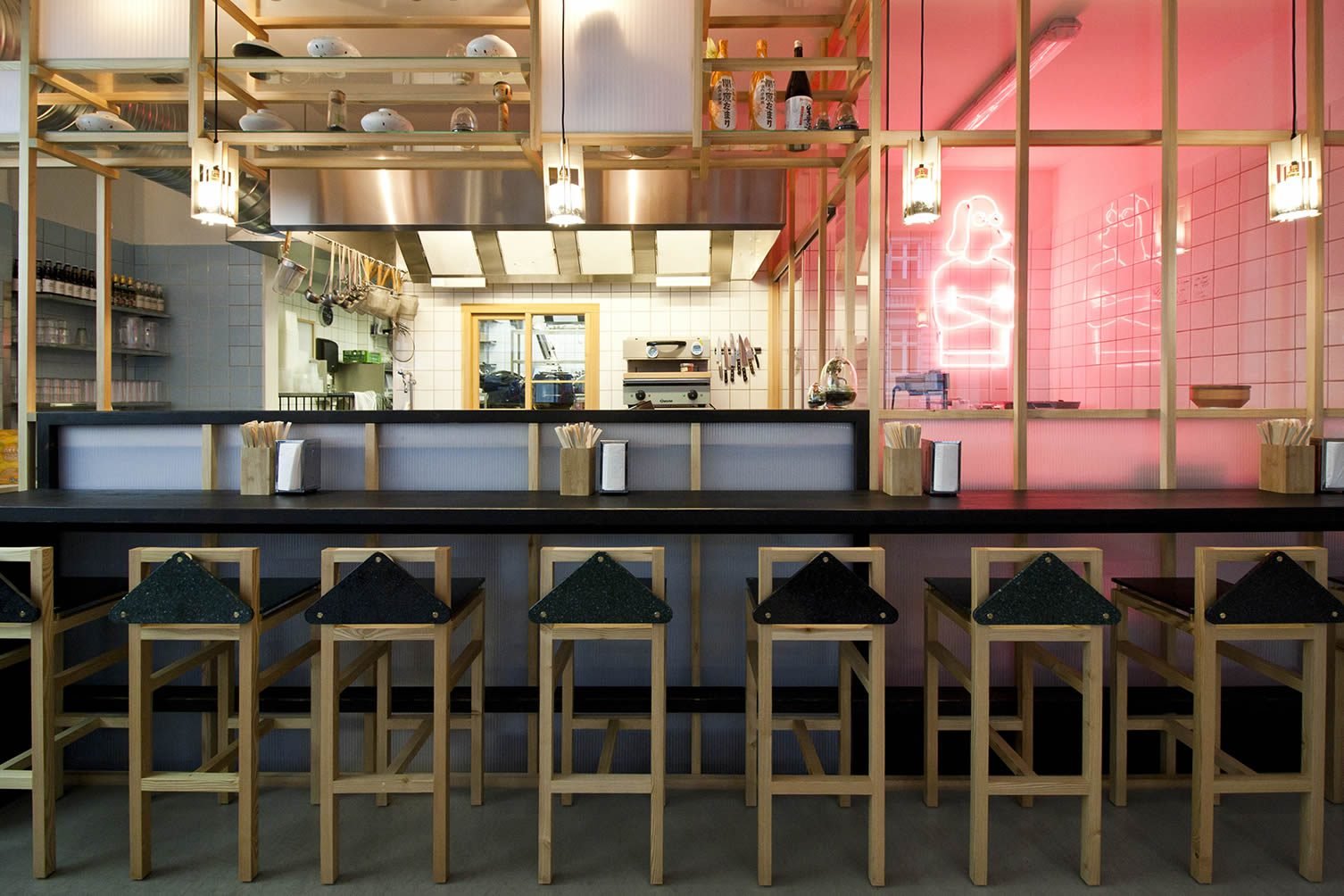
Super cool environment with neon lights, open kitchen view, energetic music, and a relaxed yet busy vibe.