Alouette





1 Michelin Star · White Guide Nordic Restaurants - Masters Level · Falstaff Restaurant - 94 Falstaff Points
Our verdict
Alouette operates on Kronprinsessegade in central Copenhagen, structuring its tasting experience around twelve to fifteen servings divided into four farm-specific Plots. The menu reads as a document of Danish agricultural relationships rather than a conventional chef showcase. One Michelin star (2025) and a position inside the Opinionated About Dining Top 100 in Europe place it firmly within the city's serious tasting-menu tier.

Pearl is the En Primeur Club membership app — saves, bookings, and concierge access live there. Same editors, same standards.
- Address
- Kronprinsessegade 8, 1306 København K, Denmark
- Phone
- +45 31 67 66 06
- Hours
- Mon–Tue ClosedWed–Sat 5 PM–12 AMSun Closed
- Website
- restaurantalouette.dk
- Directions
- Get directions
- Booking
- Book on Tock
The menu
What to order
- Monkfish with miso gooseberry and bee pollen
- Langoustine
- Pea dish
A Menu Built Like a Document
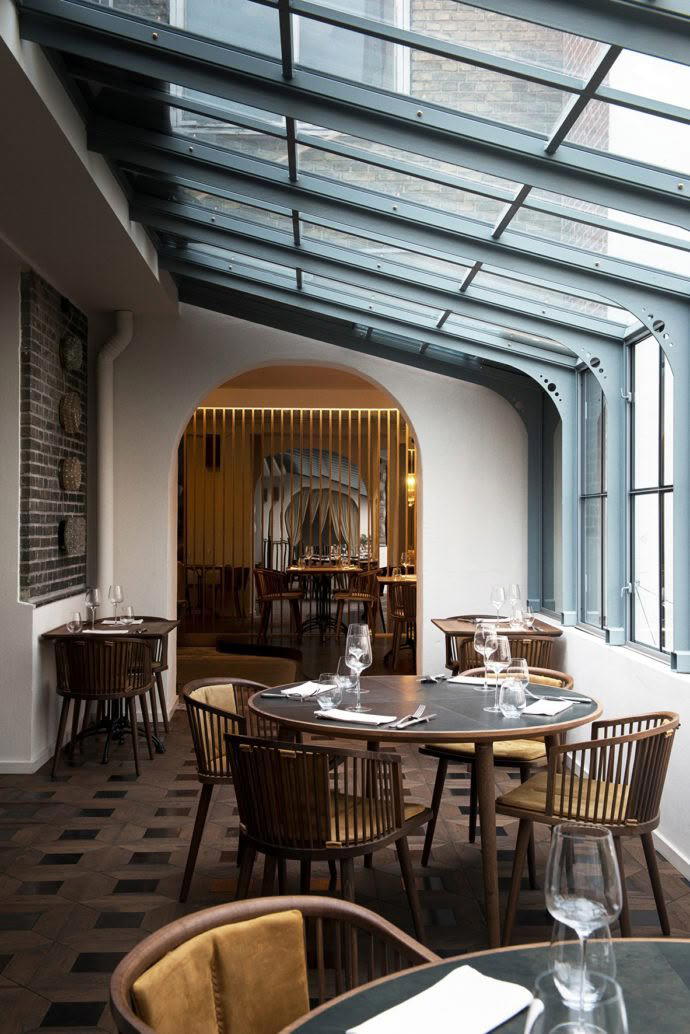
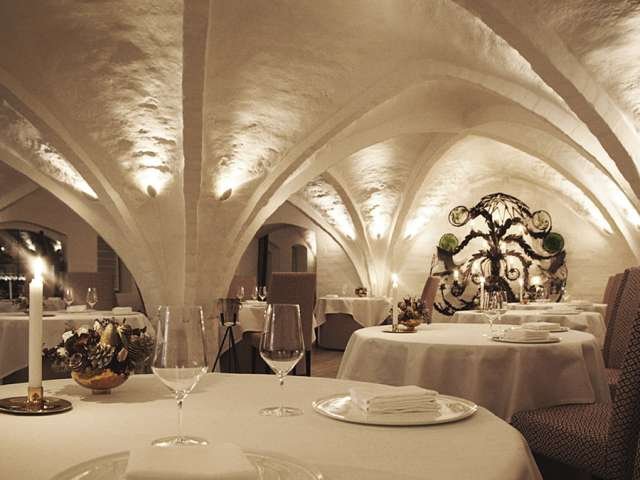
Kronprinsessegade is a street that rewards patience. The address sits inside Copenhagen's Latin Quarter, where the buildings read older and quieter than the busier restaurant corridors around Vesterbro or Nørreport. Walking toward number eight on a Thursday or Friday evening, the shift in pace is noticeable: fewer tourists, fewer signs competing for attention. Alouette occupies that register deliberately. The room, from available accounts, keeps the minimalism of the menu's design philosophy visible in the physical space, with open fire as both cooking method and ambient presence.
What distinguishes Alouette within Copenhagen's dense tasting-menu tier is not the number of courses or the size of the kitchen team — it is the underlying architecture of how those courses are sequenced and justified. Where many menus at this price point organise around seasonal produce or chef biography, Alouette organises around farms. The menu divides into four Plots, each a multi-serving exploration of a single Danish agricultural relationship: its methods, its products, and the specific reasoning behind the collaboration. That structure is closer to a land survey than a restaurant menu, and it places Alouette in a different conversation from its peers.
Four Plots, Twelve to Fifteen Servings
The Plot format gives each section of the meal a documentary function. Rather than a progression of flavour from light to heavy, or a geography of the Danish coastline and interior, the sequence follows the logic of individual producers. A guest eating through all four Plots is, in effect, eating through four arguments about Danish agriculture — why a particular farm's methodology produces a particular kind of ingredient, and what cooking over open fire reveals about that ingredient that other techniques would suppress.
The minimalist cooking style reinforces this. Open-fire preparation is listed as the dominant technique, with the explicit aim of amplifying the deepest textures, aromas, and flavours of each product. At twelve to fifteen servings, the menu has the length of a conventional tasting format but the internal logic of something more structured. One documented preparation, grilled white asparagus with Parmesan custard, lime pudding, and almond broth, illustrates how the kitchen uses contrast, the bitterness of asparagus against the fat of custard, the acidity of lime against the mild softness of almond, without adding complexity for its own sake.
Name itself signals a cross-cultural sensibility. Alouette references the French song, but the kitchen is run by two American chefs, Nick Curtin and Andrew Valenzuela, and the influences registered in the food include American, Scandinavian, Italian, and Japanese. That combination is less a fusion premise than a working method: different culinary traditions brought to bear on the specific problem of what Danish terroir tastes like when treated with restraint and precision.
Where Alouette Sits in the Copenhagen Tasting-Menu Tier
Copenhagen operates one of the most competitive tasting-menu markets in Europe, with the €€€€ tier covering a wide range of formats and philosophies. Geranium, Alchemist, and Noma (before its closure) established international reference points that still shape how the city's serious restaurants are read from outside. Within that context, Alouette occupies a more focused niche: a single Michelin star awarded in both 2024 and 2025, and a position in the Opinionated About Dining Leading Restaurants in Europe ranked at 96th in 2024 and 100th in 2025, with an earlier appearance in the OAD Leading New Restaurants in Europe at 36th in 2023. The OAD list draws from a network of frequent, informed diners rather than anonymous inspectors, which means its rankings reflect accumulated repeat visits rather than single assessments.
That combination of Michelin recognition and strong OAD placement positions Alouette alongside a cohort of Copenhagen restaurants where format discipline and sourcing coherence matter as much as technical ambition. Venues like formel B, texture, Abigail & Co, Anarki, and Calma each represent distinct approaches to the same broad question of what a serious Copenhagen tasting menu does in 2025. Alouette's answer, four farms, open fire, documentary structure, is among the more architecturally coherent on offer.
For those considering the wider Danish tasting-menu landscape beyond the capital, the country's other serious tables are spread across several cities: Jordnær in Gentofte, Frederikshøj in Aarhus, Henne Kirkeby Kro in Henne, Alimentum in Aalborg, ARO in Odense, and Domæne in Herning. In the broader Scandinavian context, Frantzén in Stockholm and FZN by Björn Frantzén in Dubai represent what happens when Nordic cooking philosophy travels to larger international stages.
Open Fire as Structure, Not Style
In many contemporary restaurants, live-fire cooking functions as a signal of informality, a gesture toward rusticity that softens the formality of a tasting menu format. At Alouette, the open fire appears to serve a different purpose. Because the menu's declared aim is to let Danish ingredients speak in their most direct register, the fire is a precision tool rather than an aesthetic choice. The absence of heavy saucing, emulsification, or elaborate plate construction, characteristics of a more intervention-heavy kitchen, places the sourcing decisions at the centre of each serving. If the farm relationships are the content of the menu, the fire is the editing style: removing everything that would dilute the signal.
That approach has practical implications for what a guest experiences over the course of a full evening. Twelve to fifteen servings through four Plots, operating Thursday through Saturday from 5pm to midnight, produces a long meal with a clear internal rhythm. The service window until midnight suggests unhurried pacing, which is consistent with a menu designed to be read as much as eaten.
Planning a Visit
Alouette is open Thursday, Friday, and Saturday from 5pm to midnight, and closed Sunday through Wednesday. The four-night operating week is narrow for a restaurant at this recognition level, which makes forward planning relevant. Kronprinsessegade 8 sits within the Latin Quarter, accessible from central Copenhagen on foot from most hotel clusters around the city centre. The address falls inside a neighbourhood better suited to arriving by foot or bicycle than by car, with several hotel options within a short walk. For a broader picture of where to stay, our full Copenhagen hotels guide covers the relevant ranges. For bars before or after the meal, our full Copenhagen bars guide maps the options by neighbourhood. Those planning a longer stay can find the full scope of the city's eating, drinking, and cultural programming in our full Copenhagen restaurants guide, our full Copenhagen wineries guide, and our full Copenhagen experiences guide.
Frequently asked questions
How do I find Alouette?
Alouette is located at Kronprinsessegade 8, 1306 København K, Denmark, Copenhagen.
Is Alouette Michelin-listed?
Alouette has received recognition including: Nick Curtin and Andrew Valenzuela, two American chefs, determine the cuisine of Alouette, named after the famous French song. Their dishes have American, Scandinavian, Italian and Japanese influences. The menu at Alouette is an exploration ….
What do regulars order at Alouette?
There is no à la carte at Alouette: every guest at the table follows the same sequence of twelve to fifteen courses, structured into four Plots, each devoted to a specific Danish farm. The menu changes as farm relationships and seasonal produce shift, so returning guests encounter a materially different progression each visit. One documented preparation from the kitchen is grilled white asparagus with Parmesan custard, lime pudding and almond broth, which illustrates the kitchen's open-fire minimalism and its cross-cultural influences drawn from Scandinavian, American, Italian and Japanese cooking.
What does dinner at Alouette typically cost?
Pricing at Alouette is listed as €€€€.
At-a-Glance Comparison
A small set of peers for context, based on recorded venue fields.
| Venue | Cuisine | Price | Awards | Notes |
|---|---|---|---|---|
| AlouetteThis venue — the venue you are viewing | Modern Nordic Fine Dining | $200–300 | 1 Michelin Star · White Guide Nordic Restaurants - Masters Level | Not listed |
| Geranium | Modern New Nordic Pescatarian | $500+ | 3 Michelin Stars · World's 50 Best #1 | New Nordic, Creative |
| Noma | New Nordic Fine Dining | $300–500 | 3 Michelin Stars · World's 50 Best #1 | Creative |
| Alchemist | Avant-Garde Molecular Gastronomy with Social Commentary | $500+ | 2 Michelin Stars · World's 50 Best #5 | Progressive, Creative |
| Koan | Modern Korean-Nordic Fine Dining | $300–500 | 2 Michelin Stars · World's 50 Best #91 | New Nordic, Kaiseki, Creative |
| a|o|c | Modern Scandinavian Fine Dining | $300–500 | 2 Michelin Stars · La Liste Top Restaurants | New Nordic, Mediterranean Small Plates, Creative |
Recognition history
Dated appearances from independent guides and award organizations, with the underlying list record or original source where available.
Michelin 1 Star
Michelin
Falstaff Restaurant - 94 Falstaff Points
Falstaff
Opinionated About Dining Top Restaurants in Europe Ranked #103
Opinionated About Dining
White Guide Nordic Restaurants - Masters Level
White Guide
We're Smart World 4 Radishes
We're Smart World
Full recognition history (11 entries)
White Guide Denmark Restaurants - Global Masters Level
White Guide
Michelin 1 Star
Michelin
Opinionated About Dining Top Restaurants in Europe Ranked #100
Opinionated About Dining
Michelin 1 Star
Michelin
Opinionated About Dining Top Restaurants in Europe Ranked #96
Opinionated About Dining
Opinionated About Dining Top New Restaurants in Europe Ranked #36
Opinionated About Dining
Continue exploring
More in Copenhagen
Restaurants in Copenhagen
Browse all →
Bars in Copenhagen
Browse all →
Hotels in Copenhagen
Browse all →

Details
- Elegant
- Sophisticated
- Cozy
- Modern
- Date Night
- Special Occasion
- Business Dinner
- Chefs Counter
- Open Kitchen
- Extensive Wine List
- Farm To Table
- Local Sourcing
- Tasting Menu
- Vegetarian Friendly
- Allergy Accommodating
Current opening hours
- Monday
- Closed
- Tuesday
- Closed
- Wednesday
- 5 PM–12 AM
- Thursday
- 5 PM–12 AM
- Friday
- 5 PM–12 AM
- Saturday
- 5 PM–12 AM
- Sunday
- Closed
Hours can change for holidays and private events. Last verified .
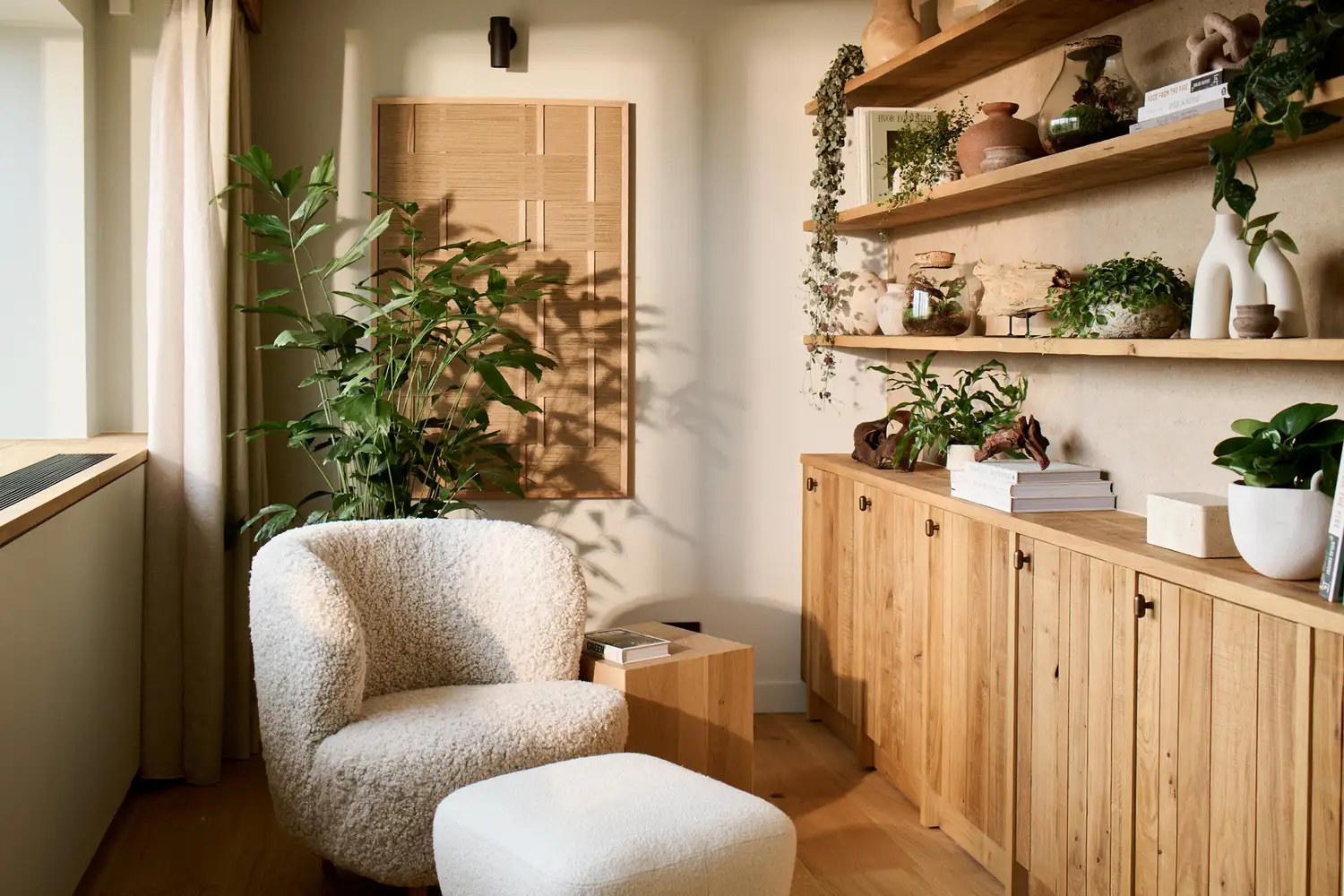
Luxurious brown and beige dining room with 1970s vibe, wooden floors, and warm lighting, though some note noise from wooden floors.