
Tabelog 100 #81
Our verdict
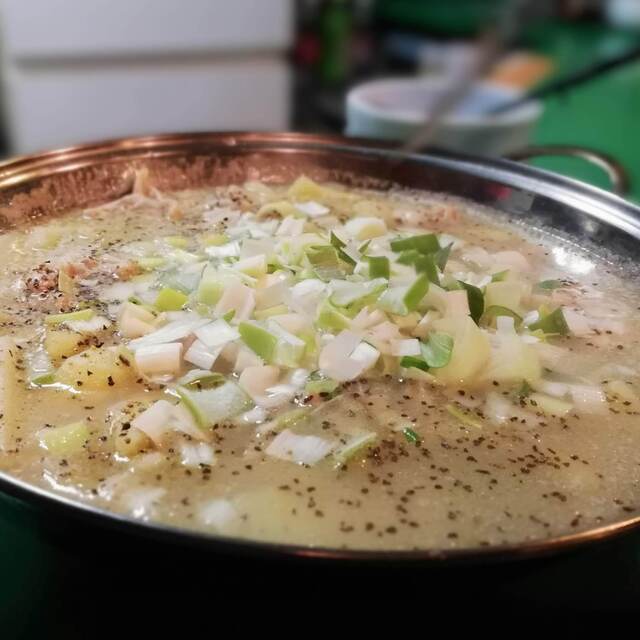
Simon is a Korean home-cooking address in Azabu-Juban with a 2024 Tabelog 100 selection for Asian and ethnic cuisine in Tokyo. Its appeal sits in a different register from Tokyo’s tasting-menu economy: modest pricing, compact scale, counter seating, take-out, and a reputation built around long-running neighborhood use rather than ceremony.

Pearl is the En Primeur Club membership app, where members save venues, book tables and use the concierge.
The menu
What to order
- Dak Galbi Guksu
- Korean home-style stews
- Korean small plates
Tokyo changes tone quickly away from its busiest dining streets: apartment entrances, small stairwells, vertically stacked restaurant signs, and dinner culture written as much in repeat local habits as destination dining. Here, Korean cooking occupies a useful place in the city’s restaurant map: less theatrical service than continuity, comfort, and cooking able to survive fashion cycles because regulars understand its role.
That context matters with Simon. Tokyo’s Korean dining scene is often framed through late-night energy or polished modern rooms, but the city also has quieter Korean tables embedded in everyday restaurant districts. Tokyo gives that format a varied audience: office dinners, family meals, and locals wanting something steadier than a reservation-led counter but more specific than a chain meal.
Korean cooking in a city better known for expense-account dining
Tokyo’s premium restaurant culture can make every meal feel like a ranking exercise. The comparison set often tilts toward Japanese fine dining, with names such as 麻布 幸村 - Yukimura, 暗闇坂 宮下, Motoazabu Kushima, Okadamae, and クラージュ in a more formal register. Simon uses another grammar: Korean category, compact scale, and a grounded rather than ceremonial cultural signal.
The distinction matters. Korean cooking in Japan has a different social texture from the high-heat model that shapes many international perceptions of Korean food. It draws attention to a style of eating that can make sense across generations. That is why a neighborhood Korean restaurant can feel anchored rather than trend-led: the format is built for return visits, not one performance.
Recognition gives that local pattern a wider frame. The restaurant was selected in 2024 by Tabelog Hyakumeiten, with Korean listed as its category. Within Tokyo’s crowded dining landscape, a Korean restaurant needs consistency and identity to register in that mix.
The better reading is not that one award turns a neighborhood room into a grand destination. It is that Tokyo’s restaurant conversation has matured enough to value restaurants outside the luxury tasting-menu mold. For readers mapping the city beyond sushi counters and kappo rooms, that matters. The same trip can include other Tokyo dining rooms and Korean cooking here without treating any as lesser forms of dining.
The value is in continuity, not spectacle
Simon’s appeal is best understood through steadiness rather than spectacle, a useful credential in a city where restaurant churn can be ruthless. Longevity in Tokyo is not romantic by itself; plenty of older rooms coast. But survival usually means a restaurant has found a clear place in local routines. Its listing in the Korean category is therefore more than a label. It explains why the experience sits closer to a dependable neighborhood table than a chef-led concept.
That shapes expectations. The appeal is not a long tasting progression, wine-pairing narrative, or the luxury vocabulary of hotel-adjacent restaurants. It is a practical format suited to straightforward meals with friends, colleagues, or regular dining companions. The emphasis is on everyday usefulness, reinforcing the grounded reading rather than diluting it.
The useful menu reading is broad rather than overly specific: this is a Korean restaurant whose comfort-food logic matters more than luxury signaling. Korean cooking can carry a meal through familiarity and balance rather than expensive ingredients or formal presentation.
In Tokyo, this cooking has particular value for visitors whose itineraries are filled with highly structured meals. A city of counters and courses can become fatiguing when every dinner demands silence, timing, and close attention. A Korean room offers another mode: still culturally specific, still serious in its category, but less burdened by prestige-dining etiquette.
How to place it within a Tokyo itinerary
Plan around Simon as part of a Tokyo evening rather than a trophy reservation. The city can shift quickly between residential calm and international traffic, so dinner here can pair with a bar-focused night or a quieter local walk. Readers building a broader food map should use Our full Tokyo restaurants guide for restaurant context, then cross-reference Our full Tokyo bars guide, Our full Tokyo hotels guide, Our full Tokyo experiences guide, and Our full Tokyo wineries guide when structuring the rest of the night.
Within Tokyo’s broader dining field, the point is contrast. Other Tokyo dining rooms may lean toward seafood, nightlife, café culture, or highly designed specialty formats, each saying something different about how the city eats. Simon’s role is narrower and clearer: Korean cooking in Tokyo, backed by category recognition.
For travelers extending the same lens across Japan, the comparison becomes more useful. Regional dining can move through many category-specific rooms across the country, from casual specialists to tightly focused neighborhood restaurants. Japanese food travel is stronger when it includes these formats, not only formal Japanese cuisine.
The editorial verdict is simple: choose this restaurant when the priority is a grounded Korean meal in Tokyo rather than staged luxury. Its trust signals are concrete: a 2024 Tabelog Hyakumeiten selection, a listed Korean category, and a published dinner price range of JPY 4,000 - JPY 4,999. In a city dense with restaurants chasing novelty, that continuity has authority. For a wider comfort-food thread, compare the mood with other everyday formats, where cultural weight can sit beyond price point.
Frequently asked questions
Where exactly is Simon?
Simon is located in Tokyo.
What's the price range at Simon?
Pricing at Simon is listed as JPY 4,000 - JPY 4,999.
Is Simon reservation-only?
Simon’s published phone number is +81-3-3470-5889. Simon is in Tokyo.
What has Simon built its reputation on?
Simon’s profile rests on Korean cooking in Tokyo and a 2024 Tabelog Hyakumeiten selection.
Budget and Context
Side-by-side context: comparable cuisine and price.
| Venue | Cuisine | Price | Awards | Notes |
|---|---|---|---|---|
| SimonThis venue (the venue you are viewing) | Korean Home-Style Restaurant | $30–50 | Tabelog 100 #81 | Not listed |
| Pro Ganjang Gejang Akasaka ten | Traditional Korean Ganjang Gejang Specialist | $50–100 | Tabelog 100 #76 | Minato, Traditional Korean Ganjang Gejang Specialist |
| Japanese Soba Noodles Tsuta (Japanese Soba Noodles 蔦) | Michelin-Starred Japanese Soba Ramen | $20–30 | Tabelog 100 #32 | Yoyogi-Uehara, Michelin-Starred Shoyu Soba Ramen |
| Re:s Cafe Bar & Sweets | Japanese Dessert Cafe | $20–30 | Not listed | Nishi Waseda, Japanese Dessert Cafe |
| ハードロックカフェ 東京 | American Rock Cafe Burgers & Grill | $30–50 | Not listed | Minato, American Rock Cafe Burgers & Grill |
| Chinkai Rou | Traditional Chinese dumpling house & izakaya | $20–30 | Tabelog 100 #15 | Shinagawa, Traditional Chinese dumpling house & izakaya |
Recognition history
Dated appearances from independent guides and award organizations, with the underlying list record or original source where available.
Tabelog 100 #81 · No. 81
Tabelog · Tabelog 100 - Asian cuisine / Ethnic cuisine - TOKYO - 2024
Continue exploring
More in Tokyo
Restaurants in Tokyo
All restaurants in Tokyo →

Bars in Tokyo
All bars in Tokyo →




Details
- Cozy
- Lively
- Classic
- Casual Hangout
- Date Night
- After Work
- Group Dining
- Standalone
- A La Carte
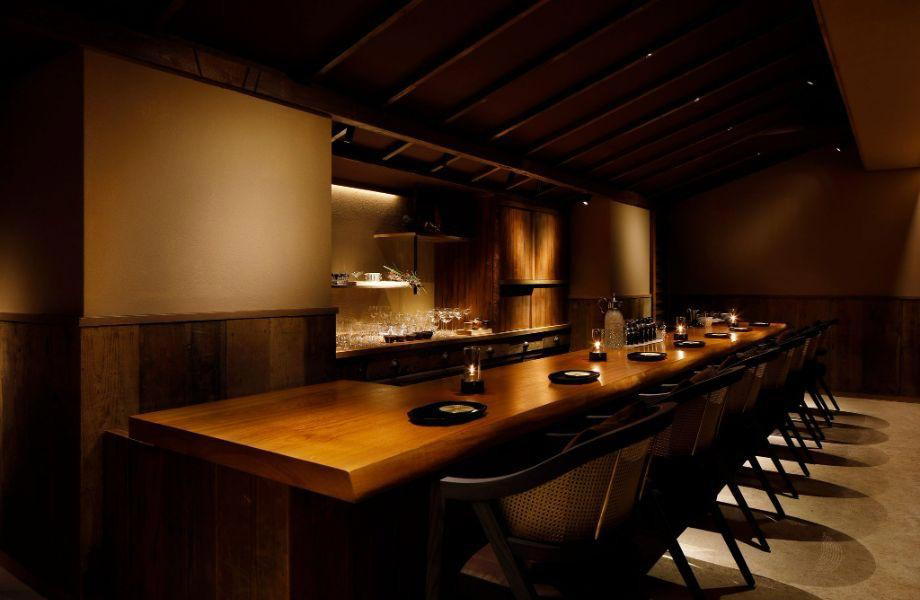
A compact, homey Korean eatery with a nostalgic feel, close-set tables, and a warm, bustling atmosphere that stays casual and unpretentious rather than polished or design-driven.